










Remote Control Mowers for Solar Farms, Levees and Slopes
2026-06-12
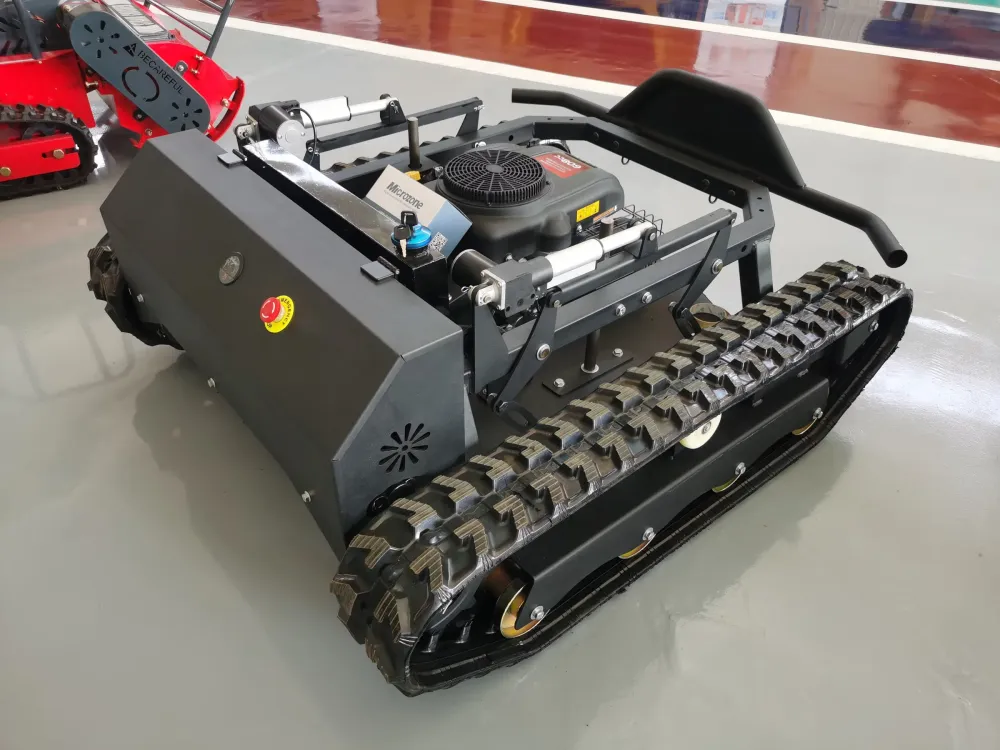
A remote control slope mower handles solar sites, river levees and steep embankments that crews can't safely walk. Here's how flail decks, tracks and control range fit commercial vegetation management.
Commercial vegetation management has a problem that residential lawn care doesn't: the ground crews are asked to mow is often steep, wet, fenced, or full of obstacles, and the work has to repeat on a schedule across a large area. Solar arrays, flood levees, retention basins, highway embankments — these all grow grass that has to come down regularly, and most of them are places you can't safely send a person on a riding mower.
That's the operational case for a remote control slope mower. It's not about a fancier lawn cut. It's about clearing vegetation on sites where the alternative is hand crews with string trimmers working a slope all day, or a riding machine on ground it has no business being on.
The sites that justify a remote machine
Most commercial buyers land on remote-controlled equipment because of one specific site type that conventional mowers can't service safely or economically:
- Solar farms. Rows of panels create tight lanes, low clearances, and shaded growth, and the ground between and under arrays is often graded. A low-profile tracked machine driven by remote gets under and between rows without an operator dodging panels.
- Levees, dykes and embankments. Flood-control banks are steep by design and frequently wet at the toe. They're the textbook case for taking the operator off the slope.
- Retention ponds and drainage basins. Banks run straight down to water. A slide on a riding mower there is a serious incident; a slide on a remote machine is a lost pass.
- Highway and rail embankments, municipal slopes. Long, repetitive, steep verges where crew safety near traffic and grade is the whole concern.
The common thread is grade plus repetition plus risk. When all three line up, a remote control slope mower moves the operator to safe ground and keeps the schedule.
Flail deck vs rotary: why commercial sites run flail
For managed lawn you'd want a clean rotary cut. For commercial slope and vegetation work, a remote control flail mower is usually the right call, and the reason is the growth itself. Levees, basins, and neglected verges don't grow tidy turf — they grow tall grass, brush, saplings, and woody stems.
A flail deck spins dozens of small hinged knives on a horizontal shaft. They chew through heavy, woody material that would bog or scatter from a rotary blade, and because the knives swing back on impact instead of staying rigid, the deck shrugs off the rocks and hidden debris that come with rough ground. That's also why the same machines get spec'd as a remote control brush cutter — on overgrown sites, you're cutting brush, not lawn. If a site is mostly maintained grass, a rotary deck still has its place; the flail is for the rough, woody, abrasive conditions that define most commercial slope work.
Tracks, stance and gradeability
Almost every serious commercial slope machine is a tracked mower, and on a grade that's not a styling choice. Rubber tracks lay a long footprint that grips wet bank grass where tires would spin, and a low, wide tracked chassis sits close to the ground so it holds a steep traverse instead of rolling. That combination is what lets these machines work grades far beyond what any seated mower is rated for.
When you compare machines for a commercial fleet, gradeability is the headline number — the maximum slope the machine will safely hold and cut. Match it honestly to your steepest site, the same way you'd size any other piece of equipment to its hardest regular job rather than its average one. Spec for the worst bank you actually mow.
Control range and line of sight
A remote machine is only useful as far as you can reliably control it. Two things govern that on a real site:
- Radio range. The operator needs solid signal from wherever they're standing — top of a levee, end of a solar row, the flat above a basin. On open ground this is rarely the limit; the practical constraint is usually the next point.
- Line of sight. You drive what you can see. On a slope you naturally stand uphill and keep the machine below and in view, which is also the safe position. Solar arrays complicate this — panels block sight lines, so crews work row by row, repositioning to keep the machine visible rather than driving it blind under a distant array.
For practical purposes, plan the work around keeping the machine in clear view, and let the safe operator position — uphill, clear of the fall line — set where you stand. The range spec matters, but line of sight is what actually structures the day.
The labor and safety math
The reason a contractor or facility buys one of these usually comes down to a straightforward comparison against the alternatives:
- Versus hand crews: a string-trimmer team working a slope is slow, expensive, and exposed to the same grade and heat all day. One operator with a remote machine covers far more bank per hour and stands on stable ground while doing it.
- Versus a riding mower on ground it shouldn't be on: the comparison isn't productivity, it's liability. A rollover on a wet levee or pond bank is exactly the incident this equipment exists to prevent.
For ongoing programs — a solar O&M contract, a municipal slope-mowing route, a flood district's levee schedule — that math favors a remote machine quickly, because the work repeats and the risk is structural to the site.
How ZHONGMAI machines compare to Agria and other brands
Buyers researching remote slope mowers will encounter European specialist names, notably the Agria 9600 remote control mower — a German-built tracked machine with a long track record in professional vegetation management, particularly in Central Europe. The Agria 9600 is a capable, well-supported machine for its home market. Our remote control slope mowers target buyers who need the same tracked, remote-operated, flail-deck capability for commercial slope work but are sourcing for Asia, Africa, Latin America, or the Middle East, where the Agria supply chain is thin and the landed cost of a European machine is typically prohibitive. The fundamental performance parameters — tracked undercarriage, wireless remote operation, flail or brush-cutting deck, steep-slope gradeability — are matched; the practical difference is in purchase price, landed cost, and regional parts availability. If you're comparing options across brands, that's the honest framing to use rather than assuming a European brand name automatically translates to better field performance in your country.
Remote slope mowers in Southeast Asia and Indonesia
Demand for remote control slope mowers has grown steadily across Southeast Asia. Indonesian buyers searching for a mesin rumput remote control — the local term for a remote-controlled lawnmower or brush cutter — encounter exactly the same terrain challenges that drive commercial adoption everywhere: steep embankments along toll roads, riverbank levees, plantation row margins, and infrastructure slopes where walking crews with trimmers is slow and hazardous. Palm oil plantation edges, in particular, present recurring slope-mowing requirements at scale. Our machines ship directly to Indonesian importers and distributors, with parts support structured for in-region availability. If you're in Indonesia or broader Southeast Asia and evaluating tracked remote slope mowers for a commercial vegetation program, contact us to discuss configurations suited to your site grades and growth conditions.
Spec'ing a machine for a commercial program
If you're evaluating remote slope mowers for a fleet or a recurring contract, line up these against your sites:
- Gradeability matched to your steepest regular bank, not the average.
- Deck type — flail for woody, overgrown, abrasive sites; rotary only if you're truly mowing maintained grass.
- Cutting width against your lane and clearance constraints (solar rows, narrow verges).
- Track footprint and ground pressure for wet levee and basin work.
- Parts and support — a fleet machine that's down for a six-week part isn't earning. Confirm what blades, tracks and wear items cost and how fast you can get them.
Our remote control slope mowers are built for this commercial vegetation-management work — tracked, remote, and decked for rough growth — so the operator stays on safe ground while the machine takes the slope. If a site also needs the bank reshaped, drainage cut, or debris cleared before the mowing program starts, a mini excavator handles the earthwork. For residential and general steep-slope buyers, our guide to the best mower for steep slopes and hills covers the consumer side of the same question.
Browse our remote control slope mower range · — we reply within one business day.
Frequently asked questions
Why use a remote control mower on a solar farm?
Solar arrays create tight lanes, low clearances, and graded ground that a seated mower can't service safely or get under. A low-profile tracked remote control slope mower drives between and under rows while the operator stands clear, keeping panels and people out of harm's way. It also handles the repetitive, scheduled nature of solar site vegetation management more economically than hand crews.
What is a flail mower and why is it used on slopes?
A flail mower spins dozens of small hinged knives on a horizontal shaft. The knives swing back on impact instead of staying rigid, so the deck chews through tall grass, brush and woody saplings and shrugs off rocks and hidden debris — exactly the rough, overgrown growth that levees, basins and verges produce. That toughness is why commercial slope and brush-cutting work runs flail decks rather than rotary blades.
How steep a slope can a remote control mower handle?
Tracked remote machines work grades well beyond what any seated mower is rated for, because the long track footprint grips wet bank grass and the low, wide chassis resists rolling. The exact limit is the machine's gradeability rating — match it to the steepest bank you actually mow, not your average site.
Is a remote control mower worth it for vegetation management?
For recurring commercial programs — solar O&M, municipal slope routes, flood-district levee schedules — yes. One operator covers far more steep bank per hour than a string-trimmer crew, and the operator never stands on a slope where a rollover could happen. When the work repeats and the risk is built into the site, the labor and safety math favors a remote machine quickly.
How do ZHONGMAI remote mowers compare to the Agria 9600?
Both are tracked remote control slope mowers with flail deck capability for commercial vegetation management. The Agria 9600 remote control is a proven German-engineered machine for European markets with strong local service. ZHONGMAI machines offer equivalent tracked, remote-operated slope-mowing capability at a lower landed cost for buyers in Asia, Africa, the Middle East and Latin America, where Agria parts and service support are limited. The decision usually comes down to landed cost, regional availability, and service network rather than raw machine capability.
Related articles
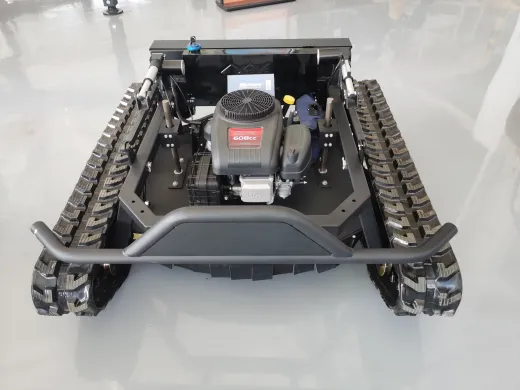
Best Mower for Steep Slopes and Hills: How to Choose Safely
Finding the best mower for steep slopes, hills, and banks — from push mowers and riding mowers to tracked zero-turn conversions and remote-control slope mowers. Safety grades, robot mower limits, and what commercial operators actually use.
Read more →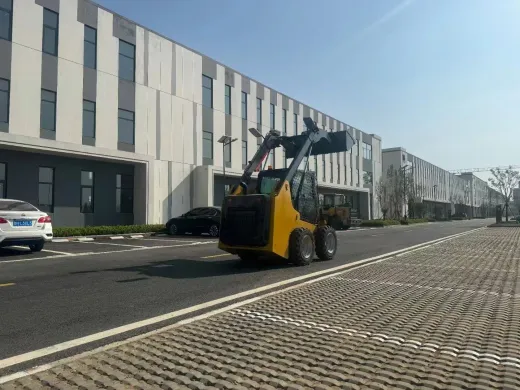
Best Skid Steer for Mulching, Land Clearing and Snow Removal
The best skid steer for mulching, land clearing or snow removal isn't one model — it's the right hydraulic flow, traction and attachment for the job. Drum mulcher vs disc, brush hog vs flail mower, stump grinder vs tree shear: here's how to spec the machine and pick every attachment.
Read more →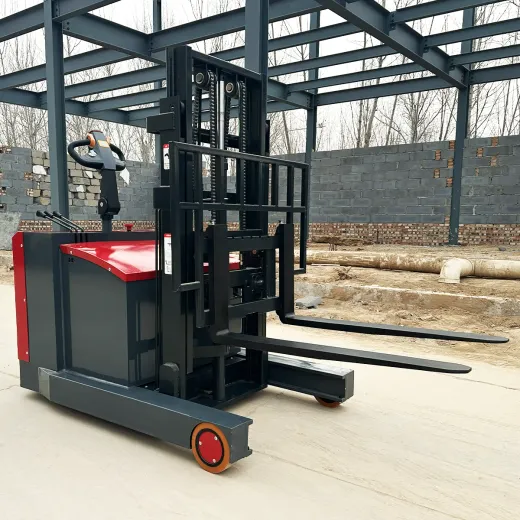
Forklifts for Narrow Aisles: Reach Trucks, Stackers and Aisle Math
Choosing forklifts for narrow aisles comes down to aisle width versus storage density. Here's how reach trucks and stackers stack up, and how to find the best narrow aisle forklift for your racking.
Read more →