










Reach Truck
The forks come to the rack — high pallets, narrow aisles, planted chassis · CPDR15 / CPDR20 electric reach trucks, 1.5–2 t
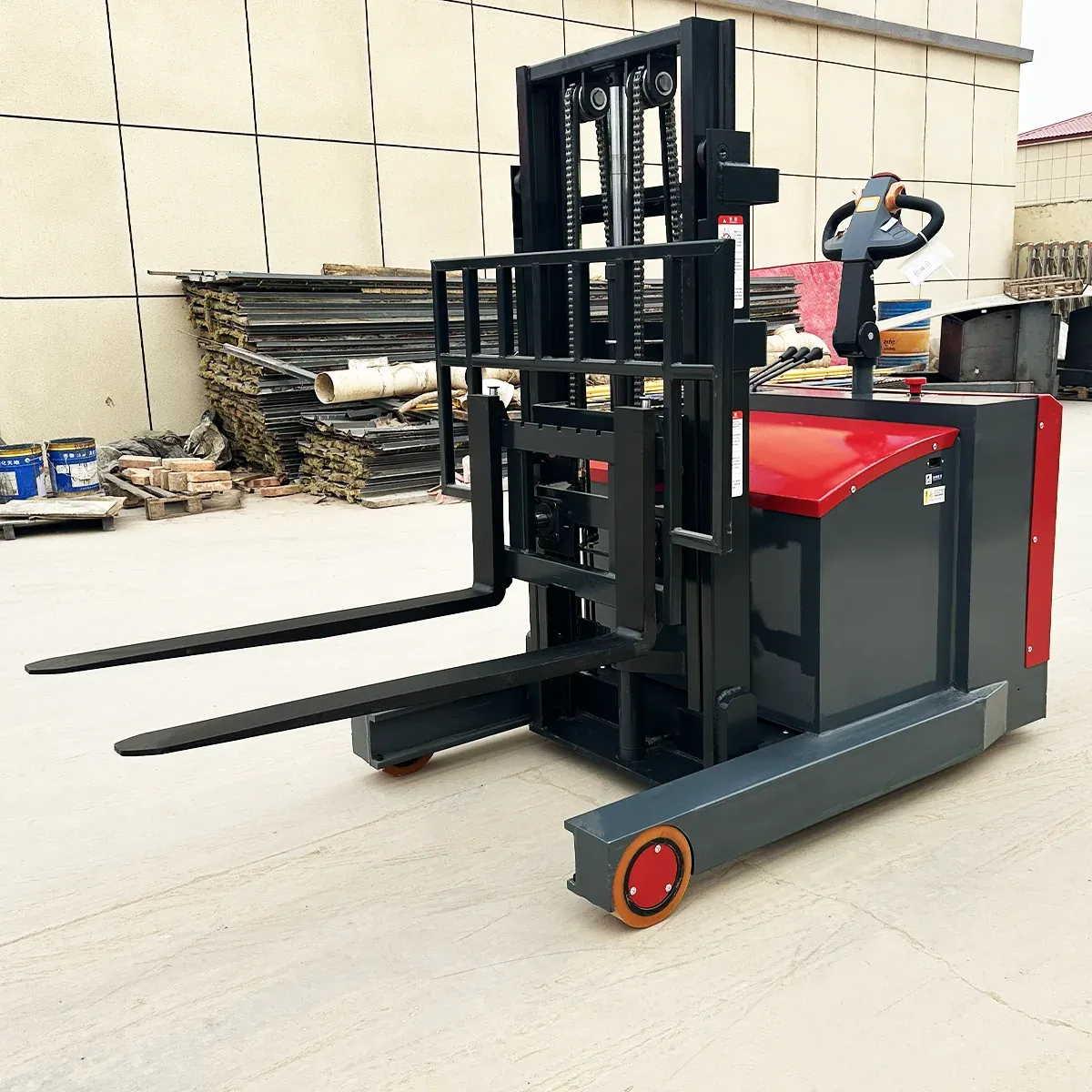
A reach truck stacks where wider trucks cannot: the mast slides forward to place the pallet, then pulls back over the chassis for travel, so the aisle only needs to fit the machine — not the machine plus a swinging counterweight. Our CPDR15 and CPDR20 electric reach trucks carry 1,500 kg and 2,000 kg on a 48 V system, lift to 4,000 mm on a duplex mast, and weigh in around 2,000 kg so the chassis stays planted under a high load. Joystick hydraulics and a stand-behind operator position keep cycles quick. Built in Shandong; CE marked with an 18-month warranty.
Models & technical data
| Item | CPDR15 / CPDR20 |
|---|---|
| Rated capacity | 1,500 kg / 2,000 kg |
| Lift height | 1,600–4,000 mm |
| Mast | Duplex with reach action; tilt 6–12° |
| Battery | 48 V, lead-acid or lithium |
| Service weight | Approx. 2,000 kg |
| Controls | Joystick hydraulics, stand-behind operation |
| Export packing | 175 × 112 × 215 cm, approx. 2,000 kg gross |
| Warranty / certification | 18 months, CE / ISO 9001 |
Factory figures for CPDR15/20 as shipped; mast height, battery and fork sizes are configured per order — ask for the full datasheet with residual capacities.
Key features
- CPDR15 / CPDR20: 1,500 kg and 2,000 kg rated capacity on 48 V power
- Reach action places pallets without driving the chassis under the rack
- Duplex mast with lift heights from 1,600 to 4,000 mm
- Joystick hydraulic control from a stand-behind operator position
- Approx. 2,000 kg service weight keeps the truck stable at full height
- Mast tilt range of 6–12° holds loads snug during reach and travel
- Lead-acid or lithium battery; 18-month warranty, CE / ISO 9001
Where it works
How a reach truck works the aisle
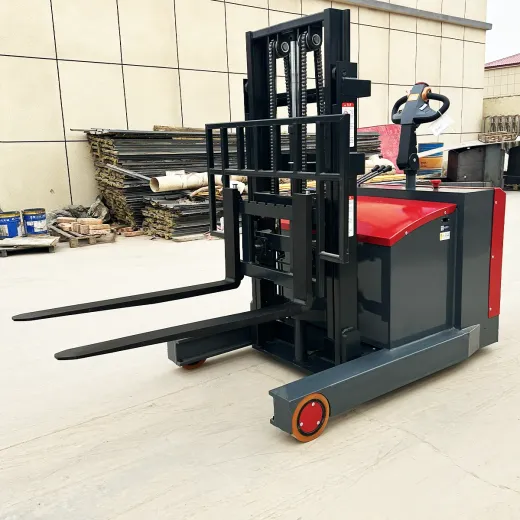
Watch the gallery photos in sequence and the mechanism explains itself: the mast and fork carriage ride forward on the support arms to deposit the pallet, then retract so the load travels back inside the wheelbase. The truck never has to drive its body under the rack, which is what lets it live in aisles a counterbalanced machine cannot turn in.
Stability comes from geometry rather than a huge counterweight alone — the load sits over the support arms during travel, and the roughly 2,000 kg chassis does the rest at height. The 6–12° mast tilt keeps the pallet nosed back against the carriage while the forks are loaded.
Reach truck vs forklift: different jobs, not rivals
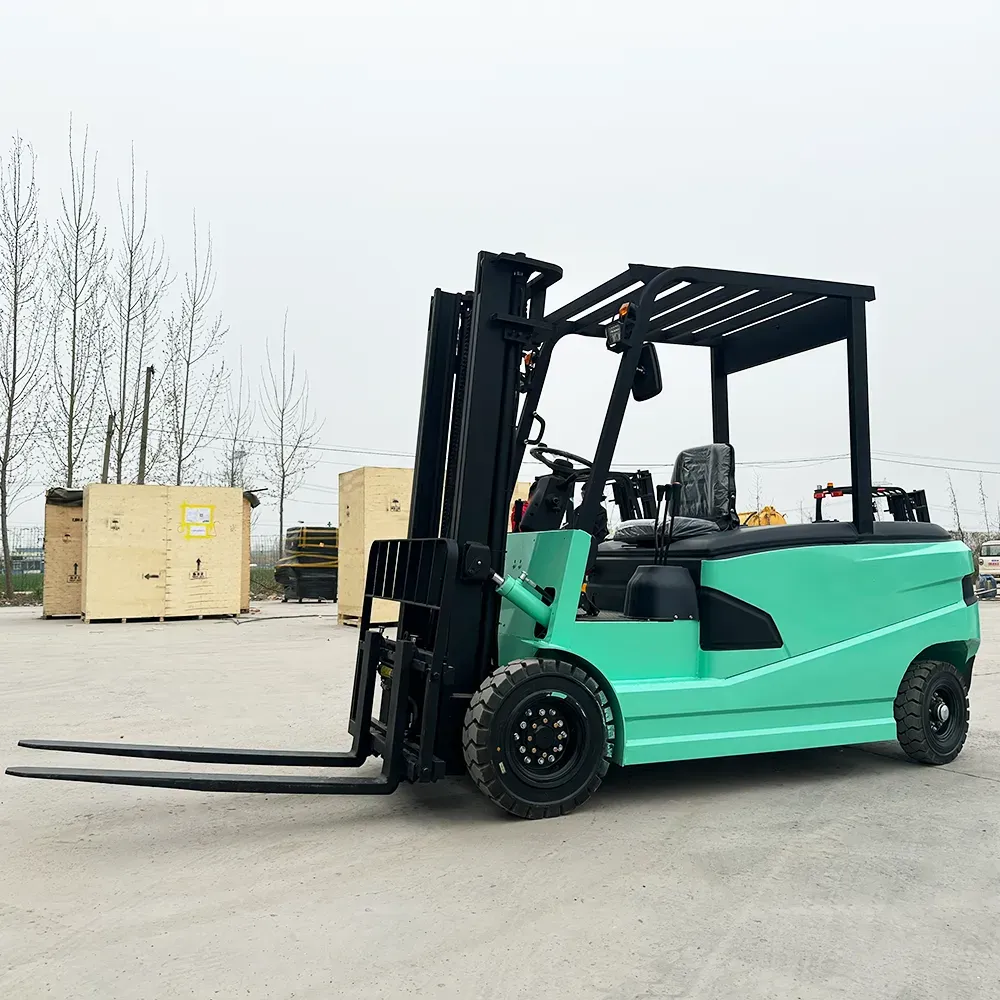
The honest comparison: a counterbalanced truck is the generalist — yards, docks, trailers, rough surfaces — while the electric reach truck is the racking specialist that trades outdoor ability for aisle width and lift height economics. If your pallets live above 3 m in dense racking, the reach truck stores the same stock in noticeably less floor area.
Most warehouses past a certain size end up with both: something counterbalanced at the dock, a reach truck in the aisles. What you should not do is buy a wide-aisle machine and then design racking around its turning circle — rack layout is cheaper to fix on paper than in steel.
Send us the rack drawing with beam heights and aisle widths and we will confirm whether CPDR15 or CPDR20 fits, including the residual capacity at your top beam — the number that actually matters, not the headline rating.
CPDR hardware and the buying process
Both models run 48 V with a choice of lead-acid or lithium pack, joystick hydraulic control and a stand-behind operator station — the joystick cluster is visible in the gallery close-up, alongside the 2,000 kg capacity marking on the production unit. Lift heights run 1,600 to 4,000 mm on the duplex mast.
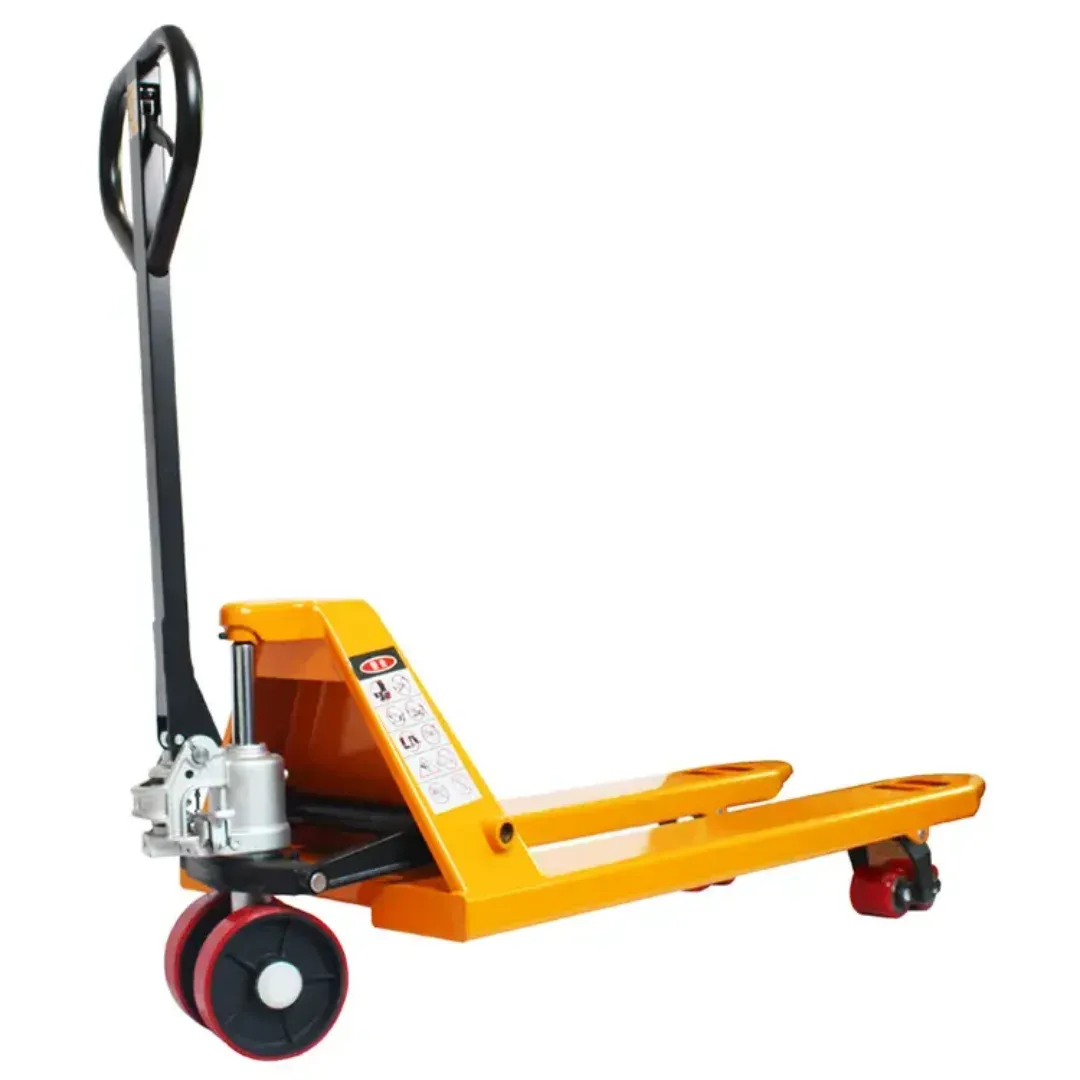
Each truck export-packs at 175 × 112 × 215 cm and roughly 2,000 kg gross, so mixed containers with our electric stackers and hand pallet trucks load cleanly. For long-run put-away at lower heights, the ride-on stacker on this site is the cheaper machine — we will point you there when the rack plan says so.
Factory-direct from Shandong: what that means for a reach truck order
ZHONGMAI builds the CPDR15/20 in-house at our Shandong plant rather than sourcing it through a trading company, so a quote request goes straight to the engineers who spec the mast, motor and battery — not through a reseller relaying questions back and forth. Send the rack drawing, beam heights and pallet weight and we return a formal FOB quotation, typically within one business day, naming the CPDR model, mast option and battery chemistry that fit.
Every CPDR ships CE marked with an 18-month warranty and shares its 48 V electrical architecture and control logic with the rest of our stacker and pallet truck line, so a mixed fleet does not mean mixed spare-parts sourcing. Export packing runs 175 × 112 × 215 cm at roughly 2,000 kg gross per unit, and we quote FOB Qingdao or Tianjin with freight handled by your forwarder or ours.
Types of reach trucks: single-deep, double-deep, walkie, rider, turret and VNA
Reach trucks split first by how deep into racking the forks reach. A single-deep reach truck like the CPDR extends once, placing or pulling one pallet per rack face. A double-deep truck adds a pantograph — a scissors linkage that telescopes the forks a second time to reach the row behind the front pallet. Double-deep storage roughly halves the rack faces needed for the same SKU count, at the cost of FIFO discipline: whichever pallet went in first at the back stays there until the front one comes out.
By operator position, a standup (rider) configuration has the operator standing in a compartment on the machine, which is the standard setup for full-shift racking work — that's how the CPDR ships by default. A walkie version drops the ride platform; the operator walks alongside and steers with a tiller, which suits lower-volume put-away or a tighter budget, and we can configure the CPDR either way.
At the far end of the aisle-width spectrum sit turret trucks, which rotate the fork carriage instead of turning the chassis, and articulated (four-way) trucks, which bend in the middle to swing into aisles as narrow as 1.6–1.8 m. Both need either floor guidance or a more complex chassis and carry a real price premium over a standard pantograph reach truck. For most distribution centers with 2.5–3.0 m aisles, the single-deep, pantograph-style CPDR covers the job without that extra infrastructure.
Mast height, max height and telescopic reach specs
Two numbers matter when sizing mast height: free-lift height — how far the forks rise before the outer mast section starts to move, which decides whether the truck clears low steelwork — and maximum lift height, the fork face height at full extension. The CPDR's duplex mast covers 1,600–4,000 mm on that second figure. For projects that need more, a triplex mast (three nested sections) can push lift height past 6,000 mm — we source and quote that configuration on request.
The mast itself, which guides the carriage up and down, is a separate mechanism from the reach action, which moves the whole mast-and-carriage assembly forward and back on the support arms. Some competing designs use telescopic forks that extend on their own instead of a moving mast; that approach suits deep or double-deep reach into racking without moving the chassis, but it isn't how the CPDR is built.
Residual capacity at height is the number that actually governs your racking plan, not the nameplate rating. A truck rated 2,000 kg at ground level might carry only 1,200 kg at 4,000 mm, and that lower figure is what the top-beam calculation needs. Ask for the full load chart alongside the headline capacity when you compare quotes.
Narrow-aisle warehouse design: aisle width, turning radius and VNA
Aisle width is the reach truck's core argument over a counterbalanced machine. A standard counterbalanced forklift needs roughly 3.5–4.0 m of working aisle to turn with a loaded pallet; a reach truck like the CPDR works in about 2.5–2.8 m because the load retracts over the wheelbase before any turn happens. Very-narrow-aisle equipment — turret and articulated trucks — pushes that down to 1.5–1.8 m, but only with floor rails, wire guidance, or a bent chassis doing the work instead of a turn.
Turning radius on a straddle-type reach truck is set by wheelbase and straddle-arm width rather than overall length; typical electric narrow-aisle reach trucks in this class post a geometric turning radius around 1,400–1,600 mm. Side loaders and articulated trucks cut the effective figure further by removing the turn altogether — the load exits sideways instead.
The aisle-width saving has to be weighed against system cost: VNA equipment needs guidance infrastructure, a flatter floor, and accepts lower per-truck throughput because travel is single-file. For most 2.5–3.0 m aisle warehouses, a standard reach truck is the sweet spot — send us the CAD floor plan and racking layout and we'll return a working-aisle calculation specific to the CPDR's straddle dimensions.
Battery, components and operator safety
Battery chemistry shapes total cost of ownership more than any other single choice on the CPDR. Lead-acid suits single-shift sites with reliable overnight charging and someone watering the cells on schedule. Lithium tolerates opportunity charging at every break, charges faster, weighs less, and is the better call for cold-storage duty because its performance holds up at low temperatures where lead-acid struggles. Lithium costs more upfront but typically pays that back within two to three years on a multi-shift site; the charger ships matched to whichever chemistry and supply voltage you specify.
Underneath, the CPDR runs a three-point wheel layout — two straddle wheels up front and a single driven, steered wheel at the rear — steered by a tiller handle on walkie units or a wheel/tiller on rider units. A joystick handles lift, lower, reach-out, reach-in and sideshift together, with a thumb horn and creep-speed button alongside it; rider configurations add a seat belt or harness.
Safety is layered rather than single-point: an overload sensor cuts hydraulics above rated capacity, a travel-speed limiter slows the truck once the mast is elevated, the geometry keeps the center of gravity inside the stability triangle during reach, and the park brake sets automatically the moment the operator releases the deadman. We recommend service every 500 operating hours, covering wheel wear, hydraulic-fluid condition and battery health.
How the CPDR compares against premium-brand reach trucks
Yale, BT, Jungheinrich and Crown built their reputations on decades of narrow-aisle tuning, deep dealer service networks and factory telematics — and for a large fleet with a local dealer on call, that infrastructure is worth paying for. The CPDR competes on a different basis: the same core spec — duplex mast, 48 V system, joystick hydraulics — built and shipped factory-direct, without the dealer margin those brands carry.
The trade-off is honest: a branded machine holds resale value better in markets where it's common, and its service network is already local. What the CPDR offers instead is a materially lower landed cost, an 18-month warranty from the factory that built it, and spare parts that share voltage and control logic with the rest of our line — worth it for buyers who don't already have a premium dealer relationship to protect, or who are equipping a new site from scratch.
Buying guide: price, cost, for sale options and choosing a supplier
Price tracks configuration closely. A walkie reach truck from a Chinese factory typically starts around USD 8,000–12,000; a rider (standup) configuration runs USD 12,000–22,000 depending on lift height and battery chemistry. Branded European or Japanese machines usually land in the USD 35,000–60,000 range for the equivalent capacity — the premium buys a local dealer network and established resale value. A used or refurbished unit from any brand can cut the new price by 40–60%, at the cost of shifting maintenance risk onto the buyer.
Cost beyond the purchase price is mostly battery, service and tires: lead-acid packs run 4–5 years before replacement, lithium 8–10; a scheduled service every 500 hours covers the rest. On a single-shift site, ten-year ownership cost on a factory-direct Chinese machine typically comes in well under an equivalent European unit, provided local service is available for routine items.
Send us your floor plan, top beam height, heaviest pallet weight and required cycles per hour, and we return a formal quotation — CPDR model, mast option, battery spec and FOB price — within one business day. We quote FOB Qingdao or Tianjin; budget roughly 6–10% of machine cost for sea freight and import duties on top.
Related Buying Guides
Pallet Jack vs Stacker vs Reach Truck: Which One Do You Need?
How to choose between a pallet jack, a stacker, a reach truck and a full forklift — where the pallet jack forklift comparison matters, and where the best reach truck or narrow aisle forklift fits — based on lift height, throughput and aisle width.
Read more →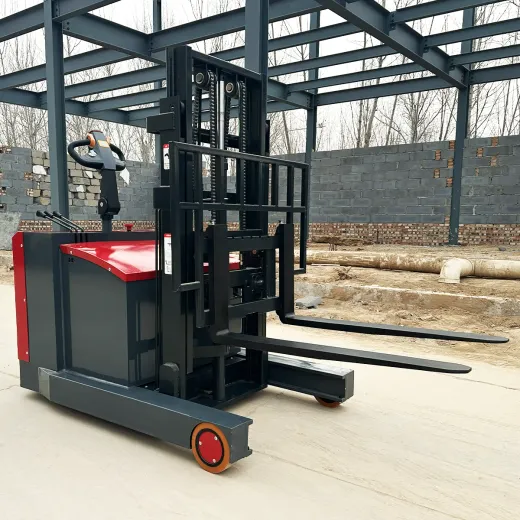
Forklifts for Narrow Aisles: Reach Trucks, Stackers and Aisle Math
Choosing forklifts for narrow aisles comes down to aisle width versus storage density. Here's how reach trucks and stackers stack up, and how to find the best narrow aisle forklift for your racking.
Read more → Reach Truck Operator: Skills, Training, and What the Job Actually Involves
A complete guide to the reach truck operator role: what you do on the job every day, the skills and certification you need, safety rules that matter, and how the right machine makes every shift easier.
Read more →Common questions
What is the difference between a reach truck and a forklift?
A conventional counterbalanced machine carries the load ahead of the front axle and needs wide aisles to turn. A reach truck slides the mast forward to place the pallet, then retracts the load over its own wheelbase — so it works narrower aisles and taller racking, but belongs on smooth indoor floors rather than yards.
How high can the CPDR electric reach truck lift?
Duplex masts on the CPDR15/20 run from 1,600 up to 4,000 mm. Capacity falls as the mast extends, so quote requests should include your top beam height and heaviest pallet — we answer with the residual capacity at that height, which is the figure your racking plan actually needs.
What aisle width does a reach truck need?
Less than a counterbalanced truck, because the load retracts over the wheelbase before the truck turns. The exact figure depends on pallet size and approach geometry rather than one number, so send the rack layout and pallet spec with your inquiry and we return the working-aisle calculation for the CPDR.
Can a reach truck work outdoors or inside containers?
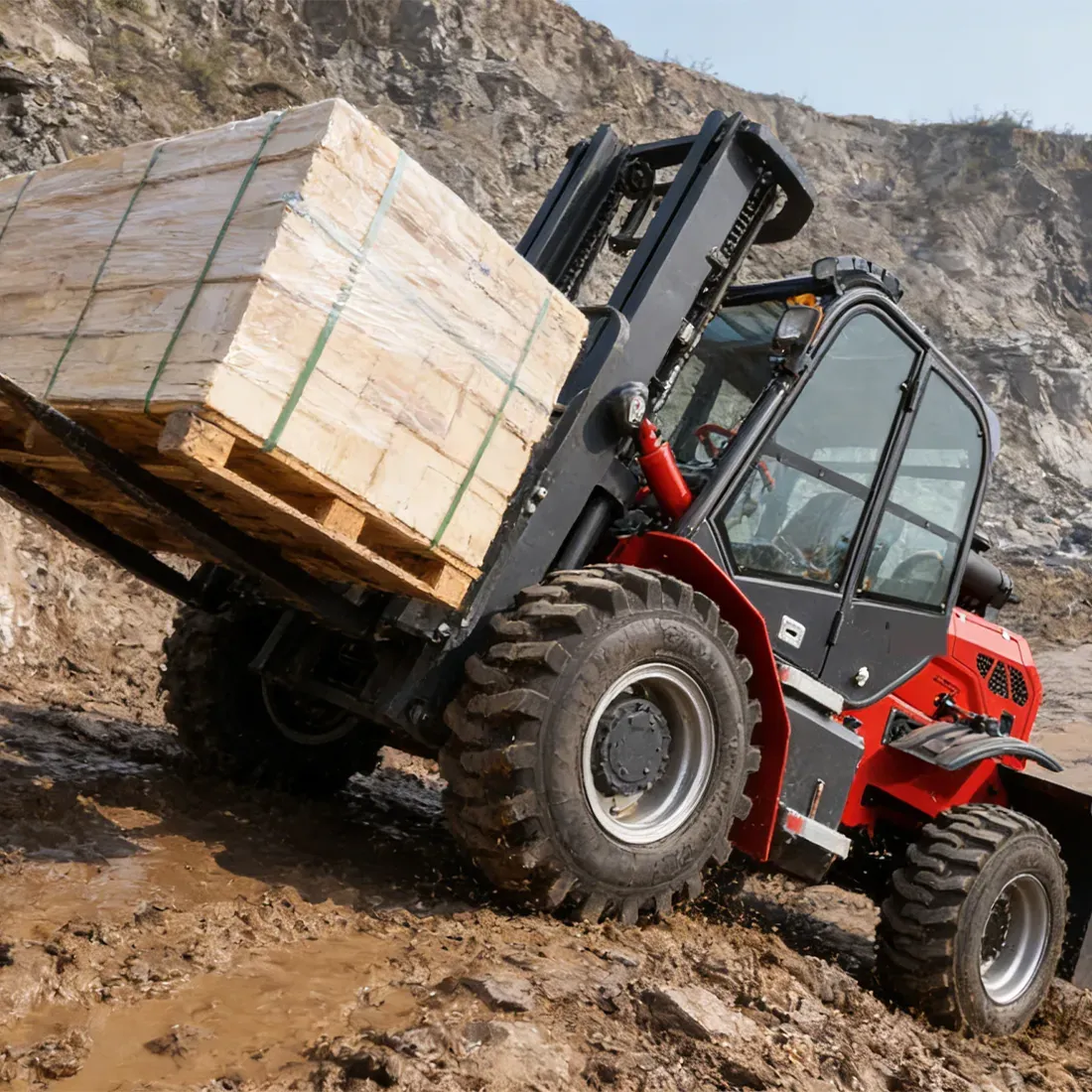
It is built for smooth warehouse floors; our yard photos show test runs, not its working habitat. Container stuffing and dock-to-staging moves are better served by a hand pallet truck or electric stacker, then the reach truck handles put-away from staging into the racking.
What battery options does the CPDR15/20 take?
48 V packs in lead-acid or lithium. Lead-acid suits single-shift sites with overnight charging discipline; lithium takes opportunity charging at breaks and needs no watering, which usually wins for multi-shift or cold-storage work. Either chemistry ships installed, with charger matched to your supply voltage.
What is a double-deep reach truck and when does it make sense?
A double deep reach truck uses a pantograph (scissors linkage) to extend the forks twice, placing a pallet behind the front row of racking. This halves the number of rack faces needed for the same SKU count, roughly increasing storage density by 30–40 % versus single-deep. The trade-off is FIFO discipline: you must manage which SKU occupies the rear slot, because retrieval always pulls the front pallet first. It makes most sense for high-volume, low-SKU-count goods where FIFO is not critical — beverage, bulk consumables, seasonal stock.
What is the difference between a standup reach truck and a walkie reach truck?
A standup (rider) reach truck has the operator riding inside a compartment, standing on a platform on the side or rear of the machine — the right call for full-shift racking work where the operator makes hundreds of cycles. A walkie reach truck drops the ride platform: the operator walks alongside and steers with a tiller handle. Walkie units cost less and take up less space but move slower over a high-cycle shift.
What is a turret truck and how does it differ from a standard reach truck?
A turret truck doesn't turn in the aisle at all — the fork carriage rotates 90° (or the whole mast slews) so the machine places pallets on either side while traveling straight through. That lets turret trucks work aisles as narrow as 1.5–1.8 m, but they typically need wire or rail guidance built into the floor. They deliver the highest storage density of any reach truck type, at the cost of the most infrastructure investment. The CPDR is a standard pantograph reach truck, not a turret machine.
What is an articulated reach truck and do I need floor guidance?
An articulated reach truck bends in the middle: the front section — carrying the forks and load — swings into a narrow aisle while the rear section stays in the cross-aisle. That lets a standard-radius machine work aisles of 1.6–1.8 m without floor rails or wire guidance. The trade-off is a more complex chassis, a higher purchase price, and a lower maximum lift height than a rail-guided turret truck.
How do reach truck controls work?
On the CPDR (standup rider configuration) a joystick on the right controls all hydraulic functions: lift, lower, reach-out, reach-in and sideshift. A thumb rocker operates the horn. Travel direction (forward/reverse) and speed are controlled by a rotary grip or thumb switch on the tiller. On walkie reach truck models, the same hydraulic functions appear as buttons on the tiller head. All controls comply with ISO 3691 ergonomic standards. High reach forklift controls from brands like Yale or BT Reflex add a colour display for battery state, height logging and optional fleet-management telematics — features our CPDR offers as factory options on request.
What is the reach truck turning radius for the CPDR?
The working aisle width — which incorporates the reach truck turning radius, pallet length and safety clearance — is what racking designers actually specify. For the CPDR15/20 with a standard 1,150 mm × 1,150 mm pallet, the working aisle is approximately 2,500–2,700 mm. The geometric turning radius of the chassis itself is roughly 1,500 mm measured at the outer straddle arm. Send your pallet dimensions and racking layout for an exact figure.
How does the CPDR reach truck compare on price to Yale or BT Reflex?
New reach truck price from Yale (RR5725, NR045EC series) or BT Reflex typically falls in the USD 35,000–55,000 range ex-dealer. The CPDR15/20 is quoted factory-direct FOB Qingdao; for the equivalent rider standup configuration with lithium battery, typical pricing is significantly below that range. The gap narrows when you factor import duties, freight and the absence of a local service network — which is why we offer a 18-month warranty and will discuss spare-parts stocking with serious buyers. Reach truck cost over ten years is a better metric than sticker price alone.
Can the CPDR work in cold storage?
Yes, with the cold-storage option: hydraulic fluid rated to −25 °C, sealed electrical connectors, anti-condensation heating for the display and battery management unit, and stainless hardware on exposed fasteners. Lithium battery is recommended for cold storage reach truck duty because lithium maintains charge acceptance at low temperatures better than lead-acid. Specify the coldest aisle temperature in your inquiry.
Request pricing for the Reach Truck
Send your target model, quantity and destination port. Our export team replies within one business day with a quote, lead time and shipping details.
- Phone / WhatsApp: +86 182 5478 8200
- Email: [email protected]
- Jining, Shandong, China