










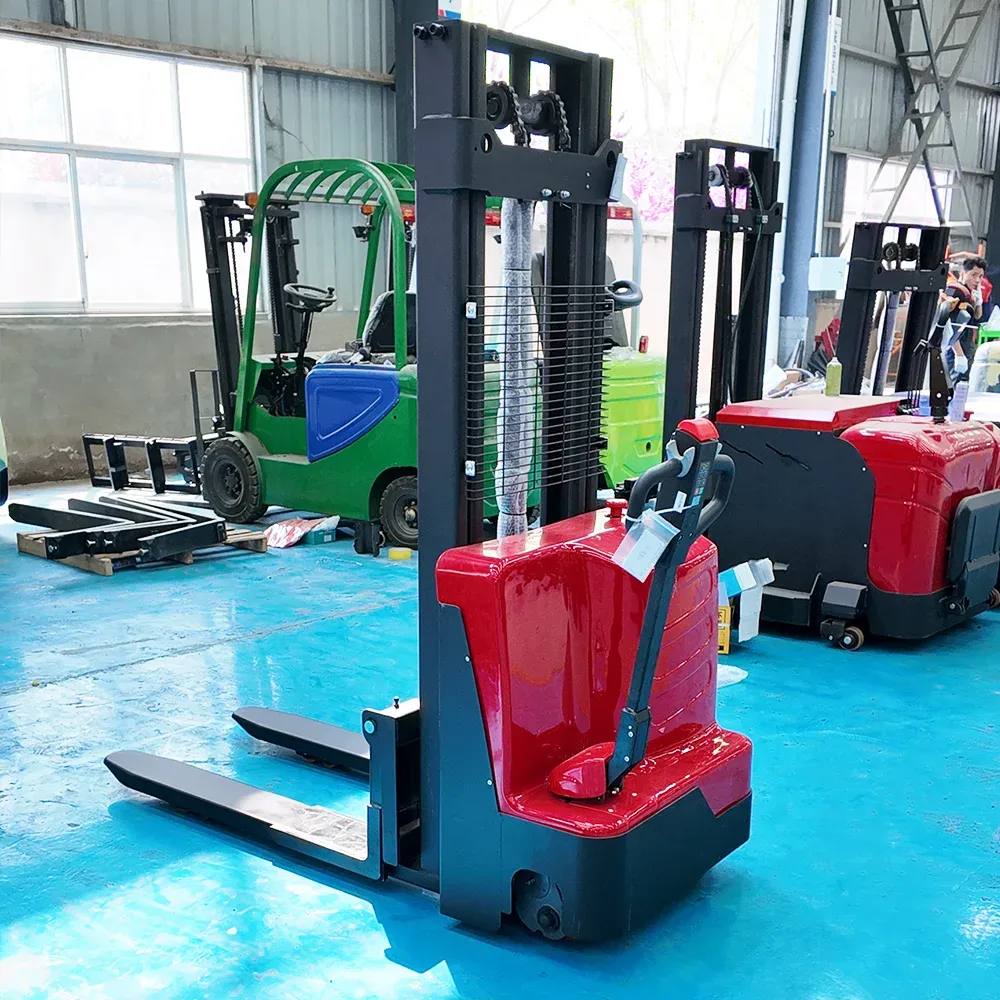
Electric Stacker
Powered travel, powered lift — one walk-behind machine for the whole pallet job · CPDS walkie stacker, 1–2 t, 48 V
The CPDS electric stacker powers both halves of the job: travel and lift run off a 48 V battery, so one operator walks the tiller and the machine does the rest. Rated capacity spans 1,000 to 2,000 kg with masts from 1,600 mm to 5,500 mm in single, two and three-stage builds. It covers the horizontal work of an electric pallet jack, then adds the mast that puts pallets on beams — which is why most small warehouses buy this walkie stacker instead of two separate machines. Built in Shandong, CE marked, 18-month warranty.
Models & technical data
| Item | CPDS series |
|---|---|
| Rated capacity | 1,000–2,000 kg |
| Load center | 500 mm |
| Lift height | 1,600 / 2,000 / 2,500 / 3,000 / 3,500 / 4,000 / 5,500 mm, custom |
| Mast | Single, two or three-stage |
| Battery | 48 V, lead-acid or lithium |
| Travel speed | 5 km/h loaded / 6 km/h unloaded |
| Min. turning radius | 1,500 mm |
| Standard forks | 1,150 × 180 × 50 mm |
| Tires | Solid |
| Service weight | From 510 kg |
| Warranty / certification | 18 months, CE / ISO 9001 |
CPDS series figures from the factory datasheet; mast height, fork size and battery chemistry are configured per order.
Watch it work
Key features
- 1,000–2,000 kg rated capacity at a 500 mm load center (CPDS series)
- Lift heights 1,600–5,500 mm; single, two or three-stage masts to suit the building
- 48 V system with lead-acid or lithium battery — chemistry chosen per duty cycle
- Travel governed to 5 km/h loaded, 6 km/h empty: walking pace by design
- 1,500 mm minimum turning radius for single-aisle work
- Tiller head with horn, lift/lower rockers and emergency reversing pad
- Solid tires and a 510 kg service weight keep shipping and floors easy
Where it works
What the CPDS walkie stacker actually does
One machine, two motions. The drive wheel moves the load at walking pace while the operator steers from the tiller; the lift circuit raises up to 2 t onto rack beams as high as 5,500 mm, mast depending. Because the operator walks, there is no seat, cab or suspension to pay for — the cost sits in the motor, mast and battery, where it belongs.
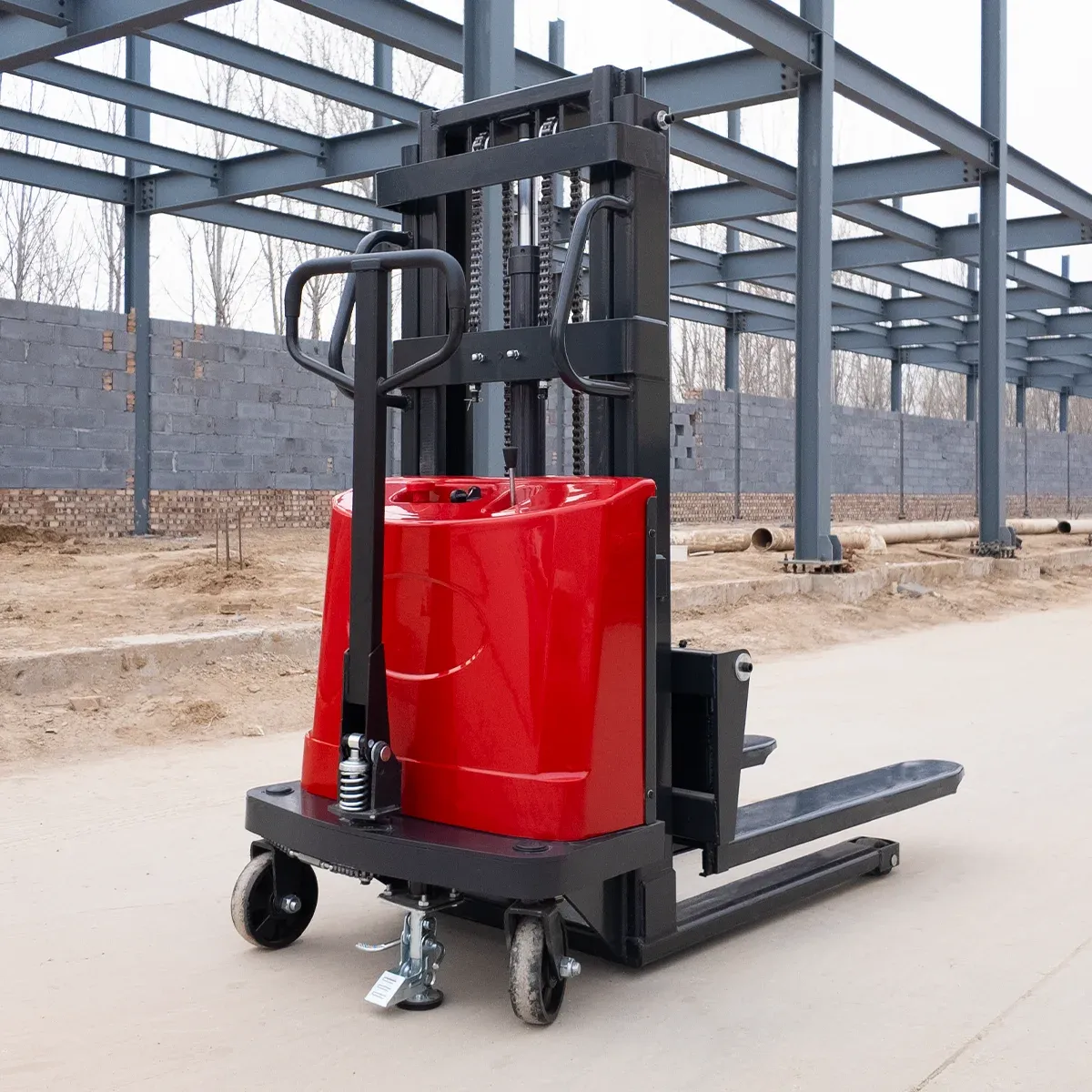
The control head carries the throttle, horn, lift and lower rockers and the reversing pad that stops and backs the machine if the operator is pinned. An emergency stop sits on the chassis. These are the photos in the gallery — production machines on our own floor, with the chain anchors and free-lift cylinder visible.
Electric pallet jack or electric stacker?
An electric pallet jack powers travel but lifts only a few centimeters: it moves pallets, it never stacks them. The walkie stacker does the same horizontal work and adds the mast. If your racking is single-deep and under 5.5 m, one CPDS usually replaces a powered pallet jack plus whatever was doing the lifting.
The reverse is also true and worth saying plainly: if you only ever travel — dock to staging, no racking — a low-lift machine is cheaper and lighter, and a stacker's mast is dead weight. Tell us the workflow and we will spec the cheaper machine when that is the right answer.
Battery choice, charging and upkeep
Lead-acid is the budget pick and tolerates a simple daily-charge routine; lithium costs more upfront but takes opportunity charging at breaks and skips watering entirely. Both come in 48 V packs on this chassis. For single-shift work, lead-acid usually wins on total cost; for double shifts, lithium earns its premium back in uptime.
Routine care is short: tire and fork checks, chain lubrication, and battery discipline. When throughput grows past walking pace, the same control logic carries over to our ride-on stacker with stand-on pedals; when most loads go above 4 m into narrow aisles, look at the CPDR reach truck instead.
Walk-Behind, Semi-Electric or Full-Electric: Which Configuration
Walkie stacker and pedestrian stacker are the same design — the European trade uses "pedestrian stacker" because the operator walks alongside the tiller rather than riding, and both terms describe the CPDS platform on this page.
The control head is built around that walking position. The reversing pad on the tiller face cuts power and reverses the drive the instant it contacts the operator's body, so a pinned operator is pushed clear rather than crushed against a rack upright. A separate emergency-stop button on the chassis kills all circuits regardless of tiller position, for use once the operator has already stepped back. The throttle is a proportional twist or thumb control rather than a stepped switch, so speed builds smoothly from a crawl — useful for threading a loaded pallet into a tight rack bay instead of snapping straight to governed speed.
Choosing between walk-behind, semi-electric and full-electric comes down to lift frequency. If the truck only lifts a handful of times a shift, our semi-electric stacker — listed separately on this site — saves cost by using a manual hydraulic pump for lift while still motorizing travel. Once lifting happens continuously through a shift, the pump becomes the bottleneck and the CPDS full-electric earns back its price difference in operator time. Walk-behind itself remains the right call as long as travel distances stay short enough that walking pace doesn't cost real throughput; once runs get long, that's a signal to look at the ride-on stacker, not to abandon the walk-behind category.
Capacity and specs: 1 ton, 1.5 ton, 2 ton options
The CPDS line runs three standard capacities: 1,000 kg (about 2,200 lb), 1,500 kg (about 3,300 lb), and 2,000 kg (about 4,400 lb), all at the standard 500 mm load center. That's a different class of machine from the 10,000–15,000 lb electric pallet jacks used for ride-on freight handling — those are heavier equipment built for a different job. Most small-warehouse and 3PL work sits comfortably in the 1–2 ton range.
Lift height is the second variable. Masts ship at 1,600, 2,000, 2,500, 3,000, 3,500, 4,000, or 5,500 mm, in single, two, or three-stage free-lift or full-free configurations depending on the build. The 1,600 mm entry mast suits low racking and floor-level staging; the 5,500 mm triple-stage mast serves high-bay warehouses reaching a fourth or fifth beam. Service weight starts from 510 kg, which keeps the machine manageable on loading docks and inside standard containers. Standard forks are 1,150 × 180 × 50 mm; longer or narrower forks are available as a factory build option.
Stacker types: straddle, counterbalance, platform and reach
The CPDS is a straddle stacker by geometry: two outrigger legs extend along the floor and straddle the pallet from the sides, so the machine carries no heavy rear counterweight. That keeps the machine lighter and gives it a tighter turning radius than a counterbalanced design — the tradeoff is that the legs need clear floor space under the pallet, which rules out closed-base pallets and pallets sitting flush against a dock plate.
A counterbalance walkie stacker solves that specific problem: it drops the outrigger legs and carries rear ballast instead, so it can pick up closed-base pallets or work right up against a flush dock where legs can't enter. It's a heavier machine for the same capacity, trading the straddle design's light weight and tight turning radius for that clearance.
Platform and reach stackers are different product categories built off similar chassis logic. A platform stacker replaces the forks with a flat work platform — used for order picking or light assembly at height rather than pallet handling. A reach stacker adds a telescoping carriage that extends the forks forward into the rack before lifting, letting the truck work deep racking without driving fully into the aisle; our CPDR reach truck is the dedicated product for that job. The CPDS itself does not reach — it lifts straight up in the spot where it's parked.
Applications: warehouse, narrow aisle, cold storage and rough terrain
The core use is racked-warehouse work — dock to rack, put-away and picking. For narrow-aisle operations, the CPDS's 1,500 mm turning radius suits standard single-deep racking in aisles down to roughly 2.5 m without needing dedicated very-narrow-aisle equipment.
Cold storage is a common deployment. The 48 V lithium pack holds its capacity better than lead-acid in sub-zero temperatures, and the fully sealed drive housing handles the condensation that forms when the machine moves between a cold room and an ambient dock. Ask for the cold-room battery spec when ordering for this environment. Distribution centers and 3PL operations run the same machine for inbound put-away and outbound pick-and-stage — one truck covers both without a change-over.
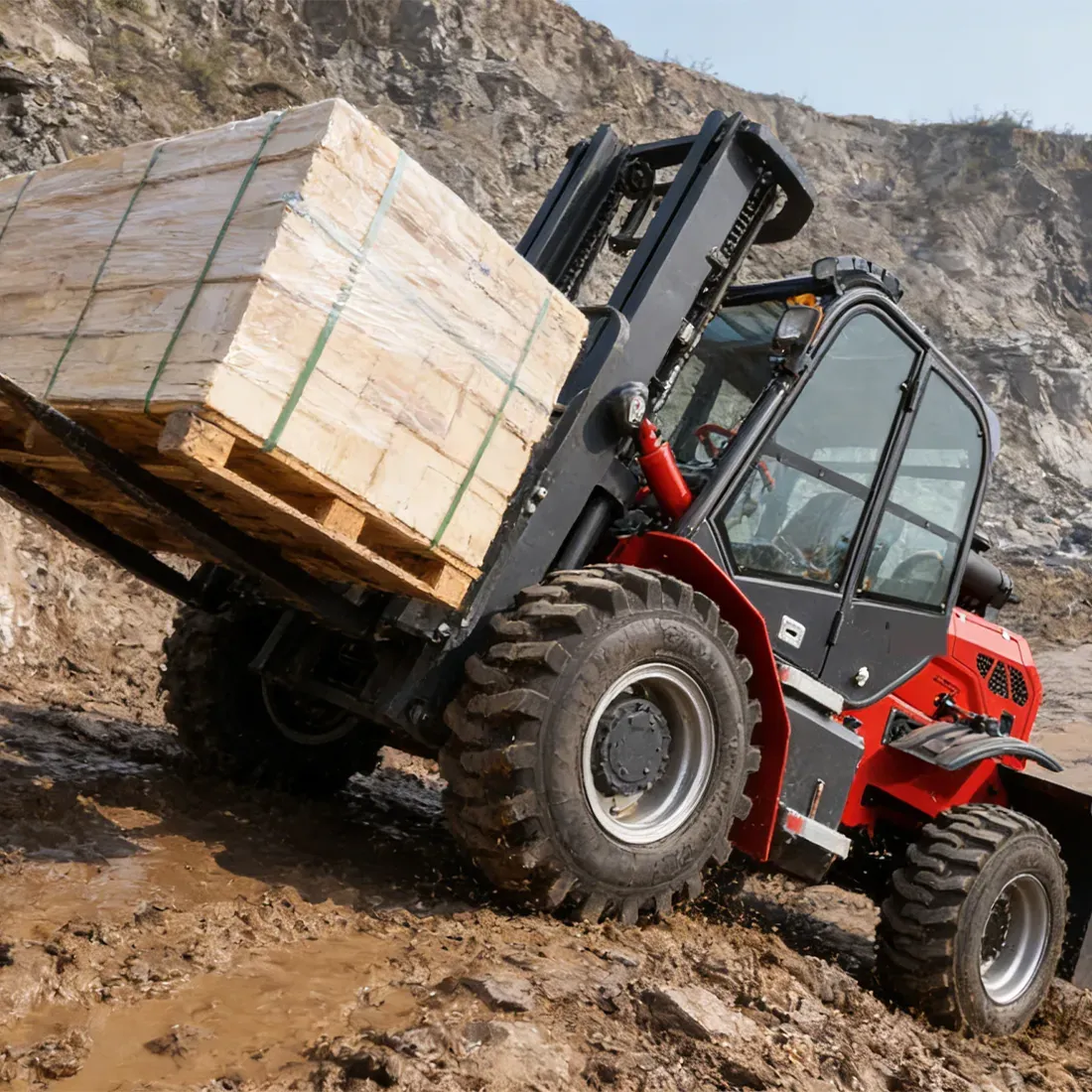
Rough terrain is an honest conversation. The standard CPDS rides on solid tires and is built for smooth concrete or hard-packed floors — nothing else. Outdoor staging areas, gravel, or uneven yards need pneumatic tires, a higher-clearance chassis, and reinforced forks, which is a different build quoted to order, not the same machine on bigger wheels. Tell us the surface and load and we'll specify the right build rather than overpromise the standard one.
Factory-Direct Pricing
Factory-direct pricing removes two layers that sit on top of a distributor's sticker price: the import markup on machines shipped in from overseas, and the dealer margin added when a domestic distributor resells them. The steel, motor and electronics are the same regardless of which layers get added on top — what changes is how many hands the machine passes through before it reaches your dock.
Container-load orders push the unit cost down further, since freight and paperwork spread across more units. Mixed containers combining stackers with reach trucks and hand pallet trucks are common and straightforward for us to arrange.
For buyers benchmarking price, Yale, Big Joe and Clark are the usual reference points — well-known brands with well-known distributor pricing. We aren't a reseller of any of them; we're the factory. Send your spec and delivery port and we'll return an FOB Shandong quote you can compare directly against those numbers.
Where to buy and what electric stacker prices look like
We're a Shandong factory with direct export experience, and the price we quote — for any capacity, mast height, or battery chemistry — is the manufacturing cost plus margin, with no distributor layer added on top.
Retail channels that list stackers under well-known brand names are often sourcing from factories like ours; the gap between their listed price and a direct FOB quote is mostly the supply chain in between. Ordering by the container improves the unit economics further. We ship stacked and shrink-wrapped on wood bases, and mixed containers combining stackers, reach trucks and hand pallet trucks are something we handle routinely.
To get a number, send us your capacity, lift height, and delivery port. We return a datasheet and FOB price within one business day, whether you're ordering a single unit or a full container.
Battery, motor, wheels and key components
The 48 V battery is the largest variable in the spec. A lithium battery lasts 1,500–2,000 charge cycles to 80% capacity and accepts partial charging without memory effect; a lead-acid pack costs less upfront and is serviceable with basic tools. Both fit the same battery compartment on the CPDS chassis. Replacement batteries use the same 48 V form factor as the original — confirmed on the datasheet we send with the machine.
The drive motor is a brushless DC unit coupled to the drive wheel through a reduction gearbox. It provides regenerative braking on descent — energy feeds back to the battery rather than burning off as heat. The travel controller limits loaded speed to 5 km/h; the same throttle signal controls direction, making the machine simple to learn for new operators. Wheels are solid polyurethane or solid rubber on the drive and load positions — no puncture risk on warehouse floors with nail debris. Standard forks are 1,150 × 180 × 50 mm; the chain, anchors and free-lift cylinder are visible in the gallery photos.
How to operate, types overview, and use cases
Operating the CPDS follows a short learning curve: power on, select direction at the tiller throttle, steer by the handle, and use the lift/lower rockers to raise and position the load. The operator walks beside the tiller at the machine's governed 5–6 km/h — never riding, since this is a walk-behind design. Stand-on and ride-on variants exist as separate products for operations where walking pace becomes the bottleneck.
The broader category breaks into four types: walk-behind (the CPDS), rider/center-rider (stand-on or seated), reach truck (extending carriage for deep racking), and very-narrow-aisle (guided induction). The walk-behind covers roughly 90% of small to mid-warehouse operations under 5,500 mm lift and 2,000 kg capacity. Automated and AMR platforms are a separate, guided or autonomous product category — not this machine — and we'll direct you honestly to the right supplier rather than misrepresent the CPDS as something it isn't.
Related Buying Guides
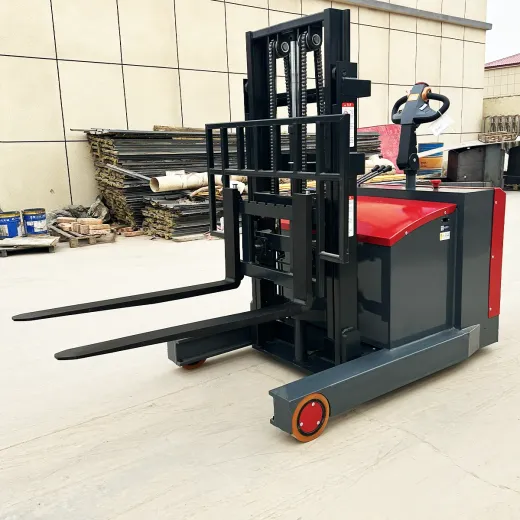
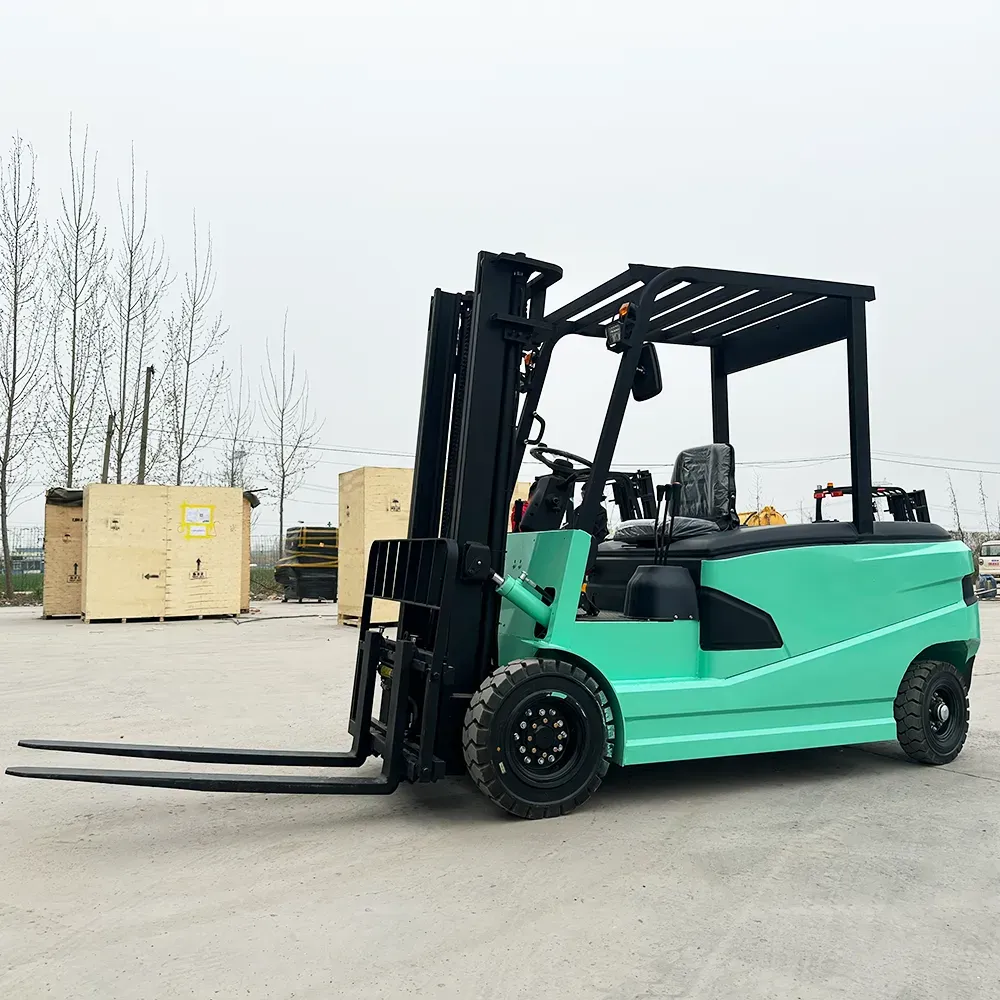
Pallet Jack vs Stacker vs Reach Truck: Which One Do You Need?
How to choose between a pallet jack, a stacker, a reach truck and a full forklift — where the pallet jack forklift comparison matters, and where the best reach truck or narrow aisle forklift fits — based on lift height, throughput and aisle width.
Read more →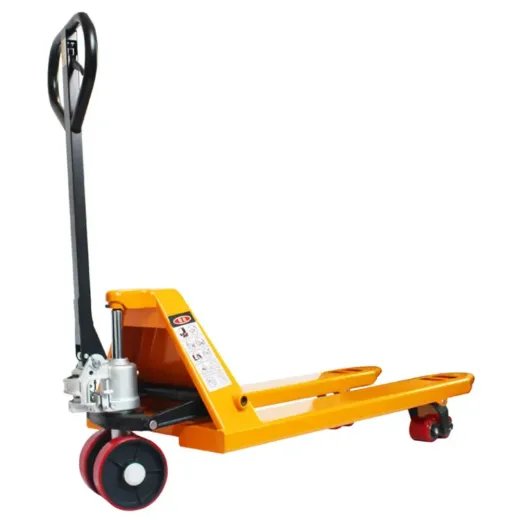
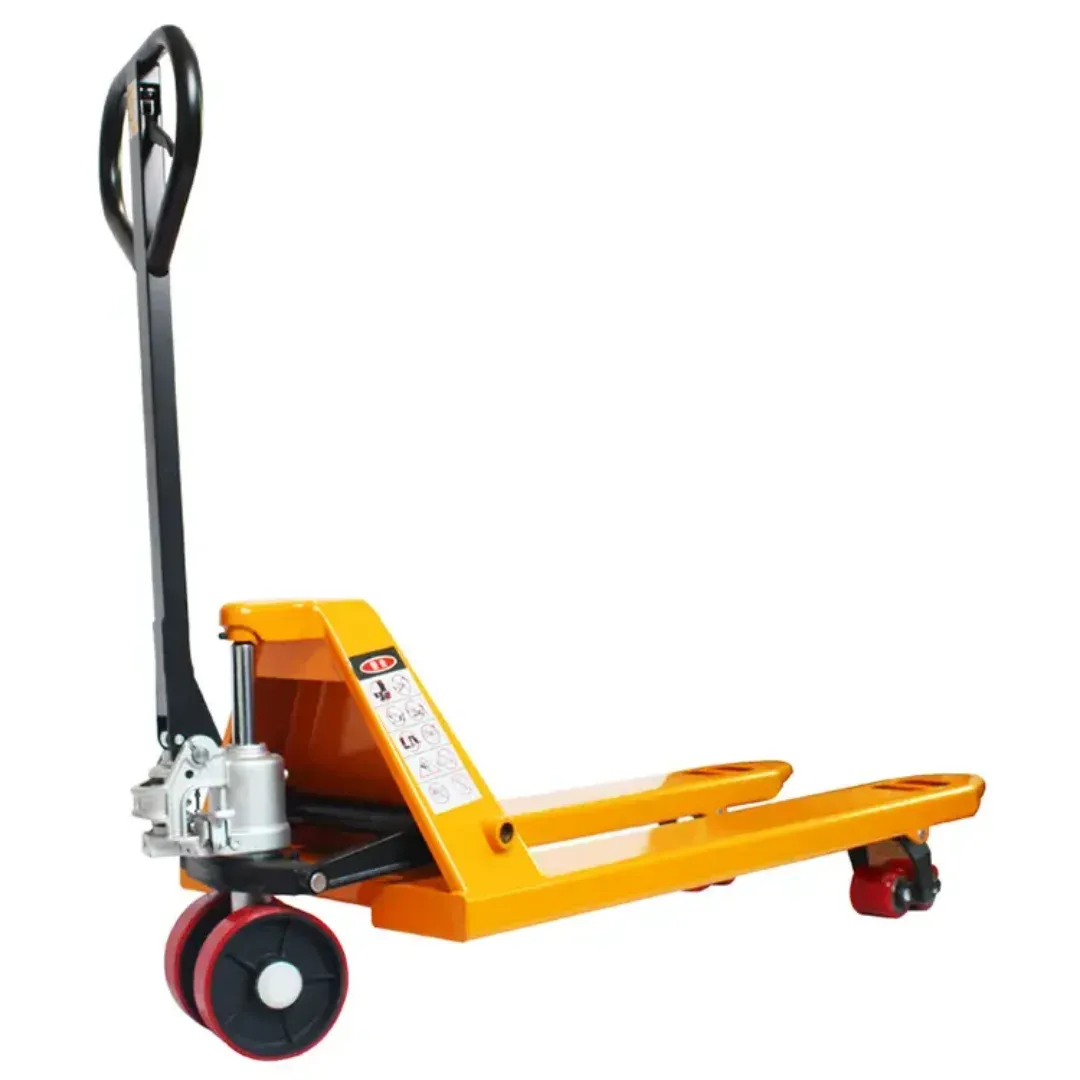
How to Choose a Pallet Jack: Manual vs Electric vs Scale Models
A practical buyer's guide to picking the best pallet jack — manual hand pallet truck, electric pallet jack, or a model with a built-in weighing scale — covering types, operation, maintenance and floor requirements.
Read more →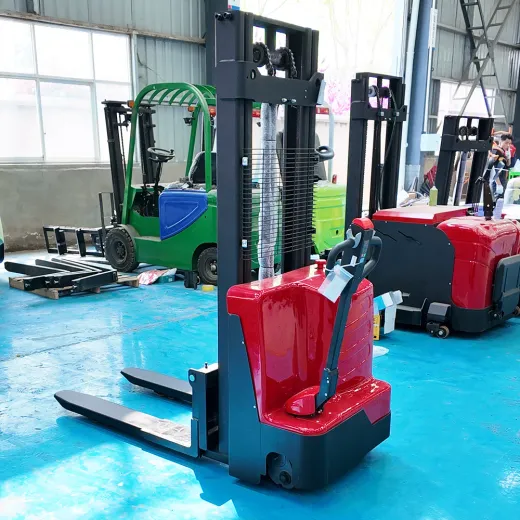
Autonomous Pallet Movers & AGV Pallet Jacks: What Warehouses Need to Know
Before spending six figures on an autonomous pallet mover or AGV pallet jack system, read this guide. We break down how the technology works, true ROI timelines, and why most small-to-mid-size warehouses still get better returns from electric stackers and manual pallet trucks.
Read more →Common questions
What is the difference between an electric pallet jack and an electric stacker?
An electric pallet jack powers travel but lifts a pallet only clear of the floor. An electric stacker adds a mast, so the same walk-behind machine also puts loads on racking — on the CPDS, up to 5,500 mm and 2,000 kg. Buy the jack for pure transport, the stacker when anything must be stacked.
How high can a walkie stacker lift a full pallet?
CPDS masts run from 1,600 to 5,500 mm. The honest figure is capacity at height, not maximum height: rated load falls as the mast extends, so a 2 t machine does not place 2 t at the top beam. Send your rack heights and load weights and we return the residual-capacity table.
Should I choose lead-acid or lithium for an electric pallet stacker?
Single shift with overnight charging: lead-acid, it is cheaper and proven. Two shifts, cold rooms or no battery-room discipline: lithium — opportunity charging at breaks, no watering, longer cycle life. Both fit the same 48 V chassis, so you can standardize either way across a fleet.
How fast does the CPDS electric walkie stacker travel?
5 km/h loaded and 6 km/h unloaded — deliberately held to a brisk walking pace, since the operator is on foot beside the tiller. If your runs are long enough that walking speed costs real time, that is the signal to move up to the stand-on ride-on stacker rather than chase a faster walkie.
What aisle width does an electric stacker need?
The CPDS turns within a 1,500 mm radius, but working aisle depends on your pallet size and approach angle, not the truck alone. As a rule the machine plus a 1,200 mm pallet wants roughly a 2.3–2.5 m aisle for comfortable right-angle stacking; send a rack layout and we confirm against the exact mast and fork build.
What is the difference between a straddle stacker and a counterbalance walkie stacker?
A straddle stacker uses two outrigger legs that straddle the pallet, so the machine needs little to no rear counterweight — it is lighter and turns tighter. A counterbalance walkie stacker (counterbalanced stacker) has no legs, relying on rear ballast, which suits closed-base pallets and flush dock plates where legs cannot enter. The CPDS is a straddle design. Tell us your pallet type and floor situation, and we recommend the right geometry.
What is a semi-electric stacker versus a full electric stacker?
A semi-electric stacker powers the drive travel by motor but uses a manual hand pump for lifting. A fully electric stacker motorizes both travel and lift. The CPDS is fully electric. Semi-electric is lower cost and simpler but requires the operator to pump the lift manually — suited for infrequent lifting or tight budget applications.
Can the electric stacker handle rough terrain or cold storage?
Cold storage: yes, specify lithium battery for sub-zero environments, and the sealed drive handles condensation when moving between zones. Rough terrain: no — the CPDS rides solid tires for smooth concrete. A true rough terrain pallet stacker or all terrain pallet stacker needs pneumatic tires and a higher-clearance chassis, which we quote separately. Tell us your floor type before ordering.
How does the electric stacker price compare to brands like Yale, Big Joe or Clark?
Yale walkie stacker, big joe walkie stacker, and clark walkie stacker are distribution-channel prices: factory cost plus import duties plus dealer margin. Our walkie stacker price and electric pallet stacker price are Shandong FOB — the factory number with no domestic reseller layer. On a container order, the gap is significant. We do not claim to be or resell any of those brands; we are the manufacturer competing on price and warranty terms.
What is the electric stacker price range, and can I order a single unit?
Electric stacker prices vary by capacity (1 t, 1.5 t, 2 t), mast height, and battery chemistry. We quote FOB Shandong per configuration — send capacity, lift height, and your delivery port for a specific number within one business day. Single units can be ordered; mixed container loads with pallet trucks and reach trucks are common and reduce per-unit freight.
Is a walkie stacker the same as a walkie forklift or walk-behind forklift?
Broadly yes — both terms describe a pedestrian-operated lift truck where the operator walks behind the tiller rather than riding. The difference is usually mast height: "walkie forklift" sometimes refers to a counterbalanced design with a full mast, while "walkie stacker" typically implies the straddle or leg-based design. The CPDS is a straddle-design walkie stacker.
Request pricing for the Electric Stacker
Send your target model, quantity and destination port. Our export team replies within one business day with a quote, lead time and shipping details.
- Phone / WhatsApp: +86 182 5478 8200
- Email: [email protected]
- Jining, Shandong, China