










Semi Electric Stacker
Battery does the lifting, you do the steering — stacking on a hand-truck budget · Powered lift, manual travel pallet stacker
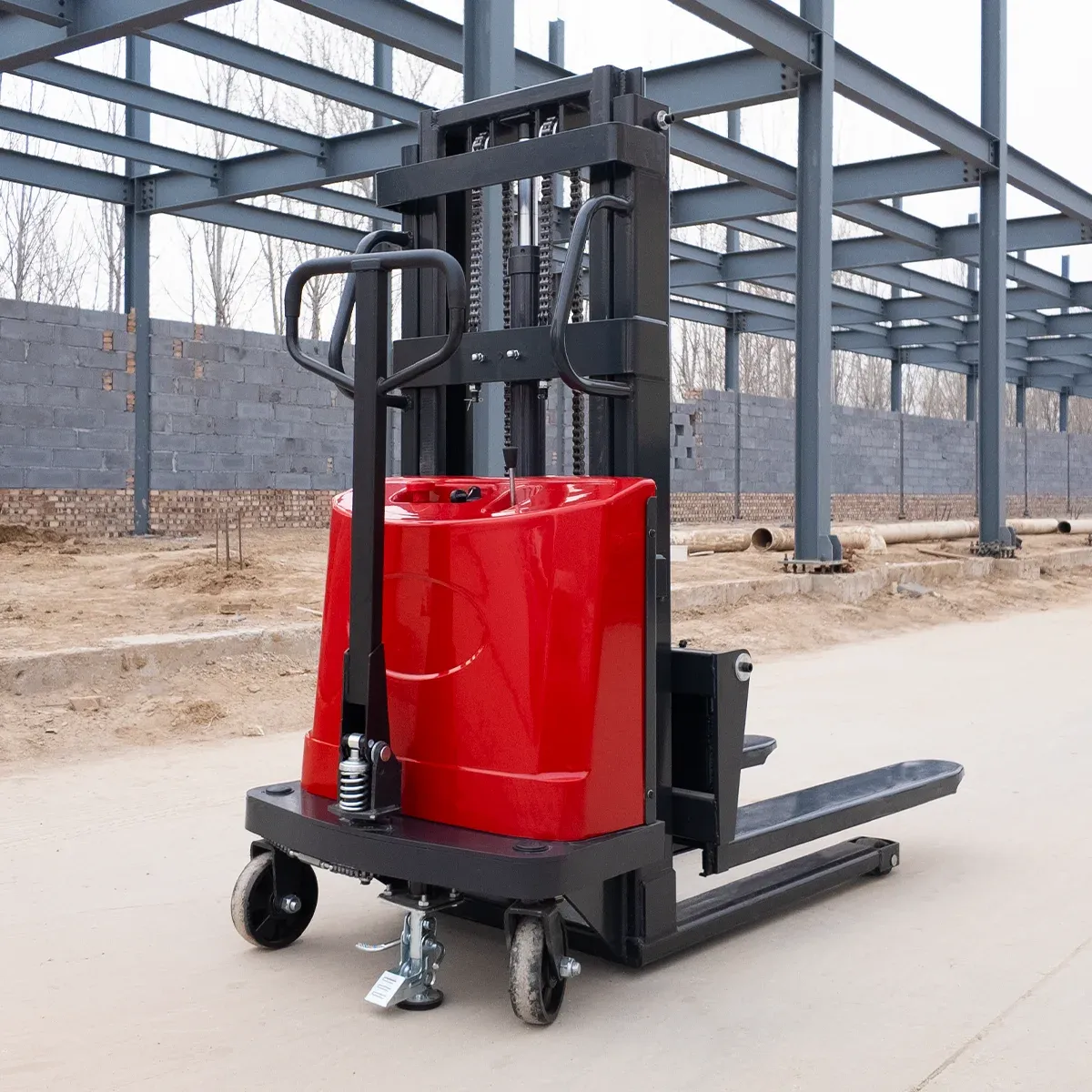
A semi electric stacker splits the work: the battery lifts, the operator pushes. For plants that stack a few pallets an hour rather than a few a minute, that trade keeps the price near a manual machine while cutting out the cranking that wears people down. Our build pairs a welded two-stage mast and electric hydraulic power unit with straddle legs and width-adjustable forks, so closed-bottom pallets and odd crates are workable, not a workaround. It is also the natural step up once a manual pallet stacker starts feeling slow.
Models & technical data
| Item | Specification |
|---|---|
| Lift drive | Battery-powered hydraulic unit, push-button control |
| Travel | Manual push/pull — no drive motor (semi electric) |
| Mast | Welded two-stage, chain-over-cylinder |
| Forks | Width-adjustable over straddle legs |
| Load capacity | 1,000–1,500 kg |
| Lift height | 1.6–3.0 m (up to 3.5 m option) |
| Battery | Lithium-ion |
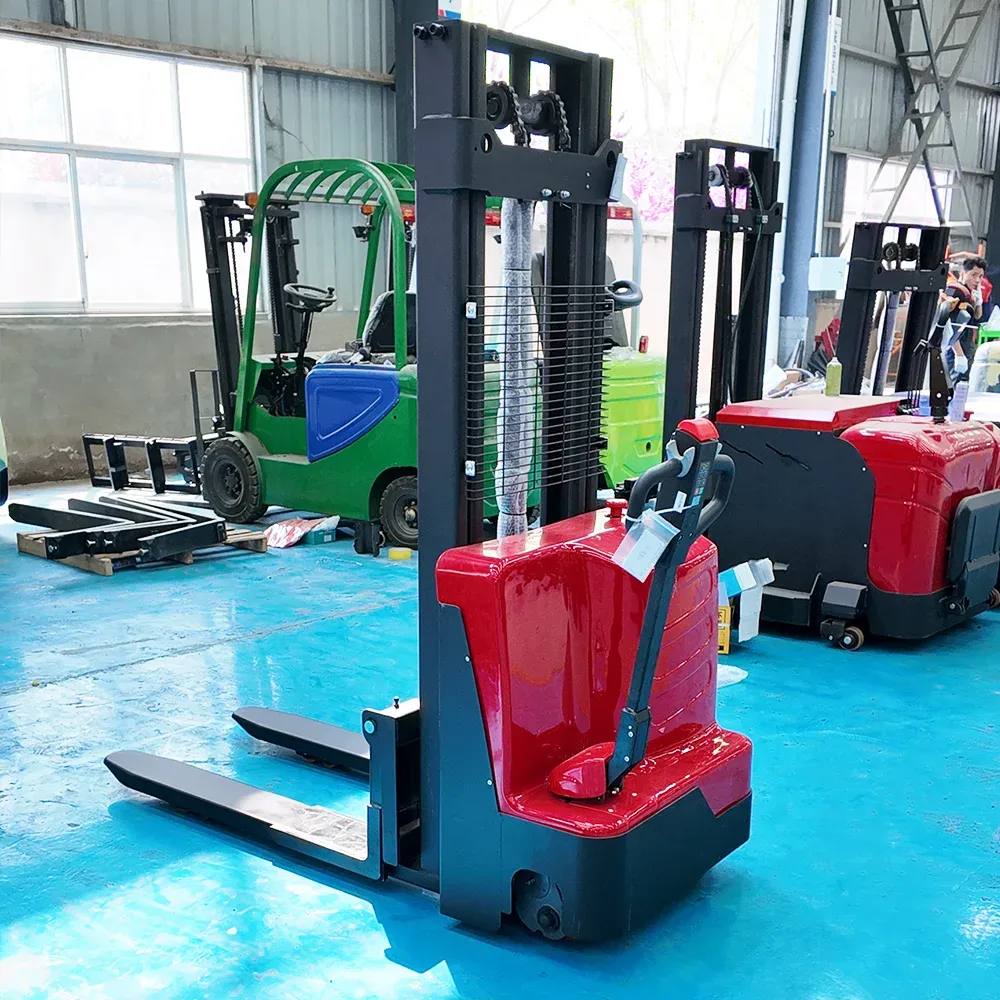
| Finish | Red / black powder coat as pictured, OEM colors |
The rows below describe the build as pictured; capacity and lift height are offered across the ranges shown and fixed per order. Full datasheet ships with the quotation.
Key features
- Electric hydraulic lift — push-button raising instead of dozens of pump strokes per pallet
- Manual travel keeps the driveline simple: no traction motor, controller or drive repairs
- Width-adjustable forks over straddle legs take Euro pallets, closed pallets and crates
- Welded two-stage mast with chain-over-cylinder lifting, built in our own frame shop
- Spring-return tiller for controlled steering in tight bays
- Shortest maintenance list in the powered range: battery, pump and seals
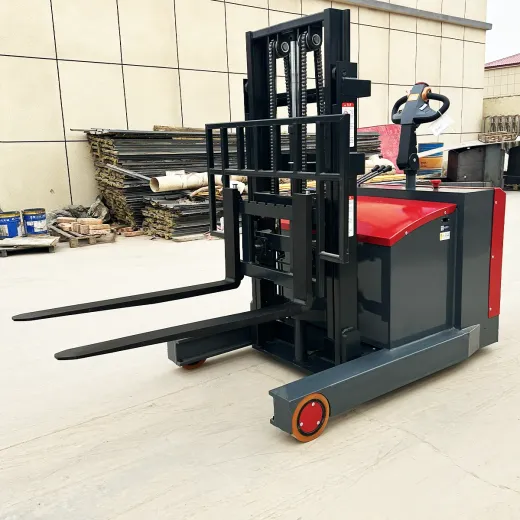
- Yard photos on this page are our machines outside the workshop — not studio renders
Where it works
Where a semi electric stacker earns its keep
Run the duty-cycle math before you spend on full power. If an operator stacks 10 to 30 pallets a day, lifting is the part that hurts — pushing an unloaded mast 20 meters is not. A semi electric pallet stacker removes the hard half of the job for roughly the price gap between a good hand pump unit and a cheap powered one.
That is why these go to machine shops, back-of-store warehouses and container destuffing crews: places where a pallet stacker waits more than it works. The pump motor only runs while the forks move, so a charge lasts shifts, not hours, and there is no traction system to service when the machine sits idle for a week.
Straddle legs and adjustable forks — the detail that decides
Stackers carry the load between outrigger legs, which is fine until the pallet has a closed bottom that the legs cannot enter. Our semi electric straddle stacker answers that with width-adjustable forks riding over the straddle legs: spread the legs around the pallet, set the forks to the stringers, and lift.
The same geometry takes crates, mesh boxes and non-standard pallets that a fixed-fork machine refuses. Check the gallery — the wide black fork carriage in the photos is that adjustable arrangement on a real unit in our yard, with the lift chains and cylinder in plain view.
When to skip semi and go fully powered
Be honest about throughput. Past roughly 30 to 40 pallet moves a day, or any travel run longer than a short aisle, manual pushing becomes the bottleneck and operators start parking loads at floor level to avoid trips. At that point the CPDS electric stacker — powered travel and lift — repays its premium fast; it has its own page here with full factory figures.
Going the other way: if you lift twice a week, a manual pallet stacker or even a high-lift hand truck may be all you need, and we will say so in the quotation. Selling the wrong machine costs us a repeat customer, which is bad math for a factory.
Semi electric stacker price and what we ship
The semi electric stacker price question comes down to two things: lift height and battery chemistry. A 1.6 m lithium-ion unit at 1,000 kg sits at one end; a 3.5 m AGM build at 1,500 kg sits at the other, and the gap between them is larger than most buyers expect when they first ask for a quote. We quote against your actual spec — mast height, rated load, fork travel, battery type — rather than a catalogue number, because a number without those parameters is meaningless.
In India, buyers often compare us against Godrej and Voltas, who sell the same basic layout — powered lift, manual travel, straddle legs — through local dealer networks. Our factory-direct price sits below their retail price because there is no distributor adding margin; you deal with the plant. Shipping to an Indian port adds lead time but rarely adds cost once you hit a half-container or full-container quantity.
The semi electric stacker manual we ship is bilingual and covers installation, daily checks, battery maintenance and fault codes for the control board. A paper copy goes in the crate; a PDF version is on request with the quotation. If you need a spare-parts manual in addition to the operator manual, flag it when you inquire and we include the exploded drawings.
Related Buying Guides
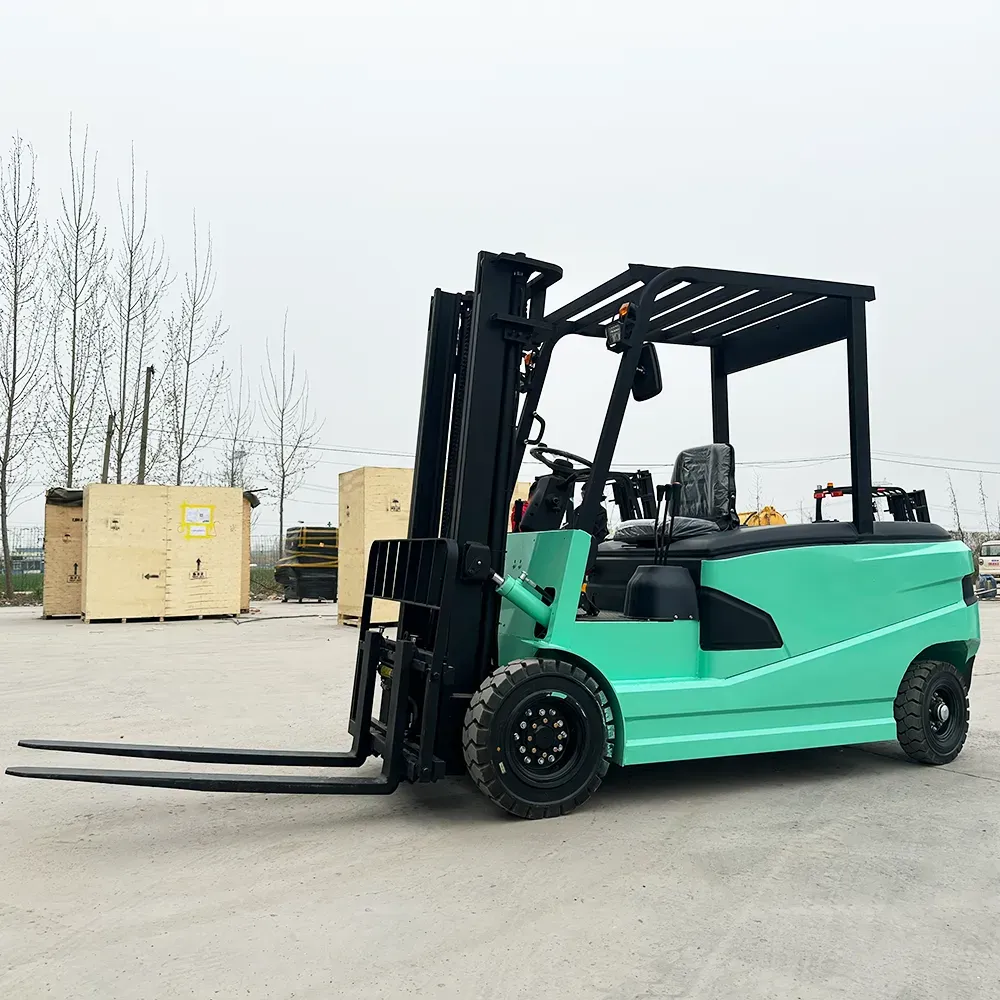
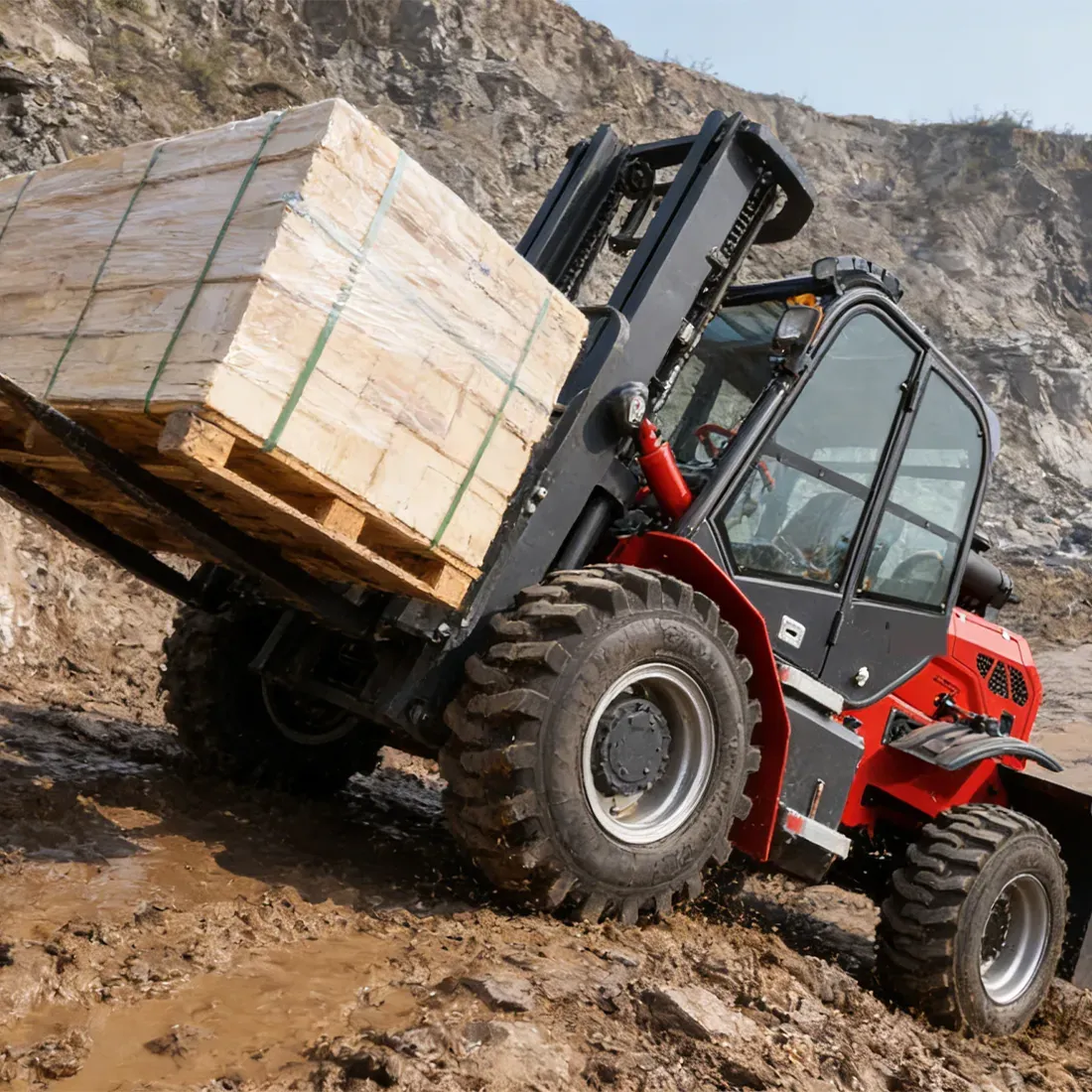
Pallet Jack vs Stacker vs Reach Truck: Which One Do You Need?
How to choose between a pallet jack, a stacker, a reach truck and a full forklift — where the pallet jack forklift comparison matters, and where the best reach truck or narrow aisle forklift fits — based on lift height, throughput and aisle width.
Read more →
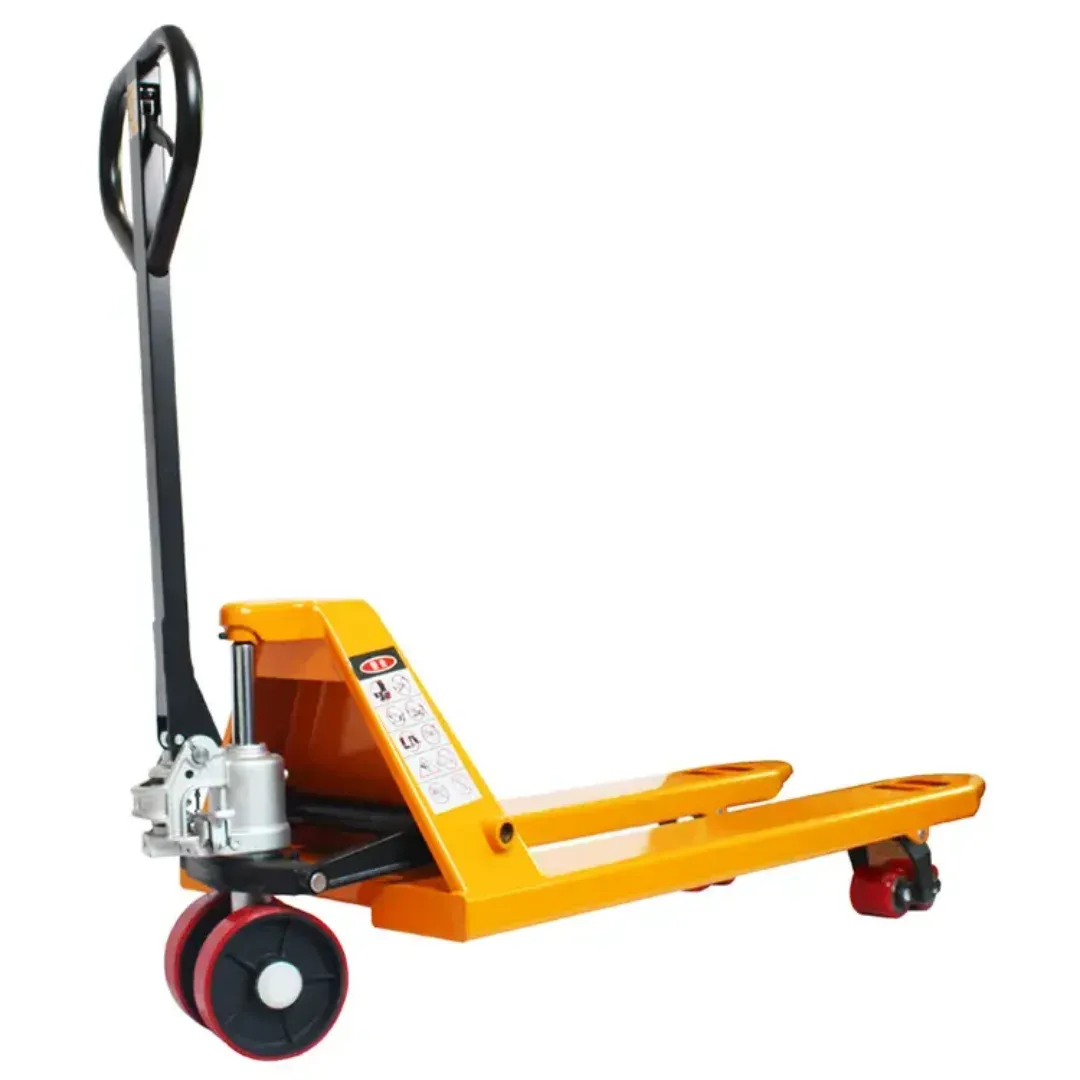
How to Choose a Pallet Jack: Manual vs Electric vs Scale Models
A practical buyer's guide to picking the best pallet jack — manual hand pallet truck, electric pallet jack, or a model with a built-in weighing scale — covering types, operation, maintenance and floor requirements.
Read more →Common questions
What is a semi electric stacker and how does it work?
It is a pallet stacker with battery-powered lifting and manual travel. The operator pushes and steers with the tiller, then raises the forks with a button instead of pumping. You get powered stacking at close to manual-machine cost, with far less to maintain than a fully powered unit.
Semi electric vs fully electric pallet stacker — which should I buy?
Count daily moves and travel distance. Under about 30 pallets a day over short runs, semi electric is the better money. Above that, or with long aisles and ramps, manual pushing becomes the bottleneck — step up to our CPDS electric stacker with powered travel.
Can a semi electric straddle stacker pick up closed-bottom pallets?
Yes — that is what the adjustable-fork-over-straddle-leg layout is for. The legs spread around the pallet instead of entering it, and the forks set to your stringer spacing. Send your pallet type with the inquiry and we confirm leg and fork settings before production.
How high can your semi electric pallet stacker lift?
Mast height is configured per order, so we quote it against your racking rather than print one number here. Tell us top-beam height and load weight; remember rated capacity falls as lift height rises, so the honest spec is capacity at your height, which we state in the datasheet.
Is a semi electric stacker worth it over a manual pallet stacker?
If anyone lifts more than a handful of pallets daily, yes — hand-pumping a 1 t load to shoulder height is the task operators quietly stop doing. The semi electric unit removes that strain for a modest price step while keeping the simple manual drivetrain.
What does a semi electric stacker price typically include, and how do I get a quote?
The semi electric stacker price we quote covers the machine as configured: mast, forks, battery, charger and the operator manual. Freight, import duties and any local certification are separate. To get a real number, send us your lift height, load, battery preference (lithium-ion or AGM) and destination port — we reply with a line-item build sheet, not a range.
How does your semi electric stacker compare with a Godrej or Voltas semi electric stacker?
Godrej and Voltas are solid local brands sold through Indian dealer networks, using the same basic layout — powered lift, manual travel, straddle outriggers. Our factory-direct price is below their retail price because you buy direct from the plant. Lead time to an Indian port is typically 30–45 days; a local brand ships faster but costs more. Tell us which spec you priced with them and we compare honestly.
What is in the semi electric stacker manual, and is a PDF available?
The semi electric stacker manual covers pre-delivery inspection, daily and weekly maintenance, battery charging procedure, fault codes for the control board, and a basic parts list. A bilingual paper copy is packed in every crate. If you need the PDF version or the full spare-parts exploded-drawings manual, ask when you inquire and we attach both to the quotation email.
Request pricing for the Semi Electric Stacker
Send your target model, quantity and destination port. Our export team replies within one business day with a quote, lead time and shipping details.
- Phone / WhatsApp: +86 182 5478 8200
- Email: [email protected]
- Jining, Shandong, China