









Pallet Jack vs Stacker vs Reach Truck: Which One Do You Need?
2026-06-12
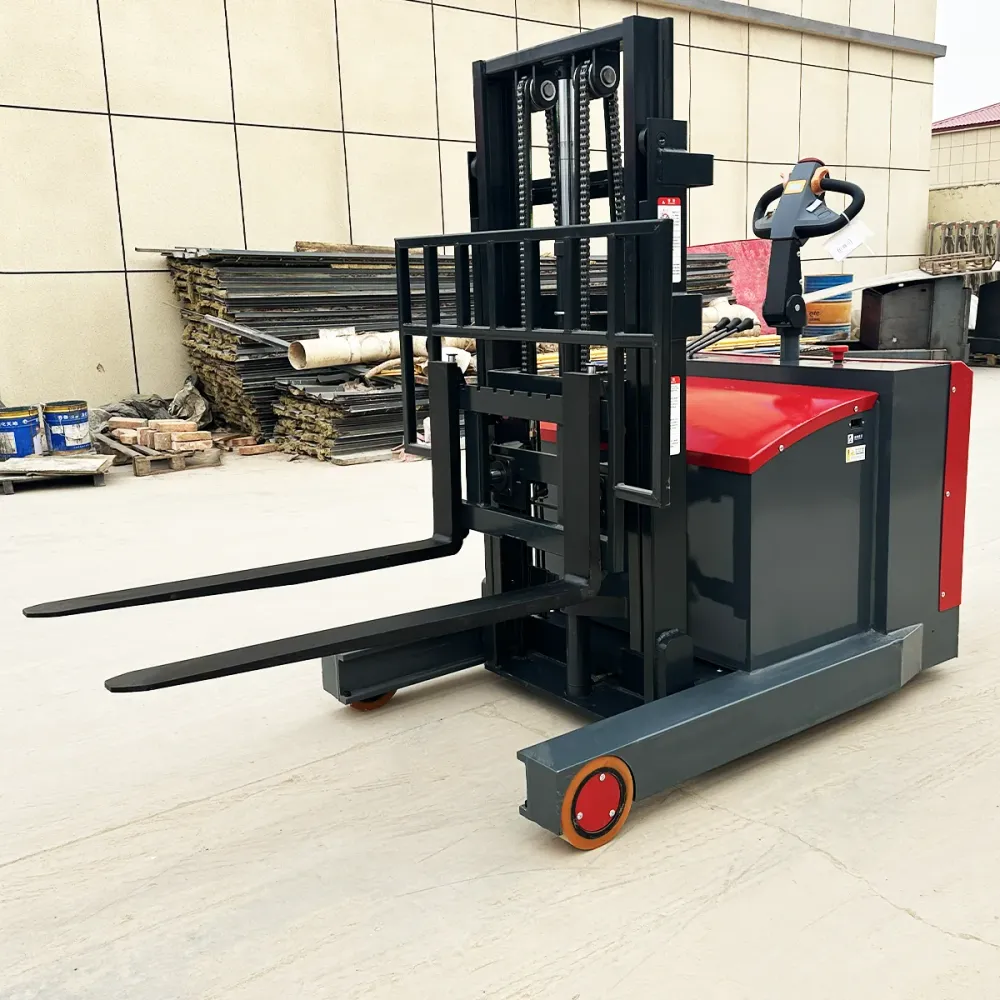
How to choose between a pallet jack, a stacker, a reach truck and a full forklift — where the pallet jack forklift comparison matters, and where the best reach truck or narrow aisle forklift fits — based on lift height, throughput and aisle width.
Pallet jack, stacker, reach truck — three machines that all move pallets, three very different price tags, and a lot of buyers who order the wrong one because the names blur together. The thing that separates them isn't power or size. It's one question: how high do you need to lift, and how often?
Answer that honestly and the choice almost makes itself. Here's the family laid out from lowest to highest, so you can find where your operation actually lands.
Pallet jack: move along the floor, don't lift
A pallet jack lifts a pallet just enough to clear the floor and roll it somewhere else. That's the whole job. It doesn't stack and it doesn't put anything on a rack. If everything you do is ground-level — receiving, loading, shuffling pallets across a flat floor — a hand pallet truck is all you need and anything more is wasted money. The split inside this class is just manual versus electric: a manual unit is fine for short bursts on a flat floor, while an electric one earns its price once one person is moving pallets all shift or there are ramps to deal with.
The moment you have to put a pallet up, even one pallet onto a second one, you've reached the limit. That's where a stacker comes in.
Stackers: the bridge between floor work and racking
A stacker lifts pallets up — onto a second pallet, a workbench, or low racking — and the category splits by how much help the machine gives the operator. Pick the lightest one that covers your real lift:
- Manual / semi-electric — a semi-electric stacker powers the lift with a battery while the operator pushes and steers by hand. Good for low frequency, modest heights, and tight budgets where pumping a fully manual lift all day isn't realistic.
- Full electric, walk-behind — an electric stacker drives and lifts on battery; the operator walks alongside. This is the volume sweet spot for stacking at moderate heights without the cost of a sit-down truck.
- Ride-on — a ride-on stacker adds a platform or seat so the operator travels with the truck. Worth it when travel distances between lifts are long enough that walking is the bottleneck.
Stackers cover a huge share of real warehouse work. Most operations that think they need a forklift actually need a stacker.
Reach truck: height and density without a wide aisle
When pallets go up high and the racking is packed tight, you're into reach-truck territory. A reach truck uses a pantograph or moving mast to extend the forks forward into the rack, then pulls the load back over the wheelbase to travel. That single trick is what lets it work tall racking in a narrow aisle that a counterbalance forklift could never turn in.
The best reach truck for a given site is the one whose maximum lift height clears your top beam with margin and whose residual capacity at that height still covers your heaviest pallet — capacity always drops as the forks go up, so read the load chart, not just the headline rating.
Where the narrow aisle forklift fits
If your aisles are genuinely tight and your racking is tall, the reach truck is effectively the best narrow aisle forklift answer for most operations — it's purpose-built for exactly that geometry. The deciding numbers are your aisle width and your top storage height. Measure both before you shop, because they set the floor under everything: a truck that can't turn in your aisle or can't reach your top beam is the wrong truck no matter how good it is on paper.
One more thing the load chart won't tell you: the deeper the racking and the higher the lift, the more the operator depends on mast visibility and fine control to place a pallet cleanly. That's a real difference between a truck that's quick to learn and one that slows every put-away, so it's worth checking on the machines you shortlist rather than treating all reach trucks as interchangeable.
Pallet jack vs forklift: when does a full sit-down truck make sense?
The pallet jack and forklift comparison comes up more than you'd expect, and it's worth being direct: a full sit-down counterbalance forklift is the right answer in fewer indoor situations than buyers assume. A pallet jack forklift setup — running both machines on the same floor — makes sense when you have outdoor or uneven-surface work requiring a counterbalance truck while indoor floor-level moves stay with a pallet jack. The forklift and pallet jack split also appears when a business has loading dock and trailer work (forklift) plus internal distribution (pallet jack) — two tasks, two tools, both right.
Where a full counterbalance forklift genuinely wins over a stacker or reach truck is outdoor work on unpaved surfaces, heavy single lifts in an open yard, and trailer loading where the machine has to carry weight over an unsupported span. If those describe your busiest jobs, a sit-down forklift belongs on the list. If your work is primarily indoor on a flat floor with racking to fill, work your way up the pallet jack to stacker to reach truck ladder first — you'll get a machine better matched to the geometry for less money.
A simple decision path
Run your operation through this and you'll land on the right category:
- Do you ever lift a pallet off the floor onto something? No → pallet jack. Yes → keep going.
- Do you stack onto racking above shoulder height? No → a stacker (semi-electric, electric, or ride-on, by frequency and travel). Yes → keep going.
- Is your racking tall and your aisle tight? Yes → reach truck.
- Do you need outdoor, heavy-lift, or trailer-loading work on rough surfaces? Yes → consider a full counterbalance forklift alongside your pallet jack.
The common mistake runs in one direction: buying up. Plenty of warehouses pay for a reach truck and use it like a stacker, or buy a stacker and only ever roll pallets along the floor. Buy for the lift you actually do, not the one that sounds more capable.
Don't forget the operator and the battery
Whichever class you land in, two practical factors decide whether the machine works day to day. The first is the operator: walk-behind units need less training and certification than ride-on and reach trucks, which matters if you rotate staff. The second is the battery: lithium charges fast and tops up between tasks, which keeps multi-shift operations running without a spare-battery routine, while lead-acid is cheaper up front but needs swap-and-charge discipline. Factor both into the comparison, not just the lift specs.
Browse our reach truck range · — we reply within one business day.
Frequently asked questions
What's the difference between a stacker and a reach truck?
A stacker lifts pallets to modest heights and is usually walk-behind, ideal for stacking onto low racking or onto a second pallet. A reach truck extends its forks forward into tall racking and pulls the load back to travel, letting it work high storage in narrow aisles. Reach trucks cost more and lift far higher; a stacker covers most everyday warehouse lifting.
Do I need a reach truck or a stacker?
If your racking is tall and your aisles are tight, you need a reach truck — it's built for height and density in narrow aisles. If you stack at moderate heights and have room to maneuver, a stacker does the job for much less. The deciding numbers are your top storage height and aisle width.
Is a reach truck the best narrow aisle forklift?
For most operations with tall racking and tight aisles, yes — a reach truck is purpose-built for that geometry, which is why it's the usual narrow aisle answer. Confirm the truck's residual capacity at your top lift height clears your heaviest pallet, since capacity always falls as the forks rise.
Can a pallet jack stack pallets onto racking?
No. A pallet jack only lifts a pallet enough to clear the floor and roll it. The moment you need to lift a pallet onto racking or onto another pallet, you need a stacker or a reach truck instead.
When should I choose a forklift over a pallet jack?
Choose a full counterbalance forklift when your primary work involves outdoor surfaces, uneven ground, trailer loading, or very heavy single lifts in an open yard. A forklift and pallet jack combination makes sense when you have both those outdoor tasks and indoor floor-level distribution. For purely indoor warehouse work with racking, a stacker or reach truck is usually the better-matched, more cost-effective choice than a sit-down counterbalance truck.
Related articles
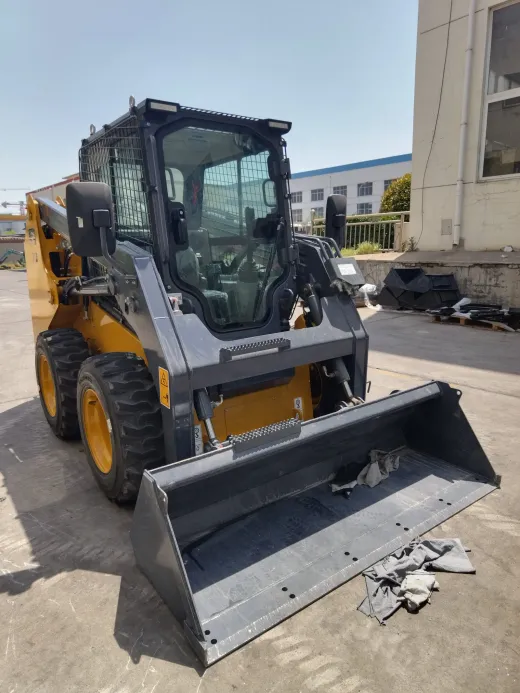
Skid Steer Weight: Operating Weight by Class, Mini to Large Frame
How much does a skid steer weigh? It depends on frame class, undercarriage, and whether you mean operating weight, shipping weight, or rated capacity. This guide breaks down skid steer weight from stand-on minis to large-frame machines, explains tracked vs wheeled weight differences, and covers what the number means for trailer selection and towing rules.
Read more →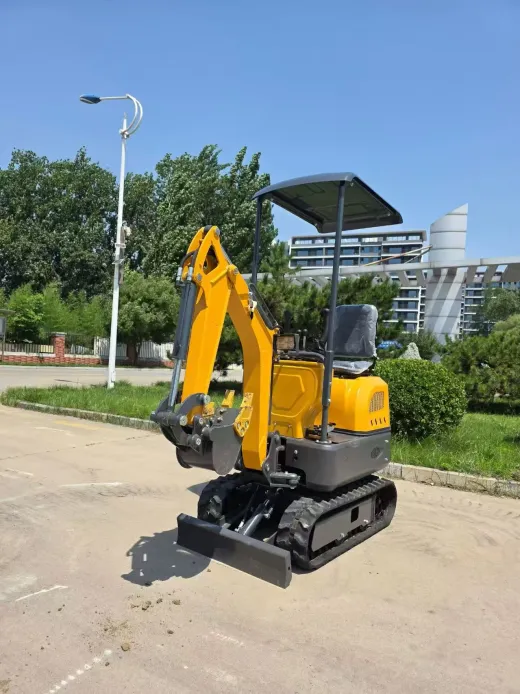
Amphibious Mini Excavators: Working on Water, Marshes & Wetlands
A clear-headed guide to amphibious and floating mini excavators — how pontoon undercarriages work, where they outperform standard machines, their real limitations, and when wide rubber tracks are the smarter choice for wet and soft-ground work.
Read more → Articulating Loaders Explained: Compact & Mini Articulated Loaders
An articulating loader offers superior maneuverability in tight spaces where conventional machines struggle. This guide covers everything buyers need to know about small, compact, and mini articulated loaders — from how they work to what to look for when shopping.
Read more →