










Amphibious Mini Excavators: Working on Water, Marshes & Wetlands
2026-06-28
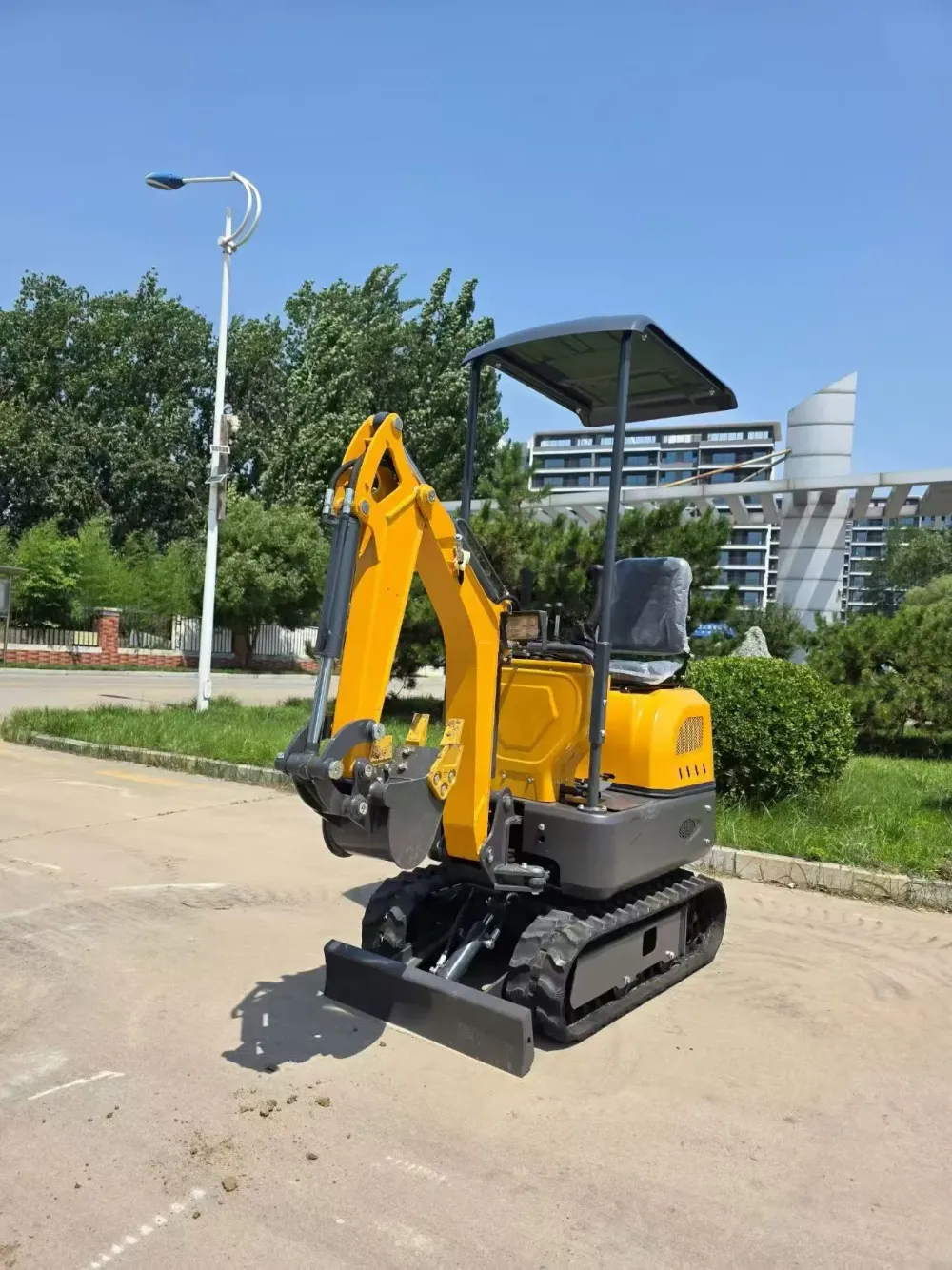
A clear-headed guide to amphibious and floating mini excavators — how pontoon undercarriages work, where they outperform standard machines, their real limitations, and when wide rubber tracks are the smarter choice for wet and soft-ground work.
Most excavators sink in water. An amphibious mini excavator does not. By replacing the standard steel undercarriage with sealed pontoon floats, the machine displaces enough water to stay on the surface while the upper structure — cab, boom, arm, and bucket — operates exactly as it would on land. The result is a compact excavator that can dig, dredge, and grade in environments a conventional machine cannot enter without a barge or a purpose-built dredge pump.
This guide explains the engineering behind floating excavators, where they are the right tool, where they are not, and what to compare when evaluating a mini amphibious excavator for purchase or rental.
What is a pontoon undercarriage and how does it work
A standard mini excavator rides on a steel or rubber track frame. An amphibious conversion replaces that frame with two sealed steel pontoon floats — essentially hollow hull sections — wide enough to support the machine's weight on water. The drive sprockets, rollers, and track chains are retained, but they now wrap around the outside of each float. When the machine moves into water, buoyancy from the pontoons keeps it afloat while the track chains paddle the machine forward. On land, the same tracks grip the ground normally.
Pontoon geometry matters more than gross buoyancy. A wider, longer pontoon provides a more stable working platform but reduces maneuverability in narrow channels. Most commercial floating mini excavator configurations are built on base machines in the 3.5 to 6 ton class — light enough to achieve adequate freeboard without excessively large floats, heavy enough to generate the breakout force wetland dredging demands.
Sealed access hatches allow inspection of the float interiors. Any responsible specification includes compartmented floats so that a single puncture does not flood the entire undercarriage. Verify compartmentalization before accepting any amphibious unit.
Where amphibious excavators earn their keep
The core use case is work that neither a land excavator nor a boat-mounted dredge can reach economically. That covers four main categories:
- Wetland and marsh restoration: Removing invasive vegetation, reshaping channels, and grading basin edges in environments where ground bearing capacity is effectively zero. The machine floats over soft peat and organic soils that would swallow any tracked machine.
- Shallow-water dredging: Clearing silt, debris, and accumulated sediment from irrigation canals, retention ponds, fish farm basins, and navigational channels too shallow for a conventional dredge vessel. Reach and precision from an excavator boom exceed what a suction dredge can deliver in confined spaces.
- Shoreline and riverbank work: Rip-rap placement, bank grading, and flood-damage repair where the work face is partly above and partly below the waterline. An amphibious machine can position itself in the water and work the bank from the wet side — the safest and most accurate approach.
- Dock and culvert construction in standing water: Driving sheet piles, placing precast units, and excavating footings where the water table is at or above the work surface.
If your job falls into one of those four categories and water depth exceeds roughly 1.5 meters, a floating mini excavator is almost certainly the most cost-effective solution. Below that depth, the calculus changes — see the section on standard machines below.
Key specifications to compare
When evaluating a mini amphibious excavator for sale, the spec sheet has two layers: the base excavator specs and the amphibious system specs. Both matter.
Base excavator: Dig depth, arm reach, bucket breakout force, and hydraulic flow for attachments. Wetland dredging typically uses a long-reach boom configuration — a standard arm will not reach the channel bottom when the machine is floating on the surface. Confirm whether the quoted machine includes a long-reach arm or whether it is an optional upcharge.
Amphibious system:
- Float length and width — determines stability and freeboard (height above the waterline). More freeboard means you can work in mild wave action or current without shipping water.
- Maximum water depth — most configurations work safely to 3–4 meters. Beyond that, the track chain loses grip on the bottom and you are fully floating, which increases instability.
- Travel speed on water — typically 1–2 km/h. These machines are not fast movers between work zones on large bodies of water.
- Float material and coating — marine-grade steel with epoxy or polyurethane coating resists corrosion. Verify paint system and expected maintenance interval.
- Compartments per float — four or more per side is the industry standard for safe operation.
Our standard mini excavator range serves as the base platform for amphibious configurations. The base specs are listed per model so you can evaluate dig depth and hydraulic performance before selecting the undercarriage option.
Operational limits you need to understand before buying
An amphibious excavator is not a universal wet-ground machine. Several genuine limitations affect where and how it can be deployed:
- Stability on slopes: Pontoons provide excellent stability on flat water but poor grip on sloping riverbanks. Attempting to traverse a steep muddy slope with the machine partially afloat and partially grounded is a rollover risk. Most operators walk the machine in from a stable launch point rather than driving it down a soft bank.
- Working radius in current: In flowing water above roughly 1.5 m/s, the machine will drift while working. An anchor line or spud pole system is standard practice on river projects. Confirm whether the configuration includes spud poles or whether you need to source them separately.
- Bucket capacity and dredge output: A mini excavator bucket is measured in hundredths of a cubic meter. For high-volume sediment removal, the cycle time of a boom-and-bucket system is orders of magnitude slower than a cutter-suction dredge. Amphibious excavators excel at precise work in confined spaces; they are not the right tool for high-tonnage material removal across a large area.
- Transport and mobilization: The wide pontoons do not fit on a standard excavator trailer. A flatbed or low-loader wide enough for the full float width is required, and some road configurations may need a permit. Factor mobilization cost into the project budget before assuming the machine is cheaper than alternative methods.
- Maintenance access: Track chains on pontoon undercarriages operate partially submerged and accumulate mud, sand, and debris. They require more frequent inspection and lubrication than a standard undercarriage and will wear faster in abrasive sediment. Budget accordingly.
When a standard mini excavator with wide tracks is sufficient
Before specifying an amphibious machine, honestly assess whether the work actually demands floating capability. A conventional mini excavator fitted with wide rubber pads or steel swamp shoes can operate on saturated ground with a bearing capacity as low as 20–30 kPa — soft enough for most marginal wetland-edge and ditch work. Ground pressure decreases as track width increases, and many 3.5 to 5 ton machines can be configured with tracks wide enough to work on ground that would stop a wheeled vehicle.
Ask three questions before defaulting to amphibious:
- Is there standing water deeper than roughly 600 mm over the work area? If not, wide pads may suffice.
- Is the work area accessible by land, even if the ground is soft? Swamp shoes and low-ground-pressure mats can extend the reach of a land machine substantially.
- Is the project volume large enough to justify mobilization of a wider machine? A day's work in a small pond may cost less with a rented long-reach machine working from the bank than with a full amphibious mobilization.
If all three answers point toward the water, the amphibious specification is justified. If any answer is borderline, price both options before committing.
Buying versus renting: how to decide
Finding a amphibious mini excavator for sale at a competitive price is straightforward in markets where wetland and dredging work is common. Buying makes sense when you have a recurring pipeline of water-based projects — pond maintenance contracts, annual canal dredging, ongoing wetland restoration work. The machine amortizes quickly when utilization is high.
Renting is the better choice for one-off projects or when the scope is uncertain. Rental rates for amphibious units are higher than for standard excavators, but the daily rate is still far below the capital cost of an owned machine sitting idle between projects. Specialist contractors who own amphibious fleets often provide operated rates that include the operator's wetland experience — valuable on technically complex dredging work where inexperienced operation can quickly damage the machine or the environment.
If you are building a fleet and expect water-based work to represent 30% or more of annual hours, ownership is generally the right direction. Below that threshold, rental or subcontracting is usually more cost-efficient when the full cost of ownership — maintenance, insurance, wide-load transport, float inspection, and track replacement — is accounted for.
Evaluating a supplier
The amphibious excavator market sits between the mainstream equipment industry and the specialist marine construction sector. Not every mini excavator manufacturer offers an amphibious option, and not every amphibious undercarriage supplier builds to the same standard. When comparing suppliers, focus on four things:
- Integration versus bolt-on: The best configurations are engineered as a system — the base machine, hydraulic routing, and pontoon undercarriage are matched from the start. Aftermarket pontoon conversions on an existing machine are common but introduce fit and warranty complications. Ask whether the amphibious system was designed for the specific base model or adapted from a generic kit.
- Float certification: For commercial projects, particularly in jurisdictions with waterway permits, the pontoon structure may need to meet a marine or structural standard. Verify whether the supplier can provide material certificates and inspection documentation.
- Parts availability: Pontoon seals, track chain sections sized for the float diameter, and drive sprocket profiles can differ from the standard excavator parts. Confirm that wear parts are stocked or readily available, not custom-fabricated on order.
- After-sales support: Wetland projects tend to be remote. A supplier who can provide technical support by phone and ship parts quickly is worth more than one who offers a lower sticker price but operates with a long lead time on service.
We supply base machines for amphibious configurations and can advise on matching excavator specifications to pontoon system requirements. Contact us through the mini excavator product page to discuss your project requirements.
Browse our amphibious mini excavator range · — we reply within one business day.
Frequently asked questions
What is an amphibious mini excavator?
An amphibious mini excavator is a compact excavator fitted with sealed pontoon floats in place of a standard steel track frame. The floats provide enough buoyancy to keep the machine on the water surface while the upper structure — cab, boom, arm, and bucket — operates normally. The track chains wrap around the outside of the floats and propel the machine through water as well as across soft ground.
How deep can an amphibious excavator work in water?
Most configurations are rated for operation in water up to 3 to 4 meters deep. Below that depth the machine is fully floating and increasingly difficult to hold on position without an anchor or spud poles. For deeper work, a barge-mounted excavator or a dedicated dredge is the more appropriate tool.
What is the difference between a floating mini excavator and a standard mini excavator with swamp tracks?
A floating mini excavator uses pontoon floats and can operate on open water and in areas with no ground bearing capacity at all. A standard mini excavator fitted with wide swamp shoes or low-ground-pressure tracks can operate on saturated soft ground but cannot work in standing water deeper than roughly 400 to 600 mm. If the work area has standing water above that depth, the amphibious configuration is required; if it is just very soft ground, wide tracks may be sufficient and considerably cheaper to mobilize.
What are the main applications for a mini amphibious excavator?
The most common applications are wetland and marsh restoration, shallow-water dredging of irrigation canals and retention ponds, riverbank and shoreline grading, and construction work in areas where the water table is at or above the work surface. They are also used for fish farm maintenance, flood damage repair, and placing rip-rap along waterway edges where the work face straddles the waterline.
Is an amphibious mini excavator good for dredging?
It depends on the scale and type of dredging. A boom-and-bucket system is well suited to precise, confined-space dredging in ponds, canals, and small water bodies — it can place material accurately and work close to structures. For high-volume sediment removal across a large area, a cutter-suction dredge will move far more material per hour. Amphibious excavators are often the first choice for dredging jobs that require accuracy or are too confined for a vessel.
How is an amphibious excavator transported?
The wide pontoon floats exceed the width of a standard excavator trailer, so a flatbed or low-loader wide enough to accommodate the full float width is required. Some road configurations may require a wide-load permit. Factor transport cost and lead time into your project budget, particularly for remote wetland sites where road access is limited.
Where can I find an amphibious mini excavator for sale?
Amphibious mini excavators are available through specialist dealers and directly from manufacturers who offer pontoon undercarriage options for their excavator range. When comparing units for sale, verify float compartmentalization, long-reach arm availability, parts supply for the undercarriage, and whether the machine was purpose-built as an amphibious system or converted from a standard base. Contact ZHONGMAI through our mini excavator product page to discuss specifications and pricing for your project.
Related articles
Skid Steer Weight: Operating Weight by Class, Mini to Large Frame
How much does a skid steer weigh? It depends on frame class, undercarriage, and whether you mean operating weight, shipping weight, or rated capacity. This guide breaks down skid steer weight from stand-on minis to large-frame machines, explains tracked vs wheeled weight differences, and covers what the number means for trailer selection and towing rules.
Read more → Articulating Loaders Explained: Compact & Mini Articulated Loaders
An articulating loader offers superior maneuverability in tight spaces where conventional machines struggle. This guide covers everything buyers need to know about small, compact, and mini articulated loaders — from how they work to what to look for when shopping.
Read more →
Autonomous Pallet Movers & AGV Pallet Jacks: What Warehouses Need to Know
Before spending six figures on an autonomous pallet mover or AGV pallet jack system, read this guide. We break down how the technology works, true ROI timelines, and why most small-to-mid-size warehouses still get better returns from electric stackers and manual pallet trucks.
Read more →