










Articulating Loaders Explained: Compact & Mini Articulated Loaders
2026-06-28
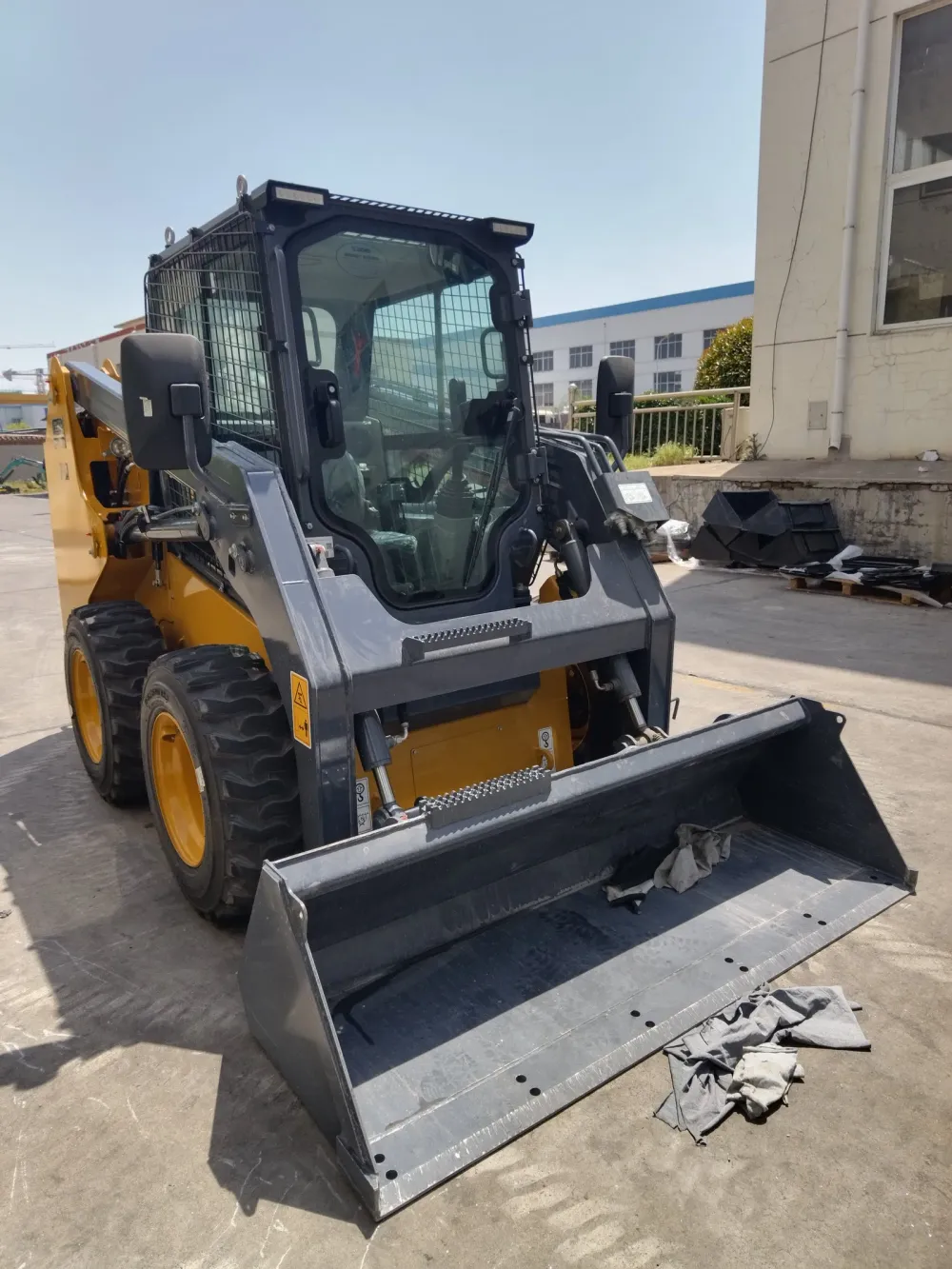
An articulating loader offers superior maneuverability in tight spaces where conventional machines struggle. This guide covers everything buyers need to know about small, compact, and mini articulated loaders — from how they work to what to look for when shopping.
If you've ever tried to work a standard wheel loader into a narrow greenhouse corridor, a cramped urban job site, or a winding trail through mature timber, you already understand why the articulating loader exists. Unlike a rigid-frame machine that must skid its rear tires to turn, an articulating loader bends in the middle — the front and rear frames pivot against each other — so the machine can track smoothly around corners without scuffing turf, cracking pavement, or getting wedged against a wall. The result is a loader that can work efficiently in spaces no full-size machine would survive. In this guide we break down the major categories, explain the specs that matter, and help you figure out whether a small articulating loader, a compact articulating loader, or a true mini articulated loader is the right investment for your operation.
What Is an Articulating Loader and How Does It Work?
A conventional wheel loader steers by braking or counter-rotating its rear wheels relative to the front — a process called skid steering. An articulating skid steer or articulating loader uses a different principle: the chassis itself is hinged at the center. When the operator turns the steering wheel (or joystick), hydraulic cylinders push the front frame left or right relative to the rear frame, creating a smooth, vehicle-like arc rather than a scrubbing pivot.
This center-articulation design delivers several practical advantages:
- Tight turning radius — the machine follows its own footprint around corners, letting it navigate aisles, doorways, and switchback paths that would stop a skid steer cold.
- Reduced ground disturbance — because tires roll rather than scrub, the machine is far gentler on finished turf, gravel, and soft ground.
- Comfortable operator feel — the steering input is proportional and predictable, much closer to driving a car than wrestling a skid steer.
- Better traction distribution — four-wheel drive combined with an articulating frame keeps all wheels in contact with uneven terrain.
The articulating front end loader configuration adds a boom and bucket at the front, making the platform useful for lifting, carrying, and dumping material in addition to just moving around tight spaces.
Small Articulating Loaders: Who Needs One?
The market for a small articulating loader has exploded over the past decade as landscapers, nurseries, hobby farms, equestrian facilities, and small construction crews discovered that a compact, nimble machine can replace a pickup-and-wheelbarrow workflow at a fraction of the labor cost. A small articulated loader typically weighs between 1,500 and 4,000 kg, fits through a standard garden gate or barn door, and can be transported on a single-axle trailer behind a half-ton pickup.
Common applications include:
- Moving mulch, compost, topsoil, and gravel on residential landscaping projects
- Cleaning stables, poultry houses, and livestock pens
- Grading driveways and access roads on rural properties
- Loading pallets and feed bags in feed mills and warehouses
- Handling materials in confined industrial yards
Because these machines are so versatile, small articulated loaders for sale appear in a wide variety of configurations — from basic bucket-only units to fully toolcarrier-spec machines with auxiliary hydraulics capable of running sweepers, forks, augers, and tilting buckets. If you're evaluating whether a small articulating loader or a skid steer loader better fits your needs, the key differentiator is almost always the terrain and the width of spaces you need to access.
Compact Articulating Loaders: The Sweet Spot for Contractors
Step up from the small category and you reach the compact articulating loader — machines typically in the 4,000–8,000 kg operating weight range with rated operating capacities from roughly 800 kg to 2,500 kg. This bracket is where serious landscaping contractors, municipal crews, golf course superintendents, and light construction operations tend to land.
What distinguishes a compact articulating loader from its smaller sibling is raw capability: more lift height, more breakout force, higher hydraulic flow for demanding attachments, and often a cab with ROPS/FOPS certification and climate control. At the same time, overall dimensions remain modest enough that the machine can still enter gated properties, work on paved surfaces without causing damage, and be transported without a semi.
Buyers shopping in this segment should pay close attention to:
- Tipping load — the static tipping load at full articulation is often significantly lower than straight-ahead tipping load; always compare articulated figures.
- Auxiliary hydraulic flow — running a mulching head or cold planer demands 60–100 L/min or more; confirm the machine's spec sheet, not just the pump displacement.
- Attachment compatibility — whether the front coupler is a universal skid steer plate or a proprietary system dramatically affects your tooling costs over time.
- Cab visibility — in tight spaces, seeing all four corners of the machine is critical for safety and productivity.
Buyers who also need to dig foundations or clear tree stumps sometimes pair a compact articulating loader with a dedicated backhoe loader or mini excavator rather than trying to do everything with attachments on a single machine.
Mini Articulating Loaders: Maximum Access, Minimum Footprint
At the compact end of the spectrum sits the true mini articulated loader — sometimes called a micro loader or ultra-compact loader. These machines typically weigh under 1,500 kg, are narrow enough to fit through a standard 36-inch doorway, and can work inside barns, glasshouses, and even large retail buildings. Walk-behind and stand-on variants exist, but the most capable mini articulating loaders are ride-on machines with full four-wheel drive and a proper hydraulic boom.
The demand for mini articulating loaders for sale has grown sharply as urban landscapers, rooftop garden contractors, and indoor growers have realized that a mini loader can do in hours what would take a crew days with wheelbarrows. Key specs to compare when shopping mini articulated loaders include:
- Machine width — anything under 900 mm is genuinely doorway-capable; confirm the bucket width adds no more than 100–150 mm.
- Lift height — some mini loaders top out at 1.8 m, limiting dumping into tall containers; others reach 2.5 m or more.
- Operating weight vs. rated capacity ratio — look for a tipping load at least 2× the rated operating capacity for stable handling.
- Electric vs. diesel power — electric mini loaders are increasingly popular for indoor use where exhaust fumes are unacceptable.
The best mini articulated loader for your application depends heavily on whether you prioritize access (go narrow and light), lift height (accept a slightly wider machine), or attachment versatility (ensure high-flow hydraulics). There is no single universal winner — the right machine is the one whose specs match your most demanding regular task.
Articulating Loader vs. Skid Steer: Choosing the Right Machine
The question buyers ask most often is whether to choose an articulating loader or a conventional skid steer. Both are compact, both accept a huge range of attachments, and both can be transported on a standard trailer. The differences come down to how each machine moves and where it works best.
A skid steer is generally more compact front-to-back, more powerful for its size class, and faster in open areas where counter-rotation turning is not a problem. It is the workhorse choice for demolition, land clearing, and construction sites where the ground doesn't matter and speed does. The trade-off is that every turn scrubs the tires against the surface, which damages turf, pavement, and gravel, and the pivot-in-place motion requires a clear zone around the rear of the machine.
An articulating loader wins wherever surface preservation, narrow passages, or smooth low-ground-pressure operation matters. It also tends to be more comfortable to operate over a full shift because steering inputs feel natural. For buyers who need both digging depth and loading ability, a backhoe loader may be more efficient than trying to fit either machine with a digging attachment.
For attachment-heavy operations — sweepers, grapples, pallet forks, augers — both platforms work well. Check out the full range of skid steer attachments compatible with universal coupler plates, many of which also fit articulating loaders that use the same standard interface.
What About Articulating Mini Dump Trucks?
Shoppers researching mini articulating loaders sometimes encounter a related but distinct product: the mini articulating dump truck. While a loader carries material in a front-mounted bucket and uses the boom to lift and dump, an articulating dump truck carries material in a rear body and tips it backward or to the side. The articulating frame on a dump truck serves the same steering purpose — tight cornering on confined sites — but the machine is optimized for high-volume material transport rather than lift-and-place work.
Mini articulating dump trucks are popular in quarrying, tunneling, and large landscaping operations where a loader fills the truck's body and the truck shuttles material to a stockpile or crusher. They are not a substitute for a loader; they are a complement to one. If your operation involves moving bulk quantities of spoil or aggregate over distance on a confined site, a small articulating dump truck paired with a compact loader or excavator is often the most efficient two-machine combination.
Key Buying Checklist for Articulating Loaders
Before you commit to any compact articulating loader or mini model, run through this checklist to make sure you're buying the right machine for your actual workload:
- Access width — measure the narrowest passage the machine must fit through, including with the bucket attached. Add 100 mm clearance per side as a safety margin.
- Rated operating capacity — calculate your heaviest single bucket load (material weight × typical bucket fill factor) and make sure the machine's rated operating capacity exceeds it.
- Lift height — confirm the dump height at full reach clears your target container, truck bed, or wall by at least 200 mm.
- Auxiliary hydraulic flow and pressure — match the machine spec to your most demanding attachment's requirements.
- Coupler type — universal skid steer plate gives the broadest attachment compatibility; proprietary couplers lock you to a single ecosystem.
- Transport weight and dimensions — confirm your trailer's rated capacity and ramp width before buying.
- Service access — check that filters, drain plugs, and greasing points are reachable without removing major components.
- Dealer support — parts availability and trained technicians matter more than purchase price over a five-year ownership horizon.
For buyers comparing small articulated loaders for sale across multiple suppliers, insist on a field demonstration with your own materials and in your own working environment. A machine that performs brilliantly in an open dealer yard may struggle in the actual tight, uneven, or soft-ground conditions you work in daily.
Browse our articulating loader range · — we reply within one business day.
Frequently asked questions
What is the difference between an articulating loader and a skid steer loader?
A skid steer turns by counter-rotating or braking its wheels, which scrubs tires against the ground and requires open space around the rear of the machine. An articulating loader steers by hinging at the center of its frame, allowing it to track smoothly through corners without surface damage. Articulating loaders are preferred where turf preservation, tight passages, or indoor operation matters; skid steers generally offer more power and speed in open, rough-ground environments.
How small can a compact articulating loader be?
The smallest ride-on articulating loaders are under 900 mm wide and weigh less than 800 kg, making them capable of passing through a standard 36-inch doorway. At this size, rated operating capacities are typically 200–400 kg. Mid-range compact articulating loaders are usually 1,200–1,600 mm wide with capacities of 500–1,500 kg. True compact models top out around 8,000 kg operating weight before transitioning into the full-size category.
Can mini articulating loaders use skid steer attachments?
Many mini and compact articulating loaders are built with a universal skid steer quick-attach plate, which means they can accept the broad library of skid steer attachments — buckets, pallet forks, grapples, sweepers, augers, and more. However, always confirm that the loader's auxiliary hydraulic flow and pressure match the attachment's requirements, and that the machine's rated operating capacity is sufficient for the loaded weight of the attachment plus material.
What should I look for when comparing mini articulated loaders for sale?
The most important specs to compare are: machine and bucket width (critical for access), dump height at full reach, rated operating capacity (and the tipping load figure at full articulation, which is always lower than straight-ahead tipping load), auxiliary hydraulic flow in liters per minute, and overall transport weight. Beyond specs, evaluate parts availability, local dealer support, and whether the seller offers a demonstration on your actual site before purchase.
Is an articulating front end loader better than a backhoe loader for landscaping?
They serve different primary functions. An articulating front end loader excels at moving, lifting, and placing bulk materials — mulch, soil, gravel, pallets — especially in tight spaces. A backhoe loader adds a rear digging arm capable of trenching and excavating, but is typically larger and less maneuverable in confined areas. For pure material handling in narrow spaces, an articulating loader usually wins; for mixed loading-and-digging tasks on open sites, a backhoe loader may be more efficient.
Can a mini articulating loader work indoors?
Yes — this is one of the primary reasons buyers choose mini articulated loaders over larger machines. Their narrow width allows access through standard doorways, and their smooth articulating steering avoids the floor damage that skid steer counter-rotation causes. For applications inside food processing facilities, warehouses, or livestock buildings where exhaust emissions are a concern, electric-powered mini articulating loaders are available and are increasingly the preferred choice.
How much does a small articulating loader cost compared to a skid steer?
Pricing varies significantly by size, specification, and origin. At equivalent operating capacities, articulating loaders often carry a modest premium over comparable skid steers due to the more complex articulating frame and steering system. However, total cost of ownership factors — reduced tire wear, lower surface repair costs, and better operator comfort reducing fatigue-related errors — frequently offset the higher purchase price over a typical five-year ownership period. Always request a total cost of ownership comparison, not just a sticker price comparison.
Related articles
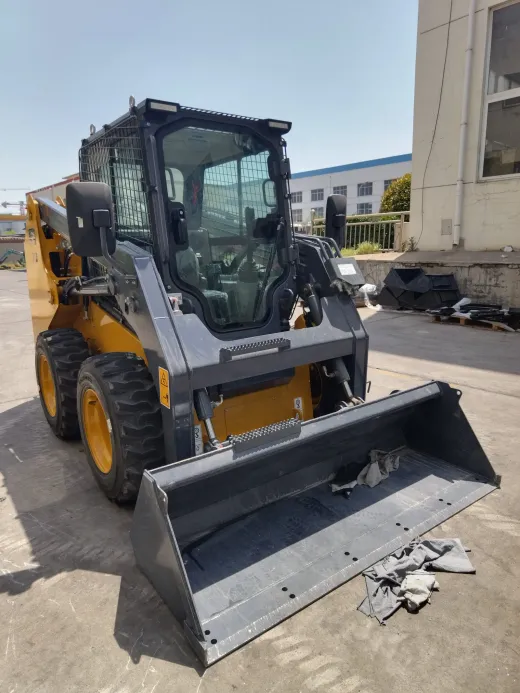
Skid Steer Weight: Operating Weight by Class, Mini to Large Frame
How much does a skid steer weigh? It depends on frame class, undercarriage, and whether you mean operating weight, shipping weight, or rated capacity. This guide breaks down skid steer weight from stand-on minis to large-frame machines, explains tracked vs wheeled weight differences, and covers what the number means for trailer selection and towing rules.
Read more →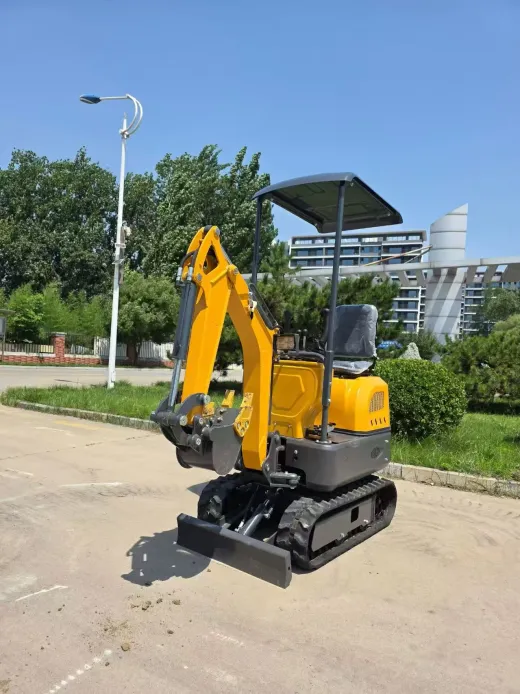
Amphibious Mini Excavators: Working on Water, Marshes & Wetlands
A clear-headed guide to amphibious and floating mini excavators — how pontoon undercarriages work, where they outperform standard machines, their real limitations, and when wide rubber tracks are the smarter choice for wet and soft-ground work.
Read more →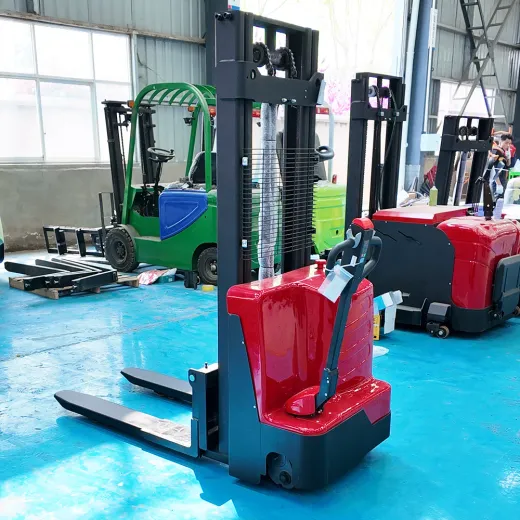
Autonomous Pallet Movers & AGV Pallet Jacks: What Warehouses Need to Know
Before spending six figures on an autonomous pallet mover or AGV pallet jack system, read this guide. We break down how the technology works, true ROI timelines, and why most small-to-mid-size warehouses still get better returns from electric stackers and manual pallet trucks.
Read more →