










Autonomous Pallet Movers & AGV Pallet Jacks: What Warehouses Need to Know
2026-06-28
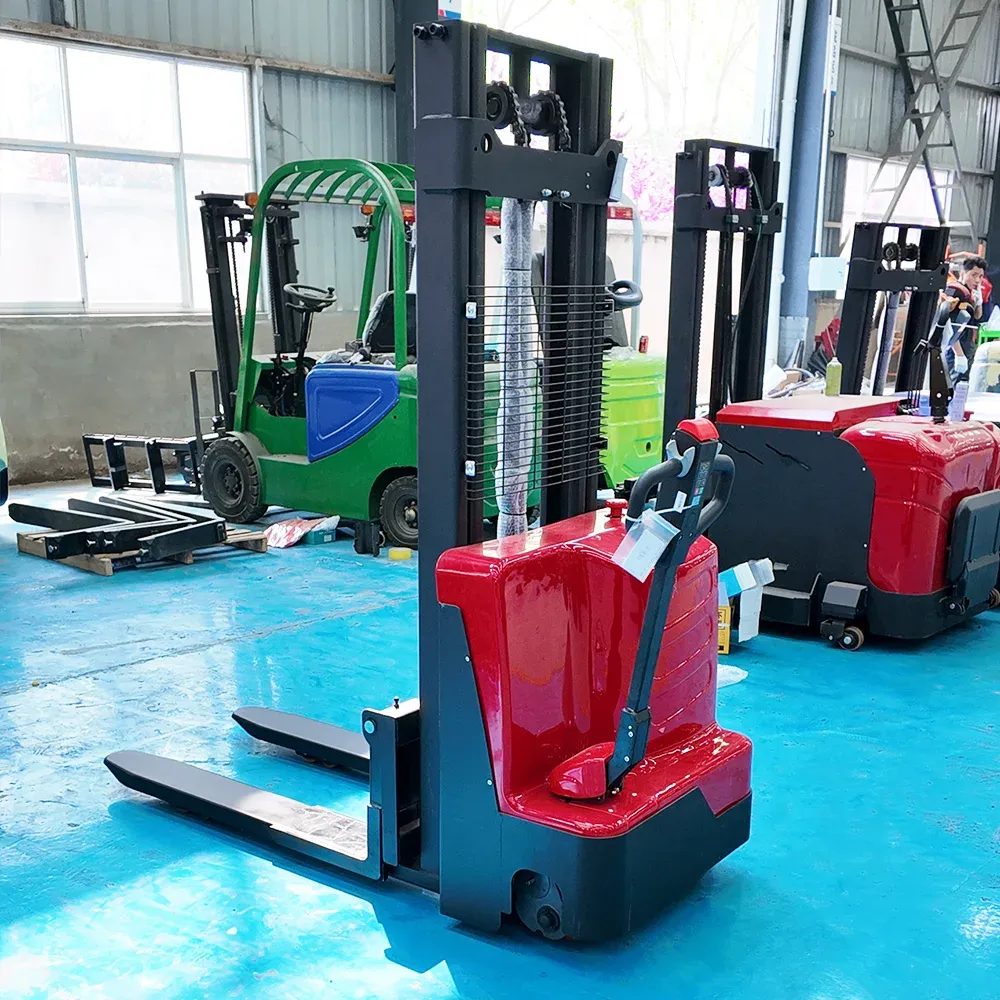
Before spending six figures on an autonomous pallet mover or AGV pallet jack system, read this guide. We break down how the technology works, true ROI timelines, and why most small-to-mid-size warehouses still get better returns from electric stackers and manual pallet trucks.
What Is an Autonomous Pallet Mover?
An autonomous pallet mover is a self-navigating vehicle designed to transport loaded pallets through a warehouse or distribution center without a human operator. The category includes autonomous mobile robots (AMRs), automated guided vehicles (AGVs), and hybrid systems that combine both approaches. Unlike a standard electric pallet truck or stacker, these machines rely on onboard sensors, cameras, LiDAR, and route-planning software to move goods from point A to point B independently.
The distinction between AMRs and AGVs matters in practice. Traditional AGVs follow fixed magnetic tape or wire paths embedded in the floor, making them inflexible when layouts change. AMRs use dynamic mapping and obstacle avoidance, letting them reroute on the fly. Most modern systems marketed as an agv pallet jack or autonomous pallet mover today fall somewhere on this spectrum, blending fixed-route efficiency with some degree of adaptive navigation.
These systems are designed primarily for high-throughput, repetitive horizontal transport: moving pallets between receiving docks and storage aisles, staging goods for pick operations, or feeding production lines at consistent intervals.
How AGV Pallet Jack Systems Actually Work
A typical agv pallet jack installation is more than a single machine. It is a system comprising the vehicles themselves, a fleet management software layer, infrastructure modifications (charging stations, reflective markers or floor beacons in some systems), and integration with the warehouse management system (WMS). Understanding this full scope is critical before evaluating cost.
The vehicle detects its position using one of several methods: laser triangulation off reflectors, simultaneous localization and mapping (SLAM) using LiDAR point clouds, or camera-based visual markers. Once positioned at a pallet, the forks lower, the machine slides under the pallet, confirms load presence via sensors, lifts, and navigates to the destination. The fleet management software coordinates multiple units to prevent deadlocks and prioritize tasks based on WMS demand signals.
Charging is typically automated: the vehicle returns to a docking station when battery falls below a threshold, charges for a set period, and re-enters the task queue. This autonomous cycle is the operational appeal — the machines can theoretically run across two or three shifts with minimal human intervention beyond maintenance.
The Real Cost of Going Autonomous
The capital cost of an autonomous pallet mover system is consistently the factor that resets expectations. A single AMR or AGV pallet jack unit from established vendors typically costs between $35,000 and $80,000 USD depending on payload, navigation technology, and software licensing. That is before infrastructure costs, WMS integration, staff retraining, and the facility assessment fees most vendors charge upfront.
A realistic minimum viable deployment — enough vehicles to handle a single workflow reliably — usually requires at least three to five units to account for charging downtime, maintenance cycles, and throughput buffers. That puts the minimum entry investment for a functioning autonomous pallet mover system at $150,000 to $400,000 before ongoing software subscriptions and maintenance contracts.
Payback periods advertised by vendors typically assume two or three-shift operations, stable throughput, and labor costs at or above $20–25 per hour all-in. Under those conditions, a three-to-five year payback is plausible for high-volume operations. For warehouses running a single shift or with variable throughput, payback periods of seven to ten years are common — at which point the technology may already require replacement or major upgrades.
Additional hidden costs include: floor condition remediation (AGV systems are sensitive to damaged floors), ongoing software licensing (often $5,000–$15,000 per year per vehicle), and the specialist labor needed for programming and troubleshooting that most in-house teams do not have on day one.
Where Autonomous Systems Deliver Genuine Value
There are real use cases where an autonomous pallet mover or agv pallet jack system earns its cost. The common thread is scale, repetition, and labor constraint.
High-volume cross-docking operations moving hundreds of identical pallets per shift between fixed points — receiving dock to staging lane, for example — are close to ideal. The route is fixed, the load type is consistent, and labor savings compound across three shifts. Cold storage facilities also benefit disproportionately because the harsh working environment strains human operators and increases turnover, making the labor cost calculus shift in favor of automation even at lower throughput volumes.
E-commerce fulfillment centers with predictable inbound pallet flows and enough square footage to dedicate lanes to automated traffic can justify the investment. Automotive and electronics manufacturing facilities with high-mix, low-variability internal logistics are another strong fit.
What these environments share: throughput above 200–300 pallet moves per shift, multi-shift operations, stable SKU and pallet configurations, floor space that can be partitioned for automated traffic, and IT infrastructure capable of integrating fleet management with existing WMS. If your operation checks all of these boxes, autonomous systems are worth a detailed feasibility study.
When Manual Electric Equipment Is the Smarter Investment
The majority of warehouses — particularly small and mid-size operations — do not meet the conditions where an autonomous pallet mover delivers competitive returns. For these facilities, well-specified manual electric equipment consistently outperforms on total cost of ownership over a five-year horizon.
A high-quality electric stacker handles palletized loads up to 1,000–2,000 kg, lifts to heights an AGV pallet jack typically cannot match, and costs a fraction of an autonomous system — often $4,000 to $12,000 depending on capacity and lift height. A single operator with an electric stacker can handle horizontal transport, racking, and staging in a single pass. An AGV can only handle horizontal transport and requires separate equipment for vertical placement.
A hand pallet truck — whether manual or powered — remains the fastest and most flexible tool for short-distance pallet spotting, truck unloading, and ad hoc moves that autonomous systems struggle to handle without reprogramming. The flexibility to respond to a driver arriving early, a mislabeled pallet, or a sudden dock change is not a minor advantage: it is the operational reality of most warehouses most of the time.
Electric stackers and powered pallet trucks also require no infrastructure investment, no WMS integration, no software subscription, and minimal specialist maintenance. A trained technician with basic hydraulic and electrical knowledge can keep a fleet of electric stackers running for years. The same cannot be said for an AGV fleet.
Questions to Ask Before Committing to an AGV System
If you are seriously evaluating an agv pallet jack or autonomous pallet mover system, these questions will surface the gaps vendors tend to gloss over in demo presentations.
What is our actual pallet move count per shift, verified from WMS data — not estimated? Vendor ROI models are sensitive to this number. A 20% overestimate in throughput can shift a three-year payback to five years or more.
What percentage of our pallet moves follow fixed, repeatable routes? If more than 30–40% of moves are ad hoc or variable, AGV utilization will be lower than projected and the system will require frequent reprogramming.
What is the total cost including software, infrastructure, integration, and training — not just the vehicle price? Request a line-item quote. The vehicle is rarely more than 50–60% of total system cost.
What happens when a unit goes down? A fleet of five AGVs with one offline is a 20% throughput reduction. What is the contingency plan, and what manual equipment will need to be on standby?
What are the floor condition requirements? Have a vendor engineer inspect your floor before committing. Floor remediation can add $20,000–$100,000 to a project depending on facility age.
Building a Practical Pallet Handling Stack
For most warehouses, the most cost-effective pallet handling approach is a layered one: use electric stackers and powered pallet trucks as the foundation, and consider targeted automation only for the specific bottleneck workflows that meet the criteria above.
A practical starting point: audit your pallet moves by route type. Classify each as fixed-route repetitive, semi-fixed, or fully variable. If fixed-route repetitive moves account for fewer than 40% of total volume, a full autonomous pallet mover deployment is unlikely to deliver the ROI vendors project. Instead, invest in higher-quality manual electric equipment, improve operator routing with basic WMS task interleaving, and revisit automation when volume scales.
If a specific workflow — say, inbound receiving to a buffer zone 80 meters away, running 300 times per shift across three shifts — clearly meets the threshold, a pilot deployment of two or three agv pallet jack units on that single route can validate the business case before committing to a full fleet purchase.
ZHONGMAI's electric stacker range and hand pallet truck lineup are built for exactly this foundation layer — reliable, maintainable, and sized for the throughput ranges where manual electric equipment gives the strongest return. They are also the right backup fleet for any operation that does move toward partial automation.
Browse our autonomous pallet mover range · — we reply within one business day.
Frequently asked questions
What is the difference between an autonomous pallet mover and an AGV pallet jack?
An autonomous pallet mover is a broad category covering any self-navigating vehicle that handles pallet transport without a human operator, including both AMRs (autonomous mobile robots) and AGVs (automated guided vehicles). An AGV pallet jack specifically refers to an AGV system designed in the form factor of a pallet jack — low to the ground, entry-level fork design — that follows guided or mapped routes. AMRs are generally more flexible; traditional AGVs follow fixed paths. The distinction matters for how easily you can reconfigure the system when your facility layout changes.
How much does an autonomous pallet mover system cost?
A single autonomous pallet mover or AGV pallet jack unit typically costs $35,000 to $80,000 USD depending on payload capacity, navigation technology, and the vendor. A minimum viable deployment of three to five units, including software, infrastructure, and WMS integration, commonly runs $150,000 to $400,000 or more before ongoing maintenance and licensing fees. Total cost of ownership over five years is substantially higher than the hardware sticker price.
What is a realistic payback period for an AGV pallet jack system?
Vendors typically project three to five years under ideal conditions: two or three shifts per day, stable high throughput (200+ pallet moves per shift), and labor costs above $20–25 per hour all-in. In practice, single-shift operations or variable throughput environments often see payback periods of seven to ten years. Always model payback using your actual verified throughput data, not vendor estimates.
Can an autonomous pallet mover replace forklifts and electric stackers entirely?
No. Current autonomous pallet mover and AGV pallet jack systems are designed for horizontal transport at floor level or low lift heights. They cannot replace counterbalance forklifts or reach trucks for high-rack storage, and they struggle with the ad hoc flexibility that human operators handle routinely — irregular loads, unexpected dock changes, variable SKU configurations. Most operations that adopt AGVs still maintain a fleet of electric stackers and pallet trucks for tasks the autonomous systems cannot handle.
What floor conditions are required for AGV pallet jack operation?
AGV and AMR systems generally require flat, well-maintained concrete floors with consistent surface condition. Cracks, expansion joints, uneven transitions between dock plates and warehouse floors, and debris can cause navigation errors, sensor faults, or physical damage to the vehicle. Many facilities require floor remediation before an AGV system can be installed — a cost that is frequently underestimated and should be included in any pre-purchase facility assessment.
When does it make more sense to buy an electric stacker than an autonomous pallet mover?
For most small and mid-size warehouses, an electric stacker delivers better five-year total cost of ownership than an autonomous pallet mover. If your pallet moves are mixed or variable, your throughput is below 200 moves per shift, you run a single shift, or your operation requires vertical racking alongside horizontal transport, a high-quality electric stacker gives you more capability per dollar. Electric stackers also require no software integration, no infrastructure modification, and no specialist IT support.
How do I evaluate whether my warehouse is ready for an autonomous pallet mover?
Start by classifying your pallet moves: what percentage are fixed-route and repetitive versus ad hoc? If fewer than 40% of moves follow a fixed, repeatable route, AGV utilization will likely be too low for the system to pay back within five years. Verify your actual pallet move count from WMS data, check your floor condition, confirm your IT team can support WMS integration, and request a fully itemized quote from vendors — vehicle price, software licensing, infrastructure, integration, and training. A pilot deployment on a single high-volume route is a lower-risk way to validate the business case before committing to a full fleet.
Related articles
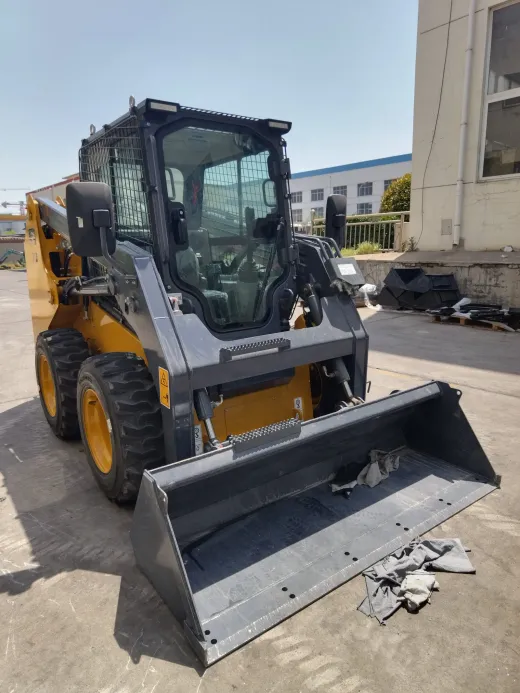
Skid Steer Weight: Operating Weight by Class, Mini to Large Frame
How much does a skid steer weigh? It depends on frame class, undercarriage, and whether you mean operating weight, shipping weight, or rated capacity. This guide breaks down skid steer weight from stand-on minis to large-frame machines, explains tracked vs wheeled weight differences, and covers what the number means for trailer selection and towing rules.
Read more →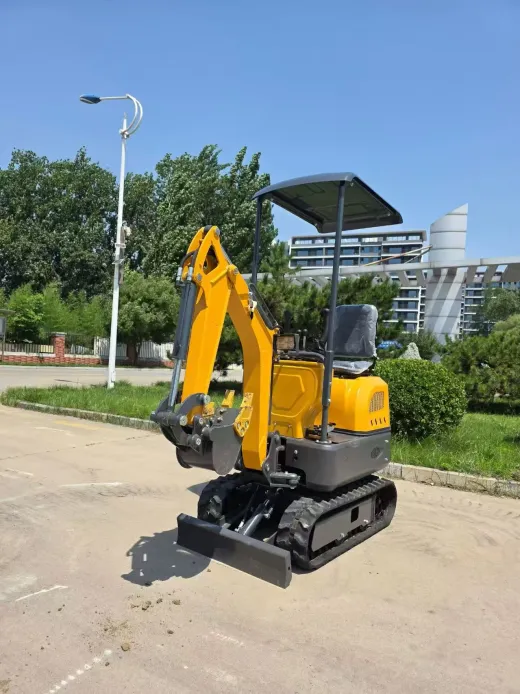
Amphibious Mini Excavators: Working on Water, Marshes & Wetlands
A clear-headed guide to amphibious and floating mini excavators — how pontoon undercarriages work, where they outperform standard machines, their real limitations, and when wide rubber tracks are the smarter choice for wet and soft-ground work.
Read more → Articulating Loaders Explained: Compact & Mini Articulated Loaders
An articulating loader offers superior maneuverability in tight spaces where conventional machines struggle. This guide covers everything buyers need to know about small, compact, and mini articulated loaders — from how they work to what to look for when shopping.
Read more →