










Electric Mini Excavator: Battery-Powered Diggers Explained
2026-06-28
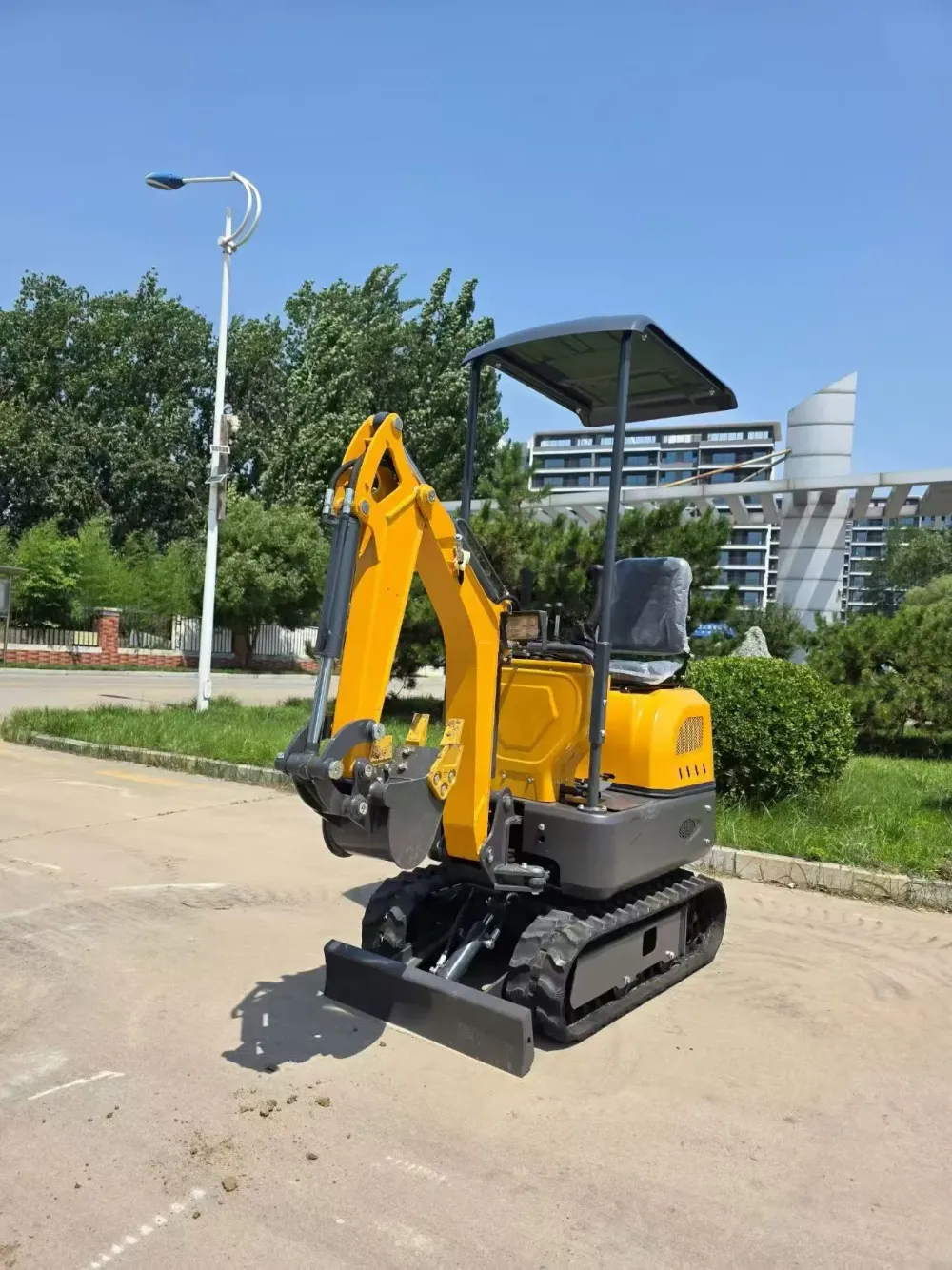
Battery-powered compact excavators are reshaping jobsites — quieter, cleaner, and cheaper to run than diesel. This guide covers everything buyers need to know about the electric mini excavator market in 2026, from real-world battery life to total cost of ownership.
The electric mini excavator has moved from niche curiosity to serious jobsite tool in just a few years. Rising diesel costs, tightening emissions regulations in urban areas, and dramatic improvements in lithium-ion battery technology have pushed contractors, landscapers, and rental fleets to take a hard look at battery powered mini excavators. Whether you are digging utility trenches inside a hospital basement, grading a backyard too tight for a full-size machine, or working in a noise-sensitive residential neighbourhood, a fully electric mini excavator can do the job without fumes or the constant growl of a diesel engine. This guide explains how these machines work, what they actually cost, how long the battery lasts, and how to decide whether one makes sense for your operation.
What Is an Electric Mini Excavator?
An electric mini digger — also called a battery mini excavator, electric compact excavator, or electric micro excavator — is a compact excavator that replaces the traditional diesel or gasoline engine with an electric motor powered by an on-board battery pack. The hydraulic system is driven by an electric motor rather than a combustion engine, so dig force and bucket breakout force remain comparable to diesel equivalents of the same size class.
Electric compact excavators typically range from one to ten tonnes operating weight. The sub-three-tonne segment — what the industry calls electric micro diggers — is where demand is growing fastest, driven by indoor demolition, landscaping, and urban infrastructure work. Above five tonnes, battery weight and cycle-time constraints make full electrification harder, though hybrid systems are common in that range.
Key components that differ from a diesel machine include:
- Lithium-ion battery pack — usually 20–100 kWh depending on machine size and target runtime.
- Electric motor driving the main hydraulic pump — brushless AC motors are standard in current designs.
- On-board charger or DC fast-charge port — charge times range from two hours (DC fast charge) to eight hours on a standard outlet.
- Battery management system (BMS) — monitors cell temperature, state of charge, and cycle count to protect battery longevity.
- Regenerative swing/travel — some models recover energy during boom lowering or track braking to extend runtime.
Electric Mini Excavator Price: What to Expect in 2026
The single biggest question buyers ask is: what is the electric mini excavator price? The honest answer is that battery-powered machines carry a meaningful purchase-price premium over diesel equivalents — but that premium has been shrinking every year.
As a rough market benchmark in 2026:
- Sub-1-tonne electric micro digger: $18,000–$32,000 USD (diesel equivalent: $12,000–$20,000).
- 1–2.5-tonne battery mini excavator: $35,000–$65,000 USD (diesel equivalent: $22,000–$40,000).
- 2.5–6-tonne electric compact excavator: $70,000–$140,000 USD (diesel equivalent: $45,000–$90,000).
When you search for a battery powered mini excavator for sale or a mini electric excavator for sale, you will encounter both OEM-branded machines and lower-cost options from Chinese manufacturers. The price gap between Western OEM and Chinese-manufactured machines in the same weight class can be 30–50%, and that gap is even more pronounced on the small electric digger end of the market where Chinese suppliers have deep production scale.
Total cost of ownership often tells a different story than the sticker price. Fuel savings alone — at current diesel prices — can offset $8,000–$15,000 per year for a machine working a full shift daily. Add reduced maintenance (no oil changes, no fuel filters, no injection system service) and the payback period for the price premium typically falls inside three years for high-utilisation machines.
If you are comparing a battery operated mini excavator against a propane mini excavator — another zero-exhaust option popular in North America — electricity wins on energy cost per hour in most markets, though propane machines avoid the charge-time constraint on multi-shift operations.
Battery Life and Charging: Real-World Numbers
Runtime anxiety is the most common objection to buying an electric powered mini excavator. Manufacturers typically publish runtime figures under light-to-medium duty cycles. Here is what those numbers mean in practice:
- Light duty (grading, backfilling): 6–10 hours on a full charge for a 1.5–2.5 tonne machine with a 40–60 kWh pack.
- Medium duty (general trenching, landscaping): 4–7 hours.
- Heavy duty (continuous digging in hard clay or rock): 2.5–4 hours.
Most contractors working a single eight-hour shift report that a well-sized battery pack covers the day with a buffer, especially when the machine spends time idling or repositioning. Problems arise on double-shift operations or when a site has no access to 3-phase power for fast charging.
Charging options matter as much as battery capacity:
- Standard 240V single-phase (Level 2): adds roughly 5–10 kW, so a 50 kWh pack takes 5–10 hours — adequate for overnight charging.
- 3-phase AC charging (11–22 kW): cuts charge time to 2.5–5 hours.
- DC fast charging (50–80 kW): fills an empty pack in 45–90 minutes where site power allows it.
Battery longevity is another valid concern. Current lithium iron phosphate (LFP) packs — the chemistry most mini excavator manufacturers now favour for its thermal stability and cycle life — are rated for 2,000–4,000 full charge cycles before capacity drops to 80%. At one cycle per day, that is 5–11 years of service, well beyond typical machine depreciation schedules.
Key Models on the Market: IHI, ECR25, and the 19C-1E
Several benchmark machines are worth knowing when you research the electric mini digger for sale market, because their spec sheets set buyer expectations.
The IHI electric excavator line — produced by IHI Construction Machinery of Japan — includes sub-1.5-tonne machines designed specifically for indoor and urban applications. IHI was an early mover in the electric micro digger space and its machines are well-regarded for build quality and compact tail swing, though pricing reflects the Japanese OEM premium.
Volvo's ECR25 electric compact excavator has become a reference point in the 2.5-tonne class. The ECR25 electric uses a 48V lithium-ion system with an on-board charger and delivers runtime comparable to a half-shift under typical conditions. Its published ECR25 electric compact excavator specs — 24.8 kN bucket breakout force, 3.7 m max dig depth — demonstrate that electric drivetrains can match diesel performance at this weight class. Rental fleet operators in Scandinavia and the UK have adopted it widely.
The 19C-1E electric mini excavator is Bobcat's entry in the 1.9-tonne segment. The 19C-1E electric mini excavator price in North American markets typically falls in the $55,000–$65,000 range depending on dealer and options. It features a 20.4 kWh lithium-ion pack, 240V on-board charging, and a claimed runtime of four hours under standard duty — placing it squarely in the category of a machine suitable for a half-shift or a full day of intermittent use.
Note: ZHONGMAI does not manufacture the IHI, ECR25, or 19C-1E — these are referenced here as market benchmarks. ZHONGMAI's own battery mini excavator and mini excavator lineup competes in overlapping weight classes with a focus on value, parts availability, and export-ready configurations.
Electric vs. Diesel vs. Propane: Which Should You Buy?
Choosing between an electric mini excavator, a diesel compact machine, or a propane mini excavator depends on your specific operating conditions. There is no universally correct answer, but the decision tree is fairly clear once you map your situation.
Choose electric if:
- You work indoors, in tunnels, food facilities, hospitals, or any space where exhaust is prohibited.
- Your site is in a city with engine idling restrictions or ultra-low emission zone (ULEZ) requirements.
- You operate a single shift and can charge overnight on site power.
- Noise is a constraint — residential construction, night work, or noise-sensitive environments.
- You want lower fuel and maintenance costs and can absorb the higher purchase price.
Choose diesel if:
- You work remote sites with no reliable power access.
- You run double or triple shifts where charge time becomes a bottleneck.
- Your application demands peak hydraulic power for sustained heavy digging.
- Purchase budget is constrained and you need the lowest upfront cost.
Choose propane if:
- You want zero exhaust indoors but propane supply infrastructure is already in place at your sites.
- You need continuous multi-shift operation without the charge-time constraint.
- Local propane pricing is favourable relative to electricity rates.
For most urban landscapers, rental operators, and contractors doing utility work within serviced areas, the fully electric mini excavator now makes economic sense — especially as purchase prices continue to converge with diesel.
Buying a Battery Mini Excavator: What to Check Before You Sign
Whether you are searching for a small electric excavator from a dealer or looking at electric mini digger for sale listings from an importer, the due diligence checklist differs somewhat from a diesel purchase.
- Battery chemistry and warranty: Prefer LFP chemistry for longevity. Ask for the specific warranty terms — most reputable suppliers offer 2–5 years or a defined cycle-count guarantee on the pack.
- Charger compatibility: Confirm the machine ships with an on-board charger and that the charge port standard matches infrastructure you can access on site (CEE, SAE J1772, CHAdeMO, CCS, or proprietary).
- Replacement battery availability: For Chinese-manufactured machines especially, confirm that the battery pack is a standard cell format (e.g., CATL or BYD prismatic cells) with a clear replacement pathway, not a proprietary pack with no aftermarket.
- Actual runtime at your duty cycle: Ask the dealer or manufacturer for runtime data at the duty cycle that matches your work — not the best-case light-duty figure.
- Service network: Electric drivetrains are simpler than diesel, but BMS firmware updates and motor controller diagnostics require either a local technician or remote access capability. Check what the manufacturer offers.
- Telematics and battery monitoring: Modern machines should offer remote state-of-charge monitoring, fault alerts, and geofencing — confirm these are included or available.
- Resale market: The used battery operated mini excavator market is still developing. If resale value matters to your business model, factor in that battery state of health will be a key appraisal variable for future buyers.
ZHONGMAI's mini excavator range is available with both diesel and electric powertrain options. Our export team can advise on voltage configurations, charger standards, and battery specifications for your target market. We also stock a full complement of attachments compatible with our compact equipment lines — hydraulic breakers, augers, and bucket sets that work equally well on electric-powered machines.
Attachments, Jobsite Integration, and the Broader Electric Equipment Ecosystem
One advantage of the electric micro digger for sale market maturing is that the auxiliary equipment ecosystem is catching up. Hydraulic breakers, compaction plates, auger drives, and thumb attachments all connect to the auxiliary hydraulic circuit in the same way on electric machines as on diesel — there is no functional difference from the attachment's perspective.
What does change is jobsite power planning. A site running a micro excavator with battery operated digger capability alongside other electric equipment — battery-powered compactors, electric site lighting, EV charging for crew vehicles — needs a coherent power management plan. Sequencing charges, sizing the site transformer, and planning for generator backup on remote sites are all legitimate operational considerations.
For buyers also evaluating other compact equipment, ZHONGMAI's skid steer loader and backhoe loader lines are worth comparing where the application overlaps with what a mini excavator can do. In some cases — particularly grading, site prep, and material handling — a skid steer with the right attachments is a more versatile choice than a dedicated excavator, electric or otherwise.
The direction of travel in the industry is clear: emissions regulations will tighten, battery costs will continue to fall, and the price premium of electric compact excavators over diesel will continue to compress. Buyers who adopt early lock in the operational learning curve and the fuel-cost savings advantage. Those who wait will find a larger selection at lower prices — but also more competition for the machines that are available.
Browse our electric mini excavator range · — we reply within one business day.
Frequently asked questions
How long does the battery last on an electric mini excavator?
Runtime depends on machine size, battery capacity, and duty cycle. A 1.5–2.5 tonne electric mini excavator with a 40–60 kWh battery pack typically delivers 4–8 hours under light-to-medium duty. Heavy continuous digging reduces that to 2.5–4 hours. Most single-shift operations find that overnight charging on 240V site power is sufficient.
What is the typical electric mini excavator price compared to diesel?
Battery powered mini excavators carry a 30–60% purchase price premium over equivalent diesel machines. In 2026, a 1–2.5 tonne electric mini excavator typically costs $35,000–$65,000 USD. However, fuel savings of $8,000–$15,000 per year for high-utilisation machines often deliver full payback on the price premium within two to three years.
Can an electric mini excavator be used indoors?
Yes — this is one of the primary use cases. Zero exhaust emissions make the electric mini digger suitable for indoor demolition, hospital and food-facility construction, basement work, and tunnel projects where diesel exhaust is prohibited. Reduced noise is an additional benefit in sensitive indoor environments.
How do I charge a battery mini excavator on a jobsite?
Most battery mini excavators include an on-board charger that connects to standard 240V single-phase power for overnight charging. Sites with 3-phase supply can charge significantly faster. Some machines support DC fast charging that replenishes the pack in under two hours. For remote sites without grid power, a diesel generator sized to the charger's input requirements is the standard solution.
What is the difference between an electric mini excavator and a propane mini excavator?
Both eliminate diesel exhaust. Electric machines have lower energy cost per hour, quieter operation, and simpler drivetrains with less maintenance. Propane machines avoid the charge-time constraint — they refuel in minutes — making them better suited to multi-shift operations or remote sites where charging infrastructure is unavailable. Electricity typically wins on total operating cost where grid power is accessible.
Are Chinese electric mini excavators reliable?
Quality varies significantly by manufacturer. Reputable Chinese OEMs use standard-format battery cells from Tier-1 suppliers such as CATL or BYD, provide documented BMS specifications, and offer clear warranty and replacement-battery pathways. Key due-diligence checks include battery chemistry confirmation, cycle-life warranty terms, charger standard compatibility, and the availability of local or remote service support.
What attachments work with an electric mini excavator?
All standard hydraulic attachments — buckets, hydraulic breakers, auger drives, compaction wheels, thumbs, and grapples — connect to an electric mini excavator's auxiliary hydraulic circuit in exactly the same way as on a diesel machine. There is no functional difference from the attachment's perspective. Confirm the machine's auxiliary hydraulic flow and pressure ratings match your intended attachment specifications before purchasing.
Related articles
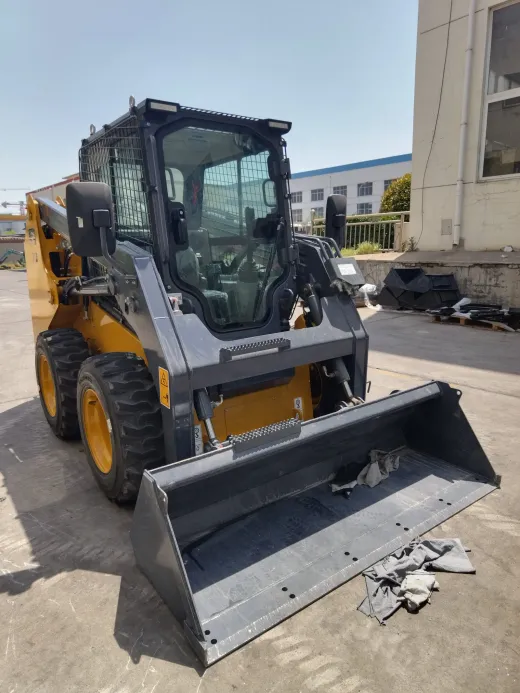
Skid Steer Weight: Operating Weight by Class, Mini to Large Frame
How much does a skid steer weigh? It depends on frame class, undercarriage, and whether you mean operating weight, shipping weight, or rated capacity. This guide breaks down skid steer weight from stand-on minis to large-frame machines, explains tracked vs wheeled weight differences, and covers what the number means for trailer selection and towing rules.
Read more →
Amphibious Mini Excavators: Working on Water, Marshes & Wetlands
A clear-headed guide to amphibious and floating mini excavators — how pontoon undercarriages work, where they outperform standard machines, their real limitations, and when wide rubber tracks are the smarter choice for wet and soft-ground work.
Read more → Articulating Loaders Explained: Compact & Mini Articulated Loaders
An articulating loader offers superior maneuverability in tight spaces where conventional machines struggle. This guide covers everything buyers need to know about small, compact, and mini articulated loaders — from how they work to what to look for when shopping.
Read more →