










Electric Skid Steer Loader: Are Battery-Powered Skid Steers Worth It?
2026-06-28
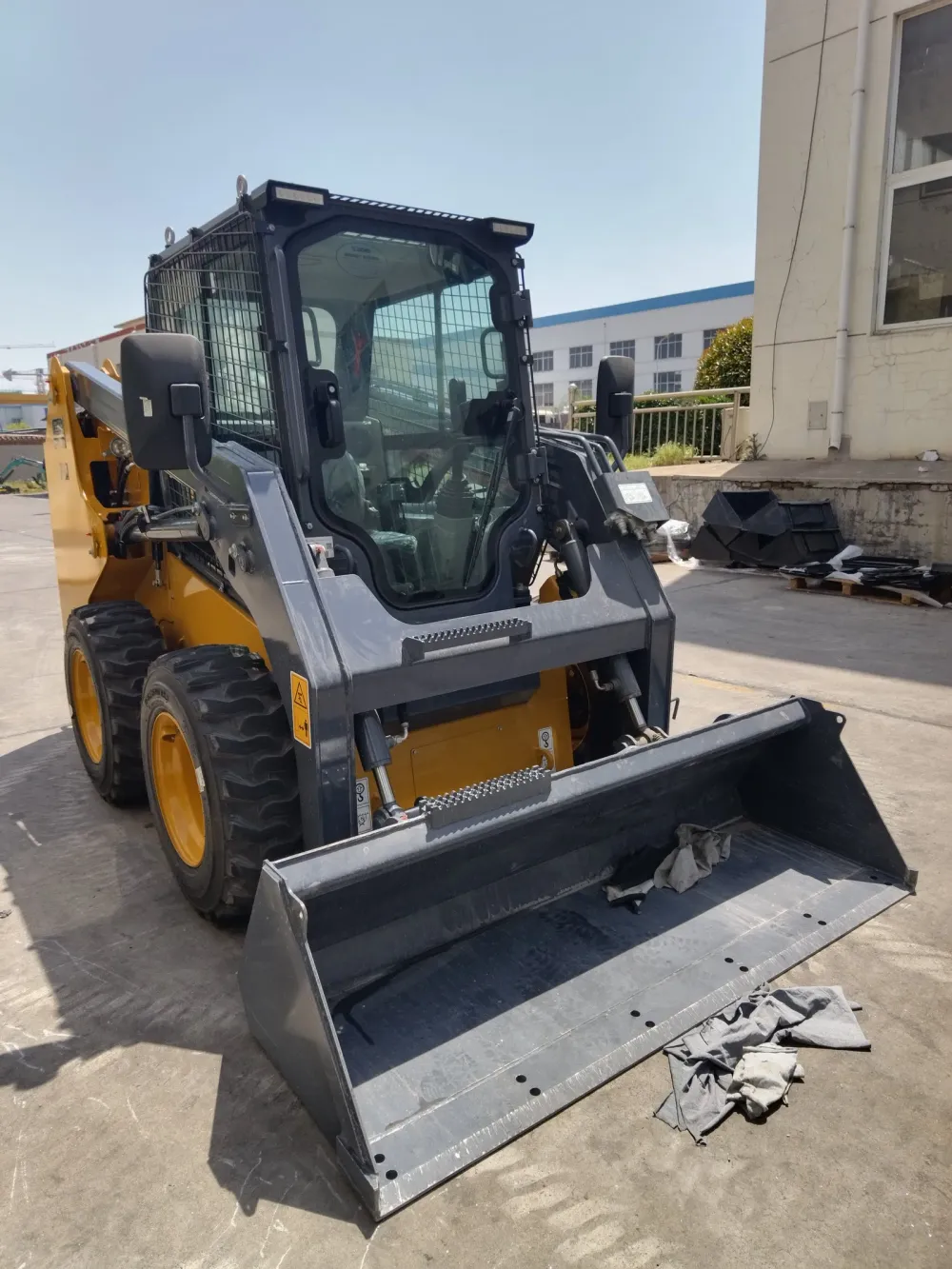
Battery-powered skid steers are reshaping job sites with zero emissions, lower operating costs, and near-silent operation. This guide breaks down everything buyers need to know about the electric skid steer loader market in 2026 — from real running costs to which applications benefit most.
The construction equipment industry is going electric, and compact loaders are leading the charge. An electric skid steer loader — also called an electric skid loader or skid steer electric — runs entirely on a lithium-ion battery pack rather than a diesel or gas engine. That means no exhaust fumes, dramatically reduced noise, and operating costs that can be 60–70% lower than a comparable diesel machine. For indoor work, greenhouse operations, urban demolition, and environmentally sensitive sites, an electric skid steer is no longer a novelty — it is increasingly the practical first choice. This guide covers what the technology actually delivers, where it falls short, and how to evaluate whether a battery-powered machine makes financial sense for your operation.
What Is an Electric Skid Steer Loader?
A conventional skid steer uses a gasoline or diesel engine to drive hydraulic pumps, which in turn power the lift arms, auxiliary hydraulics, and drive motors. An electric skid steer loader replaces the combustion engine with one or more electric motors fed by a high-voltage battery pack — typically 48 V to 96 V lithium-ion in compact models, and up to 400 V in full-size machines.
The result is a machine that behaves almost identically to its diesel counterpart but with a fundamentally different energy source. Operators often describe the response as smoother and more linear because electric motors deliver peak torque instantly, without the lag of a turbo-diesel spooling up. The same skid-steer attachment ecosystem — augers, buckets, forks, trenchers — works unchanged because auxiliary hydraulic flow is generated by an electrically driven hydraulic pump.
Two main form factors exist in this category:
- Electric mini skid steer loader — stand-on or walk-behind units with an operating capacity under 1,000 lb. Perfect for landscaping, tight residential sites, and tasks that a full-size machine cannot reach.
- Full-size electric compact track loader / wheeled electric skid steer — rated operating capacities from 1,500 to 3,500 lb, intended for commercial and light industrial work.
A third emerging category is the all electric compact track loader, which pairs a rubber-track undercarriage with full battery-electric power for superior flotation on soft ground without any emissions.
Electric vs. Diesel Skid Steer: Running Cost Comparison
The upfront purchase price of an electric skid steer for sale is typically 20–40% higher than a comparable diesel model. But the total cost of ownership calculation often reverses that gap within two to four years, depending on hours run per year and local energy prices.
Consider the key cost lines:
- Fuel vs. electricity: Diesel averages $4–5 per hour of operation at current prices. Charging an equivalent electric machine typically costs $0.80–$1.50 per hour depending on grid rates and battery size.
- Maintenance: No oil changes, no air filters, no fuel filters, no coolant flushes, no diesel particulate filter (DPF) regeneration cycles. Electric drivetrain components have far fewer wear items. Expect maintenance costs 50–70% lower than diesel over a 5-year period.
- Downtime: DPF issues alone sideline many diesel compact loaders for hours. Electric machines eliminate this failure mode entirely.
- Battery replacement: Modern lithium iron phosphate (LFP) battery packs are warrantied for 2,000–3,000 charge cycles, equating to 6,000–10,000 operating hours before significant capacity loss. At typical utilization, that is 8–12 years of service life.
The breakeven math changes significantly for contractors who run machines more than 4 hours per day. High utilization operators recover the price premium fastest and gain the most from reduced maintenance windows.
Electric Mini Skid Steer: The Compact Case
The electric mini skid steer segment is growing fastest because the smaller battery packs needed for light-duty machines are more affordable, and the zero-emission benefit is most critical in the confined spaces where mini machines operate.
An electric mini skid steer loader typically weighs 1,200–2,500 lb, fits through a standard 36-inch gate, and runs 4–8 hours on a single charge depending on load cycle. Because the machine is small, a standard 240 V Level 2 charger can replenish the pack in 4–6 hours overnight — no special fast-charge infrastructure needed for single-shift operations.
Applications where an electric mini skid steer for sale makes the most sense include:
- Greenhouse, nursery, and indoor growing operations where diesel fumes harm plants and workers
- Residential landscaping — low noise keeps neighbors happy and allows earlier start times
- Pool excavation and backyard work — fits through narrow side gates
- Interior demolition and renovation where fumes in an enclosed building pose health risks
- Horse stables, livestock barns, and food processing facilities
The electric mini track loader variant adds rubber tracks to the mini platform, delivering even lower ground pressure — ideal for turf restoration, wetland-adjacent work, and soft landscape applications where wheel marks are unacceptable.
ZHONGMAI's skid steer loader line covers a range of capacities. Contact our team to discuss which model specification best matches your lift and reach requirements.
Remote Control Options: Electric Machines Lead the Way
Battery-electric architecture is a natural fit for remote operation. Without a combustion engine requiring human-proximity cooling air and exhaust management, the machine can be fully sealed and operated at a distance. This has made the remote control mini skid steer and remote control skid steer loader categories almost synonymous with electric power.
Remote control skid steers are used in several demanding scenarios:
- Hazardous demolition: Operating near unstable structures without putting a driver in the seat.
- Steep slope work: Running a machine on grades where rollover risk makes cab operation unsafe.
- Confined spaces: Tunnels, crawl spaces, and underground utility vaults where human entry requires special permits.
- Repetitive tasks: Some remote-control units support semi-autonomous routing for grading or material transfer loops.
Radio-controlled range typically extends 300–1,000 feet line-of-sight. More sophisticated systems use camera feeds and operate over LTE for beyond-line-of-sight tasks. If remote operation is a priority for your application, verify whether the model you are evaluating offers an optional RC kit or ships with remote capability standard.
Electric Track Loader vs. Electric Wheeled Skid Steer
Buyers choosing between an electric track loader (compact track loader, CTL) and a wheeled electric skid steer face the same tradeoff that exists in the diesel world — just with battery-electric powertrains.
Electric compact track loader advantages:
- Lower ground pressure — spreads machine weight across a longer track footprint
- Superior traction on mud, sand, snow, and loose fill
- Less surface damage on soft or finished ground
- Better stability on slopes
Electric wheeled skid steer advantages:
- Lower initial cost — tracks are expensive to replace ($3,000–$8,000 per pair)
- Faster travel speed on hard surfaces
- Less wear on paved yards and loading docks
- Simpler drivetrain with lower long-term maintenance
The all electric compact track loader represents the premium end of this market. Several manufacturers have announced or released CTL models in the 60–90 hp equivalent range with 8-hour shift-capable battery packs and on-board fast charging. These machines carry a significant price premium over wheeled electric skid steers but are the right tool for contractors working in muddy or undeveloped terrain conditions.
For buyers who need track-based performance without the electric premium, ZHONGMAI's conventional skid steer and attachment lineup provide a cost-effective diesel alternative that handles the same range of tasks.
Key Specs to Evaluate Before You Buy
Shopping for an electric skid loader requires paying attention to a different spec sheet than diesel buyers are used to. Here are the critical numbers to compare:
- Rated Operating Capacity (ROC): Same as diesel — the load in pounds the machine can safely handle at 50% tipping load. Do not buy underspecified; electric machines do not gain capacity from engine tuning.
- Battery capacity (kWh): Larger packs mean longer runtime but more weight and slower charging. A 20 kWh pack on a mini machine is generous; a full-size skid steer may need 40–80 kWh for shift-long operation.
- Charge time and onboard charger amperage: A 7.2 kW onboard charger on a 40 kWh pack needs ~6 hours for a full charge. Some machines support DC fast charging (CCS or CHAdeMO) for 1–2 hour top-ups.
- Auxiliary hydraulic flow (GPM) and pressure (PSI): This determines which attachments the machine can power. High-flow attachments (mulchers, cold planers) require 30+ GPM — verify the electric machine's hydraulic pump is up to the task.
- Operating weight: Electric machines are heavier than diesel equivalents due to battery weight. Confirm your trailer's payload rating and job site ground bearing capacity.
- Warranty: Look for separate battery and drivetrain warranties. A credible manufacturer will warrant the battery pack for at least 5 years or 2,000 cycles.
Is an Electric Skid Steer Right for Your Business?
An electric skid steer loader makes the most financial and operational sense under a specific set of conditions. Use this checklist to evaluate your situation:
- ✔ You work indoors, in enclosed spaces, or in emission-controlled zones at least 30% of the time
- ✔ You operate the machine more than 4 hours per day — higher utilization accelerates payback
- ✔ You have access to 240 V or higher charging at your yard or primary job site
- ✔ Noise is a constraint — residential neighborhoods, hospitals, schools, or noise ordinance areas
- ✔ You are tired of diesel particulate filter issues, cold-start problems, or fuel theft
- ✔ Your attachment requirements stay within the hydraulic flow the electric platform can deliver
Conversely, a conventional diesel or gas skid steer may still be the better choice if:
- ✗ You run the machine on remote sites with no charging infrastructure
- ✗ You need full-shift operation for two shifts back-to-back without swap batteries
- ✗ Budget is the overriding constraint and total cost of ownership over 5+ years is not factored in
- ✗ Your primary application requires continuous high-flow hydraulics (e.g., full-time mulching)
For buyers on the fence, a backhoe loader or a diesel skid steer remains a proven, lower-upfront-cost alternative with a mature parts and service network. ZHONGMAI offers both paths — reach out to our sales team for a side-by-side cost analysis tailored to your annual hours.
Browse our electric skid steer loader range · — we reply within one business day.
Frequently asked questions
How long does an electric skid steer loader run on a full charge?
Runtime depends heavily on battery pack size and workload intensity. A light-duty electric mini skid steer loader with a 15–20 kWh pack typically delivers 4–6 hours of mixed-cycle work. Full-size electric skid steers and compact track loaders with 40–80 kWh packs are designed to cover a standard 8-hour shift under moderate loads. Heavy continuous work like trenching or high-flow attachment use will reduce runtime by 20–30%.
Can I use standard skid steer attachments on an electric skid steer?
Yes. Electric skid steers use the same universal quick-attach plate and auxiliary hydraulic couplers as diesel machines. Your existing buckets, forks, augers, and grapples will bolt right on. The key variable is hydraulic flow — verify the electric machine's pump output in GPM matches what your high-demand attachments require. Standard attachments like buckets and pallet forks have no hydraulic requirement and work identically.
What does an electric skid steer cost compared to diesel?
Electric skid steers typically carry a 20–40% purchase price premium over comparable diesel models. An electric mini skid steer starts around $25,000–$40,000 USD depending on capacity and brand, while full-size electric skid steers range from $60,000 to over $100,000 for premium models with large battery packs. However, operating costs are 60–70% lower, and maintenance is substantially reduced, so many buyers recover the premium within 2–4 years of regular use.
Is an electric compact track loader better than an electric wheeled skid steer?
It depends on your terrain. An all electric compact track loader has lower ground pressure, better traction in mud and soft soil, and greater stability on slopes — making it ideal for site work, landscaping, and undeveloped terrain. An electric wheeled skid steer costs less to purchase and maintain (tracks are expensive to replace), travels faster on hard surfaces, and is better suited for yard operations and loading dock environments. Choose tracks for ground conditions; choose wheels for pavement and cost.
How do I charge an electric skid steer at a job site?
Most electric skid steers include an onboard AC charger that accepts 240 V single-phase or three-phase power. A standard 50-amp, 240 V outlet — the same used for EV car chargers — is sufficient for overnight charging of most compact machines. For fast turnaround between shifts, some models support DC fast charging via CCS connectors, cutting charge time to 1–2 hours. For remote sites without grid power, a diesel generator of 15–30 kW can charge the battery pack, though this reduces the emissions benefit.
Are remote control skid steers electric only?
Not exclusively, but the vast majority of remote control mini skid steer and remote control skid steer loader products on the market today are electric. The electric drivetrain is cleaner to seal against weather and dust, produces no exhaust in confined spaces, and is easier to integrate with electronic control systems. Some diesel-engine skid steers can be retrofitted with RC systems, but electric machines are purpose-built for this capability from the ground up.
What maintenance does an electric skid steer need?
Electric skid steers eliminate most engine-related service: no oil changes, no fuel filters, no air filters, no coolant flushes, and no diesel particulate filter (DPF) maintenance. Routine service focuses on greasing pivot points and loader arm joints, checking hydraulic fluid level and condition, inspecting the battery cooling system, and monitoring tire or track wear. Annual battery health diagnostics are recommended. Overall, expect maintenance intervals to be 2–3 times less frequent than a comparable diesel machine.
Related articles
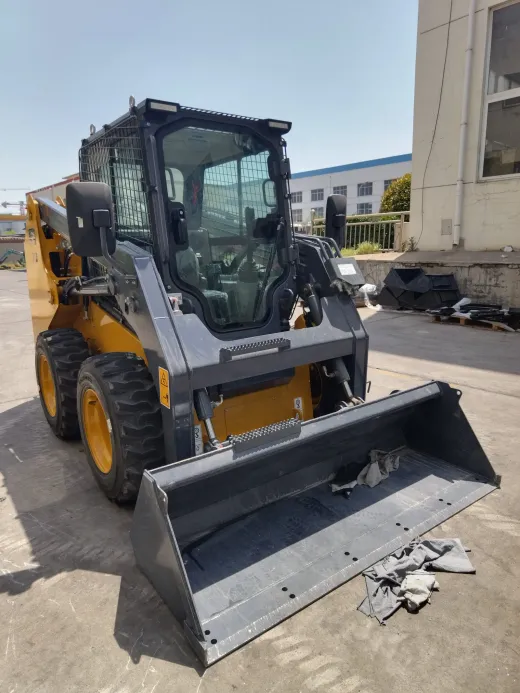
Skid Steer Weight: Operating Weight by Class, Mini to Large Frame
How much does a skid steer weigh? It depends on frame class, undercarriage, and whether you mean operating weight, shipping weight, or rated capacity. This guide breaks down skid steer weight from stand-on minis to large-frame machines, explains tracked vs wheeled weight differences, and covers what the number means for trailer selection and towing rules.
Read more →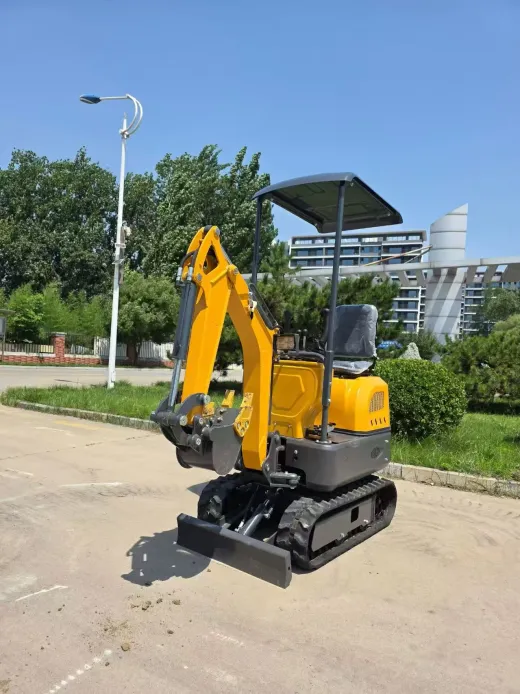
Amphibious Mini Excavators: Working on Water, Marshes & Wetlands
A clear-headed guide to amphibious and floating mini excavators — how pontoon undercarriages work, where they outperform standard machines, their real limitations, and when wide rubber tracks are the smarter choice for wet and soft-ground work.
Read more → Articulating Loaders Explained: Compact & Mini Articulated Loaders
An articulating loader offers superior maneuverability in tight spaces where conventional machines struggle. This guide covers everything buyers need to know about small, compact, and mini articulated loaders — from how they work to what to look for when shopping.
Read more →