










Mini Dozers: Small Bulldozers That Pack a Punch
2026-06-28
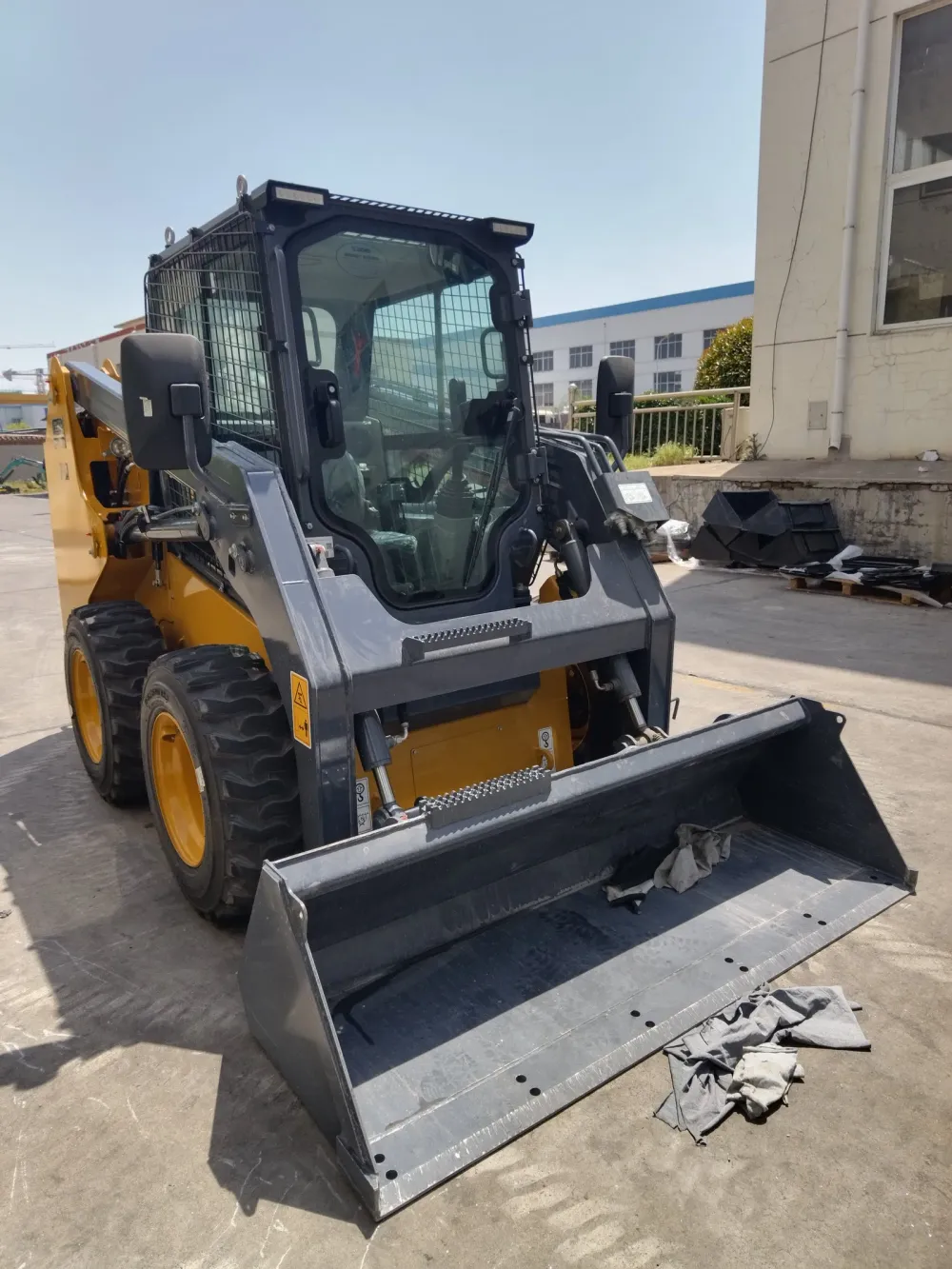
Mini dozers bring bulldozer power to job sites where full-size machines simply cannot fit. Whether you are grading a backyard, clearing brush, or pushing soil on a tight construction site, a compact dozer delivers the muscle you need at a fraction of the operating cost.
When a full-size bulldozer is overkill — or simply cannot squeeze through the gate — mini dozers step in to fill the gap. These compact machines weigh anywhere from 2,000 lb to roughly 20,000 lb, yet they push, grade, and backfill with surprising authority. Contractors, landscapers, hobby farmers, and rental yards have all discovered that a well-chosen compact dozer can replace multiple trips with a skid steer blade or a rented track loader. In this guide we walk through sizes, typical price ranges, the best use cases, and what to look for when comparing models so you can buy or rent with confidence.
What Exactly Is a Mini Dozer?
A mini dozer — also called a compact dozer, small bulldozer, or mini bulldozer — is a crawler-tracked machine fitted with a front blade designed to push, spread, and level material. Unlike a skid steer loader with a dozer blade attachment, a true mini dozer sits low to the ground on wide rubber or steel tracks, giving it a lower center of gravity and better grading finesse.
The machine class typically covers operating weights from about 1 ton up to 10 tons. Below that threshold you enter micro-dozer or remote-control territory; above it you are looking at mid-size crawlers that carry full-size price tags. Most buyers shopping for a mini bulldozer are targeting the 2- to 6-ton sweet spot where the machines are still towable on a standard equipment trailer yet powerful enough for real production work.
Key components that distinguish a compact dozer from competing machine types:
- Crawler undercarriage — distributes ground pressure for soft-soil stability
- Six-way or angle blade — allows pushing, side-casting, and back-grading without repositioning
- Torque-converter or hydrostatic drive — smooth, stepless speed control ideal for finish grading
- ROPS/FOPS cab or rollbar — operator protection on uneven terrain
Mini Dozer Sizes and Weight Classes
Understanding mini dozer sizes is the fastest way to narrow your search. The table below summarizes the most common weight classes and what each is best suited for.
- Micro class (under 2,000 lb / 1 ton) — Remote-control or walk-behind units used for indoor demolition, greenhouse grading, and utility corridor work where human-operated machines cannot safely enter.
- Light class (2,000–6,000 lb / 1–3 ton) — The most popular segment for residential landscapers and small contractors. A small dozer in this range fits through a standard 36-inch gate, tows behind a half-ton pickup with the right trailer, and sips fuel. Typical blade widths run 60–84 inches.
- Mid class (6,000–12,000 lb / 3–6 ton) — Bridges the gap between compact and full-size. These machines are common on commercial site prep, rural road building, and pipeline corridor clearing. Blade widths reach 96–108 inches.
- Upper compact class (12,000–20,000 lb / 6–10 ton) — Approaching the performance of a full-size D3 or D4 class machine while still being far cheaper to own and operate. Favored by quarries, loggers, and large-scale land clearing crews.
When people search for a compact bulldozer price, they are usually looking at the light or mid class. That is also where the widest variety of brands and configurations exist, giving buyers the most negotiating leverage.
Mini Dozer Prices: What to Expect
New mini dozer prices vary enormously depending on weight class, brand origin, blade configuration, and cab options. Here is a realistic framework for budgeting:
- Light-class new (1–3 ton): USD 25,000–65,000. Entry-level Chinese-manufactured units start below USD 30,000; Japanese and American brands cluster above USD 45,000 for comparable specs.
- Mid-class new (3–6 ton): USD 60,000–120,000. Machines in this range usually include ROPS cabs, hydrostatic drives, and six-way blades as standard equipment.
- Upper compact new (6–10 ton): USD 110,000–200,000+. At this price, buyers should compare carefully against entry-level full-size dozers to make sure the compact size advantage justifies the cost.
- Used mini dozers: A well-maintained 3-ton unit with 2,000–4,000 hours often sells for 40–60 percent of new price, making the used market attractive for budget-conscious buyers.
Always factor in dealer support, parts availability, and warranty when comparing a mini dozer for sale from different sources. A machine that sits idle waiting for an obscure hydraulic seal will cost far more in lost productivity than the initial price savings.
ZHONGMAI's skid steer loaders fitted with a dozer blade attachment offer an alternative path for buyers who want pushing and grading capability without committing to a single-purpose crawler — worth considering if versatility matters more than outright blade finesse.
Top Use Cases for Compact Dozers
Mini dozers earn their keep across a surprisingly wide range of applications. Below are the most common use cases buyers describe when they contact equipment dealers.
- Residential grading and land leveling — Finish grading a lawn, leveling a pad for a barn or shop, or creating swales for drainage. The low ground pressure of a compact crawler protects established turf better than wheeled alternatives.
- Brush clearing and light land clearing — Pushing over small trees, piling slash, and clearing fence lines. A mid-class machine with a root rake or stump-pusher blade handles most rural clearing jobs efficiently.
- Site prep and foundation backfill — Backfilling foundation walls, spreading crushed stone for driveways, and rough-grading building pads before a concrete crew arrives.
- Pipeline and utility corridor maintenance — Narrow right-of-way work where a full-size dozer would damage adjacent infrastructure.
- Snow removal and road maintenance — Rural townships and ski resorts use small dozers to maintain unpaved roads and push heavy, wet snow that overwhelms wheel loaders.
- Mining and quarry cleanup — Pushing muck and fines away from crushers, leveling stockpile areas, and maintaining haul roads inside the pit.
For tasks that blend dozing with lifting — loading trucks, moving pallets, or digging trenches — pairing a compact dozer with a backhoe loader or a skid steer loader on the same site gives a two-machine fleet that covers almost every earthmoving need.
Comparing Popular Mini Dozer Models: Spec Benchmarks
Buyers frequently compare specific models when researching a compact dozer purchase. While ZHONGMAI does not manufacture these machines, understanding published specs helps you set realistic expectations for any machine in the class.
- Komatsu D21 — A long-running light-class benchmark at roughly 4.5 tons. Known for reliable hydrostatic transmission and good parts network. Often cited as the reference point for resale value in the 3–5 ton segment.
- Cat D1 / D2 — Caterpillar's entry into the compact dozer space with SmartGrade GPS-ready blade control as an option. Priced at the premium end of the light class.
- John Deere 450 — Mid-class crawler popular with utility contractors in North America. Good torque at low RPM and a wide dealer network.
- Case 650M — Competitive mid-class option often spec'd with a 6-way PAT blade and LGP (low ground pressure) undercarriage for soft sites.
When comparing any of these against a small dozer from an alternative brand, focus on: engine horsepower at the rated RPM, drawbar pull, blade capacity in cubic yards, undercarriage track width (standard vs. LGP), and the hydrostatic vs. torque-converter drive decision. These specs, not brand badges, determine whether the machine does the work you need.
Buying vs. Renting a Mini Dozer
One of the first questions every prospective buyer should answer honestly is whether purchasing or renting a mini bulldozer makes more financial sense for their situation.
Buy when:
- You will use the machine more than 400–600 hours per year
- You have the storage, maintenance infrastructure, and skilled operators to keep it productive
- Rental availability in your area is unreliable or the rental fleet consists of worn-out machines
- You want a customized configuration (specific blade type, cab, GPS grade control) that rental yards do not stock
Rent when:
- Your need is project-specific and unlikely to repeat at the same scale
- Capital is better deployed elsewhere in your business
- You want to test a weight class before committing to a purchase
- Maintenance headaches and downtime risk are concerns
Day rates for a light-class compact dozer typically run USD 350–600; week rates USD 1,200–2,000; monthly rates USD 3,500–6,000 depending on market and machine condition. At monthly rental rates, a purchase pencils out in roughly 18–24 months for most buyers — faster if the machine works overtime.
What to Look for When Buying a Used Mini Dozer
The used market for mini dozers is active, but condition varies widely. Use this checklist before writing a deposit check on any used compact bulldozer:
- Undercarriage wear — Inspect track shoe thickness, sprocket teeth, roller flanges, and idler condition. Undercarriage replacement on a 5-ton machine can cost USD 8,000–20,000, which quickly erodes the savings on a bargain purchase.
- Hydraulic system integrity — Cycle the blade through all positions and check for drift when the valve is centered. Inspect hose condition and look for weeping around cylinder seals.
- Engine smoke and oil consumption — Cold-start blue smoke that clears is acceptable; persistent blue or black smoke is a red flag. Check the air filter and crankcase breather condition.
- Machine hours vs. service records — A 3,000-hour machine with documented oil changes every 250 hours is a better buy than a 1,500-hour machine with no records.
- Blade and push frame condition — Look for cracks at the A-frame welds and check cutting edge thickness. Cutting edge replacement is cheap; structural cracks are not.
- Telematics data — Many machines manufactured after 2015 carry factory telematics. Request a history report showing idle time, fault codes, and geographic location data if available.
If the seller cannot or will not allow a pre-purchase inspection by an independent technician, walk away. Reputable sellers welcome it.
Browse our mini dozers range · — we reply within one business day.
Frequently asked questions
What is the difference between a mini dozer and a skid steer with a blade?
A mini dozer uses a dedicated crawler undercarriage and a purpose-built push frame that delivers more consistent blade pressure and better grading finesse. A skid steer fitted with a dozer blade is more versatile — it can switch to forks, a bucket, or auger — but the blade geometry and machine weight distribution are compromises. For pure grading and pushing tasks that repeat daily, a dedicated compact dozer outperforms a skid steer blade attachment. For occasional dozing mixed with lifting and digging, a skid steer with attachments is the more economical choice.
How much does a mini dozer weigh, and can I tow it with a pickup?
Light-class mini dozers typically weigh 4,000–8,000 lb (roughly 2–4 tons). Many buyers tow them on a 14,000–16,000 lb equipment trailer behind a heavy-duty pickup with an appropriate tow rating. Mid-class machines (6,000–12,000 lb) require a dedicated equipment trailer and a one-ton or commercial truck. Always verify your truck's Gross Combined Weight Rating (GCWR) and the trailer's axle rating before hauling.
What blade types are available on compact dozers?
The most common configurations are: a straight blade (S-blade) for bulk pushing; an angle blade (A-blade) that pivots left or right for side-casting; a six-way PAT (Power Angle and Tilt) blade that moves in all directions for finish grading; and a semi-U blade for high-volume dozing. Most buyers in the light and mid class choose a six-way blade for its versatility. Root rake blades are available as an alternative front tool for land clearing work.
How many hours does a mini dozer engine last?
A well-maintained diesel engine in a quality mini dozer typically reaches 8,000–12,000 hours before requiring a major overhaul. Undercarriage components usually need attention every 3,000–5,000 hours depending on abrasiveness of the material worked. Regular oil analysis, clean fuel, and proper daily greasing are the most reliable predictors of long engine life.
Are GPS grade control systems available on small dozers?
Yes. Factory-integrated 2D and 3D GPS grade control is available on several compact dozer models, and aftermarket systems from Trimble, Leica, and Topcon can be fitted to almost any machine with electro-hydraulic blade control. GPS dozing dramatically reduces finish grading time and operator skill requirements on large flat surfaces, but adds USD 20,000–60,000 to the machine cost depending on system complexity.
What is the fuel consumption of a compact dozer?
Light-class machines (1–3 ton) typically consume 0.8–1.5 gallons (3–6 liters) of diesel per hour at moderate load. Mid-class machines (3–6 ton) burn 1.5–3 gallons (6–12 liters) per hour. Actual consumption depends heavily on soil conditions, blade loading, and how aggressively the machine is operated. Hydrostatic drive systems tend to be slightly more efficient than torque-converter drives at partial load because they do not slip.
Can a mini dozer handle tree stumps and roots?
A mid-class or upper compact dozer with a root rake blade or a stump-pusher blade can push over small to medium trees and pile slash effectively. Light-class machines can topple saplings and small trees but will struggle with mature hardwoods. For heavy land clearing with stumps larger than 12 inches in diameter, an upper compact or full-size dozer is the more productive choice. Pairing a compact dozer with a skid steer equipped with a brush cutter attachment — like those compatible with ZHONGMAI's skid steer platform — speeds land clearing significantly by mulching debris the dozer piles up.
Related articles
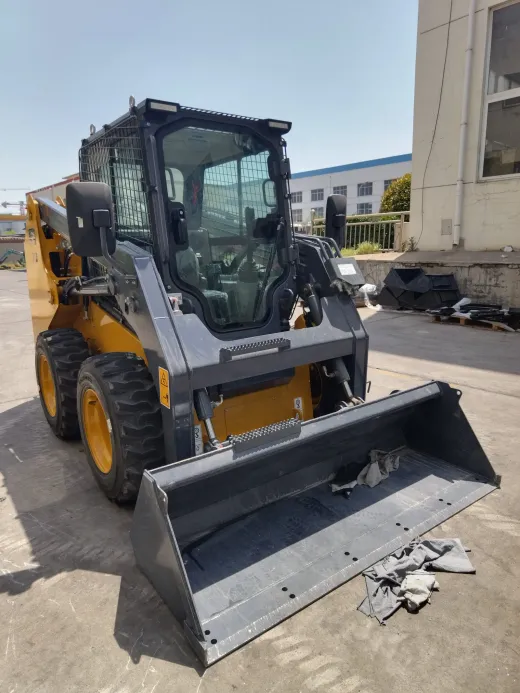
Skid Steer Weight: Operating Weight by Class, Mini to Large Frame
How much does a skid steer weigh? It depends on frame class, undercarriage, and whether you mean operating weight, shipping weight, or rated capacity. This guide breaks down skid steer weight from stand-on minis to large-frame machines, explains tracked vs wheeled weight differences, and covers what the number means for trailer selection and towing rules.
Read more →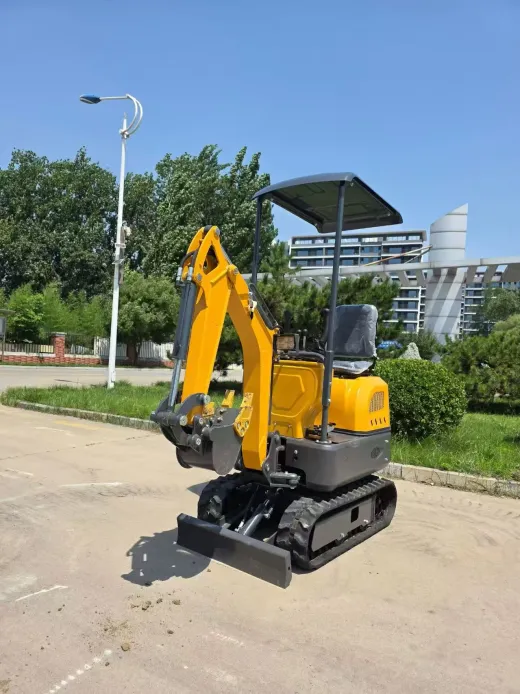
Amphibious Mini Excavators: Working on Water, Marshes & Wetlands
A clear-headed guide to amphibious and floating mini excavators — how pontoon undercarriages work, where they outperform standard machines, their real limitations, and when wide rubber tracks are the smarter choice for wet and soft-ground work.
Read more → Articulating Loaders Explained: Compact & Mini Articulated Loaders
An articulating loader offers superior maneuverability in tight spaces where conventional machines struggle. This guide covers everything buyers need to know about small, compact, and mini articulated loaders — from how they work to what to look for when shopping.
Read more →