










Skid Steer 3-Point Hitch Adapter: Hitches, Couplers & PTO Options
2026-06-28
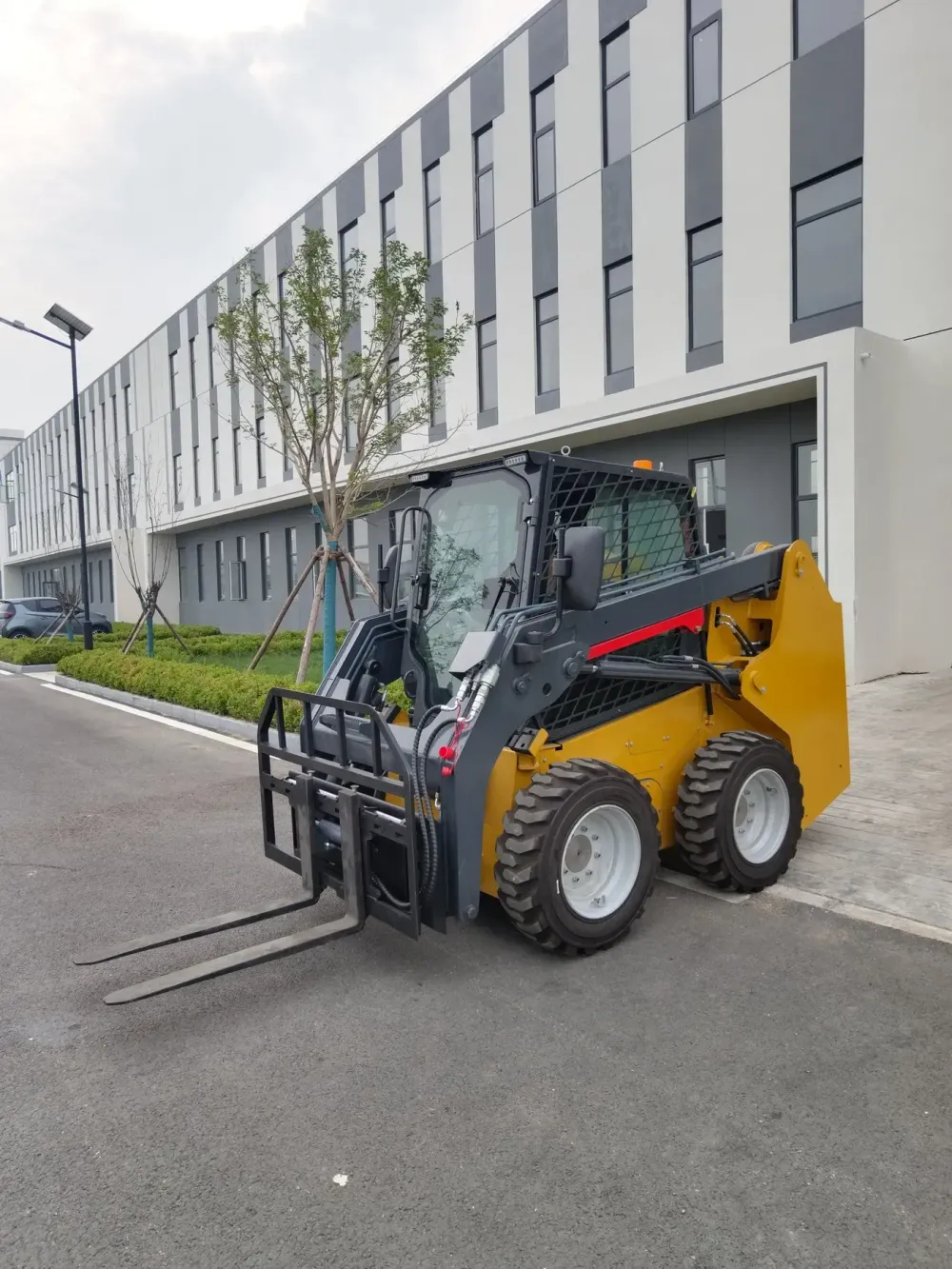
A skid steer 3 point hitch attachment unlocks a vast library of tractor implements for your loader, from finish mowers to tillers and post drivers. This guide covers every coupler, receiver, and PTO option so you can match the right adapter to your machine and workload.
If you already own a skid steer loader, adding a skid steer 3 point hitch attachment is one of the highest-value upgrades you can make. Instead of buying dedicated skid-steer-only tools for every job, a quality skid steer hitch attachment lets you plug in the same Category I or Category II implements your tractor uses — box blades, rear blades, tillers, seeders, and more. The result is a compact, maneuverable machine with the implement versatility of a full-size utility tractor. This buyer's guide walks through every hitch type, mounting standard, hydraulic coupling option, and PTO configuration you need to understand before purchasing.
What Is a Skid Steer 3-Point Hitch Adapter?
A skid steer 3 point hitch adapter is a mounting frame that bolts to your machine's universal quick-attach plate on the front loader arms and replicates a tractor's three-point linkage at the rear — or, in most front-mount designs, right where the bucket normally sits. The adapter converts the loader's lift and tilt hydraulics into raising and lowering motion for Category I or II implements, allowing any skid steer quick attach 3 point setup to become a versatile implement carrier.
Most adapters on the market are designed around the SAE/ISO skid-steer universal quick-attach standard, so a single frame fits hundreds of loaders from different manufacturers. Some specialized frames target the Bob-Tach style found on older Bobcat machines, while others are built around the universal skid-steer plate used by brands like Case, Caterpillar, and Kubota. If you operate a compact track loader or mini machine, look specifically for a mini skid steer universal mounting plate or mini skid steer quick attach adapter sized for the narrower frame width of those units.
- Category I 3-point: suits implements with 26–28 in lower link spread; common on compact tractors up to ~50 hp.
- Category II 3-point: suits larger implements with 34–36 in lower link spread; used with mid-range utility tractors.
- Most skid-steer adapters include adjustable lower arms to span both categories.
Hitch Types: Receiver, Ball, Trailer & Fifth Wheel
Not every application needs a three-point linkage. Depending on your job, you may need a simple skid steer receiver hitch attachment for towing, a skid steer ball hitch attachment for pulling a dump trailer, or a heavy-duty skid steer fifth wheel attachment for semi-trailer spotting in a yard. Understanding the difference prevents buying the wrong tool.
Receiver Hitch
A skid steer receiver hitch mounts to the quick-attach plate and presents a standard 2-in or 2.5-in receiver tube at the rear of the machine. It transforms your loader into a genuine skid steer towing attachment platform. A quality receiver hitch for skid steer is rated anywhere from 5,000 to 15,000 lb tongue weight depending on wall thickness and gusset design. Use it with a skid steer trailer ball attachment for conventional trailers, or swap the ball for a pintle hook when connecting to a pintle-eye trailer.
Trailer Hitch
A dedicated skid steer trailer hitch attachment goes one step further by integrating safety chain loops, a 7-pin trailer connector bracket, and sometimes a built-in weight-distribution bar. A well-built skid steer trailer hitch rated for your machine's actual rated operating capacity (ROC) is essential — never exceed the loader's tipping load when tongue weight is factored in.
Ball Hitch
A bolt-on skid steer ball hitch attachment provides a single 1-7/8 in, 2 in, or 2-5/16 in ball for light to medium trailer loads. This is the most common hitch attachment for skid steer purchased by landscapers and small contractors who need to occasionally pull a utility or dump trailer between job sites.
Fifth Wheel & Spreader Bar
The skid steer 5th wheel attachment — sometimes called a skid steer fifth wheel attachment — is a heavy-cast king-pin coupler that allows the machine to move semi-trailers around a yard or loading dock without a semi-truck. Pair it with a spreader bar skid steer lift frame when you need to balance a long, heavy load across two attachment points for safe overhead lifting.
PTO Options: Hydraulic and Mechanical
Many three-point implements — tillers, stump grinders, finish mowers, grain augers — require a power take-off shaft to spin their working components. Skid steers don't have a traditional mechanical PTO gearbox, so power must come from the machine's hydraulic circuit. A hydraulic pto for skid steer (also called a hydraulic motor PTO or hydro-PTO) uses the auxiliary hydraulic flow to drive an orbital or piston motor, which in turn spins a standard 540 RPM or 1,000 RPM output shaft that your implement driveshaft connects to.
When buying a skid steer 3 point hitch with pto, verify the following before purchase:
- Auxiliary hydraulic flow: A standard finish mower needs 10–15 GPM. A heavy tiller may need 20–30 GPM. Match the PTO motor displacement to your machine's available flow.
- Operating pressure: Most skid steer aux circuits run at 3,000–3,500 PSI. Confirm the PTO motor is rated above your peak system pressure.
- Output shaft size: North American implements use a 1-3/8 in 6-spline shaft at 540 RPM. European and some Asian implements use 1-3/8 in 21-spline at 1,000 RPM. Buy the correct output coupler.
- Rotation direction: Hydraulic motors can be plumbed for either rotation — confirm CW or CCW matches your implement requirement.
The skid steer pto hydraulic motor unit typically weighs 30–60 lb and mounts directly to the 3-point adapter frame. High-end units include a flow-control valve so you can dial down RPM without touching the machine's auxiliary lever — useful when running implements that are sensitive to overspeed.
Quick-Attach Standards and Coupler Compatibility
Confusion around quick-attach standards causes more buyer regret than almost any other factor. The term skid steer quick connect or skid steer quick hitch is used loosely across the industry, but there are really three distinct mounting systems in common use:
- Universal Skid Steer Quick Attach (Bob-Cat Universal / ISO 24410): The most common system. Two hook-shaped top hooks engage a horizontal top bar; two bottom lock pins engage lower receiver holes. This is the standard your skid steer style quick attach 3-point adapter should use if you own a mainstream loader.
- Deere/Quik-Tatch: Used on John Deere compact loaders. The geometry differs slightly — adapters designed for the universal plate may not latch securely without a Deere-specific frame.
- Euro / Global (Manitou, JCB, Wacker Neuson): A wider plate with different hook geometry. Purpose-built adapters are needed.
If you're using a compact machine, check whether you need a mini skid steer to skid steer adapter — a conversion plate that lets full-size universal-plate attachments mount to a smaller machine's narrower coupler frame. These adapter plates are available in both manual and skid steer electric quick attach variants where an electric actuator locks and unlocks the pins from the cab.
For applications demanding frequent attachment changes, consider upgrading to skid steer quick attach hydraulic couplers — a powered coupler that engages both the mechanical plate and the auxiliary hydraulic lines simultaneously, so you never have to exit the cab to swap implements. The skid steer auxiliary hydraulic couplers on a powered quick-attach unit are typically flat-face ISO 16028 style, which minimizes fluid spillage and air inclusion during connect/disconnect cycles.
The skid steer quick attach for tractor style adapter — which works in reverse, letting a tractor's three-point arms carry a skid-steer-plate attachment — is a separate category. These are popular with tractor owners who want access to the broader range of skid steer quick attach implements without buying a loader machine.
Tilt Attachments, Fork Extensions & Specialty Hitches
Beyond three-point and trailer hitches, the skid steer hitch ecosystem includes several specialty tools that deserve mention for buyers researching the full scope of options.
Tilt Hitch / Bucket Tilt
A skid steer tilt hitch — also sold as a skid steer bucket tilt attachment or skid steer tilt attachment for sale — inserts between the quick-attach plate and any bucket or attachment, adding a hydraulic tilt axis (±10° to ±45° depending on model). This allows grading on cross-slopes without repositioning the machine, dramatically cutting passes on fine grading work. If you grade ditches, driveways, or terraced sites regularly, a skid steer towing attachment bundle that pairs a tilt hitch with a rear receiver is a powerful combination.
Fork Extensions
Fork extensions for skid steer slide over existing pallet fork tines to increase reach from a typical 42 in to 60 or 72 in. They're useful for handling long lumber, pipe, or oversized pallets without needing dedicated long-tine forks. Always de-rate your rated fork capacity proportionally when using extensions — a 48-in extension on a 48-in tine effectively doubles the moment arm and halves safe capacity.
Rear Hitch
A skid steer rear hitch mounts to the machine's rear frame rather than the front arms — common on machines with rear auxiliary ports. This keeps the front loader arms free for material handling while towing with the rear, and is the preferred configuration for pulling aerators, seeders, or drag-behind implements on turf applications.
A skid steer trailer attachment used at the rear in this configuration also benefits from the machine's counterweight, improving stability versus a front-mounted tow point when the bucket is unloaded.
Choosing the Right Adapter: Key Buying Checklist
With so many product names and configurations in the market, a concise checklist helps narrow selection quickly. Before ordering any skid steer hitch receiver attachment or 3-point adapter, run through the following:
- Identify your machine's coupler standard — universal, Deere Quik-Tatch, Euro, or mini. Buy the matching mount or a compatible mini skid steer mounting plate adapter if needed.
- Confirm auxiliary hydraulic flow and pressure — check your operator's manual. Standard flow (15–25 GPM) covers most implements; high-flow machines (30–45 GPM) can drive larger PTO motors and heavy tilt cylinders.
- Determine implement category — Cat I or Cat II three-point? Trailer hitch? Fifth wheel? Decide before shopping to avoid buying a unit that doesn't fit your implements.
- Check rated capacity vs. your heaviest implement — the adapter's rated lift capacity must exceed the implement's weight plus any crop load. Over-capacity adapters have longer frame members and heavier gusset plating.
- PTO requirement — does your implement need power? If yes, add a hydraulic PTO motor to your cart alongside the 3-point frame. Many sellers offer bundled skid steer 3 point hitch with pto kits that save money over buying components separately.
- Rear vs. front mount — front-mount adapters are more common and easier to find; rear-mount options require specific machine frame mounting points.
- Manual vs. hydraulic quick attach — if you swap implements more than a few times per day, the time savings from skid steer quick attach hydraulic powered couplers justify the added cost.
ZHONGMAI's skid steer attachments lineup is engineered with universal-plate compatibility and includes options for tilt hitches, receiver hitches, and fork extensions. If you're evaluating which base machine to pair with these adapters, the ZHONGMAI skid steer loader range offers standard and high-flow auxiliary circuits to support the full attachment spectrum.
Browse our skid steer 3 point hitch attachment range · — we reply within one business day.
Frequently asked questions
What is a skid steer 3-point hitch adapter used for?
A skid steer 3 point hitch attachment converts your loader's quick-attach plate into a three-point linkage that accepts standard Category I and Category II tractor implements — including tillers, box blades, rear blades, post drivers, and finish mowers. It effectively doubles the implement library available to your machine without purchasing skid-steer-specific versions of each tool.
Can I add a PTO to my skid steer with a 3-point hitch adapter?
Yes. A hydraulic pto for skid steer converts the machine's auxiliary hydraulic flow into a rotating 540 RPM or 1,000 RPM output shaft. You purchase the hydraulic motor PTO unit as part of the 3-point adapter kit or as a separate bolt-on module. Match the motor's displacement (GPM demand) to your skid steer's available auxiliary flow — check your operator's manual for exact numbers.
What is the difference between a skid steer receiver hitch and a trailer hitch attachment?
A skid steer receiver hitch presents a standard 2-in receiver tube for generic towing accessories, while a dedicated skid steer trailer hitch attachment is a purpose-built frame that may include a fixed ball, safety chain brackets, and wiring harness mounts. For frequent trailer towing, the trailer hitch attachment is more convenient; for occasional towing with interchangeable accessories, the receiver hitch offers more flexibility.
Will a standard universal-plate 3-point adapter fit my mini skid steer?
Not directly. Mini skid steers use a narrower frame and a proportionally smaller mounting plate. You need a mini skid steer quick attach adapter or a mini skid steer universal mounting plate sized for your machine. Some manufacturers also offer a mini skid steer to skid steer adapter conversion plate, which lets full-size universal attachments connect to a mini machine's coupler — though you must respect the mini machine's lower rated capacity.
What is a skid steer tilt hitch and when do I need one?
A skid steer tilt hitch is a hydraulic coupler insert that adds a lateral tilt axis between the quick-attach plate and any attachment. It is most useful for fine grading on slopes, ditch work, and any application where the ground surface is not level. Instead of repositioning the entire machine on every pass, the operator tilts the bucket or blade hydraulically to match the terrain angle, saving significant time and fuel.
Can I use a skid steer hitch to tow a trailer on public roads?
In most jurisdictions, skid steer loaders are not licensed for on-road operation, so towing on public roads is generally prohibited. A skid steer trailer hitch attachment is designed for use within job sites, farms, and private property. Always verify local regulations and the machine's rated towing capacity before using any skid steer towing attachment, and never exceed the machine's rated operating capacity when accounting for tongue weight.
What is a skid steer 5th wheel attachment?
A skid steer fifth wheel attachment is a heavy-duty king-pin coupler that mounts to the loader's quick-attach plate. It allows the skid steer to move semi-trailers within a yard or warehouse dock without a semi-truck tractor. These are popular in distribution centers, lumber yards, and agriculture operations where trailers need to be spotted or repositioned frequently. They are not for over-road use and must be matched to the machine's lift and rated operating capacity.
Related articles
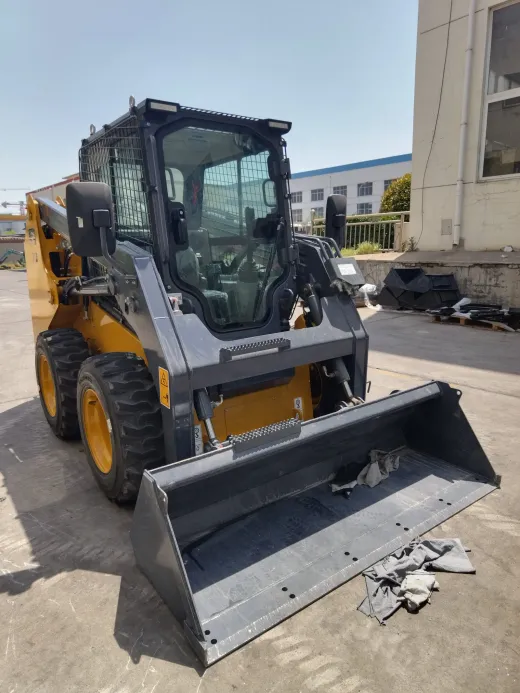
Skid Steer Weight: Operating Weight by Class, Mini to Large Frame
How much does a skid steer weigh? It depends on frame class, undercarriage, and whether you mean operating weight, shipping weight, or rated capacity. This guide breaks down skid steer weight from stand-on minis to large-frame machines, explains tracked vs wheeled weight differences, and covers what the number means for trailer selection and towing rules.
Read more →
Amphibious Mini Excavators: Working on Water, Marshes & Wetlands
A clear-headed guide to amphibious and floating mini excavators — how pontoon undercarriages work, where they outperform standard machines, their real limitations, and when wide rubber tracks are the smarter choice for wet and soft-ground work.
Read more → Articulating Loaders Explained: Compact & Mini Articulated Loaders
An articulating loader offers superior maneuverability in tight spaces where conventional machines struggle. This guide covers everything buyers need to know about small, compact, and mini articulated loaders — from how they work to what to look for when shopping.
Read more →