










Skid Steer Cement Mixer Attachment: Mix & Pour Concrete Without a Truck
2026-06-28
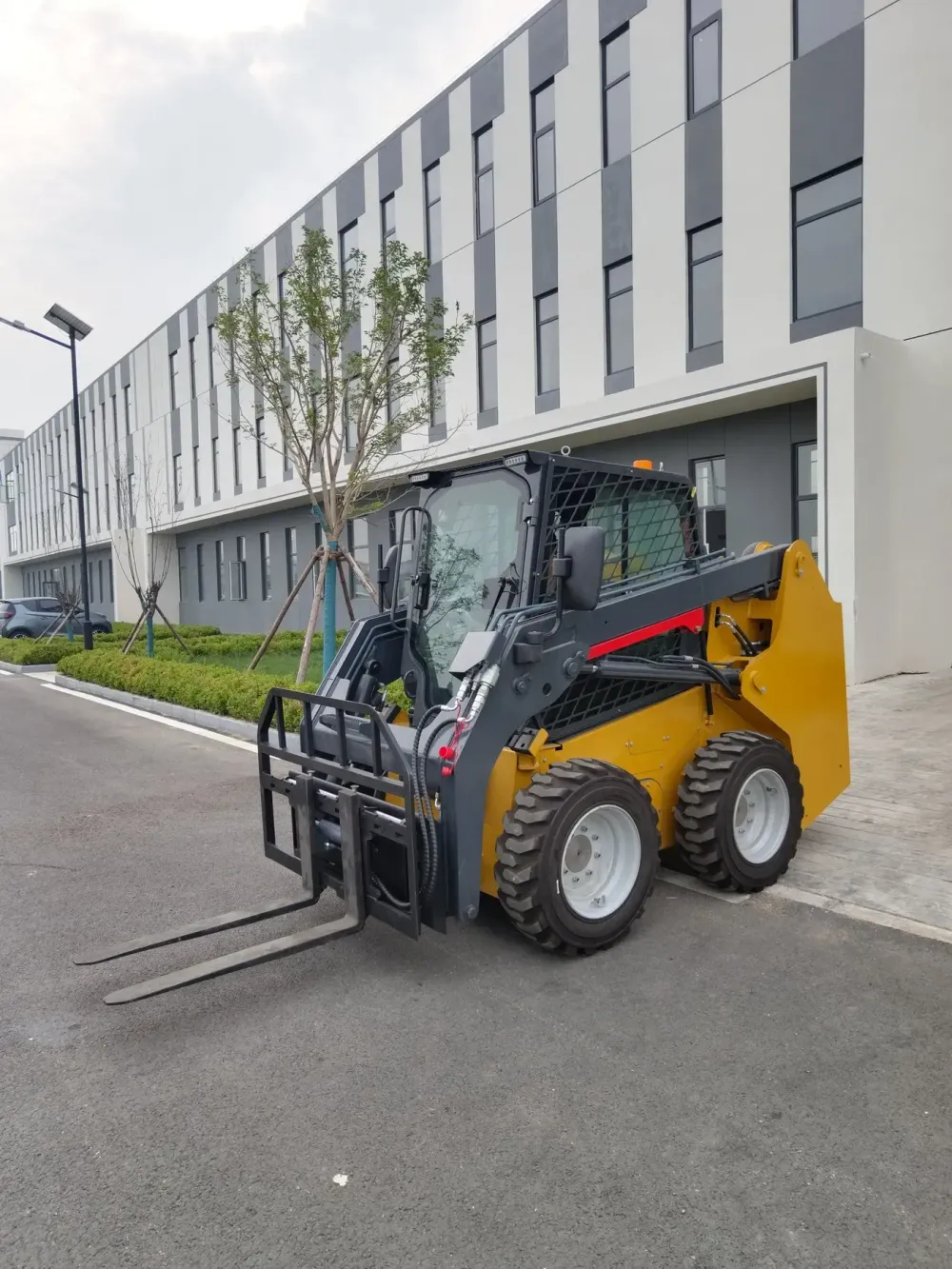
A practical guide to skid steer cement mixer attachments and concrete bucket options — covering mixing bucket types, capacity sizing, hydraulic requirements, and job-site use cases so you can pour footings, slabs, and walls without a ready-mix truck.
Ordering a ready-mix truck for a small pour is expensive, logistically complicated, and often impossible on remote or access-restricted sites. A skid steer cement mixer attachment solves all three problems at once: it mounts to the loader you already own, mixes a full batch on demand, and delivers the concrete exactly where you need it. Whether you call it a skid steer concrete mixer attachment or simply a skid steer mixer attachment, the tool works the same way — a rotating drum powered by the loader's auxiliary hydraulics churns dry ingredients with water into pourable concrete, then tilts to discharge. This guide covers every type of mixing and pouring attachment available for skid steers, how to size one to your machine, and when to consider a dedicated self-loading concrete mixer instead.
How a skid steer concrete mixer attachment works
A skid steer concrete mixer bucket is a drum-within-a-bucket design. The outer shell mounts to the universal quick-attach coupler like any other attachment; inside, a rotating drum is driven by a hydraulic motor that draws flow from the loader's auxiliary circuit. You load dry mix and aggregate through the open top, add water, engage the drum rotation, and wait the two to four minutes needed for the batch to homogenize. When the concrete is ready, the operator tilts the entire attachment forward — controlled from the cab — to pour directly into forms, footings, or a wheelbarrow.
The key distinction between a concrete mixing bucket for skid steer and a standard concrete bucket is the drum: a plain cement bucket for skid steer (or skid steer concrete bucket) holds and pours pre-mixed concrete but does not mix. A mixing attachment combines both functions in the same tool. If you are buying from ready-mix trucks and only need to transport and place concrete short distances on site, a pour bucket is sufficient. If you need to batch your own mix from dry ingredients, you need the full mixing drum.
A skid steer concrete pump attachment for sale represents a third option — a pump head that moves liquid concrete through a hose to elevated or distant pours. Pump attachments are more expensive and require more hydraulic flow than mixer buckets, but they reach locations the bucket cannot tip into: second-story deck posts, high wall forms, and trenches under obstructions. Most buyers start with the mixer bucket; the pump attachment serves specialist pouring contractors.
Capacity: choosing the right size
The most common sizes on the market today are the new 60 skid steer concrete mixer attachment — a 60-cubic-foot (roughly 0.5 cubic yard) drum — and larger units running up to a full 1 yard concrete bucket for skid steer. Sixty-cubic-foot units suit the majority of skid steer lift ratings, keeping the loaded weight within the machine's rated operating capacity. A skid steer mixing bucket at one cubic yard capacity is heavier, requires a higher-flow auxiliary circuit, and demands a loader with a rated operating capacity (ROC) of at least 2,200 lb to handle the combined weight of drum, concrete, and water safely.
Sizing rules of thumb:
- Match the loaded weight — drum plus concrete — to no more than 50 percent of the loader's tipping load, or 100 percent of the rated operating capacity.
- One cubic yard of wet concrete weighs approximately 4,050 lb. A 0.5-yard batch is about 2,025 lb plus the attachment frame weight (typically 600 to 900 lb), putting total load at roughly 2,600 to 2,900 lb. Confirm your machine's ROC before ordering.
- Hydraulic flow for the drum motor typically ranges from 15 to 25 gpm at 2,000 to 3,000 psi. Verify your loader's auxiliary circuit output against the attachment spec sheet before purchase.
For very small machines or compact track loaders, a reduced-capacity skid steer cement mixer for sale with a 0.25- to 0.33-yard drum keeps the load manageable while still eliminating the need to batch by hand.
Mixing bucket vs. pour bucket: which do you actually need?
A concrete mixer bucket attachment with an active drum is the right choice when you are batching concrete on site from dry ingredients. Typical use cases include:
- Remote fence post footings far from road access
- Residential footing pours where a ready-mix truck cannot navigate the driveway
- Small slabs and pads where a truck minimum charge of six to eight yards is wasteful
- Repair and patch work requiring fresh concrete in small quantities throughout the day
A passive skid steer concrete bucket for sale — one that holds but does not mix — makes sense when concrete arrives pre-mixed from a truck or site mixer and you need to transport it across rough ground to the pour location. These pour buckets are lighter, cheaper, and simpler, but they do not solve the batching problem.
One practical advantage of the active mixing drum: you control the water-to-cement ratio yourself, so you can tune slump to the job. Ready-mix drivers sometimes add water at delivery to make the truck's discharge easier — a practice that weakens the finished slab. When you batch with a skid steer mixing bucket, consistency is in your hands.
Hydraulic requirements and machine compatibility
The drum motor is the most hydraulically demanding component. Most skid steer cement mixer attachment models require a continuous auxiliary flow of 15 to 25 gpm and system pressure of 2,000 to 3,000 psi. Before purchasing any skid steer concrete mixer attachment, pull your loader's operator manual and confirm:
- Auxiliary flow rate — listed in gpm; must meet or exceed the attachment's minimum requirement.
- Auxiliary pressure — listed in psi; must meet the drum motor's rated working pressure.
- Coupler compatibility — most mixing bucket frames use a universal skid steer quick-attach plate. Bob-Tach and other proprietary plates require an adapter or a purpose-built frame.
- Machine lift capacity — as noted above, total loaded weight must stay within ROC limits at both the carry position and the dump height.
Standard-flow loaders (typically 15 to 20 gpm) handle most 0.5-yard mixing drums without issue. If your machine runs high-flow hydraulics (25 to 40 gpm), verify that the drum motor is rated for high flow or includes a flow-control valve — overspeeding the drum motor shortens its service life. High-flow ports are better directed to mulchers and cold planers; the mixer drum does not benefit from the extra volume.
For operators with multiple loader brands in the fleet, a skid steer mixer attachment with a removable coupler plate allows the same drum to move between machines during large pour projects, reducing total attachment inventory cost.
Job-site applications and workflow
The workflow for a skid steer cement mixer for sale — whether you call it a skid steer concrete mixer bucket or a concrete mixing bucket for skid steer — follows a consistent pattern regardless of brand or capacity:
- Load dry materials: Position the loader near the material pile. Tip the drum to the loading position (drum mouth facing up). Load bagged or bulk dry cement, sand, and aggregate in the correct proportions.
- Add water: Use a measured volume from a tank or hose to hit the target water-cement ratio. For structural concrete, 0.45 to 0.50 w/c ratio is typical.
- Mix: Engage the auxiliary circuit to rotate the drum. Standard mix time is two to four minutes for a uniform batch. Watch the drum through the open mouth — when the mix pulls cleanly from the drum wall, it is ready.
- Transport and pour: Drive to the pour location. Tilt the drum forward with the loader arms lowered (or raised, if pouring into an elevated form) to discharge. Control pour rate by adjusting the tilt angle.
- Rinse: After the pour, rinse the drum immediately. Concrete that hardens inside the drum is difficult to remove and unbalances the rotating assembly.
On larger projects requiring sequential pours throughout the day, two operators can work efficiently: one loading and mixing while the other places and consolidates concrete in the forms. The skid steer mixing bucket becomes the production constraint, so calibrate batch time and mix capacity against your placing crew's speed.
For projects that consistently exceed what a skid steer mixing bucket can deliver — multi-yard pours, continuous foundation walls, or commercial flatwork — a dedicated self-loading concrete mixer with a larger drum, integrated water tank, and discharge chute provides higher throughput and reduces operator fatigue on long pours.
Buying checklist and where to source
When evaluating a skid steer cement mixer attachment or comparing skid steer concrete mixer attachments for sale, work through this checklist before committing:
- Drum capacity: Match to your typical pour volume. A 1 yard concrete bucket for skid steer is not necessary for fence posts; a 0.5-yard drum is not sufficient for a basement wall.
- Frame weight: Lighter frames leave more payload capacity for concrete. Compare frame weights across brands at equal drum capacity.
- Drum material: AR400 or Hardox steel on the drum interior resists the abrasive action of aggregate better than mild steel and extends drum life significantly.
- Motor seal quality: Concrete dust and wash water attack hydraulic motor seals. Ask about IP rating or seal specification.
- Discharge angle: Some drums discharge only at a fixed angle; others allow variable tilt from the cab. Variable tilt gives better pour control in tight forms.
- Coupler plate: Confirm the plate matches your loader brand, or that an adapter is available.
- Warranty and parts availability: Motor seals, drum bearings, and coupler hardware are the consumables. Confirm parts are stocked or available within a reasonable lead time before the pour season.
ZHONGMAI exports a full range of skid steer attachments including concrete mixing buckets, pour buckets, and compatible coupler hardware. Units ship with documentation for hydraulic connection, recommended flow settings, and daily maintenance procedures. Contact us with your loader make, model, auxiliary flow rating, and typical pour volume to get a recommendation matched to your machine.
Concrete bucket vs. self-loading mixer: the decision boundary
The skid steer concrete mixer bucket is the right tool when:
- You already own a skid steer and want to add concrete capability without a second machine investment.
- Pour volumes per day are under two to three cubic yards.
- Site access is too tight for a dedicated mixer truck or a larger self-propelled machine.
- Concrete is needed intermittently rather than continuously throughout the workday.
A dedicated self-loading concrete mixer becomes the better choice when:
- Daily concrete volume consistently exceeds four to five cubic yards.
- The job requires continuous pouring without the stop-load-mix cycle of a bucket attachment.
- The project site has water and aggregate on hand and no ready-mix access — the self-loader's integrated bucket, water tank, and metering system batch faster than a skid steer with a drum attachment.
- You need to transport mixed concrete over longer distances on site than a skid steer bucket can manage safely.
Understanding this boundary prevents the common mistake of buying a skid steer cement mixer for sale for a project that actually warrants a dedicated machine — or, conversely, investing in a self-propelled mixer for occasional small pours that a bucket attachment would handle at a fraction of the cost.
Browse our skid steer cement mixer attachment range · — we reply within one business day.
Frequently asked questions
What is the difference between a skid steer cement mixer attachment and a concrete bucket?
A skid steer cement mixer attachment — also called a skid steer concrete mixer attachment or skid steer mixing bucket — contains a rotating drum powered by the loader's auxiliary hydraulics. It actively mixes dry cement, aggregate, and water into concrete on site. A concrete bucket for skid steer is a passive container: it holds and pours pre-mixed concrete but cannot batch a new mix from dry ingredients. If you need to produce your own concrete without a ready-mix truck, you need the active mixing drum.
How much does a 1 yard concrete bucket for skid steer weigh when loaded?
One cubic yard of wet concrete weighs approximately 4,050 lb. Add the attachment frame weight — typically 600 to 900 lb depending on drum construction — and the total loaded weight ranges from roughly 4,650 to 4,950 lb. Most mid-size skid steers have a rated operating capacity (ROC) between 1,750 and 2,500 lb, so a full one-yard load exceeds the safe working limit of many machines. Confirm your loader's ROC and tipping load before ordering a one-yard unit; a 0.5-yard skid steer mixing bucket is the safer choice for most standard loaders.
What hydraulic flow does a skid steer concrete mixer bucket require?
Most skid steer concrete mixer buckets require 15 to 25 gpm of auxiliary hydraulic flow at 2,000 to 3,000 psi. Standard-flow loaders (15 to 20 gpm) are compatible with most 0.5-yard mixing drums. High-flow machines should use a flow-control valve if the drum motor is not rated for higher volumes. Always verify flow and pressure requirements from the attachment specification sheet against your loader's auxiliary circuit output before purchase.
Can I use a skid steer mixer attachment on any brand of loader?
Most skid steer concrete mixer attachments use a universal quick-attach coupler plate that fits the majority of skid steer brands including Bobcat, Case, Caterpillar, John Deere, Kubota, and New Holland. Loaders with proprietary coupler systems — such as Bobcat's Bob-Tach — require either a brand-specific frame or a universal adapter plate. Confirm the coupler type on your machine before ordering. Frame weight, hydraulic flow, and lift capacity limits also vary by brand and model, so a model-specific compatibility check is always the safest approach.
How do I clean a skid steer concrete mixing bucket after use?
Rinse the drum immediately after each pour — wet concrete cleans out in seconds; hardened concrete requires chiseling and can permanently unbalance the drum. Pour one to two gallons of water into the drum, run the rotation for 30 to 60 seconds, then tip to discharge the rinse water. Inspect the drum interior and motor seals for buildup after every use. A thorough weekly wash with a pressure washer prevents buildup on the frame and coupler hardware.
Is a skid steer concrete pump attachment better than a mixer bucket for elevated pours?
For pours above the loader's dump height — second-story deck posts, tall wall forms, or any location the bucket cannot tilt into — a skid steer concrete pump attachment for sale provides reach that a mixer bucket cannot. The pump moves liquid concrete through a hose to the discharge point. However, pump attachments require higher hydraulic flow, are more expensive, and demand more setup time than mixer buckets. For ground-level and standard-height pours, a skid steer concrete mixer bucket is simpler, lower cost, and easier to clean. Most buyers start with the mixer bucket and add a pump attachment only when elevated pours become a regular part of their work.
When should I choose a self-loading concrete mixer over a skid steer cement mixer attachment?
A skid steer cement mixer attachment is the right choice for occasional or small-volume pours — typically under two to three cubic yards per day — where you already own a skid steer and want to avoid a second machine purchase. A self-loading concrete mixer becomes the better investment when daily concrete volume consistently exceeds four to five cubic yards, when continuous pouring is required without the stop-load-mix cycle of a bucket attachment, or when the project involves long on-site transport of mixed concrete. The self-loader's integrated bucket, water tank, and larger drum deliver higher throughput and lower operator fatigue on production pours.
Related articles
Skid Steer Weight: Operating Weight by Class, Mini to Large Frame
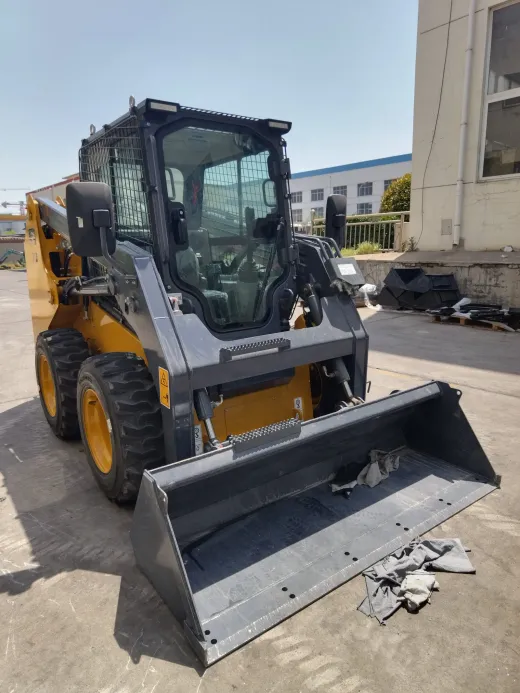
How much does a skid steer weigh? It depends on frame class, undercarriage, and whether you mean operating weight, shipping weight, or rated capacity. This guide breaks down skid steer weight from stand-on minis to large-frame machines, explains tracked vs wheeled weight differences, and covers what the number means for trailer selection and towing rules.
Read more →
Amphibious Mini Excavators: Working on Water, Marshes & Wetlands
A clear-headed guide to amphibious and floating mini excavators — how pontoon undercarriages work, where they outperform standard machines, their real limitations, and when wide rubber tracks are the smarter choice for wet and soft-ground work.
Read more → Articulating Loaders Explained: Compact & Mini Articulated Loaders
An articulating loader offers superior maneuverability in tight spaces where conventional machines struggle. This guide covers everything buyers need to know about small, compact, and mini articulated loaders — from how they work to what to look for when shopping.
Read more →