










Skid Steer Salt Spreader & Sander Attachments: Winter De-Icing Made Efficient
2026-06-28
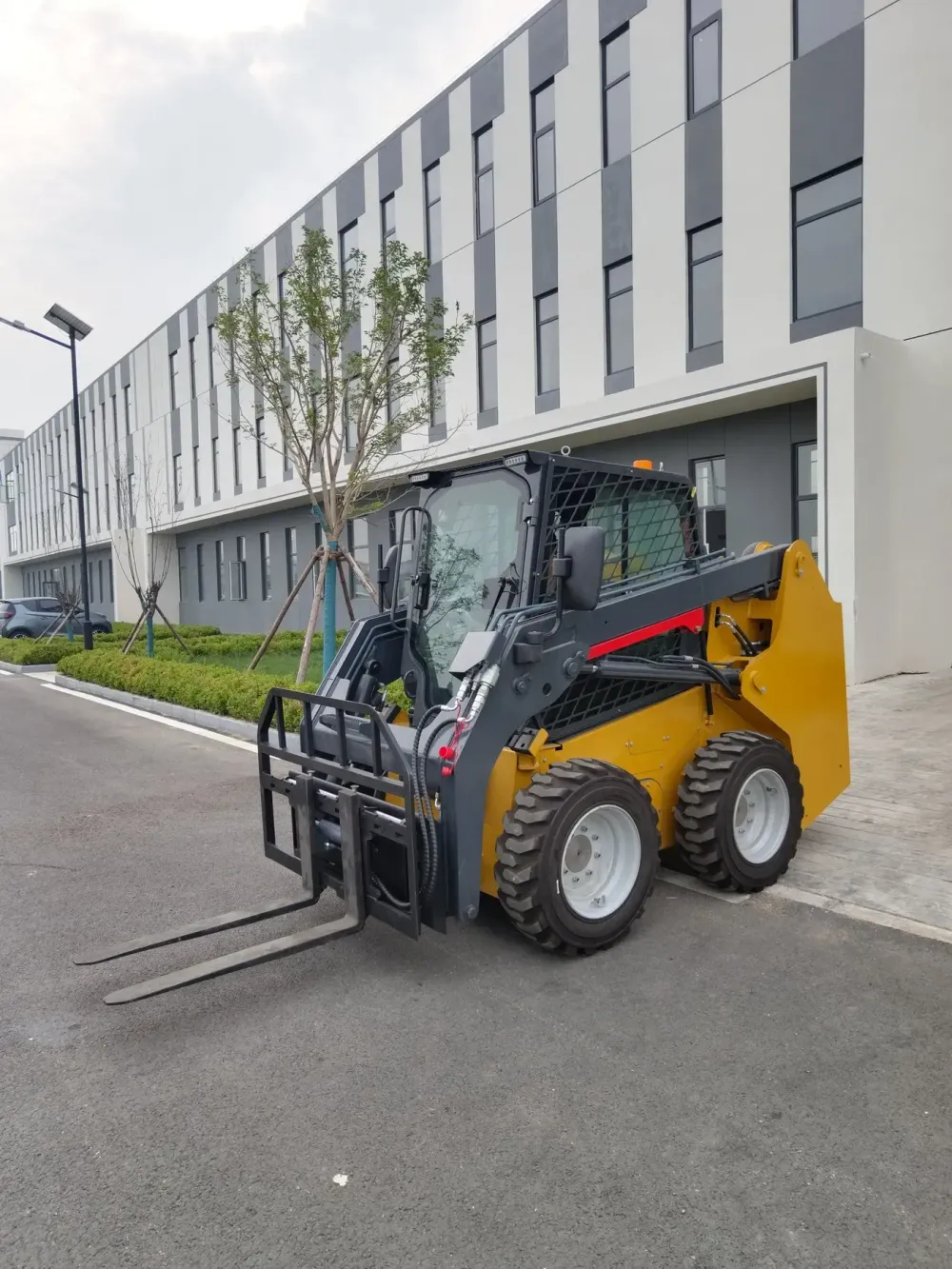
Everything you need to know about choosing a skid steer salt spreader or sander attachment — types, spread widths, capacity, auger versus spinner, and how to match the right skid loader salt spreader to your machine and application.
A skid loader salt spreader turns a machine you already own into a full winter de-icing unit — no dedicated truck, no second operator, no waiting for a contracted salting crew. You drive the same skid steer loader that does your landscaping, grading, and snow removal in summer, swap to the spreader in the time it takes to back into the mount, and you're laying salt. This guide covers how these attachments work, what separates good ones from frustrating ones, and how to match capacity and spread width to your actual workload.
What a skid steer salt spreader actually does
A skid steer spreader is a hopper-and-delivery-mechanism assembly that mounts to your machine's universal quick-attach plate and draws power from the auxiliary hydraulic circuit. Salt, sand, or a sand-salt blend loads into the hopper. An auger or conveyor at the base meters material onto a spinning disc or a chute, and the disc broadcasts it across the pavement in a controlled pattern. Width and rate are adjustable — typically via a controller in the cab that varies hydraulic flow to the spinner motor and auger speed independently.
The key distinction from a truck-mounted tailgate spreader is that the skid steer unit is front-mounted: you spread as you drive forward, which lets you see the coverage pattern and integrate spreading with plowing in a single pass. You plow, back up, drive forward, spread — and you're done with a lane before a truck would have finished its approach.
Auger feed versus conveyor feed: which design to choose
Most skid steer spreader attachments use one of two feed mechanisms, and the choice matters for how reliably material flows.
Auger-feed spreaders use a helical screw along the hopper floor to push material to the spinner. They're compact, mechanically simple, and handle dry salt very well. The weakness is wet or clumped material: a bridging event — where material arches across the auger and stops feeding — leaves you spreading nothing while you think you're working. Vibrator accessories and hopper agitators address this, but they add cost and complication.
Conveyor-feed spreaders use a chain or belt to carry material from hopper to spinner. They handle wetter blends and heavier aggregate better than augers because there's nothing for material to bridge across. They're typically larger and heavier, which matters if you're at the upper end of your machine's rated capacity.
For pure rock salt on cleared pavement in cold conditions, an auger-feed skid steer salt spreader attachment is the standard choice and it works well. For sand-salt blends or applications in warmer, wetter conditions where material absorbs moisture in the hopper, a conveyor-feed unit or an auger unit with an agitator is worth the extra cost.
Capacity and spread width: sizing the attachment to the job
Hopper capacity on a skid steer sander attachment or salt spreader typically runs from 0.5 cubic yards on compact units up to 1.5 or 2 cubic yards on larger rear-hitch or front-frame designs. What you need depends on how large your route is and how often you can reload.
A 0.75-cubic-yard hopper holds roughly 1,000 lb of rock salt — enough for a large parking lot or about half a mile of two-lane road at normal application rates. If your route is a single commercial lot with a reload point nearby, that's sufficient. If you're running a multi-property route, a larger hopper or a dedicated reload truck changes your productivity more than almost any other factor.
Spread width ranges from about 6 feet at minimum spinner speed to 30–40 feet at maximum on a full-size spinner. Narrower spreads let you target specific lanes or paths. Wider spreads cover open lots quickly. Look for a spreader where the spinner speed is independently adjustable from the cab — some budget units have a fixed spinner tied to the same hydraulic circuit as the auger, which means you can't tune width without also changing feed rate.
Hydraulic requirements and machine compatibility
Salt spreader attachments are low-demand hydraulic users — most run fine on standard auxiliary flow (15–25 GPM) and don't require high-flow circuits. That's good news because it means almost any skid steer with working auxiliary hydraulics can run one. If your machine has only single auxiliary hydraulics (one pair of couplers), that's enough. You don't need high-flow or third-function hydraulics for a salt spreader.
Weight is more of a constraint than hydraulics. A loaded 1-cubic-yard hopper can add 1,400–1,600 lb to your front-end. Check your machine's rated operating capacity against the fully loaded spreader weight before you buy. A 1,700-lb rated-capacity mini skid steer will be working at or over its limit with a large loaded hopper — size down the hopper or size up the machine. Our full range of skid steer attachments lists attachment weights so you can cross-check before ordering.
Material types and what they do to your spreader
Rock salt (sodium chloride) is the most common de-icing material and what most spreaders are sized for. It's abrasive and corrosive, which means spreader longevity depends heavily on material quality and wash-down discipline after every use. Stainless steel hoppers and poly spinners outlast painted steel and cast-iron spinners significantly in salt service. If a supplier is quoting you a spreader with a painted mild-steel hopper, ask what the expected service life looks like in salt-heavy applications.
Sand or a sand-salt blend adds traction but is heavier per cubic yard and harder on feed mechanisms as noted above. Calcium chloride and magnesium chloride pellets work at lower temperatures than rock salt but are more expensive and can damage spreader components faster if residue is left to sit. Flush thoroughly after any pellet application.
Spreaders rated for 'salt and sand' typically use wider auger flights and a more aggressive agitator than pure-salt units. If you know you'll run blends, spec accordingly from the start.
Mounting and quick-attach considerations
The universal skid steer quick-attach plate is standard across virtually all modern machines, so attachment compatibility is rarely the issue it was a decade ago. What does vary is where the hydraulic couplers connect — top-mount versus side-mount coupler placement differs between manufacturers, and some spreader hydraulic hose runs are designed for one orientation and will kink or chafe on another. Verify hose routing with your specific machine before the first use.
Front-mount spreaders are the most common configuration for skid steers because you can see coverage from the cab. Rear spreader setups exist for machines with rear auxiliary hydraulics, and some operators prefer them because they can plow forward and spread on the back pass — but visibility suffers and you're relying on experience to judge coverage rather than watching it happen. Front mount is simpler for most operators.
If you're buying a skid steer spreader attachment alongside a new machine, order them together and confirm the dealer has verified the hose routing and coupler compatibility before delivery. It's a ten-minute check that saves a frustrating first-shift discovery.
Total cost of ownership: what spreader ownership actually costs
The purchase price of a skid steer salt spreader is only part of the equation. Wash-down after every use is non-negotiable and takes five minutes — skipping it means auger corrosion, spinner bearing failure, and hopper rust within a season or two. Budget time for it or lose the equipment.
Spinner discs and their fins are wear items. On high-volume operations running coarse salt, expect to replace spinner components annually. Auger bearings are the other common wear point — they're inexpensive but require scheduled inspection. A spreader that's well-maintained and stored dry will run for many seasons. One that sits with salt residue in it over summer will not.
For operators doing winter maintenance as a service business, the spreader attachment pays for itself quickly relative to contracting out salting or buying a dedicated truck. For property owners handling their own sites, the math is similar: one machine, multiple attachments, year-round utility. That's the case for the skid steer loader platform in general, and the salt spreader is one of its most efficient seasonal add-ons.
Browse our skid steer spreader range · — we reply within one business day.
Frequently asked questions
What size skid steer do I need to run a salt spreader?
Almost any skid steer with standard auxiliary hydraulics can power a salt spreader — the hydraulic demand is low. The real constraint is rated operating capacity. Add the weight of the spreader plus a full hopper load and confirm that total stays within your machine's rated capacity. A full cubic yard of rock salt weighs roughly 1,400 lb; add the spreader frame and you're typically at 1,600–1,900 lb total. A machine with a 2,000-lb or higher rated capacity handles a mid-size spreader comfortably.
Can I use the same skid loader salt spreader for both salt and sand?
Yes, if the spreader is rated for sand or sand-salt blends. Units designed specifically for dry rock salt use narrower auger flights and lighter agitators that can jam on wet or coarse sand. If you plan to run blends, look for a spreader explicitly rated for mixed material, or choose a conveyor-feed design, which handles varied materials more reliably than an auger-feed unit.
How wide does a skid steer spreader attachment spread?
Typical spread width ranges from about 6 feet at minimum spinner speed to 30–40 feet at maximum. Actual effective width in de-icing applications is usually set between 10 and 20 feet to maintain an even coverage rate without over-applying at the edges. Spinner speed is adjustable from the cab on most modern units, so you can dial in width for each area independently.
How do I prevent the salt spreader from corroding?
Wash it down with fresh water after every use without exception. Pay particular attention to the auger housing, spinner bearings, and any steel hopper seams. Store with the hopper empty and dry. At season end, grease all fittings, inspect the auger shaft seals, and treat any bare metal with a corrosion inhibitor. Stainless steel hoppers and poly or stainless spinners corrode much more slowly than painted mild steel — worth the premium if you're running high volume.
Do skid steer sander attachments work with all quick-attach plates?
Most skid steer sander attachments use the universal (ISO) quick-attach plate that fits the vast majority of modern skid steer loaders. Some older or brand-specific machines use proprietary plates. If your machine is more than fifteen years old or from a brand known for non-standard plates, verify compatibility before ordering. Hydraulic coupler orientation (top versus side) also varies — confirm hose routing is correct for your specific machine.
What application rate should I use for rock salt?
Standard application rates for pavement de-icing with rock salt run from about 200 to 400 lb per lane-mile depending on temperature and surface conditions. Colder conditions and active snowfall push toward the higher end. Most skid steer spreader attachments let you adjust both spinner speed (affecting width) and auger speed (affecting feed rate) independently, so you can dial in the rate for conditions rather than running a fixed setting all night.
Is a front-mount or rear-mount skid steer salt spreader better?
Front-mount is the standard choice for most operators because you can see your spread pattern from the cab and integrate spreading with forward travel naturally. Rear-mount setups allow you to plow on a forward pass and spread on the return, which some operators prefer on straight lanes, but the loss of direct visibility makes coverage accuracy harder to judge. For parking lots and mixed terrain, front-mount is the more practical configuration.
Related articles
Skid Steer Weight: Operating Weight by Class, Mini to Large Frame
How much does a skid steer weigh? It depends on frame class, undercarriage, and whether you mean operating weight, shipping weight, or rated capacity. This guide breaks down skid steer weight from stand-on minis to large-frame machines, explains tracked vs wheeled weight differences, and covers what the number means for trailer selection and towing rules.
Read more →
Amphibious Mini Excavators: Working on Water, Marshes & Wetlands
A clear-headed guide to amphibious and floating mini excavators — how pontoon undercarriages work, where they outperform standard machines, their real limitations, and when wide rubber tracks are the smarter choice for wet and soft-ground work.
Read more → Articulating Loaders Explained: Compact & Mini Articulated Loaders
An articulating loader offers superior maneuverability in tight spaces where conventional machines struggle. This guide covers everything buyers need to know about small, compact, and mini articulated loaders — from how they work to what to look for when shopping.
Read more →