










Skid Steer Sweeper & Broom Attachment: Types, Sizes and Buying Tips
2026-06-28
A skid steer sweeper attachment transforms your loader into a powerful cleaning machine for jobsites, parking lots, and agricultural yards. This guide covers every major type, key specs, and practical buying tips to help you choose the right skid steer broom for your application.
Whether you need to clear debris from a freshly poured concrete slab, sweep a snowy parking lot, or clean up a grain elevator yard, a skid steer sweeper is one of the most versatile attachments you can add to your machine. Unlike a traditional push broom or towable unit, a skid steer sweeper attachment mounts directly to your loader's quick-attach plate and is powered by your machine's hydraulic system — giving you commercial-grade sweeping performance without a dedicated sweeper truck. This guide walks through every major style of skid loader sweeper, the specs that matter most, and what to look for when shopping for a skid steer broom attachment for sale.
Types of Skid Steer Sweeper Attachments
Not all sweeping jobs are the same, and the market reflects that with several distinct attachment styles. Understanding the differences helps you avoid buying the wrong tool.
- Skid steer angle broom: A single cylindrical brush that mounts at an adjustable angle, typically 30° left or right. The skid steer angle broom for sale category is the most popular because it sweeps debris to the side of the machine rather than leaving it in the path. Ideal for road edges, curbs, and drainage ditches.
- Skid steer box broom / box sweeper: Encloses the brush in a three-sided housing with a rear discharge chute. A box broom for skid steer or box sweeper for skid steer collects and ejects material to one side, keeping it contained. Suited for heavy leaf loads, light gravel, and indoor warehouse floors.
- Skid steer pickup broom: The most sophisticated style, a skid steer pickup broom combines a rotating brush with a conveyor and an integrated collection hopper. A skid steer pickup broom with dump bucket lets you sweep and collect material, then hydraulically dump the hopper — eliminating a second pass with a loader bucket.
- Skid steer power broom: A generic term for any hydraulically driven rotary broom, but often used to describe heavy-duty models with high-flow hydraulics. A skid steer power broom handles wet leaves, compacted snow, and construction debris that would stall a lighter unit.
- Skid steer push broom: A simpler, sometimes non-powered version that uses the machine's forward motion to push material. A skid steer push broom is lower cost but lacks the throwing action of a powered rotary brush.
Matching the attachment style to your primary task will save you money and maintenance headaches. If you sweep multiple surface types, the angle broom with adjustable deflectors is usually the most flexible starting point.
Key Specifications to Compare
Once you know which style you need, the spec sheet separates adequate attachments from excellent ones. Here is what to evaluate when comparing any skid steer broom sweeper or sweeper broom for skid steer.
- Sweep width: Widths typically run from 60 in (1,524 mm) to 96 in (2,438 mm). Match width to your machine size — a compact mini skid steer rotary broom or mini skid broom usually uses a 48–60 in head, while a full-size skid steer handles 72–84 in comfortably.
- Hydraulic flow requirement: Most angle brooms need 8–18 GPM. Heavy-duty skid steer power broom models may require 20–30 GPM. Always check your machine's auxiliary hydraulic output before ordering.
- Brush diameter and core material: Larger brush diameters (12–16 in) maintain surface contact better on uneven ground. Steel-wire cores suit concrete and asphalt; polypropylene skid steer broom bristles are gentler on pavers and indoor floors.
- Rotation speed (RPM): 150–250 RPM is standard for most applications. Higher RPM increases throwing distance but also bristle wear.
- Deflector/chute adjustability: A multi-position deflector lets you redirect debris 90° or straight back, which is essential when sweeping near walls or parked equipment.
- Collection capacity (pickup brooms): The skid steer sweeper bucket or sweeper bucket skid steer hopper volume typically ranges from 8 to 20 cubic feet. Larger hoppers mean fewer dump cycles per hour.
Pickup Broom vs. Angle Broom: Which Should You Buy?
The two most common choices are the pickup broom and the angle broom, and buyers frequently debate which justifies the price difference.
A skid steer pickup broom for sale costs significantly more than an angle broom because of the integrated collection system. The payoff is a one-machine workflow: the broom sweeps, the conveyor loads the hopper, and the hydraulic dump empties the debris — no second operator, no chase vehicle. For municipalities, airports, and large commercial properties that need to remove material (not just relocate it), a skid steer broom with bucket attachment or dedicated skid steer sweeper bucket pays for itself quickly in labor savings.
For construction cleanup, agricultural yards, and snow removal where you only need to move debris out of the way rather than collect it, a skid steer broom attachment of the angle or box style is the smarter buy. These are simpler, lighter, and easier to maintain. The skid steer box broom is particularly effective in windy conditions because the housing prevents material from blowing back onto the swept area.
If your jobs vary widely, consider renting a skid steer pickup broom for high-debris projects and owning an angle broom as your everyday tool.
Brush Material and Maintenance
The longevity of your skid steer sweeper brushes is one of the largest ongoing cost factors after purchase. Brush material choice should reflect your most common surface type.
- Wire (steel) bristles: Maximum durability on concrete, asphalt, and packed gravel. Best for construction sites and road maintenance. Replace when bristles are worn down to within 1–2 in of the core.
- Polypropylene bristles: Gentler, quieter, and resistant to corrosion. Preferred for pavers, brick, epoxy-coated warehouse floors, and any surface that wire could scratch. The softer material also reduces dust generation indoors.
- Combination (crimped wire + poly): Some skid steer broom bristles use alternating rows to balance aggression with surface protection — a good compromise for mixed-use operations.
Maintenance best practices: check bristle wear every 20–30 operating hours, keep the brush core clean of wrapped wire or twine (stop the machine before clearing), grease the drive hub per manufacturer intervals (typically every 8 hours), and inspect the hydraulic motor seal for leaks after the first 50 hours of use. Replacement brush sections are available for most name-brand units, and ZHONGMAI's skid steer attachments are engineered for straightforward field service.
Sizing for Your Machine: Mini vs. Full-Size Skid Steers
A sweeper attachment must match both the hydraulic capacity and the physical footprint of your carrier machine.
For compact carriers — sometimes called a broom skid or skid sweeper in the trade — a mini skid broom or mini skid steer rotary broom in the 48–60 in range is appropriate. These smaller heads weigh 200–350 lb and fit through standard doorways, making them popular for indoor parking garages, warehouses, and tight urban jobsites.
Full-size skid steer loaders with rated operating capacities of 1,500–3,500 lb typically handle 66–84 in brooms weighing 500–900 lb. Models sometimes referenced in spec comparisons — such as the Sweepster or Wolverine lines — benchmark sweep widths, hydraulic flow, and bristle trim diameters that are useful reference points when evaluating any sweepster skid steer broom or wolverine skid steer broom equivalent. Compare those published specs against the attachment you are considering, regardless of brand, to ensure you are getting equivalent performance.
As a rough productivity benchmark, a 60-inch broom attachment covers approximately 4,500–6,000 square feet per hour on a flat, debris-light surface, while a 72-inch pickup unit covers roughly 6,500–9,000 square feet per hour once dump cycles are factored in — useful figures when estimating labor time for a parking lot or yard job.
ZHONGMAI manufactures skid steer loaders across a broad capacity range. If you are also evaluating the carrier machine itself, visit our skid steer loader page for rated flow figures that directly affect which broom width you can run. Buyers looking at compact options may also want to review our mini excavator lineup if sweeping is one part of a broader site-prep workflow.
Where to Buy and What to Budget
Pricing for a skid steer sweeper attachment for sale or skid steer broom for sale varies widely by style and width.
- Angle brooms (66–84 in): Entry-level units start around $1,800–$2,500 USD. Heavy-duty models with bolt-on bristle segments and hydraulic angle adjustment run $3,500–$5,500.
- Box brooms: A skid steer broom bucket or box style typically costs $2,500–$4,500 depending on width and discharge options.
- Pickup brooms: Expect $8,000–$18,000 for a skid steer pickup broom with dump bucket, with price driven by hopper size and conveyor design.
When comparing any skid steer angle broom for sale, skid steer sweeper for sale, or skid steer pickup broom for sale, factor in: warranty length, availability of replacement brush sections, and whether the dealer stocks hydraulic motor parts locally. A cheaper unit with a 90-day warranty and no parts support can cost more over three seasons than a well-supported unit purchased at a higher upfront price.
Price also varies by supplier tier: OEM attachments from your loader's own brand carry the tightest hydraulic integration and dealer support but often cost 40–70% more than comparable third-party units, while mid-market specialty manufacturers and import attachments have closed much of the quality gap over the past decade. Before ordering from any supplier, verify the coupler plate dimensions in millimeters rather than relying on ‘universal fit’ marketing language, ask for the hydraulic motor brand and model so you can confirm parts availability, and request the bristle material spec sheet. If you are importing, build 30–60 days of lead time into your project schedule.
ZHONGMAI supplies skid steer attachments direct to buyers worldwide. Contact our sales team for current pricing on the full attachment range, including sweeper configurations suited to your machine's hydraulic flow.
Skid Steer Sweeper vs. Other Cleaning Machines
A skid loader sweeper is not always the right tool. Understanding the trade-offs helps you justify the investment.
- vs. Dedicated ride-on sweeper: A ride-on sweeper offers a dedicated operator seat and larger hoppers, but requires a second piece of equipment and licensing in some jurisdictions. A skid steer sweeper attachment turns a machine you already own into a sweeper — better ROI for most contractors.
- vs. Tractor broom: Tractor-mounted brooms have higher ground clearance and work well in fields, but they lack the tight-turn maneuverability of a skid steer in confined spaces.
- vs. Backhoe with broom: A backhoe loader can carry some sweeper attachments via a front auxiliary circuit, though sweep width is often limited and visibility is worse than on a skid steer. For dedicated sweeping tasks, the skid steer wins on cycle efficiency.
- vs. Manual crew: On a large paved area, a single operator with a skid steer power broom outpaces a four-person crew with push brooms by a significant margin, while reducing fatigue and liability.
Browse our skid steer sweeper range · — we reply within one business day.
Frequently asked questions
What is the difference between a skid steer angle broom and a box broom?
An angle broom mounts at an adjustable angle (typically 30° left or right) and throws debris to the side of the machine. A box broom for skid steer encloses the brush in a three-sided housing and channels material out through a side or rear chute, which keeps debris more contained. The angle broom is more versatile for road edges and drainage; the box broom performs better in windy conditions or where you need directional control of the discharged material.
How much hydraulic flow does a skid steer sweeper attachment need?
Most standard angle and box brooms require 8–18 GPM of auxiliary hydraulic flow. Heavy-duty skid steer power broom models designed for wet debris or compacted snow can require 20–30 GPM. Always check your carrier machine's published auxiliary flow spec — running an undersized flow will cause the brush to spin slowly and reduce sweeping effectiveness while stressing the hydraulic motor.
What skid steer broom bristles should I choose for concrete versus pavers?
For concrete and asphalt, wire (steel) bristles provide the most effective cleaning action and the longest service life. For pavers, brick, or coated floors, polypropylene bristles are the better choice — they clean effectively without scratching the surface. Some manufacturers offer combination bristle configurations with alternating wire and poly rows for mixed-surface operations.
How often do skid steer broom bristles need to be replaced?
On a heavily used unit sweeping concrete or asphalt, expect to replace the bristles roughly every 150–300 operating hours; lighter work on smoother surfaces can extend that to 400–500 hours. Check bristle wear every 20–30 operating hours as part of routine maintenance, and replace the brush section once bristles are worn down to within 1–2 in of the core, since sweep quality drops sharply after that point.
Can I use a skid steer sweeper attachment in winter for snow removal?
Yes. A skid steer power broom with steel wire bristles handles light-to-moderate snow accumulation very effectively, particularly on flat paved surfaces like parking lots and loading docks. For heavy or wet snow, pair the sweeper with a skid steer snow bucket for initial clearing, then follow with the broom to clean down to bare pavement. Most broom housings are powder-coated or galvanized to resist corrosion from road salt.
What is the benefit of a skid steer pickup broom with dump bucket over a standard angle broom?
A skid steer pickup broom with dump bucket collects swept material in an integrated hopper and lets you hydraulically dump it into a truck or dumpster — eliminating the need for a second operator or a separate loader pass to remove the debris. This is the primary advantage for municipal street sweeping, airport ramp cleaning, and any application where material must be removed rather than just relocated to the side.
How do I match sweeper width to my skid steer size?
As a general rule, choose a sweep width that does not exceed the track or tire width of your machine by more than 12–18 inches on each side. Mini skid steer rotary broom heads in the 48–60 in range suit compact carriers. Full-size skid steers typically run 66–84 in brooms. Also confirm your machine's hydraulic flow meets the broom's minimum requirement, as undersized flow is a more common mismatch than physical width.
Are ZHONGMAI skid steer attachments compatible with other brand machines?
ZHONGMAI skid steer attachments use a universal quick-attach plate that is compatible with the industry-standard skid steer coupler pattern used by most North American and European carrier brands. If your machine uses a non-standard plate, adapter plates are available. Contact our team with your machine's make and coupler type for confirmation before ordering.
Related articles
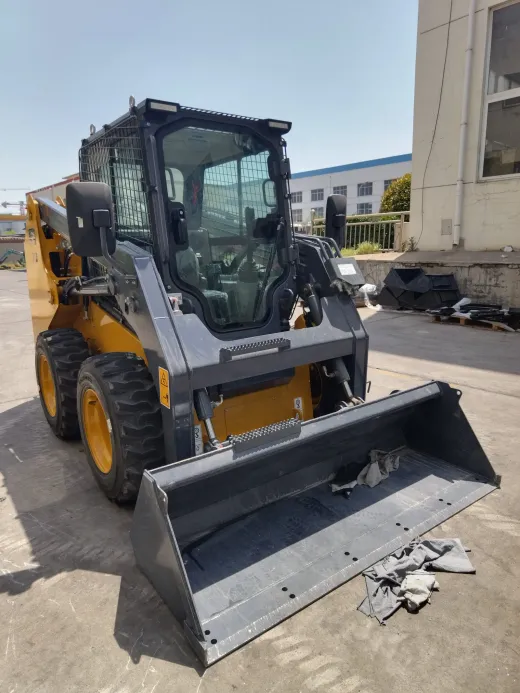
Skid Steer Weight: Operating Weight by Class, Mini to Large Frame
How much does a skid steer weigh? It depends on frame class, undercarriage, and whether you mean operating weight, shipping weight, or rated capacity. This guide breaks down skid steer weight from stand-on minis to large-frame machines, explains tracked vs wheeled weight differences, and covers what the number means for trailer selection and towing rules.
Read more →
Amphibious Mini Excavators: Working on Water, Marshes & Wetlands
A clear-headed guide to amphibious and floating mini excavators — how pontoon undercarriages work, where they outperform standard machines, their real limitations, and when wide rubber tracks are the smarter choice for wet and soft-ground work.
Read more → Articulating Loaders Explained: Compact & Mini Articulated Loaders
An articulating loader offers superior maneuverability in tight spaces where conventional machines struggle. This guide covers everything buyers need to know about small, compact, and mini articulated loaders — from how they work to what to look for when shopping.
Read more →