










Small & Compact Loaders: Mini Loader Types and How to Choose
2026-06-28
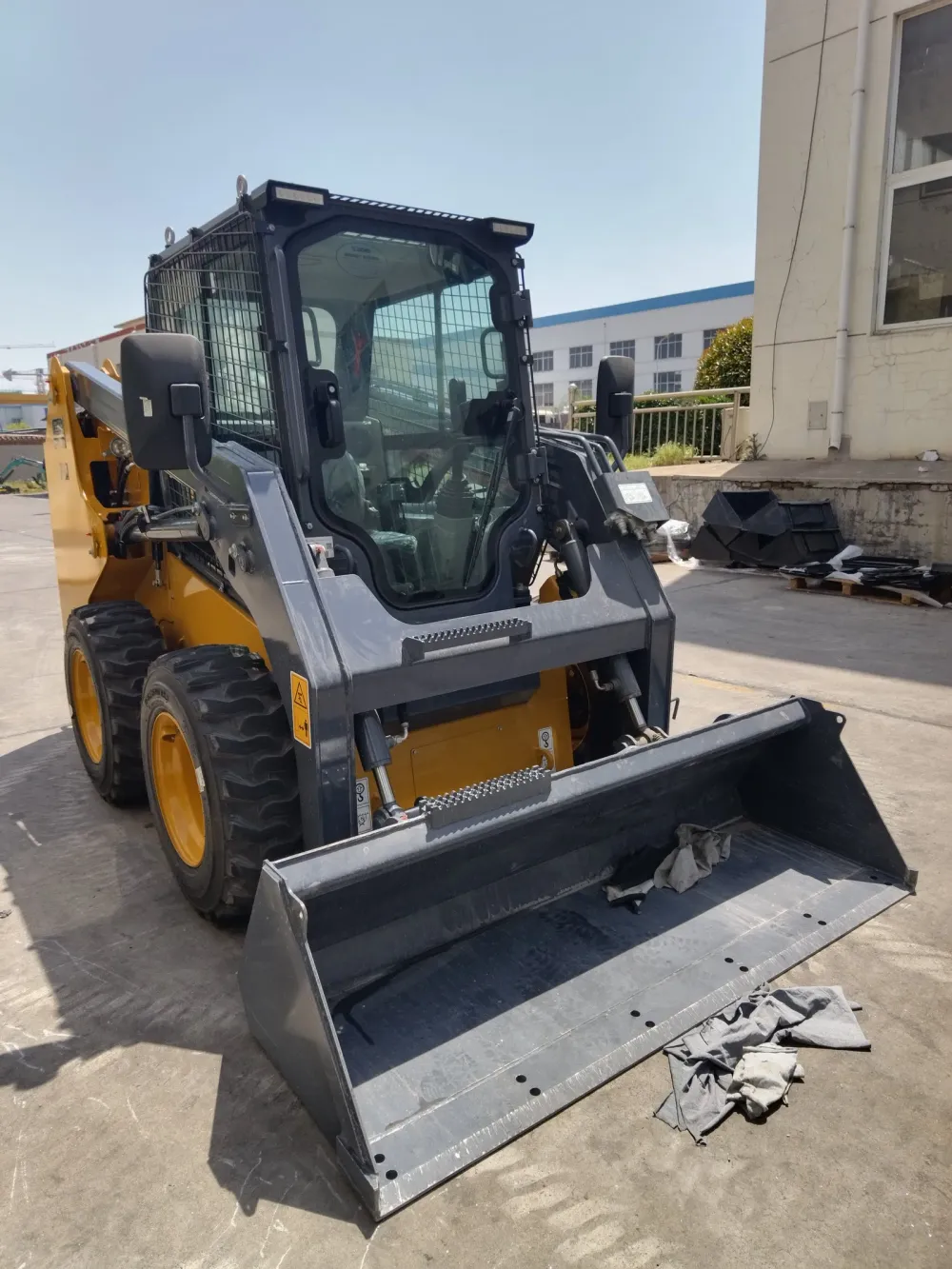
Not every job needs a full-size machine. A compact utility loader delivers surprising power in a small footprint, letting contractors, landscapers, and property owners tackle earthmoving, grading, and material handling without renting a massive machine. This guide breaks down every type of small loader, what specs actually matter, and how to pick the right one for your site.
When space is tight, access is limited, or your budget simply does not stretch to a full-size machine, a compact utility loader becomes the workhorse you did not know you needed. These machines pack rated operating capacities between 400 and 1,200 kg into a chassis narrow enough to fit through a standard gate, yet they move dirt, carry pallets, and push material faster than any skid-steer you could rent years ago. Whether you are comparing a mini front end loader for a nursery run or a heavier sub compact loader for a construction site, the category has expanded dramatically and the choices can feel overwhelming. This guide cuts through the noise so you can match machine to task on the first try.
What Is a Compact Utility Loader?
The term compact utility loader covers any loader with a rated operating capacity (ROC) below roughly 1,200 kg that is designed primarily for lifting, carrying, and pushing. The family includes wheeled skid-steers, compact track loaders, stand-on loaders, and walk-behind configurations. What unites them is the universal quick-attach plate: swap a bucket for forks, augers, or a grapple in minutes.
If you have searched for a loader small enough for residential work, you have almost certainly come across the same machines under different names. Manufacturers and rental yards use mini compact loader, compact mini loader, and utility loader interchangeably. For practical purposes, think of the category in three tiers:
- Walk-behind or stand-on loaders (ROC under 300 kg) — the smallest mini dirt mover option, fits through 36-inch gates, ideal for sod farms and greenhouse work.
- Sub compact loaders (ROC 300–700 kg) — the sweet spot for landscaping, hardscaping, and small demolition; machines like the Bobcat MT100 and Toro Dingo sit here, though ZHONGMAI's own wheeled compact models cover this range at a more competitive price point.
- Compact utility loaders (ROC 700–1,200 kg) — bridge the gap to full-size skid-steers; capable of running heavier attachments such as hydraulic breakers and trenchers.
Understanding these tiers before you shop prevents the most common mistake: buying a machine whose lift capacity falls short the moment a real job hits.
Mini Front-End Loader vs. Skid-Steer: Key Differences
Shoppers often conflate a mini front loader with a skid-steer loader, but the steering geometry differs fundamentally. A mini front end loader — sometimes called an articulated mini loader — uses a centre pivot hinge to steer, much like a full-size wheel loader. This gives a tighter turning radius than you might expect and produces less turf damage because the tyres roll rather than skid. A skid-steer, by contrast, brakes one side to turn in place, which can churn up soft ground.
The trade-off: articulated mini end loader designs tend to be taller and longer for a given ROC, meaning they may not fit under low overhangs. Skid-steers sit lower and are more manoeuvrable in confined structures like barns or warehouses. If ground conditions are soft or you work on finished lawns regularly, an articulated mini bucket loader often wins. If you need to spin inside a shipping container or a narrow corridor, a skid-steer's zero-turn radius cannot be beaten.
For most buyers, the deciding question is: will this machine damage my surfaces, and how confined is my workspace? Both answers together point to the right architecture. Explore ZHONGMAI skid-steer loaders if zero-turn manoeuvrability is your priority, or read on if an articulated layout fits your site better.
How to Read the Specs That Actually Matter
Marketing sheets for any loader mini drown you in numbers. Here are the five that genuinely drive buying decisions:
- Rated Operating Capacity (ROC) — the maximum load the manufacturer certifies at 35 % or 50 % of tipping load, depending on standard. Compare same-standard figures only. A machine rated at 700 kg to the ISO standard and one rated at 700 kg to the SAE standard are not equivalent.
- Hydraulic flow (L/min) — determines which attachments the machine can power. A compact mini loader with only 30 L/min of standard flow will struggle with a mulcher or cold planer. High-flow circuits (typically 60–90 L/min) unlock the full attachment catalogue.
- Operating weight — heavier machines push harder and are more stable under load, but they can exceed trailer ratings and compact soft ground faster.
- Ground clearance and ground pressure — tracked small dirt mover variants spread weight over a larger footprint, reducing ground pressure dramatically versus tyres. Critical for muddy or sandy sites.
- Lift path geometry (radial vs. vertical) — radial arms reach out and up in an arc, maximising reach at mid-height; vertical-lift arms keep the bucket closer to the machine and reach higher at full extension, better for loading trucks and high-sided hoppers.
Ask every vendor to supply these five numbers in a single table. If a spec sheet omits ROC standard or hydraulic flow, that is a red flag worth probing before you sign anything.
Best Mini Loader Applications by Industry
Knowing which machine earns the title of best mini loader in a given trade saves significant money over the life of a fleet. Here is how the compact category maps to common industries:
- Landscaping and garden centres — a utility loader with turf tyres and a smooth-bucket is the workhorse for mulch, topsoil, and plant material. Stand-on units excel in greenhouse aisles. For slope work, pair with a land-clearing attachment.
- Equine and livestock facilities — manure management demands a compact footprint and a tight-turn radius. A mini bucket loader with a 4-in-1 bucket handles stall bedding and drainage gravel in a single machine pass.
- Residential construction and renovation — foundation backfill, trench spoil removal, and aggregate spreading are daily tasks. A sub compact loader rated above 600 kg ROC handles a full pallet of blocks without tipping.
- Golf course and sports-field maintenance — bunker raking, topdressing, and sod installation all benefit from the low ground pressure of a tracked compact utility loader.
- Utility contractors — cable and pipe crews value a machine that fits in a road lane, can run a chain trencher, and still haul spoil to the dump truck in the same shift. The ZHONGMAI backhoe loader covers heavier digging tasks when the compact class runs out of power.
Identifying your primary application before shopping narrows the field quickly. Most buyers find that two or three features separate the best compact loader for their work from a machine that just about gets the job done.
Tracked vs. Wheeled: Choosing the Right Undercarriage
Every compact mini loader comes in at least one undercarriage configuration, and the decision between tracks and wheels has downstream effects on cost, maintenance, and productivity that are easy to underestimate.
Wheeled loaders travel faster between tasks (typically 10–15 km/h versus 6–10 km/h for tracked machines), require less daily track tension maintenance, and cost less to service over a five-year horizon. They are the obvious pick for hard surfaces — concrete yards, asphalt paths, compacted gravel — where rubber tracks would wear quickly and provide little traction advantage.
Tracked loaders distribute weight across a footprint three to four times larger than equivalent tyres, which halves ground pressure and transforms traction on mud, sand, and loose topsoil. A tracked mini front loader can keep working in conditions that would mire a wheeled machine immediately. The penalty is higher upfront cost and track replacement every 800–1,500 hours depending on surface abrasiveness.
A practical rule: if more than 30 % of your operating hours occur on soft or uneven ground, a tracked small dirt mover pays for itself in avoided downtime and reduced site damage within two seasons. Under 30 %, the wheeled version's speed and lower maintenance cost usually win on total cost of ownership. If you are undecided, consult the ZHONGMAI skid-steer loader range — several models are available in both configurations.
Attachments That Multiply a Compact Loader's Value
The single greatest advantage of any loader mini with a universal quick-attach plate is the attachment ecosystem. A single machine can replace five or six purpose-built tools when you match attachments to your seasonal workload. Common high-value combinations include:
- 4-in-1 combination bucket — opens at the bottom to act as a clam, grabs irregular objects, grades and backfills; the most versatile bucket for a compact utility loader.
- Pallet forks — turn the machine into a compact forklift; essential for landscape supply yards and masonry contractors.
- Hydraulic auger — post holes, tree planting, and pier foundations; requires adequate hydraulic flow, so check your machine's spec before purchasing a large-diameter bit.
- Brush cutter / mulcher — land clearing and right-of-way work; pairs naturally with a high-flow mini end loader or tracked skid-steer. See ZHONGMAI attachment options for available cutting widths.
- Snow blade or pusher — a winter revenue stream for landscaping contractors; the compact footprint navigates car parks that full-size ploughs cannot reach.
- Trencher — irrigation, cable, and drainage installation; ensures the utility loader earns its keep across multiple trade sectors in a single year.
Before committing to an attachment, verify that your machine's hydraulic flow, operating pressure, and coupler interface are compatible. Mismatched specs are the most common source of post-purchase frustration in the compact loader category.
Total Cost of Ownership: Price Beyond the Sticker
The sticker price of a best compact loader tells you almost nothing about what the machine will cost over five years of productive work. Factor in these additional cost centres before signing:
- Fuel or electricity consumption — diesel compact loaders typically burn 2–5 L/h depending on load. Battery-electric sub compact loader models are emerging and reduce fuel cost to near zero but carry higher upfront prices and charging infrastructure requirements.
- Scheduled maintenance — hydraulic fluid, filters, track tension, and tyre condition checks. Tracked machines add track replacement at $2,000–$6,000 per pair depending on size.
- Parts availability and dealer proximity — a machine that sits idle waiting for parts erases any savings from a lower purchase price. ZHONGMAI maintains regional parts depots and provides full technical documentation to owners, reducing mean-time-to-repair on common service items.
- Resale value — well-maintained compact loaders from reputable manufacturers retain 40–60 % of purchase price at five years. Machines from suppliers with thin dealer networks and poor documentation typically sell at a steeper discount.
- Attachment investment amortisation — if you already own a set of quick-attach tools, verify coupler compatibility before switching brands. Rebuying attachments can easily add $5,000–$15,000 to the effective switch cost.
Running a five-year total cost of ownership comparison — purchase price plus fuel, maintenance, parts, and estimated resale — almost always narrows the field to two or three serious contenders and exposes the cheap machine that looked attractive on paper.
Browse our compact utility loader range · — we reply within one business day.
Frequently asked questions
What is the difference between a compact utility loader and a sub compact loader?
The terms overlap significantly, but most manufacturers use 'sub compact loader' to describe machines at the smaller end of the compact range — typically with a rated operating capacity below 600 kg. A compact utility loader generally covers the broader class up to about 1,200 kg ROC. Both share the universal quick-attach system and can run a wide range of attachments, but sub compact models are lighter, narrower, and more suitable for very confined sites, while larger compact utility loaders can power heavier attachments and carry bigger loads.
Can a mini front end loader replace a full-size skid-steer on a construction site?
For many tasks — aggregate spreading, trench backfill, material relocation — a mini front end loader rated at 800–1,200 kg ROC handles the work adequately and costs significantly less to own and operate. Where it falls short is in tasks requiring sustained breakout force (pushing large stockpiles, ripping compacted ground) or lifting heavy prefabricated components. In those situations a full-size skid-steer or a backhoe loader is the right tool. Many contractors run one compact machine for precision work and one larger machine for heavy pushing, rather than trying to cover everything with a single unit.
How do I know if a compact loader has enough hydraulic flow for my attachments?
Check the hydraulic flow specification on the machine's data sheet — listed in litres per minute (L/min) or US gallons per minute (GPM). Standard flow on most compact loaders is 30–60 L/min; high-flow circuits reach 60–110 L/min. Then look up the minimum flow requirement of your intended attachment. Mulchers, cold planers, and large augers typically need 60+ L/min to operate at rated speed. If the machine's standard circuit is under-spec, some models offer an optional high-flow upgrade from the factory, which is worth ordering at purchase rather than retrofitting later.
What is the best compact loader for landscaping?
The best compact loader for landscaping depends on your ground conditions and the tasks you prioritise. On manicured lawns, a tracked machine with low ground pressure prevents turf damage. For hard-surface yards and gravel paths, a wheeled model's faster travel speed and lower maintenance cost win out. Look for a machine with an ROC of 500–900 kg, turf-friendly tyres or rubber tracks, a high-flow port for brush cutters, and a comfortable operator station — landscaping crews log long hours and fatigue leads to costly mistakes. The ZHONGMAI skid-steer loader range covers multiple configurations suitable for landscaping work.
Is a walk-behind loader worth considering, or should I always buy a ride-on compact machine?
Walk-behind mini dirt mover units are genuinely useful in applications where a ride-on machine physically cannot fit — greenhouse benches, narrow terraced garden beds, interior demolition through standard doorways. Their ROC tops out around 200–300 kg, so they are not a substitute for a ride-on compact loader on open sites. If your jobs alternate between very confined indoor spaces and open outdoor sites, some contractors own one walk-behind unit and rent a compact ride-on as needed, rather than buying two ride-on machines of different sizes.
How long do rubber tracks last on a compact track loader?
Track life on a compact mini loader typically ranges from 800 to 1,500 operating hours, but the variance is wide because surface abrasiveness is the dominant factor. Working primarily on soft earth or grass pushes track life toward the upper end of that range. Operating on concrete, asphalt, or sharp gravel shortens life significantly — sometimes to under 600 hours. Proper track tension (checked every 50 hours) and avoiding sharp pivot turns on hard surfaces are the two maintenance habits that most extend rubber track life. Budget for one track replacement during the first five years of ownership and treat any life beyond that as a bonus.
Can I tow a compact loader on a standard trailer?
Most sub compact loader and compact utility loader models weigh between 900 kg and 3,500 kg depending on size and configuration. A single-axle equipment trailer rated at 3,500 kg GVM handles the lighter end of the range with a mid-size pickup truck. Heavier compact track loaders may require a tandem-axle trailer and a truck with a higher tow rating. Always verify the machine's operating weight (with any loaded bucket attachment removed) against your trailer's payload rating and your tow vehicle's rated towing capacity before hauling. Overloaded trailers are a common and dangerous oversight in the compact equipment category.
Related articles
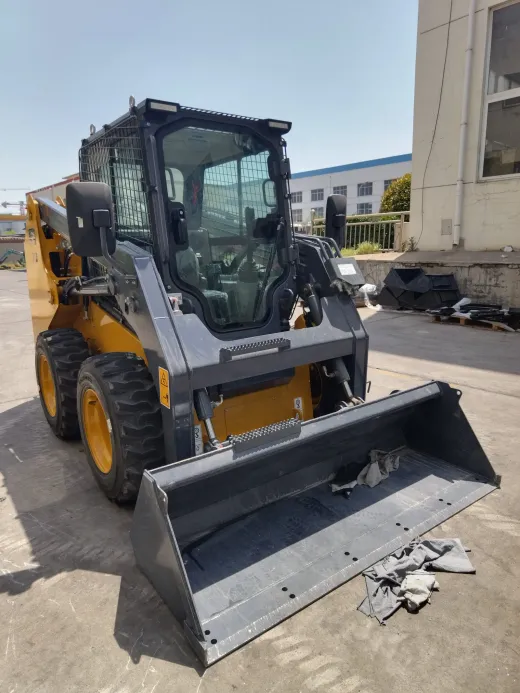
Skid Steer Weight: Operating Weight by Class, Mini to Large Frame
How much does a skid steer weigh? It depends on frame class, undercarriage, and whether you mean operating weight, shipping weight, or rated capacity. This guide breaks down skid steer weight from stand-on minis to large-frame machines, explains tracked vs wheeled weight differences, and covers what the number means for trailer selection and towing rules.
Read more →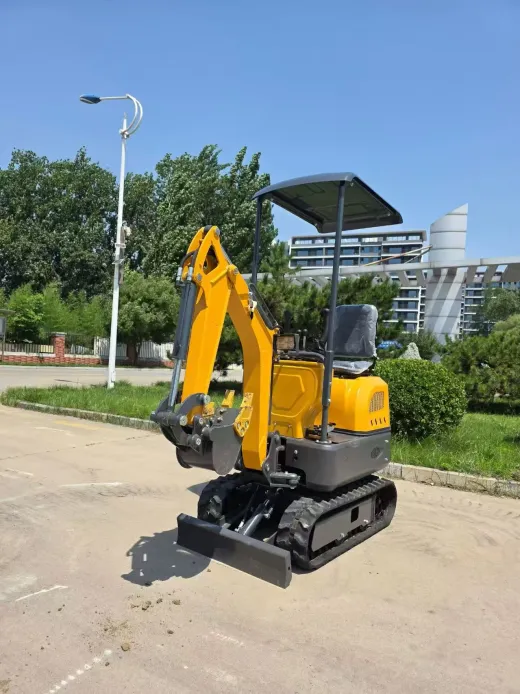
Amphibious Mini Excavators: Working on Water, Marshes & Wetlands
A clear-headed guide to amphibious and floating mini excavators — how pontoon undercarriages work, where they outperform standard machines, their real limitations, and when wide rubber tracks are the smarter choice for wet and soft-ground work.
Read more → Articulating Loaders Explained: Compact & Mini Articulated Loaders
An articulating loader offers superior maneuverability in tight spaces where conventional machines struggle. This guide covers everything buyers need to know about small, compact, and mini articulated loaders — from how they work to what to look for when shopping.
Read more →