










Walk-Behind & Stand-On Loaders: A Practical Buyer's Guide
2026-06-28
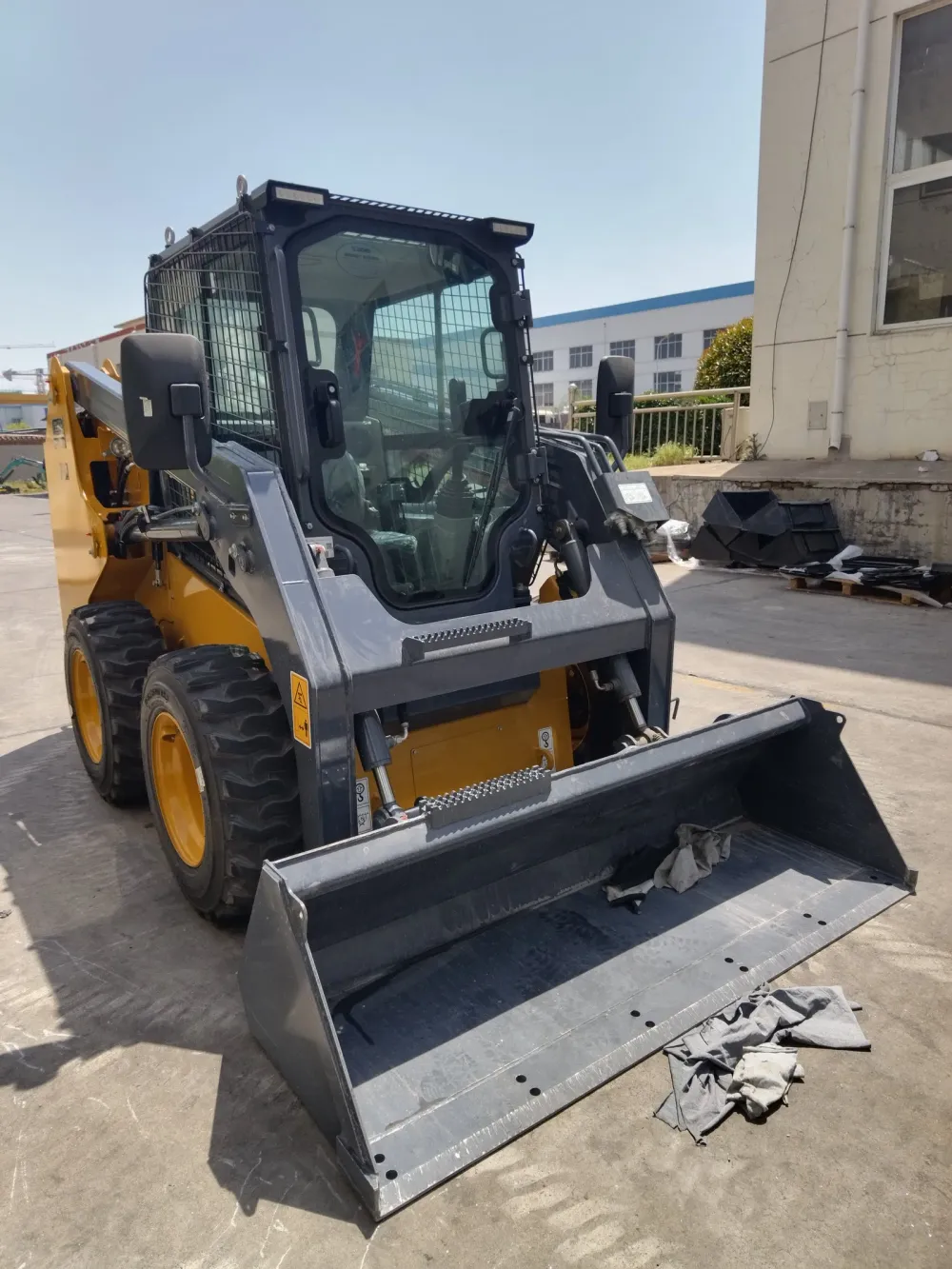
A walk-behind loader or stand-on loader can dramatically cut labor costs on tight job sites where a full-size machine simply won't fit. This guide breaks down every machine type, key specs, and what to look for before you buy.
If you've ever tried to squeeze a conventional skid steer through a backyard gate or into a greenhouse aisle, you already understand the appeal of a walk behind loader. These compact, operator-propelled machines handle gravel, topsoil, compost, mulch, and construction debris in spaces where larger equipment simply cannot go. Over the last decade the category has expanded well beyond the basic walk-behind concept: today you'll also find stand on loader designs that let the operator ride the machine in a standing position, blending the footprint advantage of a walk-behind with genuine ride-on productivity. This buyer's guide covers both families — how they work, what separates good machines from poor ones, and how to match the right machine to your workload.
What Is a Walk-Behind Loader?
A walk behind front loader — sometimes called a walk behind front end loader or a walk behind bucket loader — is a self-propelled machine where the operator walks behind the unit and steers it with handlebar-style controls. A hydraulic or electric lift arm raises and dumps a bucket at the front, giving you true loading capability without requiring the operator to climb into a cab. Rated bucket capacities typically range from 150 kg to 500 kg (330 lb to 1,100 lb), and overall machine widths can be as narrow as 70–80 cm — narrow enough to pass through a standard 90 cm doorway or gate.
Common applications include:
- Moving soil, gravel, and sand in landscaping and hardscaping projects
- Loading compost or manure on small farms and stables
- Cleaning up demolition debris in interior renovation sites
- Shifting palletized materials in warehouses with tight aisle constraints
- Snow removal from pathways, driveways, and between parked vehicles
A walk behind mini loader sits at the smallest end of the spectrum — typically under 500 kg machine weight — and is designed for maximum portability. Many models fit in a pickup truck bed or on a small trailer, eliminating the need for a dedicated transport vehicle.
Stand-On Loaders: The Middle Ground
A stand on loader (also called a stand on compact loader, stand on front end loader, or stand up loader) adds a rear platform or footrest so the operator stands on the machine rather than walking behind it. This seemingly small change has a significant impact on productivity and operator fatigue over long shifts. Because the operator travels with the machine, cycle times improve and the operator expends far less energy covering distance on foot.
A stand on bucket loader — or stand up bucket loader — retains the same compact width advantage of a walk-behind but delivers ride-on comfort and control precision. Hydraulic drive replaces the physical effort of pushing the machine, and many models offer joystick or twin-lever steering that experienced operators find more intuitive than handlebar controls.
The stand on mini loader category is particularly popular in landscaping, where operators move repeatedly between loading, traveling, and dumping. The riding position reduces back strain and allows operators to work longer before fatigue sets in. For contractors who bill by the hour, this translates directly into margin.
Some manufacturers also use the terms stand behind loader and stand behind front loader interchangeably with stand-on designs — both describe configurations where the operator is positioned at the rear of the machine rather than seated overhead as in a conventional skid steer.
Walk-Behind vs. Stand-On vs. Compact Skid Steer: Which Do You Need?
Choosing between a walk behind front end loader, a stand up front end loader, and a compact skid steer loader comes down to three variables: access width, daily operating hours, and budget.
- Access width under 80 cm: Only a walk-behind or a specially configured stand-on machine will fit. If your job sites consistently require moving through narrow gates, interior corridors, or between rows of crops, this constraint is decisive. By comparison, a typical compact skid steer runs roughly 150–180 cm (60–72 in) wide, so anything narrower than that is off the table for a conventional skid steer.
- Daily operating hours over 4–5 hours: Operator fatigue becomes a real cost factor. A stand-on or ride-on machine pays for its price premium quickly when operators can sustain productivity through longer shifts without physical exhaustion.
- Rated operating capacity (ROC) over 500 kg: Once your typical bucket load exceeds roughly half a tonne, you are looking at compact skid steers rather than walk-behind or stand-on machines. A full-featured skid steer loader with a 700–1,200 kg ROC handles heavier material more safely and efficiently.
- Attachment variety: Walk-behind and stand-on machines support a more limited range of attachments compared with a compact skid steer. If you regularly need augers, trenchers, sweepers, or grapples, the skid steer attachments ecosystem gives you more versatility.
For many contractors and property owners, the ideal fleet is a compact skid steer for primary work and a walk-behind or stand-on loader for access-restricted secondary tasks.
Key Specifications to Evaluate
Whether you are shopping for a walk behind loader for sale or a stand on compact loader, the specification sheet tells most of the story. Here are the numbers that matter:
- Rated bucket capacity (kg / lb): This is the maximum load the machine is designed to carry safely in the bucket. Do not habitually overload — it stresses the lift arms and affects tip-over stability.
- Maximum dump height (mm): How high the bucket lip reaches at full lift. A dump height under 1,500 mm limits you to ground-level containers and wheelbarrows. Look for 1,800–2,000 mm if you need to load a truck bed or high-sided trailer.
- Drive type — hydrostatic vs. electric: Hydrostatic hydraulic drive gives smooth, infinitely variable speed control and is generally more durable under sustained commercial use. Battery-electric walk-behind models have become viable for indoor or low-emission environments, with 2–4 hour runtime on a charge being typical. Controls vary by manufacturer: walk-behind units commonly use handlebar-squeeze levers for the left and right drive motors, while stand-on machines often use a single joystick or twin levers, and operator comfort with the controls has a real effect on productivity over a full day. It is also worth checking whether the machine steers via skid-steer-style differential control, where the wheels or tracks are steered independently for tighter turns, or articulated steering, which is gentler on finished surfaces.
- Overall width (mm): The single most critical dimension for access-restricted sites. Measure your narrowest gateway before specifying a machine.
- Hydraulic flow to attachments (L/min): Higher flow rates power larger and faster auxiliary attachments. A machine with only 15–20 L/min will struggle with high-demand tools like augers or sweeper brooms.
- Weight (kg): Heavier machines offer better tractive effort in mud and loose material but are harder to transport and may damage soft turf. Lighter machines are more portable but can lose grip in challenging terrain.
- Tire type: Pneumatic tires offer a smoother ride and are standard on most machines. Solid foam-filled tires eliminate puncture risk — valuable on demolition and construction sites with debris-strewn ground.
Attachments and Versatility
One of the strongest arguments for a stand behind front loader or stand-on machine over a simple wheelbarrow or manual handling is attachment flexibility. Most mid-range and premium walk-behind and stand-on loaders accept a quick-attach plate compatible with a range of tools:
- Standard bucket: The baseline tool for moving loose material. Look for 4–6 mm hardened steel on the cutting edge if you regularly bite into compacted ground.
- Pallet forks: Turn your loader into a compact forklift for materials handling. Particularly useful for moving bagged goods, pavers, blocks, and timber on job sites.
- Snow blade / snow plow: Angled blades clear driveways and pathways efficiently. Combined with the machine's narrow width, this is a high-value winter application.
- Sweeper broom: Rotating brooms clean hard surfaces faster than manual sweeping and are popular with contractors finishing paving or concrete work.
- Auger drive: Post-hole digging in confined areas — fence lines near buildings, tree planting, deck footings — where a skid steer cannot reach.
- Grapple bucket: For brush clearing, log handling, or sorting demolition material.
If attachment variety is a priority for you, confirm that the machine you are evaluating uses a standard quick-attach plate (ISO or ANSI pattern) rather than a proprietary interface that limits third-party tooling options. ZHONGMAI's skid steer loaders and the associated attachment range use industry-standard interfaces for maximum compatibility.
Pricing: What to Expect
The walk behind loader market spans a wide price band depending on capacity, drive type, and country of manufacture.
- Entry-level walk-behind loaders (manual or light hydraulic): USD 3,000–8,000. Suitable for occasional residential use — moving small volumes of soil, sand, or gravel a few times per season.
- Mid-range hydrostatic walk-behind / stand-on mini loaders: USD 8,000–18,000. The workhorse category for professional landscapers, small contractors, and agricultural users who need reliable daily performance.
- Premium stand-on compact loaders: USD 18,000–35,000. Full hydraulic drive, high dump height, broad attachment compatibility, and commercial-grade durability. Comparable in capability (if not in access width) to entry-level compact skid steers.
- Compact skid steer loaders (for comparison): USD 25,000–60,000+ depending on ROC and configuration. If your projects are scaling up and access width is no longer the binding constraint, a skid steer loader often delivers better cost-per-tonne moved.
Chinese-manufactured machines — including those from ZHONGMAI — typically land 20–35% below comparable Western-brand units at equivalent specification levels, making them attractive to cost-conscious buyers who need commercial-grade performance without a premium brand price tag. Total cost of ownership matters as much as purchase price: confirm parts availability, warranty terms, and the distributor's service network before committing.
How ZHONGMAI Fits Into Your Equipment Decision
ZHONGMAI specializes in compact and mid-size construction and material-handling equipment built for demanding real-world conditions. While our core range — including skid steer loaders, backhoe loaders, and the full attachments catalog — addresses the heavier end of the compact equipment spectrum, we work with buyers who are evaluating the full range from walk behind mini loader up to full-size machines.
Our application engineers can help you determine whether a standing loader configuration is genuinely the right tool for your workload, or whether stepping up to a compact skid steer delivers better long-term value given your volume and hours of use. We support buyers through specification reviews, site-condition assessments, and transparent pricing — no inflated list prices, no obscure surcharges.
If you are currently running a stand on loader and finding that your loads are creeping up toward its rated capacity, or that you are spending significant time on attachment changes and wish the machine had more hydraulic flow, that is a strong signal that a compact skid steer is the right next step. Contact our team and we'll walk through the numbers with you honestly.
Browse our walk behind loader range · — we reply within one business day.
Frequently asked questions
What is the difference between a walk-behind loader and a stand-on loader?
A walk-behind loader is operated by a person walking behind the machine, steering via handlebars. A stand-on loader — also called a stand-up loader or stand behind loader — has a rear platform where the operator stands and rides the machine. Stand-on models typically offer higher productivity over longer shifts because the operator is not physically walking, reducing fatigue. Both types share the same key advantage: a narrow footprint that fits through gates and into spaces inaccessible to conventional skid steers.
How wide is a typical walk-behind front loader?
Most walk-behind front end loaders range from 70 cm to 110 cm in overall width. The narrowest models — under 80 cm — can pass through a standard 90 cm doorway or fence gate. Always measure the narrowest point on your job site before selecting a machine and compare it against the manufacturer's stated overall width including any protruding parts such as bucket cutting edges or hydraulic hose fittings.
Can a walk-behind bucket loader handle the same attachments as a skid steer?
Walk-behind bucket loaders support a useful range of attachments — pallet forks, snow blades, sweeper brooms, and augers are common — but the selection is narrower than what is available for a full skid steer loader. Skid steers benefit from a vastly larger attachment ecosystem and higher hydraulic flow rates, enabling tools like hydraulic breakers, cold planers, and high-capacity grapples. If attachment variety is central to your workflow, a compact skid steer is likely a better long-term investment.
What is a reasonable price for a stand-on compact loader?
Entry-level stand-on compact loaders from Asian manufacturers start around USD 8,000–12,000. Mid-range commercial-grade models with hydrostatic drive, quick-attach systems, and higher dump heights typically cost USD 15,000–25,000. Premium units from established Western brands can reach USD 30,000–40,000. Factor in delivery, any required attachments, and the cost of spare parts and service when comparing total cost of ownership across brands.
How much can a walk-behind mini loader carry?
Rated bucket capacities on walk-behind mini loaders range from about 150 kg (330 lb) on the smallest units to 400–500 kg (880–1,100 lb) on larger hydrostatic models. Always work within the rated operating capacity — overloading stresses the lift arms, accelerates wear on hydraulic seals, and can cause tip-forward instability. If your typical loads consistently approach or exceed 500 kg, evaluate stand-on compact loaders or entry-level skid steers instead.
Are electric walk-behind loaders worth considering?
Battery-electric walk-behind loaders are an excellent choice for indoor applications — warehouses, stables, greenhouses, food production facilities — where exhaust emissions and noise are unacceptable. Typical runtimes are 2–4 hours per charge depending on workload intensity, and most models support overnight charging from a standard outlet. For outdoor commercial use across full shifts, hydrostatic diesel or gasoline-powered machines remain more practical due to longer runtime and faster refueling.
When should I upgrade from a stand-on loader to a full skid steer?
Consider upgrading when one or more of the following apply: your typical bucket loads regularly exceed 500 kg; you need attachments with higher hydraulic flow than your stand-on machine can supply; your daily operating hours consistently run beyond 6 hours and you want a fully enclosed cab with HVAC; or your job sites have widened to the point where the narrow-footprint advantage of a stand-on is no longer a primary requirement. A compact skid steer loader delivers a step-change in rated operating capacity, attachment versatility, and operator comfort for a proportional increase in capital cost.
Where can I find a walk-behind loader for sale?
Walk-behind and stand-on loaders are sold by compact equipment dealers, online machinery marketplaces, and direct from manufacturers. When comparing listings, check rated bucket capacity, dump height, overall width, drive type, and whether the attachment coupler is a standard quick-attach plate or a proprietary mount — these specs matter more than the brand name on the machine.
Related articles
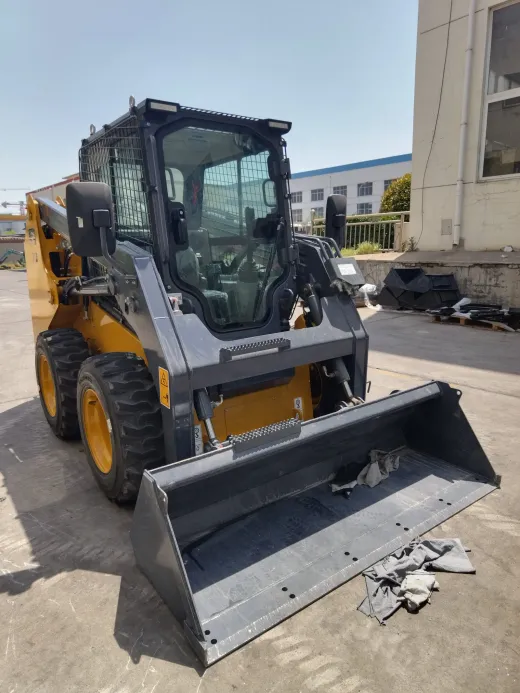
Skid Steer Weight: Operating Weight by Class, Mini to Large Frame
How much does a skid steer weigh? It depends on frame class, undercarriage, and whether you mean operating weight, shipping weight, or rated capacity. This guide breaks down skid steer weight from stand-on minis to large-frame machines, explains tracked vs wheeled weight differences, and covers what the number means for trailer selection and towing rules.
Read more →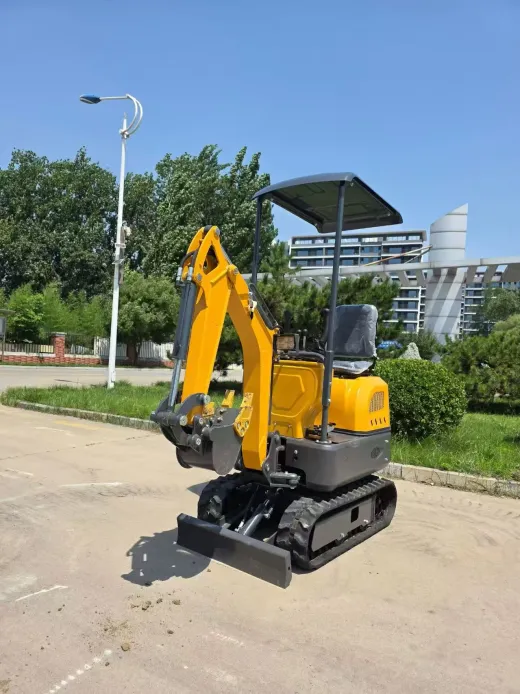
Amphibious Mini Excavators: Working on Water, Marshes & Wetlands
A clear-headed guide to amphibious and floating mini excavators — how pontoon undercarriages work, where they outperform standard machines, their real limitations, and when wide rubber tracks are the smarter choice for wet and soft-ground work.
Read more → Articulating Loaders Explained: Compact & Mini Articulated Loaders
An articulating loader offers superior maneuverability in tight spaces where conventional machines struggle. This guide covers everything buyers need to know about small, compact, and mini articulated loaders — from how they work to what to look for when shopping.
Read more →