










Front-End Loaders for Classic Tractors: Compatibility, Brands & Buying Tips
2026-06-28
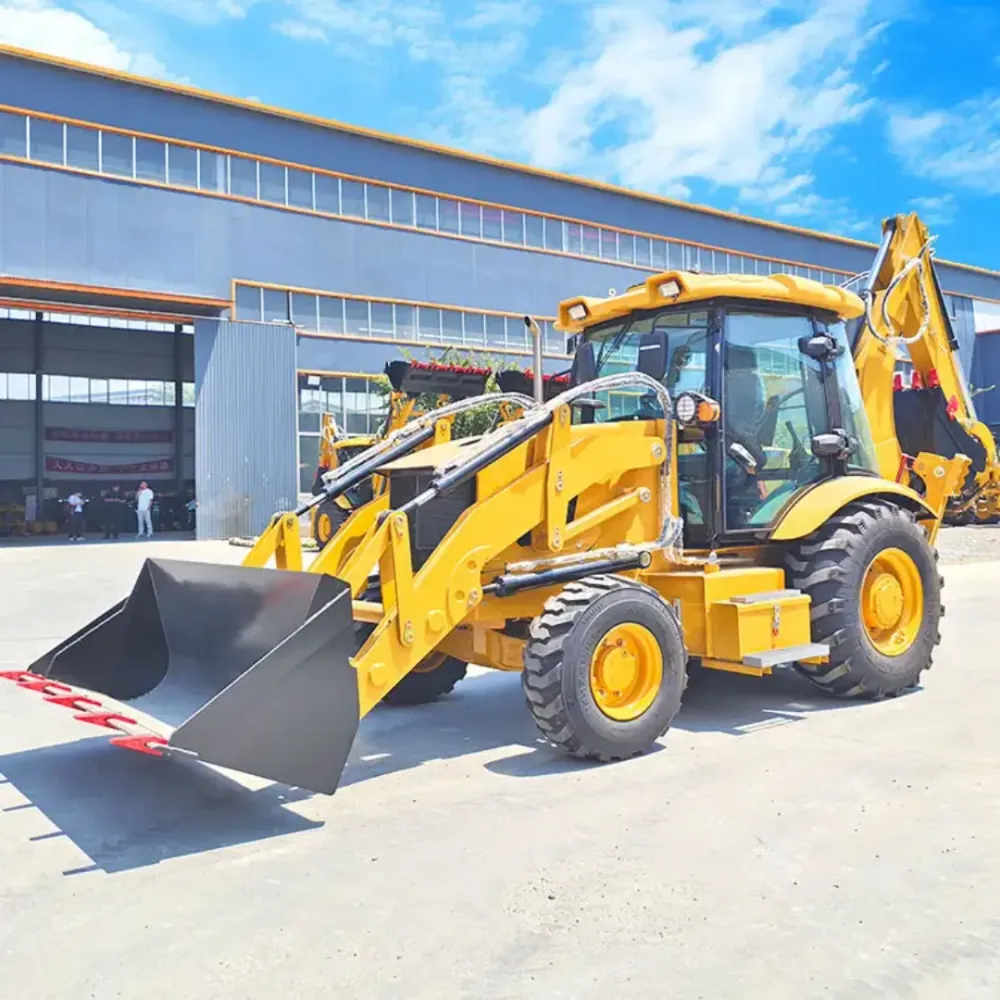
A practical guide to fitting front-end loaders on classic and vintage tractors — covering compatibility for Ford 4000, Allis Chalmers 620, Bolens G154, and other popular models, plus what to look for in loader brands like Quicke, Buhler Allied, and Bush Hog.
Finding a front-end loader for a classic tractor is harder than it looks. The machine itself may run fine, but loader manufacturers have come and gone, mount kits have been discontinued, and the used market mixes genuine bolt-on fitments with cobbled-together adaptations. This guide is written for owners of older and vintage tractors who want a loader that actually fits — covering model-specific compatibility, surviving brands, niche alternatives, and what to do when no period loader exists for your machine.
A loader for Ford 4000 and similar classic-era tractors is the most searched starting point, so we begin there, then work through the brands and models that come up most in owner forums and dealer listings.
Ford tractors: the 4000, 7310, and their loader options
The Ford 4000 three-cylinder is one of the most common vintage tractors still in regular use, and loader availability reflects that. Several manufacturers made dedicated mount kits for the 4000 series, including units from Farmhand loader lineage, early Bush Hog loader frames, and independent fabricators who still produce new brackets today. When searching for a loader for Ford 4000, the most important distinction is whether the mount uses the tractor's front axle support or the frame rails — axle-mount designs are more common but require the axle to be in good condition and correctly aligned.
The larger Ford 7310 loader — a utility tractor from Ford's 10-series line — takes a heavier loader than the 4000 and has better support from surviving period-correct mounts. The 7310 hydraulic system is more capable, so it pairs well with a bucket in the 60–70 inch width range and can handle light 3 point hitch attachments for sale simultaneously without straining the pump. If you're running a 7310 for mixed farm duties, look for loaders originally spec'd for the 6610 or 6710 — the mount geometry is identical on most makes.
For either model, check the loader's lift height and breakout force before committing. A period loader may have been adequate for 1970s operations but fall short if you're moving heavier modern materials.
Brand guide: who made loaders for classic tractors
Several loader brands built their reputations on compatibility with the major tractor lines of the 1960s through 1980s. Understanding who made what helps when you're chasing parts or a complete used unit.
- Farmhand loader attachments: Farmhand was a major independent loader manufacturer serving the North American farm market for decades. Their loaders were made to fit a wide range of tractors and parts remain in circulation through dealers and online. Farmhand-compatible mounts turn up regularly at farm auctions.
- Bush Hog loader for sale: Bush Hog — well known for rotary cutters — also produced front loaders under their own name. Used Bush Hog units are available but require careful verification of the mount series, as Bush Hog changed design families more than once.
- Buhler Allied 595 loader: Allied (later Buhler Allied) produced some of the most durable loaders in the mid-utility class. The Buhler Allied 595 is a popular used-market unit that fits a range of 60–90 hp tractors. Parts support is reasonable and the coupler system is well understood by dealers.
- Quicke Q40 loader: Quicke is a European brand with strong North American distribution. The Quicke Q40 is a light-duty front loader designed for smaller tractors and compact utility machines. Its quick-attach system is clean and the mount kit range is extensive.
- Dual 105 loader: The Dual 105 is a mid-size farm loader that appeared on many John Deere and Ford-compatible mounts in the 1970s and 1980s. Complete used units are uncommon but hydraulic components are still serviceable.
- Beco loader: Beco produced loaders primarily for the European market, with some units sold in North America. Beco loaders were known for clean fabrication but parts are harder to source than domestic brands.
- Hidromek loader: Hidromek is a Turkish manufacturer that produces both integrated backhoe-loaders and standalone loader attachments. Their product range is modern and they have expanded distribution in export markets — a viable option for buyers who cannot find period-correct equipment.
Model-specific compatibility: Allis Chalmers, Bolens, Ariens, and Satoh
Beyond Ford, several other classic tractors generate regular loader compatibility questions. Here is what the owner community has established for the most commonly searched models.
The Allis Chalmers 620 loader situation is challenging. The AC 620 is a garden/utility tractor rather than a full-frame farm tractor, and front loader options were always limited. A small number of purpose-built loader frames were produced for it in the 1970s, and some owners have adapted compact tractor loaders with custom mounting. If you are looking for an Allis Chalmers 620 loader, expect to fabricate or adapt rather than bolt on a period unit.
The Bolens G154 loader for sale is similarly uncommon. Bolens sold the G154 as a garden tractor platform and the loader option was factory or dealer-installed in limited numbers. Used complete loaders for the G154 appear occasionally at estate sales in the upper Midwest where Bolens was popular. Reproduction mount brackets have been made by small fabricators — search tractor forums before going the custom fabrication route.
The Ariens GT17 loader is another garden-tractor loader question. Ariens offered a front loader package for the GT series, but factory units are scarce. Third-party mount adapters exist and the GT17's hydraulic lift system can support a small bucket, though lift capacity is modest.
The Satoh S650G loader — the Satoh Beaver — was a small Japanese utility tractor sold in North America in the 1970s and early 1980s. Purpose-built loaders are extremely rare. Some owners have adapted loaders from similar-footprint Japanese tractors (early Kubota B-series mounts, for example), but this requires careful verification of the front axle load rating.
International and crawler loaders: a different compatibility path
The International crawler loader category covers a distinct class of machine — track-based loaders built by International Harvester on crawler chassis rather than wheel tractor frames. The TD series and the smaller T-series crawlers had purpose-built loader attachments that are mechanically simpler than modern hydraulic designs but extremely durable. Complete international crawler loader units still work on farms and construction sites today, and parts are supported by a dedicated community of IH enthusiasts and specialty dealers.
If you are considering a crawler loader as an alternative to fitting a front loader on a wheel tractor, the key trade-off is mobility versus traction. A crawler loader cannot road-travel without a trailer, but on soft or sloped ground it outperforms a wheeled machine of equivalent weight significantly. For permanent yard or farm use where the machine stays on-site, a used IH crawler loader can be a practical and cost-effective choice.
There are also 3 point hitch attachments for sale in the loader category — rear-mount loader frames that use the three-point hitch as the attachment system rather than a dedicated front frame. These are most common on smaller tractors where a full front loader is impractical or too heavy for the front axle. Capacity is limited but they require no permanent modification to the tractor.
Tree puller attachments and specialty loader tools
One of the most searched loader attachments in the classic-tractor segment is the tree puller attachment for tractor. Tree pullers clamp around a trunk and use the loader's lift and crowd force to extract the root ball — a faster method than stump grinding for smaller trees and brush clearing. They mount on the loader's quick-attach plate and require adequate breakout force from the loader itself; most manufacturers specify a minimum lift capacity of around 1,500 lb for effective pulling.
A tree puller attachment for tractor works best when the loader has a strong crowd (rollback) cylinder and good downforce. Older farm loaders with manual spool valves can run tree pullers, but the operation is slower and requires more operator input than a modern proportional control system. If tree and brush clearing is a primary use, factor this into your loader selection — some period loaders have limited crowd geometry that reduces the effective pulling angle.
Other common specialty attachments for front loaders include pallet forks, bale spears, silage buckets, and grapples. Confirm the quick-attach system is compatible before purchasing attachments separately from the loader.
When no period loader exists: modern compact alternatives
For some classic tractors — especially garden-tractor class machines like the Allis Chalmers 620, Bolens G154, and Ariens GT17 — a period front loader simply may not be findable at a reasonable price. In these cases, owners face a practical choice: invest in custom fabrication, adapt a different tractor's loader with modified brackets, or step away from the vintage machine and use a purpose-built compact loader for the work that needs doing.
Modern compact loaders from manufacturers including ZHONGMAI are designed from the ground up for loader work and offer capabilities that 1970s farm loader technology cannot match — proportional hydraulic controls, higher lift heights, greater bucket capacity, and purpose-built quick-attach systems for a full range of attachments. Our backhoe loader range, for example, includes machines suited to farm, landscaping, and light construction use with hydraulic performance and service access that vintage equipment cannot replicate.
This is not an argument against vintage tractors — it is a practical acknowledgment that some tasks are better suited to purpose-built equipment. Many owners of classic tractors keep the vintage machine for what it does well (cultivation, mowing, light hauling) and add a compact loader or backhoe loader as a separate machine for digging, moving material, and pulling stumps. The capital cost is higher upfront but total downtime is lower and operating capability is substantially greater.
Buying checklist: used loaders for classic tractors
Whether you are buying a Farmhand loader, a Bush Hog loader for sale, a Buhler Allied 595 loader, or any other used unit, the same inspection checklist applies:
- Mount compatibility first. Verify the mount kit matches your specific tractor model and serial number range — not just the make and approximate year. Many loaders were made in multiple mount variants and the wrong one requires fabrication to fit.
- Cylinder condition. Check both lift and crowd cylinders for seal leaks, chrome rod pitting, and bent rods. Cylinder repair is the most common used-loader cost and prices vary widely by bore size.
- Bucket and cutting edge. A worn or cracked bucket can be replaced but adds to acquisition cost. Factor the cutting edge replacement into your offer price.
- Hose condition. Original hoses on a 40-year-old loader are past service life regardless of appearance. Budget for a full hose replacement on any used unit.
- Quick-attach plate. Verify the plate standard matches your intended attachments. Period loaders often used proprietary plates that require an adapter for modern universal-fit tools.
- Loader valve. Test all functions — lift, lower, crowd, dump — through full travel. Sticky or bypassing spools on the control valve are an additional repair cost.
Listings for 3 point hitch attachments for sale and complete loader packages appear regularly on farm auction sites, Facebook Marketplace, and tractor-specific classifieds. Patience usually produces a better purchase than buying the first unit found at a dealer asking retail for a used loader.
Browse our loader for ford 4000 range · — we reply within one business day.
Frequently asked questions
What loaders fit a Ford 4000 tractor?
Several manufacturers made dedicated mount kits for the Ford 4000, including Farmhand loader frames and early Bush Hog loader designs. The key variable is whether the mount attaches to the front axle support or the frame rails — confirm which type any used unit uses before buying, and verify the mount series matches your tractor's serial number range. New reproduction mount brackets are available from specialist fabricators.
Is there a loader available for the Allis Chalmers 620?
Factory and dealer-installed front loaders for the Allis Chalmers 620 were produced in limited numbers and are difficult to find today. Some owners have adapted compact-tractor loaders with custom mounting brackets. Checking tractor owner forums before commissioning fabrication often turns up reproduction brackets or leads to complete used units at estate sales.
What is a tree puller attachment for a tractor and what loader capacity does it need?
A tree puller attachment mounts on the loader's quick-attach plate and uses the loader's lift and crowd force to extract trees by the root ball rather than grinding the stump. Most manufacturers recommend a minimum loader lift capacity of around 1,500 lb for effective pulling. Strong crowd (rollback) geometry and good downforce improve results. Verify the quick-attach plate standard matches the puller before purchasing.
How do I find a Bolens G154 loader or Satoh S650G loader?
Complete front loaders for the Bolens G154 and Satoh S650G (Satoh Beaver) are scarce. For the G154, check tractor classifieds in the upper Midwest where Bolens had its strongest following, and search for small fabricators who have made reproduction mount brackets. For the S650G, adapting brackets from similarly sized early Japanese compact tractors is the most practical path, though the front axle load rating must be verified before fitting any loader.
What is the difference between the Quicke Q40, Buhler Allied 595, and Dual 105 loaders?
The Quicke Q40 is a light-duty European-designed loader for smaller tractors with an extensive mount kit range and a clean quick-attach system. The Buhler Allied 595 is a mid-utility North American loader known for durability and reasonable parts support. The Dual 105 is an older North American farm loader from the 1970s–1980s that appears occasionally on the used market — hydraulic components are still serviceable but complete units are uncommon. Each was designed for a different tractor weight class, so match the loader to your tractor's horsepower and front axle rating.
When should I consider a modern compact loader instead of restoring a vintage one?
If a period loader for your tractor is unavailable, priced above its practical value, or would require significant cylinder, hose, and valve rebuilding to operate safely, a modern compact loader or backhoe loader becomes the more cost-effective choice. Modern machines offer proportional hydraulic controls, higher lift capacity, full quick-attach tool compatibility, and far better service access than equipment from the 1970s. Many owners keep the vintage tractor for cultivation and mowing while adding a purpose-built compact loader for material handling and digging.
What should I inspect when buying a used farm loader like a Farmhand, Bush Hog, or Beco loader?
Inspect mount kit compatibility against your specific tractor serial number range, cylinder condition (seals, chrome rod pitting, rod straightness), bucket and cutting edge wear, hose age (original hoses on a vintage loader should be replaced regardless of appearance), quick-attach plate standard, and the loader control valve for sticky or bypassing spools. Factor all identified repair costs into your offer price rather than buying at the asking price and absorbing the work afterward.
Related articles
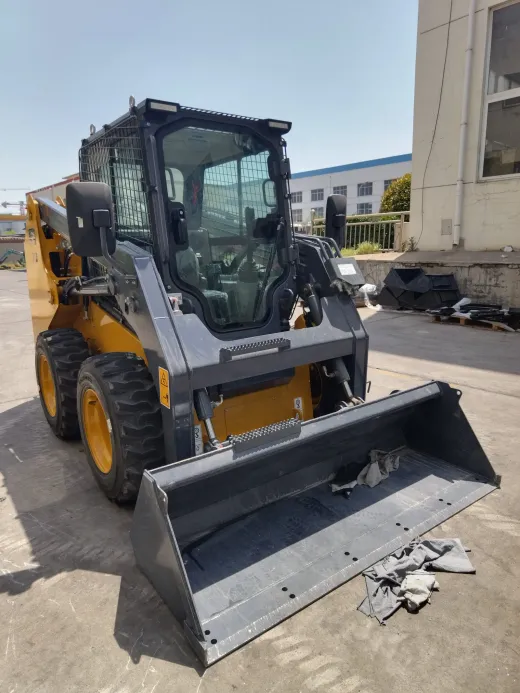
Skid Steer Weight: Operating Weight by Class, Mini to Large Frame
How much does a skid steer weigh? It depends on frame class, undercarriage, and whether you mean operating weight, shipping weight, or rated capacity. This guide breaks down skid steer weight from stand-on minis to large-frame machines, explains tracked vs wheeled weight differences, and covers what the number means for trailer selection and towing rules.
Read more →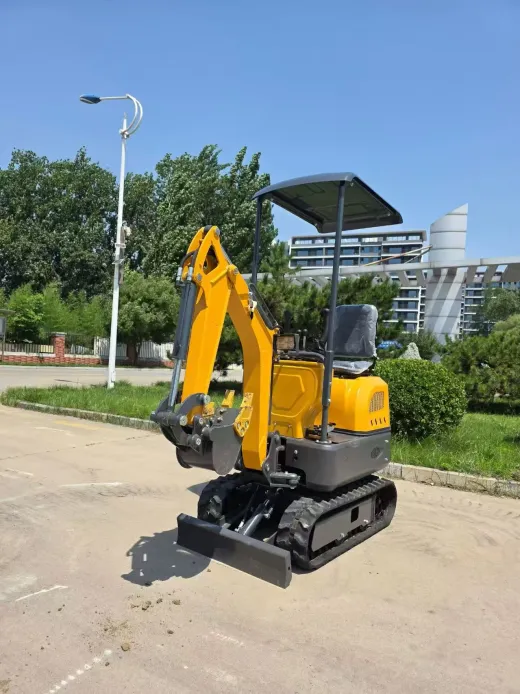
Amphibious Mini Excavators: Working on Water, Marshes & Wetlands
A clear-headed guide to amphibious and floating mini excavators — how pontoon undercarriages work, where they outperform standard machines, their real limitations, and when wide rubber tracks are the smarter choice for wet and soft-ground work.
Read more → Articulating Loaders Explained: Compact & Mini Articulated Loaders
An articulating loader offers superior maneuverability in tight spaces where conventional machines struggle. This guide covers everything buyers need to know about small, compact, and mini articulated loaders — from how they work to what to look for when shopping.
Read more →