










Compact & Mini Wheel Loaders: Sizes, Uses and Alternatives
2026-06-28
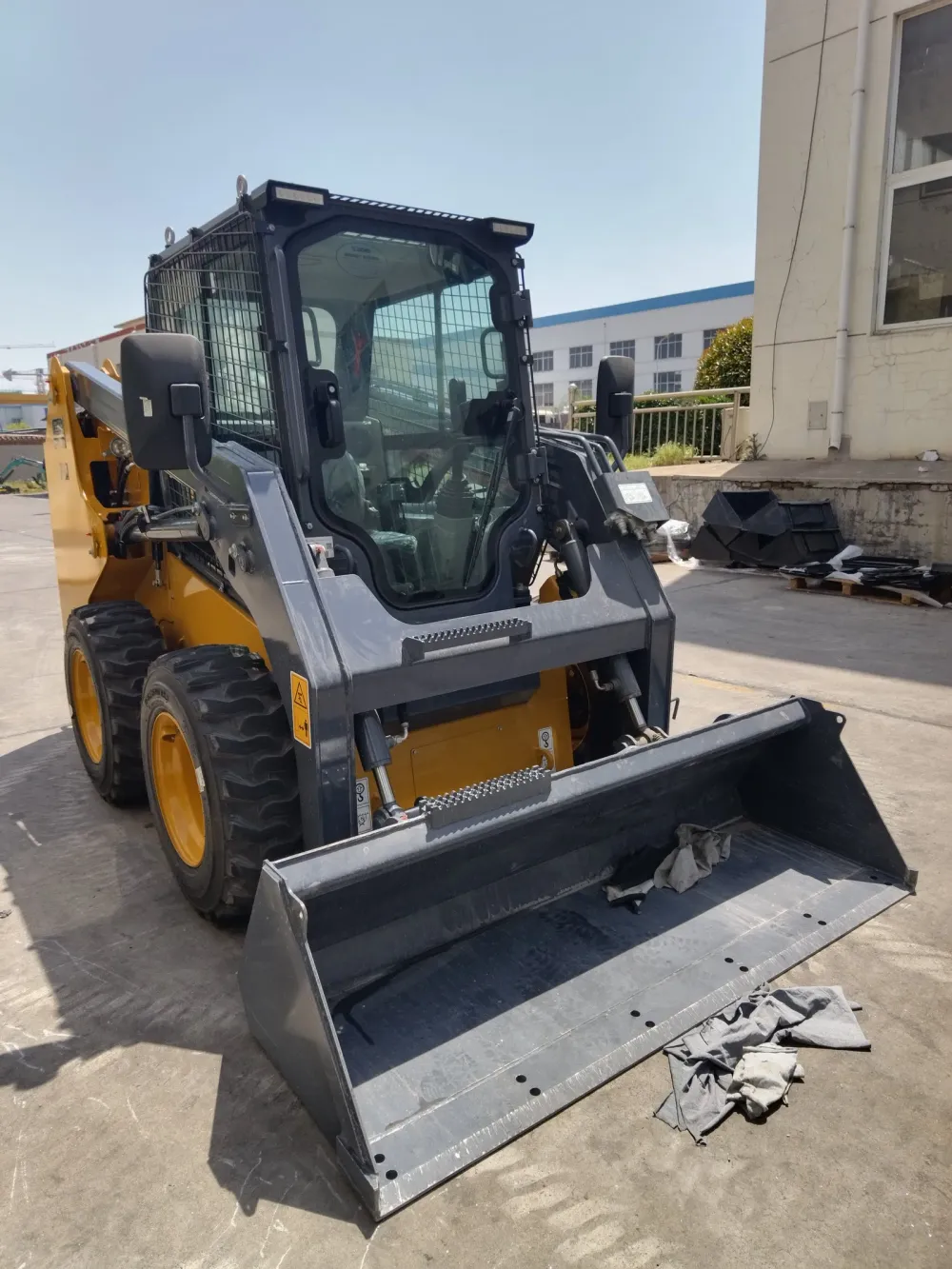
A compact wheel loader can move more material per hour than almost any other machine its size — but only if you pick the right configuration for your job site. This guide breaks down sizes, attachment options, and how articulating models compare to skid steers so you can buy with confidence.
Whether you are managing a landscaping crew, running a small construction firm, or maintaining a farm, the question of which loading machine to buy keeps coming up. The compact wheel loader sits in a sweet spot: it is more maneuverable than a full-size loader, yet it moves material far faster than a skid steer in open terrain. But the category is broader than most buyers realize. You have mini wheel loader units that weigh under 3 tonnes, true articulating wheel loader designs that pivot at the center frame, and hybrid configurations that bolt on a rear digging arm to create a wheel loader with backhoe capability. This guide walks through every major variant, explains where each one shines, and shows you when a high-spec skid steer loader is actually the smarter buy.
What Is a Compact Wheel Loader — and How Small Does 'Small' Get?
The term wheel loader small covers a surprisingly wide range of machines. At the top end you have units in the 5–7 tonne operating weight class with bucket capacities around 1.2 m³. At the bottom sits the sub compact wheel loader, sometimes called a micro loader, which can weigh as little as 1,200 kg and fit through a standard doorway. Between those extremes you find the most popular segment: the mini articulated wheel loader in the 2–4 tonne class.
Key specifications to compare across the class:
- Operating weight — lighter machines cost less to transport and cause less turf damage, but they sacrifice breakout force.
- Bucket capacity — ranges from roughly 0.2 m³ on a sub-compact to 1.0 m³ on a larger compact model.
- Rated operating load (ROL) — typically 35–50 % of tipping load; use ROL, not tipping load, when sizing for your material density.
- Engine tier — Stage V / Tier 4 Final compliance matters for urban and indoor job sites.
- Lift height — most compact loaders reach 2.8–3.5 m at full lift, enough for a standard dump truck but not a semi-trailer.
A wheel loader compact in the 3-tonne class is the most common entry point for contractors who need genuine loading speed without the overhead of a full-size machine.
Articulating vs. Rigid Frame: Why the Hinge Makes All the Difference
The defining feature of a true compact articulated wheel loader is the pivot joint between the front and rear frames. When you steer, the entire front half of the machine — engine, cab, and all — swings relative to the rear axle. This geometry gives articulating loaders two big advantages over rigid-frame machines.
First, the turning radius is dramatically tighter for a given wheelbase. A 3-tonne articulating wheel loader can complete a full Y-cycle in a pile-to-truck distance of roughly 4.5 m, whereas a rigid-frame skid steer of similar capacity needs repeated counter-rotations that burn time and fuel. Second, because all four wheels stay in contact with the ground through the pivot, traction is more consistent on uneven terrain — important for muddy construction sites and sloped landscaping work.
The trade-off is that articulating machines are wider and longer than skid steers of similar capacity, and the center hinge requires regular inspection and greasing. For very confined indoor spaces or tight urban alleys, the skid steer's zero-turn footprint can still win on practicality alone.
If you are weighing a mini articulated wheel loader against a skid steer, the deciding factor is almost always cycle time over distance. If your push distance is under 10 m and you are piling loose material, the articulated loader wins. If you are working inside a building or need to pick-and-place precision loads, look at our skid steer loader lineup first.
Mini Wheel Loader Use Cases: Where These Machines Earn Their Keep
The mini wheel loader became popular because it fills a gap that neither the compact tractor nor the full-size loader covers well. Here are the job site scenarios where buyers consistently get the best return on investment:
- Landscaping and nursery work — Moving mulch, compost, topsoil, and balled trees. A sub compact wheel loader with pallet forks can handle nursery stock without tearing up finished lawns. Look for foam-filled or turf tires as an option.
- Feed lot and livestock operations — Daily muck-out cycles demand a machine with a tight turning radius and simple controls. The articulated steering of a compact articulated wheel loader means the operator can spin in a barn aisle without hitting stall walls.
- Snow removal — A wheel loader small with a box blade or pusher blade clears parking lots faster than a pickup truck and leaves cleaner edges than a skid steer with tracks. The bucket also doubles as a scoop for loading salt spreaders.
- Demolition cleanup — Compact loaders excel at scooping rubble into dump trucks. Pair with a grapple bucket for mixed material streams.
- Small quarry and aggregate operations — Feeding hoppers and stockpiling processed stone. A 4-tonne machine with a rock bucket can move 80–100 tonnes per hour in a tight feed loop.
- Rental fleets — The compact wheel loader is one of the highest-utilization machines in a general rental fleet because it appeals to landscapers, builders, and farmers alike. Versatility drives rental revenue.
Wheel Loader with Backhoe: When You Need Dig Capability Too
A wheel loader with backhoe — sometimes marketed as a compact loader backhoe or a mini backhoe loader — adds a rear-mounted digging arm to a standard wheel loader chassis. The result is a machine that can load material from the front and trench, break rock, or excavate from the rear without switching equipment.
This configuration is popular in utility contracting, rural road maintenance, and municipal work where a single operator must both dig trenches and backfill them. The key specs to evaluate on a loader-backhoe combination:
- Backhoe dig depth — most compact units reach 3.0–4.0 m, enough for standard utility trenching.
- Bucket digging force — check both breakout force (curl cylinder) and digging force (arm cylinder); the arm figure is often lower and is the practical limit in hard soil.
- Stabilizer spread — wider stabilizers improve dig stability, but they must still fit on your typical work site.
- Loader-to-backhoe transition — hydraulically repositioned seats and controls are faster than mechanical pivot seats for high-cycle work.
If your primary need is trenching with occasional loading, also compare a dedicated mini excavator paired with a separate compact loader — the total purchase price may be similar, and you get two optimized tools instead of one compromise. If you need both functions from a single operator on a single machine, the backhoe loader is the traditional answer and remains a strong choice.
Compact Wheel Loader vs. Skid Steer: Choosing the Right Tool
This is the comparison most buyers end up making. Both machines move material, both accept a wide range of attachments, and both sit in a similar price bracket. The differences are real and consequential.
- Cycle speed over distance — A compact wheel loader rolls faster on its axles than a skid steer on its drive motors. Over a 20 m push-and-dump run, the wheel loader will complete more cycles per hour, translating directly to lower cost-per-tonne moved.
- Traction and tire wear — Wheel loaders use differentials and four-wheel drive rather than torque-fighting skid steering. Tires last longer, and the machine does not scuff up paved or finished surfaces.
- Attachment versatility — Skid steers win here. The universal quick-attach plate and high-flow auxiliary hydraulics on modern skid steers support a wider attachment ecosystem — including augers, planers, trenchers, and cold planers — than most compact wheel loaders. See our skid steer attachments page for the full range.
- Indoor and confined-space work — Skid steers are shorter, narrower, and can rotate in place. In applications like poultry house cleanout or indoor demolition, the skid steer is almost always the better fit.
- Operator fatigue — Articulating loaders generally offer a smoother ride over rough terrain. Skid steers on rubber tracks are a close second; wheeled skid steers on hard surfaces transmit more vibration to the cab.
Rule of thumb: if you move bulk material in open terrain and cover 15+ metres per cycle, buy a mini articulated wheel loader. If you need attachment flexibility and work in tight spaces, buy a skid steer.
Key Specs Buyers Miss (and Why They Matter)
Marketing sheets emphasize tipping load and horsepower. Here are the figures that actually determine daily productivity:
- Hydraulic flow rate (L/min) — determines how fast your attachments cycle. A loader with 60 L/min will run a hydraulic broom or sweeper noticeably faster than one with 40 L/min.
- Ground clearance — matters on construction sites with rebar or rough fill. Under 280 mm and you will be picking debris out of the undercarriage constantly.
- Cab ROPS/FOPS rating — check that the cab carries both ratings if you work near overhead hazards or on slopes steeper than 15°.
- Service intervals and filter accessibility — a machine that requires two hours of panel removal to change an air filter will be under-serviced in the field. Walk around any machine you are seriously considering and open every service door before you buy.
- Telematics readiness — fleet managers increasingly require GPS tracking and hour-meter reporting. Check whether the machine is telematics-ready from the factory or requires an aftermarket install.
- Parts lead time — for wheel loader compact machines sourced from China, ask your dealer for a sample of common wear parts (filters, bucket teeth, brake pads) and confirm they are stocked locally or can ship within a week.
These details rarely appear on comparison websites but consistently separate high-uptime machines from low-uptime ones after the first year of ownership.
Total Cost of Ownership: Budgeting Beyond the Purchase Price
A compact wheel loader priced attractively at purchase can become expensive to own if you underestimate operating costs. Use this framework when building your 5-year TCO model:
- Fuel — typically the largest variable cost. A 35 kW compact loader working 6 hours a day will burn roughly 8–12 litres of diesel depending on load factor. At current fuel prices, that is $15,000–$22,000 over five years at 1,500 hours per year.
- Tires — standard L2/L3 loader tires on a mini wheel loader last 1,500–3,000 hours depending on surface abrasiveness. Budget $1,200–$2,400 per set for a compact unit, more for foam-filled or solid tires.
- Scheduled maintenance — follow the OEM interval chart. Most compact loaders require an oil/filter service every 250–500 hours and a major drivetrain inspection at 2,000 hours.
- Operator training — articulated machines have different rollover dynamics than skid steers. Budget for at least one day of hands-on familiarization for each new operator, especially when operating on slopes.
- Financing — Chinese-manufactured articulating wheel loader models typically carry lower sticker prices than European or North American equivalents, but finance rates and residual values vary. Get at least two lender quotes before signing.
When you run the numbers honestly, the gap between a premium-brand and a value-brand sub compact wheel loader often narrows significantly once you account for equivalent warranty coverage and locally stocked parts.
Browse our compact wheel loader range · — we reply within one business day.
Frequently asked questions
What is the difference between a compact wheel loader and a mini wheel loader?
The terms overlap, but in practice 'mini wheel loader' usually refers to machines under 3 tonnes operating weight — small enough for one person to trailer with a pickup truck. 'Compact wheel loader' is a broader category that includes mini units as well as slightly larger machines up to roughly 7 tonnes. Both are significantly smaller than standard construction-class loaders, which start around 8–10 tonnes.
Is an articulating wheel loader better than a skid steer loader?
It depends on your primary task. A compact articulated wheel loader moves bulk material faster over open ground because it rolls on axles rather than skidding on tires. A skid steer accepts more attachment types, works in tighter spaces, and can zero-turn in place. For landscaping, snow removal, and aggregate handling in open areas, the articulating loader usually wins on productivity. For confined spaces and attachment-heavy work, the skid steer is more versatile.
Can a mini wheel loader replace a backhoe?
Not directly. A standard mini wheel loader only loads and pushes — it cannot dig. If you need digging capability, look at a wheel loader with backhoe (a loader-backhoe combination), a dedicated mini excavator, or a full backhoe loader. If your digging needs are occasional and shallow, a skid steer with an auger or trencher attachment may be a more cost-effective solution.
What size compact wheel loader do I need for landscaping?
Most landscaping crews find a 2–3 tonne compact wheel loader with a 0.4–0.6 m³ bucket sufficient for daily mulch, soil, and stone work. If you regularly load delivery trucks or handle heavy aggregate, step up to a 3–4 tonne unit. For nursery work on finished turf, prioritize machines with turf tire options and low ground pressure over raw bucket capacity.
How do I maintain a compact wheel loader to maximize its lifespan?
Follow the OEM service interval chart without exception — the most common premature failures on compact wheel loaders trace back to missed oil changes and neglected hydraulic filters. Grease the articulation joint and all pivot pins at every scheduled interval. Inspect tires weekly for cuts and embedded debris. Keep the cooling system clean, especially if working in dusty conditions, and check the air filter element daily during high-dust operations. With proper maintenance, a quality compact wheel loader should reach 8,000–12,000 hours before major drivetrain work is needed.
What attachments can a compact wheel loader use?
Common attachments include general-purpose buckets, rock buckets, pallet forks, hay spears, snow blades, box blades, sweeper brooms, and grapple buckets. The attachment ecosystem for wheel loaders is smaller than for skid steers, and compatibility depends on your machine's auxiliary hydraulic flow and the coupler standard it uses. If attachment versatility is a top priority, a skid steer loader with a universal quick-attach plate gives you access to a much wider selection.
Are Chinese-made compact wheel loaders reliable?
Quality varies by manufacturer. Established Chinese OEMs supply machines that meet Tier 4 Final or Stage V emissions standards, use branded hydraulic components (Rexroth, Parker, Kawasaki), and carry CE certification for export markets. Key due diligence steps: verify the emissions certification, ask for a parts availability commitment from your local dealer, and check that warranty claims are handled regionally rather than requiring international shipping. Reading field reviews from operators who have run the machine past 2,000 hours is more informative than factory specification sheets.
Related articles
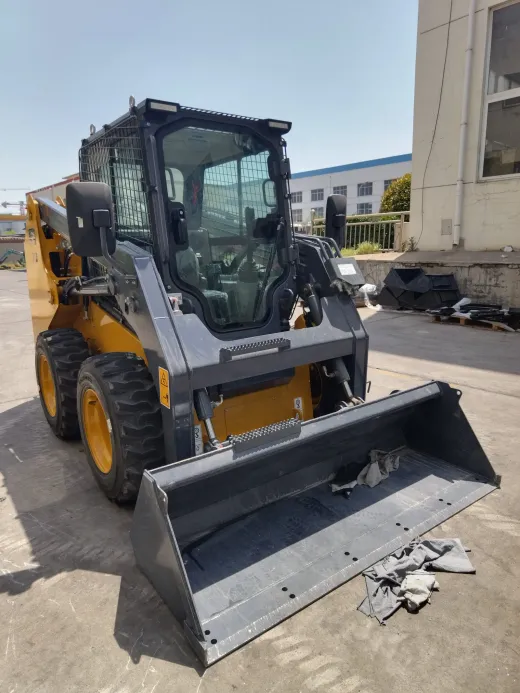
Skid Steer Weight: Operating Weight by Class, Mini to Large Frame
How much does a skid steer weigh? It depends on frame class, undercarriage, and whether you mean operating weight, shipping weight, or rated capacity. This guide breaks down skid steer weight from stand-on minis to large-frame machines, explains tracked vs wheeled weight differences, and covers what the number means for trailer selection and towing rules.
Read more →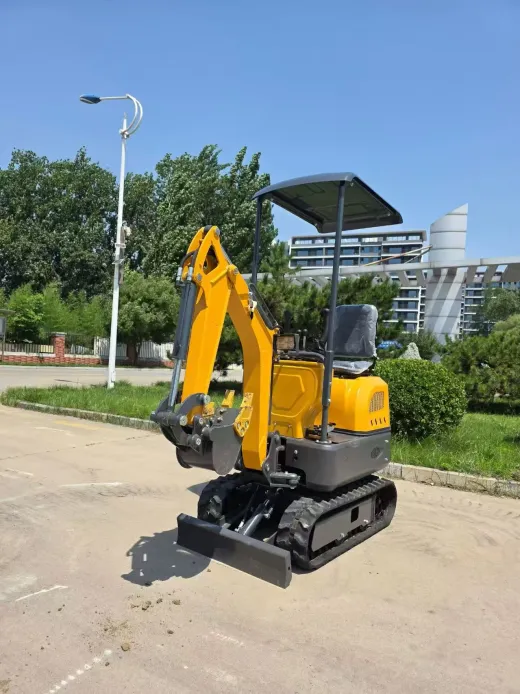
Amphibious Mini Excavators: Working on Water, Marshes & Wetlands
A clear-headed guide to amphibious and floating mini excavators — how pontoon undercarriages work, where they outperform standard machines, their real limitations, and when wide rubber tracks are the smarter choice for wet and soft-ground work.
Read more → Articulating Loaders Explained: Compact & Mini Articulated Loaders
An articulating loader offers superior maneuverability in tight spaces where conventional machines struggle. This guide covers everything buyers need to know about small, compact, and mini articulated loaders — from how they work to what to look for when shopping.
Read more →