










Reach Truck Operator: Skills, Training, and What the Job Actually Involves
2026-06-28
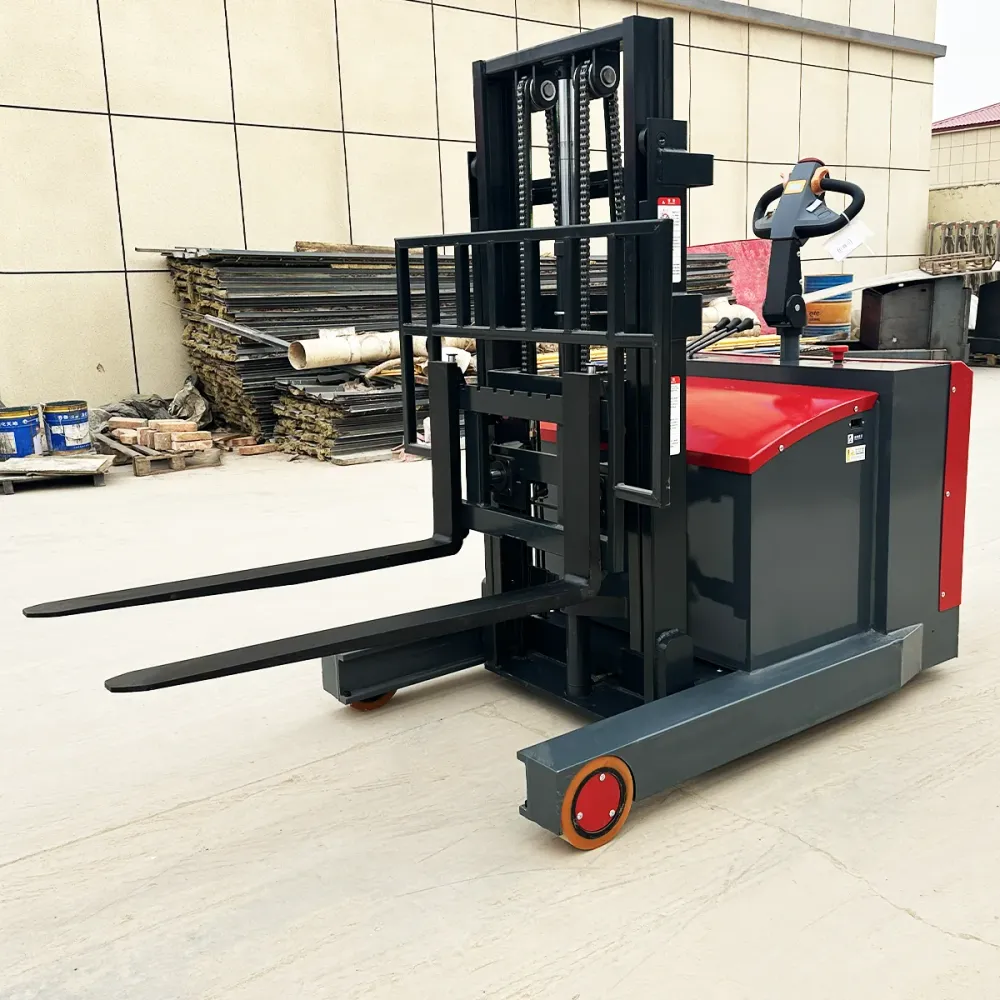
A complete guide to the reach truck operator role: what you do on the job every day, the skills and certification you need, safety rules that matter, and how the right machine makes every shift easier.
What Does a Reach Truck Operator Actually Do?
A reach truck operator is responsible for moving palletized loads in high-bay warehouses — typically stacking and retrieving stock at heights that standard counterbalance forklifts cannot safely reach. Unlike driving a sit-down counterbalance unit on an open yard, operator reach truck work happens inside narrow aisles, often with racking on both sides within centimeters of the mast.
On a typical shift, the operator will: receive pick or put-away tasks from a warehouse management system (WMS), travel to the correct aisle, extend the reach mechanism to place or collect a pallet, and confirm the transaction. Between tasks, the operator monitors battery state, reports racking damage, and keeps the aisle floor clear. The role sits at the center of warehouse throughput — slow operators or mechanical faults cascade directly into missed dispatch windows.
Core Skills Every Reach Truck Operator Needs
Competent reach truck operator work draws on a specific mix of spatial awareness, machine feel, and discipline. The skills that separate average from excellent operators include:
- Spatial judgment at height. Loads are placed up to 10–12 m high in many facilities. The operator must judge fork alignment with a pallet entry from ground level, often using in-mast cameras or height indicators rather than direct sight.
- Smooth hydraulic control. Jerky lift or tilt movements at height amplify sway. Good operators develop a light, deliberate touch on the control handles.
- Narrow-aisle maneuvering. Driving a reach truck in aisles as tight as 2.7 m demands precise steering and awareness of the rear overhang during turns.
- WMS literacy. Most modern warehouses scan barcodes or RFID at every location. Operators must read handheld terminals, confirm locations, and flag discrepancies without slowing cycle time.
- Pre-shift inspection habits. Checking forks, overhead guard, battery connectors, and tire condition before every shift is not optional — it is the foundation of safe operation.
Certification and Training: What You Need Before You Operate
No responsible employer allows an uncertified person to operate powered industrial trucks. In most jurisdictions — including the United States (OSHA 29 CFR 1910.178), the United Kingdom (ACOP L117), and the European Union — formal forklift reach operator training and employer authorization are mandatory before an operator touches a machine in a live warehouse.
A standard certification path looks like this:
- Classroom theory (4–8 hours). Covers load capacity, stability triangle, battery safety, pedestrian management, and legal obligations.
- Practical training (8–16 hours). Supervised operation on the specific machine type — including the reach mechanism, side-shift, and tilt functions — under an approved instructor.
- Assessment and authorization. Written or oral test plus a witnessed practical evaluation. The employer issues a site-specific authorization card.
- Refresher training. Required after an incident, after a period of non-use, or on a scheduled cycle (typically every 3–5 years depending on local regulation).
Operators who also handle reach stacker operator duties in port or intermodal environments follow a separate, more intensive certification track because reach stackers carry ISO containers at much greater loads and heights. The skill sets overlap but are not interchangeable.
Daily Safety Responsibilities
Safety is not a checklist item — it is the continuous background task of every operator reach truck shift. Key responsibilities include:
- Pre-operation inspection. Forks, backrest, mast chains, hydraulic hoses, battery charge level, horn, lights, and brakes — all checked and logged before the first task.
- Load capacity discipline. Never exceed the rated capacity shown on the data plate. Loads that look light can exceed limits if the load center differs from the rated value.
- Speed management. Slow down at aisle ends, blind corners, dock doors, and pedestrian crossing zones — even when the WMS is demanding throughput.
- Stability awareness. The reach mechanism shifts the load's center of gravity significantly. Always retract the reach before traveling, and never raise a load while in motion.
- Racking impact reporting. Any impact — however minor it appears — must be reported immediately. Hidden structural damage to racking causes catastrophic collapses that injure people far removed from the original incident.
Facilities that pair operators with well-maintained equipment see measurably fewer incidents. ZHONGMAI's electric reach truck is built with an integrated overload sensor and automatic speed reduction in the raised-mast state, giving the operator a mechanical safety net rather than relying solely on human judgment under pressure.
What Makes Driving a Reach Truck Different From Other Forklifts
Driving a reach truck is a genuinely different physical and cognitive experience compared to a counterbalance forklift or an order picker. The key differences are:
- Operator position. Most reach trucks are stand-up or sit-down side-stance machines. The operator faces the long axis of the vehicle, not forward. This takes adjustment — steering inputs feel reversed compared to a sit-down counterbalance unit.
- Outrigger legs. The machine travels with outrigger legs straddling the pallet. Operators must account for the leg spread when positioning at racking and when navigating around floor-level obstacles.
- Reach function. The forks extend and retract independently of the mast. Operators learn to extend only when aligned, and to retract fully before reversing out of an aisle bay.
- High-lift visibility. At 8 m and above, the load disappears into the racking structure. Operators rely on height encoders, aisle alignment lasers, or cameras — not direct vision — to confirm placement.
Operators transitioning from a counterbalance electric forklift typically need 2–4 hours of supervised transition training before they are productive on a reach truck. The underlying safety principles are the same; the machine behavior is not.
Turret Truck Operators and How the Role Compares
In very narrow aisle (VNA) warehouses, the turret truck operator role is the most technically demanding of all pallet-handling positions. A turret truck — also called a man-up VNA truck — features a rotating head that can place loads on either side of the aisle without the truck itself turning. The operator is elevated with the load, working from a cab that rises to the storage level.
Compared to a standard reach truck, turret truck operation requires:
- Precise wire or rail guidance tracking (the truck follows a floor rail or inductive wire in the aisle).
- Greater height awareness — operators regularly work at 14 m and above.
- More complex WMS integration, since location confirmation is critical at that level of density.
Most warehouses treat turret truck certification as an advanced qualification on top of standard reach truck authorization. Operators typically need 6–12 months of reach truck experience before being considered for VNA transition training.
Career Outlook and What Employers Look For
Warehouse automation is growing, but so is the total volume of goods moving through distribution centers. The net demand for skilled reach truck operator labor remains strong in most markets through the late 2020s, particularly for operators who can work comfortably with WMS terminals and handle high-bay locations that automated systems still handle poorly.
Employers consistently cite three factors when selecting or promoting operators:
- Safety record. Zero preventable incidents over a 12-month period is the minimum bar for advancement in most facilities.
- Throughput consistency. Operators who maintain steady cycle times without sacrificing accuracy are valued over those who sprint and stall.
- Equipment care. Operators who report faults early, charge batteries properly, and avoid abusive maneuvers extend machine life and reduce unplanned downtime — a direct cost saving that supervisors notice.
Reach truck operators who develop cross-training on related equipment — order pickers, counterbalance forklifts, or reach stackers in intermodal settings — command higher wages and greater scheduling flexibility. Certification portfolios are portable across employers, making them a durable career investment.
Choosing the Right Reach Truck Makes the Operator's Job Easier
Equipment quality is not just a procurement question — it directly affects operator fatigue, error rate, and job satisfaction. A poorly spec'd or poorly maintained machine forces the operator to compensate with extra effort on every cycle. Over an eight-hour shift, that adds up.
When evaluating a reach truck for a warehouse operation, operators and fleet managers should look at:
- Ergonomics. Adjustable armrests, well-positioned control handles, clear instrument displays, and low-vibration floor standing reduce fatigue over long shifts.
- Visibility aids. Integrated height encoders, rear-view cameras, and aisle alignment systems reduce errors without slowing cycle time.
- Battery and charging system. Lithium-ion options with opportunity charging eliminate the battery-change interruption that disrupts multi-shift operations.
- Service support. Downtime is lost throughput. A supplier with local service capability and parts availability keeps fleet uptime high.
ZHONGMAI's electric reach truck line is designed with the operator's daily experience in mind — from the ergonomic standing platform to the integrated safety systems that reduce cognitive load during high-bay operation. A well-matched machine does not make a mediocre operator excellent, but it does allow a skilled operator reach truck professional to work at their full potential, shift after shift.
Browse our reach truck operator range · — we reply within one business day.
Frequently asked questions
What qualifications do I need to become a reach truck operator?
You need formal powered industrial truck training covering both classroom theory and supervised practical operation, followed by a written or practical assessment. Your employer must then issue a site-specific authorization before you operate in a live warehouse. Requirements vary by country — OSHA 29 CFR 1910.178 in the US, ACOP L117 in the UK — but the core elements are consistent: training, assessment, and employer sign-off.
How long does reach truck operator training take?
For a complete beginner, expect 2–3 days total: roughly half a day of theory, one to two days of practical training on the machine, and a final assessment. Experienced forklift operators transitioning to a reach truck typically need a shorter conversion course of 4–8 hours to cover the reach mechanism, outrigger legs, and high-lift procedures.
What is the difference between a reach truck and a reach stacker?
A reach truck is a warehouse machine designed to stack pallets in narrow-aisle racking, typically to heights of 8–12 m. A reach stacker is a large outdoor machine used in ports and rail yards to lift and stack ISO shipping containers, often to 5 containers high. The operator skills overlap in the area of load control and spatial judgment, but the machines, the environments, and the certifications are separate.
Is driving a reach truck difficult to learn?
The basic controls can be learned in a few hours. Developing the spatial confidence to accurately place loads at 8–10 m, maintain consistent cycle times in a busy warehouse, and manage the outrigger legs in tight spaces takes several weeks of regular operation. Operators who have previously driven counterbalance forklifts adapt faster, but must consciously adjust to the stand-up stance and the reach mechanism.
How does a turret truck operator's role differ from a standard reach truck operator?
A turret truck operator works in very narrow aisles where the truck cannot turn — the fork head rotates instead. The operator is typically elevated with the load, working at heights up to 14 m or more. It is considered an advanced specialism built on top of standard reach truck experience, requiring additional training and usually 6–12 months of prior reach truck operation.
What are the most common safety risks for reach truck operators?
The primary risks are overloading (exceeding the rated capacity, particularly when the load center differs from the rated value), racking impacts from misaligned placement at height, traveling with the load elevated, and pedestrian collisions in high-traffic areas. All of these are preventable through proper training, pre-shift inspection, and facility traffic management procedures.
How often does a reach truck operator need refresher training?
Most regulatory frameworks and employer policies require refresher training every 3–5 years, or immediately following an incident, a near-miss, or an extended period away from the machine. Some facilities conduct annual observations rather than formal refresher courses. Check local regulatory requirements — OSHA, for example, requires retraining whenever unsafe operation is observed, regardless of time elapsed since the last certification.
Related articles
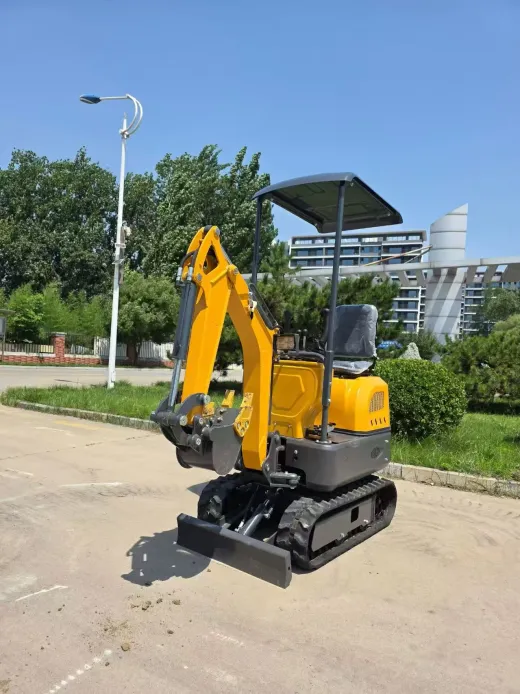
How to Operate a Mini Excavator: Controls, Techniques & Safety
A practical step-by-step guide to operating a mini excavator safely — covering cabin controls, swing and travel, basic digging technique, and what a micro digger driver needs to know before the first shift.
Read more →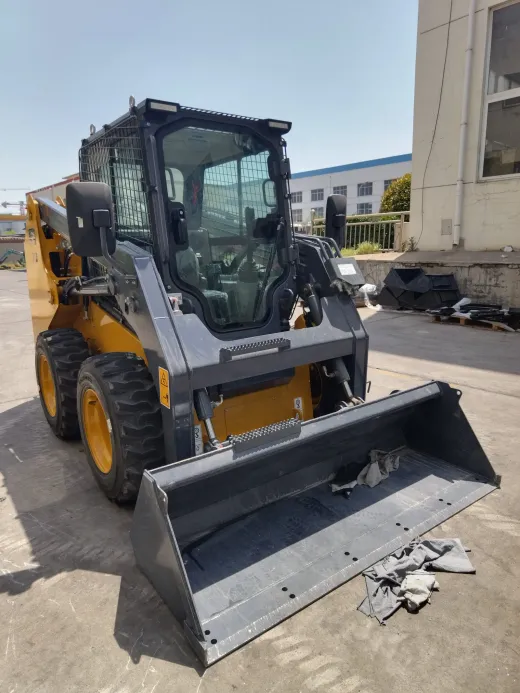
How to Drive and Operate a Skid Steer Loader: A Beginner's Guide
A complete beginner's guide to driving a skid steer loader — covering pre-operation checks, how the controls work, driving on varied terrain, digging techniques, attachment use, safety rules, and an honest look at why building your own skid steer rarely makes sense.
Read more → Largest Digger in the World — And What Most Buyers Actually Need
From the Bagger 293 bucket-wheel to the Cat 6090 mining giant, the world's largest diggers are engineering spectacles — but they have nothing to do with what most buyers actually need. Here's the full story, from record-breaking monsters to the compact machines that get real work done.
Read more →