










World's Largest Skid Steer: The Biggest Machines Ever Built
2026-06-28
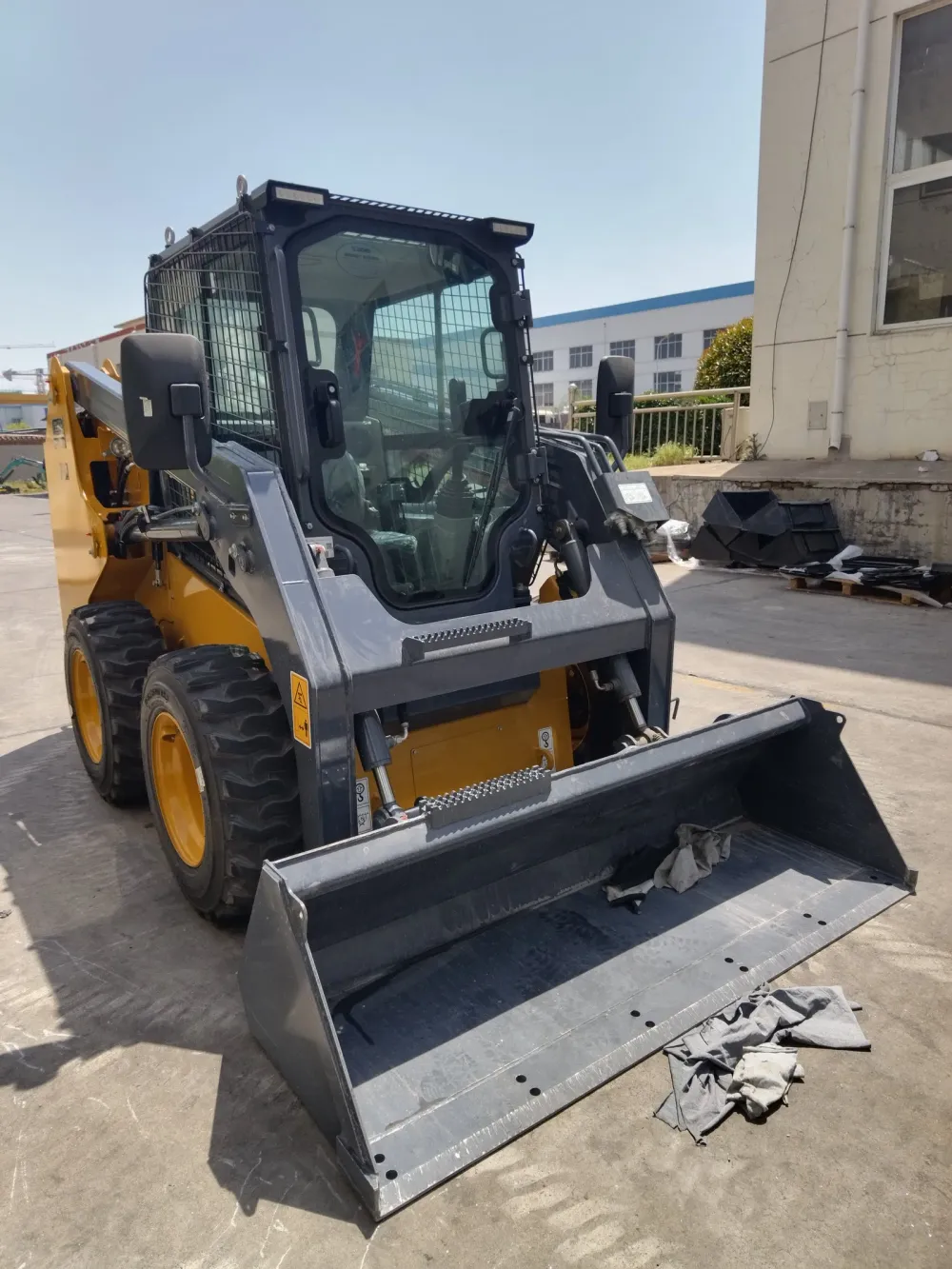
From purpose-built mining giants to the biggest production models from Caterpillar and Bobcat, this guide covers the world's largest skid steer loaders — their rated capacity, weight, specs, and the jobs that actually require them.
Most skid steer loaders weigh between 3,000 and 12,000 pounds and lift between 1,000 and 4,000 pounds at their rated operating capacity. Those machines do the overwhelming majority of real work on farms, job sites, and in warehouses around the world. But at the outer edge of what the platform can do, engineers have pushed the design far beyond those numbers — producing machines that look like a standard skid steer scaled up by some improbable factor. This article covers what world's largest skid steer actually means, which machines have held that distinction, what makes them structurally possible, and why — for almost every buyer — a right-sized machine from a proven range like our skid steer loader lineup is the better answer.
What "largest" means in skid steer terms
Size in the skid steer world is measured in a few ways: operating weight, rated operating capacity (ROC), and engine output. A machine can be physically large without having a particularly high ROC if it is heavily ballasted for stability on rough terrain. Conversely, a compact-framed machine with an aggressive tipping-load geometry can carry more than its size suggests. When people search for the world's biggest skid steer, they are usually asking one of three distinct questions: which is the heaviest production model, which has the highest rated lift capacity, or which one-off or purpose-built machine has been built for an extreme application. The answers to those three questions are not always the same machine.
Production skid steers top out around 14,000–16,000 pounds of operating weight and rated capacities in the 4,500–5,500 pound range at the high end of the mainstream market. Beyond that, the machines are either custom-built for specific industrial applications or are better described as wheel loaders or telehandlers that happen to use a skid-steer drive system. The boundary between a very large skid steer and a compact wheel loader is not always clean.
The biggest production skid steers: Caterpillar, Bobcat, and the large-frame tier
Among production machines available through dealer networks, the large-frame tier represents the practical ceiling of the skid steer format. Caterpillar's 299 series — particularly the 299D3 and its predecessors — sits at the top of their skid steer range with rated operating capacities around 4,200–4,500 pounds and operating weights over 12,000 pounds. Bobcat's large-frame T86 compact track loader pushes similar numbers. These are machines with enclosed pressurized cabs, high-flow hydraulic circuits, and frames engineered to carry that load thousands of hours without fatigue.
The structural skeleton of a large skid steer is what separates it from scaled-up geometry alone. The chassis — the welded steel box that the lift arms, axles, and cab all mount to — has to handle not just the weight of the load but the dynamic forces of the bucket slamming into a pile, the twisting loads of an auger or mulcher in hard ground, and the lateral stress of skid steering under full hydraulic pressure. On large-frame machines, that skid skeleton is a fully engineered weldment, not a simple tube frame — which is why large-frame machines from established manufacturers cost what they do and why a cheap imitation at that size tends to fail in the frame before it fails anywhere else.
One-off giants: purpose-built and prototype machines
Outside the production tier, a handful of purpose-built skid steers have been constructed for mining, land reclamation, and industrial demolition applications. These machines — sometimes built by specialist engineering firms on a skid-steer chassis concept — operate in environments where conventional wheel loaders cannot access, but where the zero-turn agility of a skid-steer drive system is essential. Operating weights in these applications have exceeded 30,000 pounds, with bucket capacities that would be at home on a small mining shovel.
These machines are not products you can configure and order. They are engineering projects — built to a specification for a single site, with custom hydraulic circuits, custom frames, and in most cases custom attachments designed around a particular material or working condition. The skid the skeleton concept at this scale means the frame itself is often designed by structural engineers using the same methodology as bridge or crane design, not adapted from a smaller production machine. They are interesting from an engineering standpoint, and they do establish the outer edge of what the skid-steer drive concept can carry — but they tell a buyer very little about what machine they should purchase.
What jobs actually need the largest machines
The jobs that push buyers toward the largest skid steer loaders fall into a short list. High-volume bulk material handling — moving heavy aggregate, ore, or dense compost — where a smaller machine simply cannot move enough tons per hour to make the economics work. Land clearing at scale, where the machine is running a heavy mulcher or root rake all day and the hydraulic demand and frame stress are continuous. Industrial demolition in confined spaces where a full-size wheel loader cannot maneuver. And certain mining or quarry applications where the pit geometry suits a skid-steer platform but the loads are extreme.
Outside that list, a buyer choosing a large-frame machine is usually doing so because they have overestimated the weight of their typical load, because they expect to run a demanding attachment occasionally, or because they believe bigger is simply safer. The problem with the last two reasons is that a large-frame machine costs more to buy, more to fuel, more to service, and more to transport. Running a machine significantly under its rated capacity is not free — the depreciation clock still runs, the fuel still burns, and if the machine is too wide or too heavy for a site, it becomes a liability rather than an asset.
Why right-sized beats biggest for most buyers
The skid steer was designed as a nimble, compact machine — the kind of loader that can work inside a building, turn in a narrow alley, or operate on a residential job site without destroying the lawn. Pushing it to the largest possible size trades away the core advantage. A very large skid steer is harder to transport, harder to maneuver on congested sites, harder to get through gates and doorways, and more expensive to run in every category.
The correct approach is to size from the work outward. Calculate your actual typical load — not your worst-case one-time load, but the weight you move most days. Add a reasonable safety margin of 20–30 percent. Then find a machine whose rated operating capacity covers that number without a large surplus. That machine will cost less, work harder for its size, and last longer because it is not chronically stressed. Our skid steer loader range covers the capacity tiers that fit real-world work for the vast majority of buyers, with matched hydraulics, proven frames, and parts availability that keeps the machine earning rather than waiting for service.
If you have a job that genuinely requires a machine at the top of the production range or beyond it, the conversation is not about which manufacturer makes the biggest — it is about whether a skid steer is even the right machine type, or whether a compact track loader, telehandler, or small wheel loader would do the job better and cost less over its life.
Frame engineering and structural limits of the skid steer platform
Understanding why skid steers have a practical size ceiling requires a brief look at the physics. A skid steer lifts with a pair of vertical or radial lift arms that are pinned to the rear of the chassis. At rated operating capacity, the machine is close to its tipping point — the front axle is carrying the full bucket load plus the machine weight cantilevered over it. The larger the load, the larger the frame and counterweight required to prevent the machine from tipping forward, which increases the operating weight, which requires a stronger frame, which increases weight again. This feedback loop is why the skid steer format does not scale indefinitely. At some point the machine is heavier than a full-size wheel loader with the same bucket capacity, but without the wheel loader's articulated steering advantage or its higher travel speed between loading cycles.
The skid skeleton — the structural frame that ties the chassis together — also faces a fatigue challenge at large scale. Skid steering applies massive lateral loads to the frame every time the machine turns, because the wheels on each side are driven at different speeds and the frame absorbs the torque reaction. On a 3,000-pound machine, those loads are manageable with a well-designed tube frame. On a 15,000-pound machine, the frame sections, welds, and pivot points all need to be engineered for the load cycle count the machine will accumulate in its service life — which is why large-frame machines from reputable manufacturers carry a significant engineering cost that is not visible from the outside.
Buying guidance: matching the machine to the real requirement
If you have read this far because you are actually shopping for a large skid steer, here is the practical guidance. Start by documenting your actual load weight and your daily cycle count. Then identify the attachment or attachments you will run and their hydraulic flow requirement — many heavy attachments require high-flow circuits that are only available on mid-to-large frame machines regardless of the bucket load. Check site access: measure your gate widths, check ground bearing pressure limits if you are working on a finished or sensitive surface, and confirm whether you can transport the machine on your standard trailer. Then build a shortlist of machines whose rated operating capacity matches your load at a 25–30 percent safety margin, whose hydraulics match your attachments, and whose weight and width match your site.
At that point the conversation becomes simple: which machine in that specification range offers the best combination of total cost of ownership, parts availability, and support in your location. That is a different question from "what is the biggest skid steer in the world," and it is the right question for a buyer. Our team is available to help work through that spec for your application — starting from the skid steer loader product page is the fastest way to get to a configured quote.
Browse our world's largest skid steer range · — we reply within one business day.
Frequently asked questions
What is the world's largest skid steer loader?
Among standard production machines, the largest skid steers come from the top of the Cat and Bobcat large-frame ranges — machines with operating weights above 12,000 pounds and rated operating capacities in the 4,200–4,500 pound range. Purpose-built or custom machines for mining and industrial applications have been built significantly larger, sometimes exceeding 30,000 pounds operating weight, but these are one-off engineering projects rather than catalog products.
What is the world's biggest skid steer used for?
The largest production skid steers are used for high-volume bulk material handling, large-scale land clearing with heavy mulchers or root rakes, industrial demolition in tight spaces, and certain quarry or mining applications. Purpose-built giants are designed for specific site conditions where conventional wheel loaders cannot maneuver but high lift capacity is still required.
Why do very large skid steers have such a heavy structural frame?
The structural skeleton of a large skid steer must handle not just the static weight of the load but the dynamic forces of working: bucket impacts, attachment torque, and the lateral stress of skid steering under full hydraulic pressure. At large scale these forces are significant enough that the frame is a fully engineered weldment — similar in design approach to crane or heavy equipment structures — rather than a simple tube frame scaled up from a smaller machine.
Is a larger skid steer always better?
No. A skid steer sized above your actual load requirement costs more to buy, more to fuel, more to transport, and more to service — without delivering more useful work. The correct size is the one whose rated operating capacity covers your typical load with a 25–30 percent safety margin. Going beyond that surplus pays for capacity you will rarely or never use.
What is the maximum rated operating capacity of a production skid steer?
Production skid steers from major manufacturers top out in the 4,200–5,500 pound rated operating capacity range at the current state of the market. Beyond that, the machine crosses into compact wheel loader or heavy telehandler territory, where articulated steering and higher travel speeds make more engineering sense than a skid-steer drive system.
How do I know what size skid steer I actually need?
Document your typical daily load weight — not your heaviest possible one-time load, but what you move most of the time. Add 25–30 percent as a safety margin. Check the hydraulic flow requirement of your primary attachment. Confirm gate and access width on your site. Then find the smallest machine in a reputable product range whose rated capacity, hydraulics, and dimensions satisfy all three. That machine will cost less and work more efficiently than a larger one.
Can a very large skid steer work indoors or in tight spaces?
This is one of the design tensions with large-frame skid steers. The skid-steer format is prized for its compact footprint and zero-turn maneuverability, but large-frame machines are wide, heavy, and tall enough that indoor or confined-space work becomes difficult or impossible. If maneuverability in tight spaces is a core requirement, a mid-size or compact machine — even if it means making more passes — is almost always the better choice.
Related articles
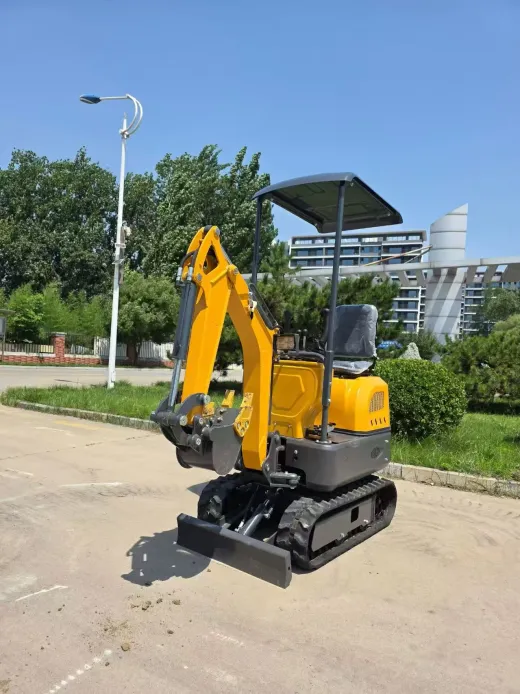
How to Operate a Mini Excavator: Controls, Techniques & Safety
A practical step-by-step guide to operating a mini excavator safely — covering cabin controls, swing and travel, basic digging technique, and what a micro digger driver needs to know before the first shift.
Read more →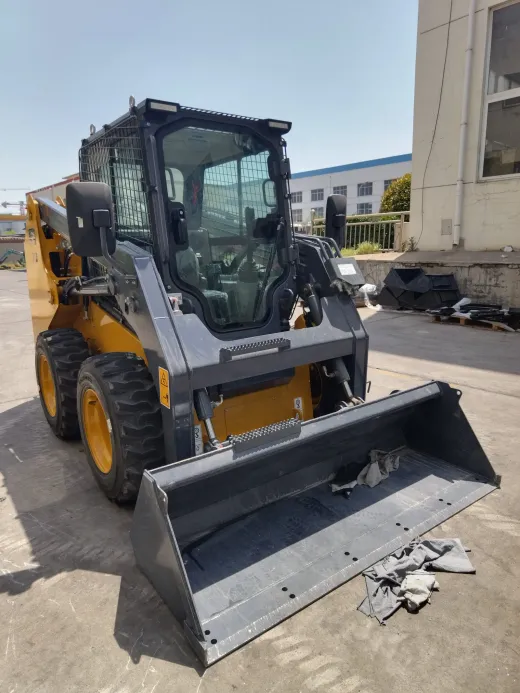
How to Drive and Operate a Skid Steer Loader: A Beginner's Guide
A complete beginner's guide to driving a skid steer loader — covering pre-operation checks, how the controls work, driving on varied terrain, digging techniques, attachment use, safety rules, and an honest look at why building your own skid steer rarely makes sense.
Read more → Largest Digger in the World — And What Most Buyers Actually Need
From the Bagger 293 bucket-wheel to the Cat 6090 mining giant, the world's largest diggers are engineering spectacles — but they have nothing to do with what most buyers actually need. Here's the full story, from record-breaking monsters to the compact machines that get real work done.
Read more →