










Skid Steer Loader Dimensions & Technical Drawings Explained
2026-06-28
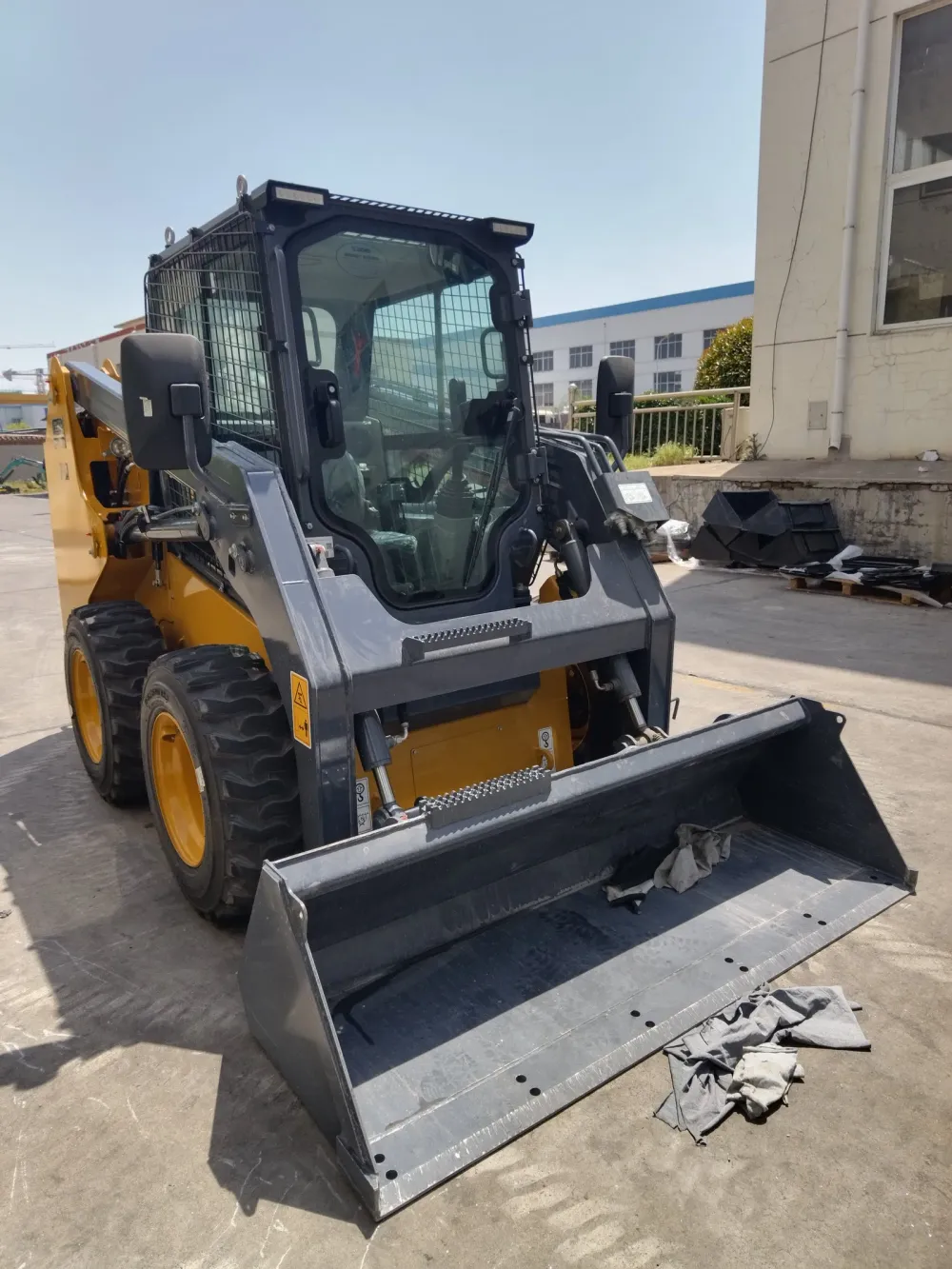
What the numbers on a skid steer technical drawing actually mean — overall length, width, height, rated reach, dump height, and turning radius — and how to use those dimensions to plan site access, select a trailer, and match a machine to your job.
Every skid steer drawing produced by a manufacturer contains the same core set of dimensions, but they are rarely explained in plain terms. A spec sheet lists numbers; a technical drawing shows where those numbers live on the machine and how they relate to each other. Once you can read both, you can plan a job site, pick a trailer, calculate dump clearance, and compare two machines accurately — without guessing or calling the dealer for every question. This guide walks through each critical dimension, where to find it on the drawing, and what it means for real work.
What a skid steer technical drawing contains
A standard skid steer technical drawing is a dimensioned orthographic projection — typically a side view and a top view, sometimes supplemented by a front view. The side view is the most information-dense: it shows the machine in transport position (boom lowered, bucket flat) and in a raised position that illustrates rated reach and maximum dump height. All dimensions are measured from defined reference points, and those reference points matter as much as the numbers themselves.
The key dimensions you will find on any well-produced skid steer loader drawing are: overall length with bucket, overall width, overall height in transport, wheelbase, ground clearance, tipping load radius, maximum lift height to pin, maximum dump height, maximum reach at full lift, and turning radius. Each has a specific meaning and a specific use. Confusing one for another — dump height for lift height, for example — leads to real planning errors.
Overall length, width, and height: the transport envelope
The three outer dimensions — overall length (OAL), overall width, and overall height in transport — define the machine's footprint for everything that happens before it starts working: hauling it on a trailer, moving it through a gate, getting it into a basement or under a building, or passing it through a narrow site entrance.
Overall length on a skid steer is always measured with the bucket attached and in the lowered transport position. A machine with a longer boom or a deeper bucket will have a longer OAL even if the chassis is identical. When reading a skid steer drawing, look for OAL noted as dimension A or L1 and confirm it includes the bucket. If a drawing shows chassis length separately from bucket-to-counterweight length, add them — that combined figure is what you need for trailer selection.
Overall width drives gate and aisle clearance. Standard skid steers range roughly from 1.5 m to 2.0 m wide depending on tire size. Some manufacturers publish width over tires and width over the loader arms separately; the tires are always wider, and that is the dimension that matters for tight passages.
Transport height is the vertical clearance you need on the trailer under any bridge, doorway, or overhead obstacle. This figure is taken with the boom fully lowered and the bucket flat. It is not the same as operating height — that is a different dimension on a different part of the drawing.
Rated reach and maximum dump height: the working envelope
The working envelope — what the machine can reach and how high it can lift — is shown on the raised-position view of the drawing. These two dimensions are what actually determine whether the machine can do the job.
Maximum lift height to pin (also called hinge-pin height or lift height) is measured from the ground to the boom's pivot pin at its highest position. This is not dump height. It is the highest point the attachment connection reaches — before any bucket rollback or dump movement is applied.
Maximum dump height is the measurement that matters for filling a truck or a hopper. It is measured from the ground to the cutting edge of the bucket at maximum height with the bucket tilted fully forward to dump. Dump height is always lower than lift height to pin — typically 0.3 m to 0.5 m lower depending on bucket geometry. When you are checking whether a machine can fill a particular truck body, use dump height, not lift height. Using lift height will give you a number that is optimistic by nearly half a metre.
Maximum reach is the horizontal distance from the machine's front axle to the bucket's cutting edge at full lift. This dimension matters for work over obstacles — loading across a wall, filling a bin set back from the machine — and for calculating the tipping load at extension. A longer reach arm increases versatility but reduces rated capacity at maximum extension. Any good skid steer drawing will note the tipping load at both straight-ahead and at full reach; always use the lower number for planning.
Wheelbase and turning radius: manoeuvrability on site
Wheelbase is the distance between the front and rear axle centres. It affects the machine's stability, ride comfort, and — on a wheeled skid steer — the arc it sweeps when turning. A longer wheelbase is more stable at speed and on ramps; a shorter wheelbase is nimbler in tight corners.
Turning radius on a wheeled skid steer is not a single number. A proper skid steer drawing will show at least two figures: the turning radius of the outermost point of the machine (typically a rear corner or a protruding counterweight) and the turning radius of the innermost point (typically the inside front tyre). The difference between those two figures is the annular sweep — the ring of ground the machine needs to complete a turn. Plan site traffic routes using the outer radius, and confirm site access using both the outer radius and the overall width together.
Because a true skid steer turns by skidding its outside tyres rather than steering them, the turning radius is determined primarily by the track width (distance between the left and right tyres). A wider machine sweeps a wider arc. This is worth checking specifically when you are planning work in a congested yard or inside a building — a machine that fits through the door does not necessarily have room to turn once it is inside.
Ground clearance and gradeability
Ground clearance is the vertical distance from the lowest structural point of the machine to the ground. On a skid steer this is typically the underside of the frame or the axle housing. The number matters in two contexts: crossing obstacles and working on soft or uneven ground. A machine with low ground clearance can high-centre on a berm, a ramp edge, or a kerb that a higher-clearance machine steps over without difficulty.
Gradeability — the maximum slope the machine can climb — is sometimes shown as a percentage and sometimes as degrees. The two do not convert simply: a 45-degree slope is 100% grade, so a 30% grade is approximately 17 degrees. When a skid steer drawing includes a gradeability figure, confirm which unit is used before planning ramp access. Most wheeled skid steers are rated to 30–40% gradeability on firm ground; tracked machines typically handle steeper grades.
How to use dimensions for trailer and transport planning
Selecting a trailer starts with three numbers from the drawing: overall length with bucket, overall width, and transport weight. The trailer deck must be long enough and wide enough, and the trailer's rated payload must exceed the machine's operating weight — not just the listed shipping weight, which sometimes excludes attachments. See our skid steer weight guide for how operating weight varies by frame class and undercarriage type before you size a trailer.
Ramp angle matters too. A trailer with a steep loading ramp and a machine with low ground clearance can contact the ramp transition — the point where the ramp meets the deck. The longer the machine's wheelbase relative to the ramp length, the greater the contact risk. Articulated or split ramps reduce this risk for longer machines. A skid steer drawing that includes a side-view silhouette makes it easy to sketch the ramp geometry and check for contact before you ever load the machine.
For road transport, confirm whether the machine's width requires a wide-load permit in your jurisdiction. In most markets, anything over 2.5 m wide requires flagging or a permit. The tire width shown on the drawing — not the chassis width — is the legal measurement that applies.
Comparing machines using technical drawings
The most useful application of a skid steer drawing is direct comparison. When two machines have similar rated capacities but different configurations, the drawings reveal what the spec sheet hides: one machine might have a longer reach arm that reduces lifting capacity at extension, or a higher dump height that is achieved with a shorter bucket, reducing breakout force at grade.
When comparing drawings from different manufacturers, check that reference points are consistent. Dump height measured from a hard flat surface to the cutting edge is a different number from dump height measured to the top of the bucket lip. Rated capacity at full lift is a different number from rated capacity at maximum reach. These are common places where drawings from different suppliers become incomparable without careful reading.
ZHONGMAI publishes full dimensional drawings and spec sheets for its skid steer loader range. If you need a drawing in a specific format for a site planning submission or an equipment comparison, request it directly — our team will provide the dimensional data in the format your project requires.
Browse our skid steer drawing range · — we reply within one business day.
Frequently asked questions
What dimensions are shown on a skid steer technical drawing?
A standard skid steer drawing shows overall length with bucket, overall width, transport height, wheelbase, ground clearance, maximum lift height to pin, maximum dump height, maximum reach at full lift, tipping load, and turning radius. Side and top views are standard; some drawings add a front view for width confirmation.
What is the difference between lift height and dump height on a skid steer drawing?
Lift height to pin is measured from the ground to the boom's pivot point at maximum height. Dump height is measured from the ground to the bucket cutting edge with the bucket tilted fully forward to dump. Dump height is always lower — typically 0.3 to 0.5 m less than lift height to pin — and is the correct figure to use when checking whether a machine can fill a particular truck body or hopper.
How do I use a skid steer drawing to select the right trailer?
Take three numbers from the drawing: overall length with bucket, overall width, and operating weight. The trailer deck must accommodate the length and width, its payload rating must exceed the machine weight (including attachments), and the ramp geometry should be checked against the machine's wheelbase and ground clearance to avoid contact at the ramp transition.
What does maximum reach mean on a skid steer spec sheet or drawing?
Maximum reach is the horizontal distance from the front axle to the bucket cutting edge at full lift height. It determines how far the machine can place or dump material beyond the front of its chassis. Reach is important for loading over obstacles or into bins set back from the machine. Note that rated lift capacity typically decreases at maximum reach — always use the lower figure for planning.
How is turning radius shown on a skid steer drawing, and why does it matter?
A proper drawing shows both the outer turning radius (the arc swept by the furthest corner of the machine) and the inner turning radius. The difference is the annular sweep — the ring of ground needed for a full turn. Plan traffic routes using the outer radius and confirm aisle widths using the outer radius plus the machine width. A machine that fits through a doorway does not automatically have room to turn inside.
Can I compare skid steer dimensions from different manufacturers using their drawings?
Yes, but verify that reference points are consistent. Dump height, rated capacity, and reach can each be measured from different baselines depending on the manufacturer's convention. When comparing, confirm that all measurements use the same reference points — otherwise the numbers are not directly comparable, even if they appear to be the same dimension.
Where can I get a technical drawing for a ZHONGMAI skid steer loader?
ZHONGMAI publishes dimensional drawings and full spec sheets for its skid steer loader range. Contact us directly to request a drawing in the format you need — PDF, DXF, or specific dimension tables for site planning or equipment comparison submissions.
Related articles
How to Operate a Mini Excavator: Controls, Techniques & Safety
A practical step-by-step guide to operating a mini excavator safely — covering cabin controls, swing and travel, basic digging technique, and what a micro digger driver needs to know before the first shift.
Read more →
How to Drive and Operate a Skid Steer Loader: A Beginner's Guide
A complete beginner's guide to driving a skid steer loader — covering pre-operation checks, how the controls work, driving on varied terrain, digging techniques, attachment use, safety rules, and an honest look at why building your own skid steer rarely makes sense.
Read more → Largest Digger in the World — And What Most Buyers Actually Need
From the Bagger 293 bucket-wheel to the Cat 6090 mining giant, the world's largest diggers are engineering spectacles — but they have nothing to do with what most buyers actually need. Here's the full story, from record-breaking monsters to the compact machines that get real work done.
Read more →