










Skid Steer Weight: Operating Weight by Class, Mini to Large Frame
2026-08-30
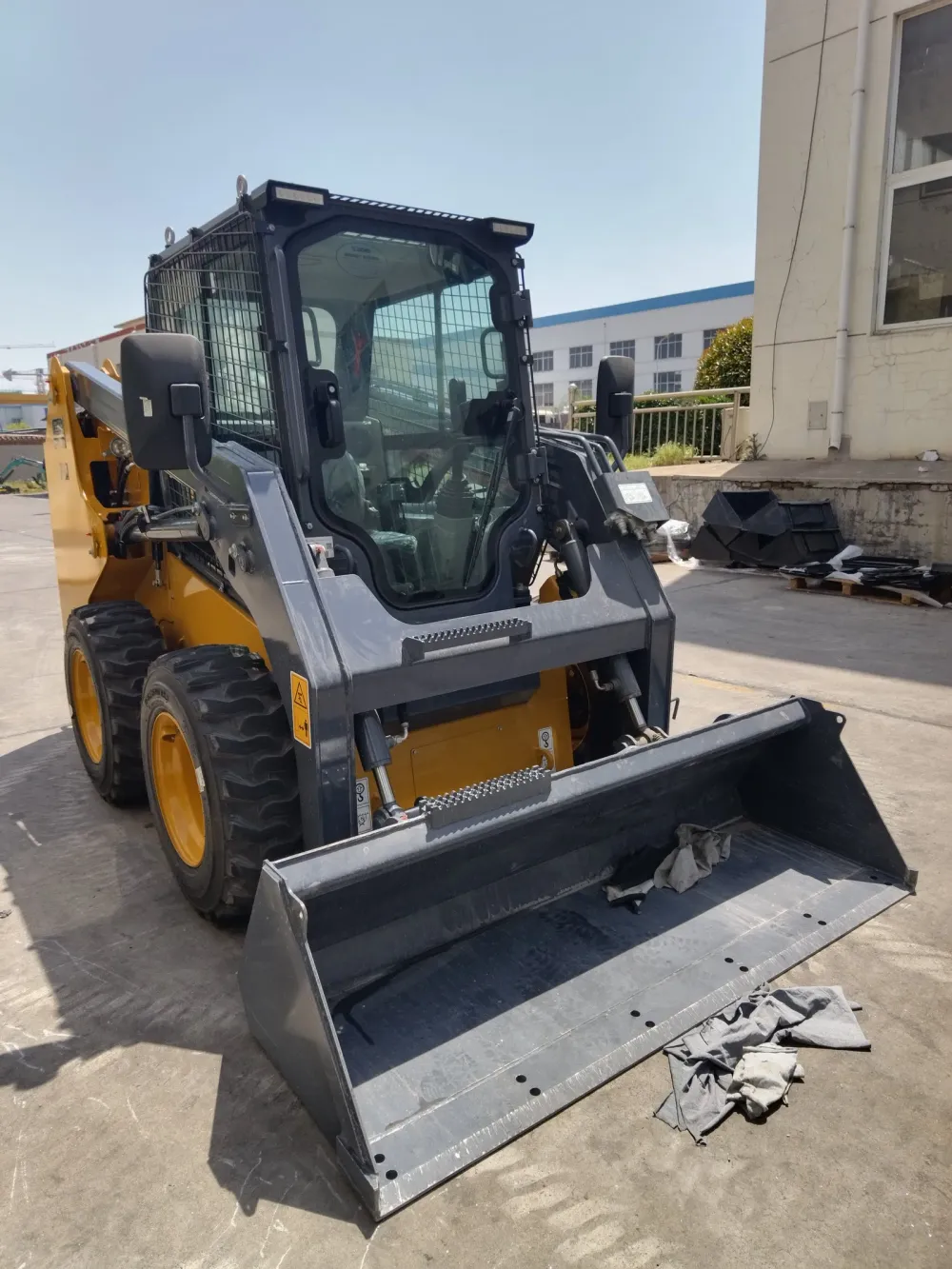
How much does a skid steer weigh? It depends on frame class, undercarriage, and whether you mean operating weight, shipping weight, or rated capacity. This guide breaks down skid steer weight from stand-on minis to large-frame machines, explains tracked vs wheeled weight differences, and covers what the number means for trailer selection and towing rules.
How much does a skid steer weigh? The honest answer is that it depends entirely on which machine class you are asking about — a stand-on mini loader can weigh under 1,000 lb, while a large-frame wheeled or tracked unit can top 10,000 lb. Skid steer weight is not one number, and treating it as one is the single biggest reason buyers get trailer selection, towing rules, and ground-pressure planning wrong before the machine ever reaches the jobsite. This guide breaks down operating weight, shipping weight, tipping load, and rated operating capacity, shows how weight varies by frame class and undercarriage type, and explains what the number on the spec sheet actually means for transport and site work.
What "Skid Steer Weight" Actually Refers To
Ask three dealers what a given skid steer weighs and you can get three different numbers, because "weight" on a spec sheet can mean four different things. Operating weight is the machine ready to work — full fluids, a standard bucket mounted, no operator and no load in the bucket. This is the figure you should use for trailer and axle-load calculations, and it is the number manufacturers usually mean when they publish a single weight figure.
Shipping weight (sometimes called dry weight) is typically 200–600 lb lighter than operating weight because it can exclude a full fuel tank, coolant, or the bucket. It shows up on freight paperwork more often than on a spec sheet a buyer reads, and it is the wrong number to use for trailer sizing.
Tipping load is a stability figure, not a weight figure — it is the load at which the machine would just begin to rotate forward over its front axle. Rated operating capacity (ROC), which is what most people searching for "skid steer weight capacity" are actually asking about, is calculated as a percentage of tipping load (typically 50% under SAE J818, or 35% under the older standard some manufacturers still reference). ROC describes what the machine can carry, not what the machine itself weighs — the two get confused constantly in casual conversation, but the spec sheet always separates them. For the full breakdown of ROC, horsepower, and lift-height specs together, see our guide to skid steer specifications.
Skid Steer Weight by Frame Class: Small, Medium, and Large
Operating weight scales directly with frame class, and knowing your class is the fastest way to answer "how much does a skid steer weigh" for your own situation. Small-frame machines — the class most landscaping and residential contractors use — run roughly 2,000–5,500 lb (900–2,500 kg). Medium-frame machines, the most commonly sold segment worldwide, run about 5,500–8,000 lb (2,500–3,600 kg). Large-frame units used for demolition, land clearing, and heavy material handling exceed 8,000 lb and can reach 12,000 lb (3,600–5,440 kg) with counterweight packages fitted.
- Small frame: 2,000–5,500 lb (900–2,500 kg) operating weight
- Medium frame: 5,500–8,000 lb (2,500–3,600 kg) operating weight
- Large frame: 8,000–12,000 lb (3,600–5,440 kg) operating weight
Weight and width tend to move together, so if jobsite access is as tight a constraint as weight, cross-check the frame class against overall width in our skid steer dimensions and technical drawing guide before you commit to a size.
Bobcat, CAT, and Other Brand-Name Skid Steer Weights: What You Can Actually Rely On
Searches for "bobcat skid steer weight" or "small skid steer weight" are usually looking for one exact figure for one exact model. We will not publish a specific kilogram number for a competitor's named model here — manufacturers revise their machines yearly, published figures vary by trim and counterweight option, and a wrong number copied from an outdated forum post causes more harm than a missing one. What is reliable is the class the machine falls into: most compact wheeled skid steers from the major Western brands sit in the small-to-medium frame band above, roughly 2,500–3,500 kg operating weight for the popular mid-size models, with large-frame flagship units commonly running 3,600 kg and up. If you need the exact weight of a specific branded model, the manufacturer's current spec sheet is the only source worth trusting — dealer brochures and marketplace listings both drift out of date.
For a structured side-by-side of how different brands present rated capacity, horsepower, and lift height — the specs that sit alongside weight on every manufacturer's chart — see our skid steer model comparison chart.
Walk-Behind and Stand-On Mini Skid Steer Weight
Mini and walk-behind skid steers are a different weight category entirely, which is why "small skid steer weight" and "walk behind skid steer weight" searches return such different numbers than the small-frame band above. These machines are built to fit through gates, into greenhouses, and onto light trailers a single operator can tow behind a pickup.
ZHONGMAI's own 380 stand-on mini skid loader is a good reference point: 890 kg operating weight on rubber tracks, with a 300 kg rated load. That puts it well under the small-frame wheeled band, low enough in ground pressure to run on turf, greenhouse rows, or a finished floor being stripped without the trailer and towing complications a full-size machine brings. Mini and walk-behind units in this class generally range from about 900 to 2,200 lb (400–1,000 kg) operating weight depending on undercarriage and engine size.
Tracked vs Wheeled: How Undercarriage Changes Skid Steer Weight
A compact track loader (CTL) is heavier than a wheeled skid steer of otherwise comparable frame and engine, because the steel-reinforced rubber track and undercarriage assembly weigh more than a set of tires and rims. The difference is commonly in the range of 800–1,500 lb (360–680 kg) for an equivalent frame size, and that extra weight is spread over a much larger ground-contact area, which is the whole point — tracks trade added machine weight for lower ground pressure per square inch.
The tradeoff runs the other way for transport: a tracked machine that is otherwise the same rated capacity as a wheeled one needs a heavier-rated trailer axle group to move it. Buyers comparing "skid steer weight capacity" between a wheeled and tracked version of what looks like the same machine should always confirm operating weight separately for each undercarriage option — it is rarely identical.
How Skid Steer Weight Affects Ground Pressure and Stability
Ground pressure is operating weight divided by the total ground-contact area of the tires or tracks. A heavier machine on the same footprint pushes harder into soft soil, turf, or an unreinforced slab, which is why the average skid steer weight for a job matters as much as its rated capacity. On finished concrete or compacted yard surfaces this is rarely a concern; on wet turf, landscaped grade, or a floor with a known load limit, it can determine whether wheels, tracks, or a lighter mini machine is the right call.
Weight also drives stability at the other end of the machine. A heavier rear counterweight raises tipping load and therefore rated operating capacity at full lift, but it adds directly to the transport weight you have to plan for. This is why two machines with the same bucket size and horsepower can have meaningfully different operating weights — one is built with a heavier counterweight for higher-capacity lifting, the other is built lighter for easier transport and lower ground pressure.
Skid Steer Weight, Trailer Rating, and Towing Requirements
Operating weight is the number that decides what trailer and tow vehicle combination you need. The trailer's rated payload must exceed the machine's full operating weight, not its shipping weight, and the tow vehicle's rated towing capacity must cover the combined weight of trailer plus machine plus any attachments riding along. Small and most medium-frame skid steers pair comfortably with a tandem-axle trailer behind a heavy-duty pickup; large-frame machines typically require a gooseneck or a dedicated equipment trailer rated well above the machine's operating weight.
Licensing is worth checking before you buy, not after. In the United States, for example, a combination of tow vehicle and loaded trailer with a gross combination weight rating over 26,001 lb generally requires a commercial driver's license — a threshold that most small- and medium-frame skid steers stay under when paired with a standard pickup and trailer, but that a large-frame machine plus a heavy trailer can approach or exceed. Rules vary by country and by state or province, so confirm the current threshold and any weigh-station requirements in your own jurisdiction before finalizing a purchase, especially if you are moving up a frame class from your current machine.
Matching Skid Steer Weight to Your Job
Start from your transport setup, not the machine catalog. If you already own a trailer and tow vehicle, their rated capacity sets a hard ceiling on operating weight before you even look at bucket capacity or horsepower. If you are buying a trailer alongside the machine, size the trailer to the operating weight of the largest machine you expect to own in the next few years, not just the one you are ordering today.
ZHONGMAI builds two machines at our plant in Jining, Shandong, and both have a fixed, published operating weight rather than a range that changes with configuration: the S55 wheeled skid steer is 2,880 kg operating weight with an 890 kg rated load and a tipping load of at least 1,780 kg, and the 380 stand-on mini is 890 kg operating weight with a 300 kg rated load. Both share one universal quick-attach plate, so the same attachments move between the two sizes if your work spans both weight classes. If your job needs a heavier large-frame machine than either of these, tell us the numbers and we will say plainly where our lineup stops rather than oversell a machine that is not sized for the task.
Browse our skid steer weight range · — we reply within one business day.
Frequently asked questions
How much does a skid steer weigh?
It depends on frame class. Small-frame skid steers weigh roughly 2,000–5,500 lb (900–2,500 kg) operating weight, medium-frame machines run about 5,500–8,000 lb (2,500–3,600 kg), and large-frame units range from 8,000 lb up to 12,000 lb (3,600–5,440 kg). Stand-on mini and walk-behind machines are lighter still, typically 900–2,200 lb (400–1,000 kg). Always use operating weight — fluids and bucket included, no operator or load — for trailer and towing calculations.
What is the difference between skid steer operating weight and rated operating capacity?
Operating weight is how much the machine itself weighs, ready to work. Rated operating capacity (ROC) is how much load it can safely carry in the bucket or on an attachment, calculated as a percentage — typically 50% under SAE J818 — of the machine's tipping load. "Skid steer weight capacity" searches are usually asking about ROC, not the machine's own weight; the two numbers are unrelated to each other beyond both appearing on the same spec sheet.
How much does a mini or walk-behind skid steer weigh?
Stand-on and walk-behind mini skid steers typically weigh 900–2,200 lb (400–1,000 kg) operating weight, well under even the small-frame wheeled class. ZHONGMAI's 380 stand-on mini, for example, is 890 kg operating weight with a 300 kg rated load — light enough to move on a light trailer and work in greenhouse rows or through standard gates that a full-size machine cannot pass.
Do tracked skid steers weigh more than wheeled skid steers?
Yes, generally. A compact track loader's steel-reinforced rubber track undercarriage typically adds 800–1,500 lb (360–680 kg) over a wheeled machine of comparable frame and engine size. That added weight is spread across a larger ground-contact area, which is what gives tracked machines lower ground pressure — the extra weight is the tradeoff for better flotation on soft or wet ground.
What skid steer weight can I tow without needing a commercial driver's license?
In the United States, a combination of tow vehicle and loaded trailer with a gross combination weight rating over 26,001 lb generally requires a CDL. Most small- and medium-frame skid steers paired with a standard heavy-duty pickup and tandem-axle trailer stay under that threshold, while a large-frame machine on a heavier trailer can approach or exceed it. Licensing rules vary by country and by state or province, so confirm the current threshold in your own jurisdiction before buying.
How does skid steer weight affect ground pressure?
Ground pressure equals operating weight divided by the total ground-contact area of the tires or tracks. A heavier machine on the same footprint pushes harder into soft soil, turf, or an unreinforced slab. Tracked machines and wider tires spread the same weight over more area, lowering pressure, which is why weight alone does not tell you whether a machine is safe for a given surface — weight and contact area have to be read together.
Where can I find the exact weight of a specific brand's skid steer model?
The manufacturer's current published spec sheet is the only reliable source. Weights change between model years, vary with counterweight and undercarriage options, and are frequently copied incorrectly onto marketplace listings and forum posts. For a structured comparison of how major brands present capacity, horsepower, and lift specs alongside weight, see our skid steer model comparison chart.
Related articles
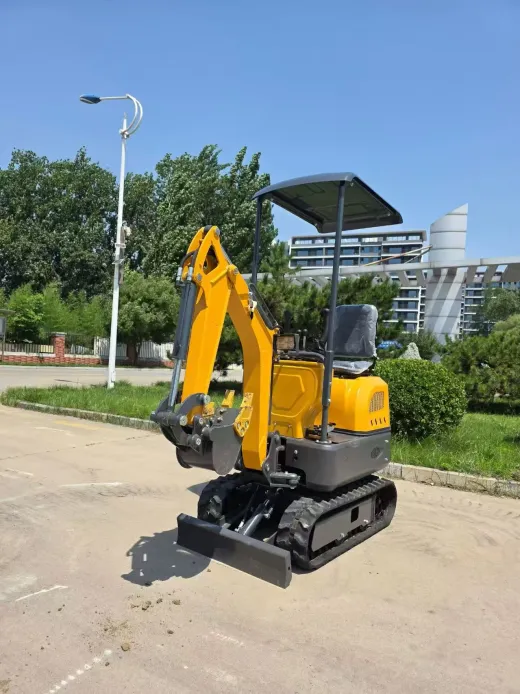
Amphibious Mini Excavators: Working on Water, Marshes & Wetlands
A clear-headed guide to amphibious and floating mini excavators — how pontoon undercarriages work, where they outperform standard machines, their real limitations, and when wide rubber tracks are the smarter choice for wet and soft-ground work.
Read more →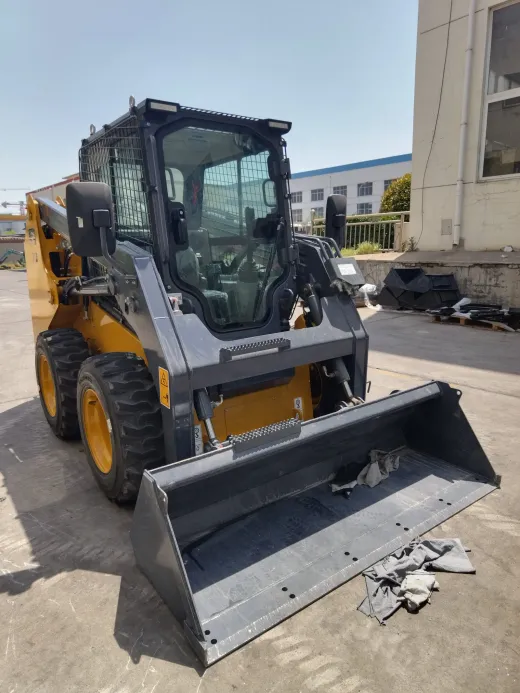
Articulating Loaders Explained: Compact & Mini Articulated Loaders
An articulating loader offers superior maneuverability in tight spaces where conventional machines struggle. This guide covers everything buyers need to know about small, compact, and mini articulated loaders — from how they work to what to look for when shopping.
Read more →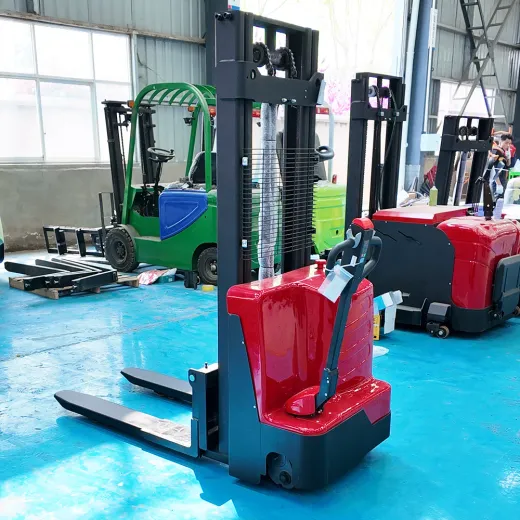
Autonomous Pallet Movers & AGV Pallet Jacks: What Warehouses Need to Know
Before spending six figures on an autonomous pallet mover or AGV pallet jack system, read this guide. We break down how the technology works, true ROI timelines, and why most small-to-mid-size warehouses still get better returns from electric stackers and manual pallet trucks.
Read more →