










Skid Steer Comparison Chart: CAT, Bobcat, Case, John Deere & More
2026-06-28
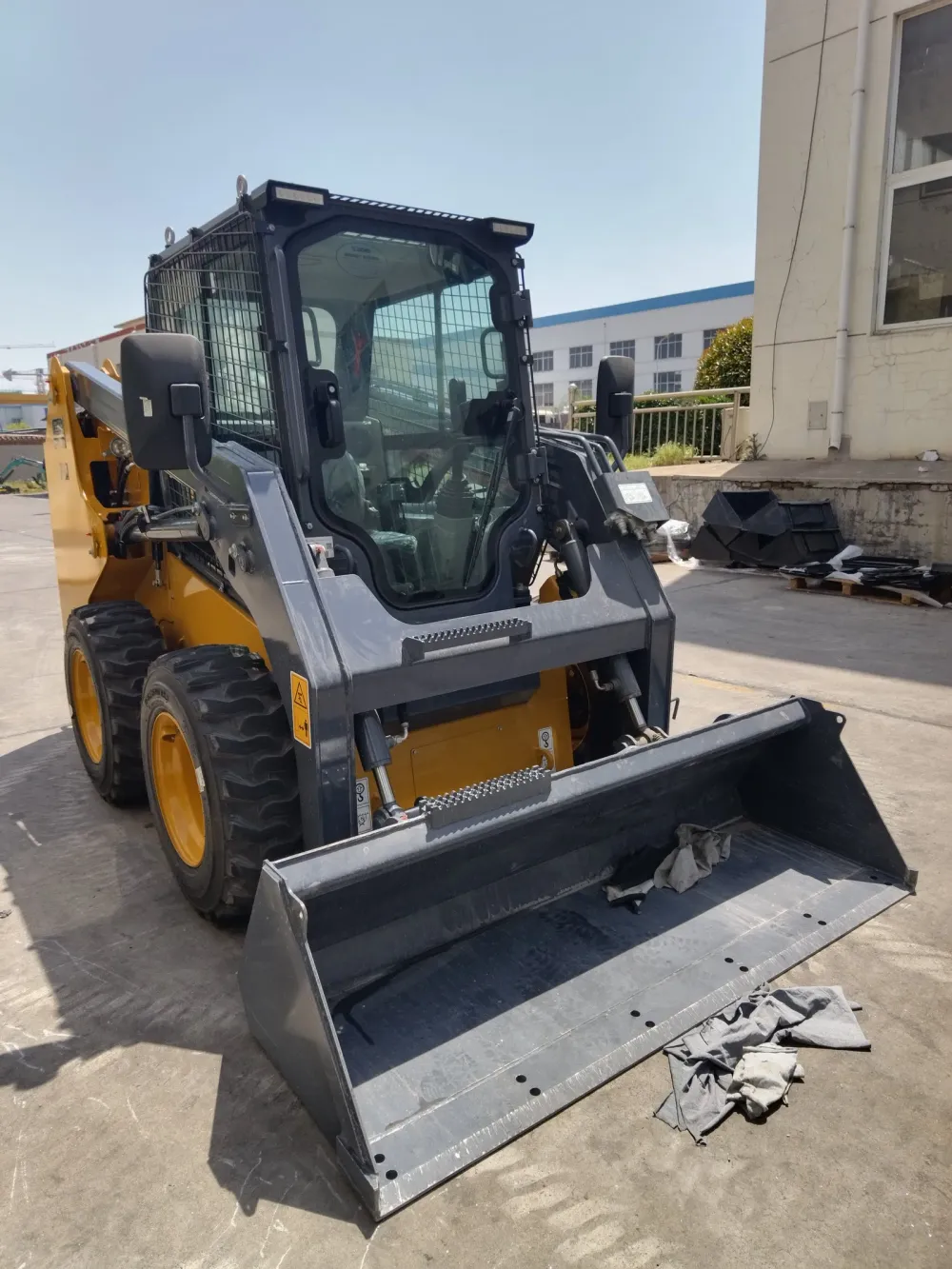
Use this skid steer comparison chart to weigh CAT, Bobcat, Case, John Deere, Ford, and Daewoo models side by side on rated operating capacity, horsepower, and lift type. Need the full detail behind a single spec instead? Our dedicated guides on skid steer weight, dimensions, and full specifications, linked throughout, cover those in depth.
Skid steer loaders are among the most versatile pieces of compact construction equipment on the market, but with dozens of models spanning multiple manufacturers, choosing the right machine is never simple. Buyers researching skid steer model specs quickly find themselves comparing rated operating capacity (ROC), horsepower, lift height, and hydraulic flow across brands like Caterpillar, Bobcat, Case, John Deere, Ford, and Daewoo. This article presents a structured market overview so you can evaluate each segment clearly — and understand where value-focused alternatives from manufacturers like ZHONGMAI fit into the picture.
Note: All model references below are informational comparisons based on publicly available specifications. ZHONGMAI does not manufacture or sell units under the brand names cited. Our own skid steer loaders are separately specified and priced for international buyers seeking competitive alternatives.
Caterpillar Skid Steer Models: 259D3, 279D3, 299D3 XE, and More
Caterpillar's compact equipment lineup is built around its D-series platform. The 259d3 is a popular radial-lift model targeting landscaping and light construction, with a rated operating capacity near 2,100 lb and a Tier 4 Final engine producing around 74 hp. Step up to the 279d3 and you gain a vertical-lift path and higher breakout force, making it better suited for pallet work and loading trucks at full height.
At the top of the wheeled skid steer range sits the 299d3 xe — CAT's extended power offering with advanced electro-hydraulic controls, up to 110 net hp, and an ROC exceeding 3,200 lb. Buyers who need to run high-flow hydraulic skid steer attachments like cold planers or mulchers often look at this tier. The 299 skid steer family in general commands a premium price, which is why many contractors with straightforward digging or grading tasks reassess whether that power tier is truly necessary.
- 259D3: ~74 hp, ~2,100 lb ROC, radial lift, standard flow hydraulics
- 279D3: ~90 hp, ~2,690 lb ROC, vertical lift, optional high flow
- 299D3 XE: ~110 hp, ~3,200 lb ROC, vertical lift, advanced electro-hydraulics
CAT also produces compact track loader variants of these frames. If your terrain is soft or muddy, the track versions of the same spec range may outperform wheeled skid steers — a tradeoff discussed further below.
Bobcat Model Lineup: S650, S590, T595, T66, T770, T870, MT52, MT55, MT85, MT100
Bobcat is arguably the most recognized name in the skid steer category globally, with a model range that covers everything from walk-behind micro loaders to large-frame wheeled machines. The s650 skid steer sits in the large-frame wheeled segment with approximately 74 hp and a 2,690 lb ROC — a workhorse for contractors who need consistent daily productivity. The s590 is a mid-frame option that balances footprint and capacity at around 66 hp and 2,100 lb ROC, popular on residential sites where width matters.
On the compact track loader side, the t595 mirrors the S590's capacity in a tracked package — useful where ground disturbance must be minimized. The t66 skid steer (tracked) and the t770 sit in the large-frame tracked segment, with the T770 delivering around 92 hp and over 3,200 lb ROC. For the heaviest tasks — demo, large-scale land clearing — the t870 pushes past 100 hp and offers ROC figures approaching 3,600 lb.
Bobcat's mini track loader line deserves separate attention. The mt52 and mt55 are walk-behind style mini track loaders ideal for confined indoor or landscaping work, while the mt85 and mt100 skid steer (also marketed as the mt100 mini track loader) scale up in capacity. The mt100 mini track loader in particular bridges the gap between a true mini skid steer and a full compact track loader, making it popular for nursery and turf contractors.
- MT52 / MT55: Walk-behind mini track loaders, ~500–800 lb ROC, very compact
- MT85: Ride-on mini track loader, ~1,100 lb ROC
- MT100 Mini Track Loader: ~1,300 lb ROC, wider attachment compatibility
- S590: Mid-frame wheeled, ~66 hp, ~2,100 lb ROC
- S650 Skid Steer: Large-frame wheeled, ~74 hp, ~2,690 lb ROC
- T595: Mid-frame tracked, ~66 hp, ~2,100 lb ROC
- T66 Skid Steer: Large-frame tracked, ~92 hp
- T770: Large-frame tracked, ~92 hp, ~3,200 lb ROC
- T870: Large-frame tracked, ~100+ hp, ~3,600 lb ROC
John Deere Skid Steer Specs: 333G, JD 315, and the G-Series
John Deere's skid steer lineup is built on its G-Series platform, offering wheeled skid steers and compact track loaders with JD's characteristic operator comfort and parts availability. The jd 333g (also marketed simply as the 333g) is the flagship large-frame model with around 100 hp and an ROC of approximately 3,300 lb — making it a direct competitor to the Bobcat T770 and CAT 279D3 in heavy-duty applications. The 333g hp designation refers to its high-performance hydraulic configuration, favored when running demanding attachments at continuous duty cycles.
The jd 315 skid steer sits lower in the range, offering a more approachable spec for small contractors and municipalities: roughly 66 hp and 2,100 lb ROC. John Deere's service network is a major selling point in North America, though buyers in export markets often find parts lead times longer than for brands with wider international distribution. For buyers outside North America who need a machine with comparable spec and stronger regional support, exploring value-tier alternatives becomes a rational step.
Case Skid Steer Specs: SR210, 1845C, and the Alpha Series
Case Construction Equipment has a long history in the skid steer market. The 1845c skid loader became an industry icon in its era — a mid-frame uni-loader with a distinctive single-arm loader design. While the 1845C is no longer in current production, it remains widely used on the used equipment market, and many buyers still search its specs: roughly 60 hp and around 1,750 lb ROC, with Case's distinctive over-the-engine air intake design.
Current Case models follow the Alpha Series naming. The sr210 is a radial-lift wheeled skid steer producing around 74 hp and 2,100 lb ROC — positioned directly against the Bobcat S590 and CAT 259D3. Case has emphasized operator ergonomics in the Alpha Series, with a wider cab opening and improved visibility. For buyers comparing the sr210 against Chinese-manufactured alternatives in the same weight class, the primary differences typically come down to dealer support geography and purchase price, not raw capability.
- 1845C Skid Loader: Legacy model, ~60 hp, ~1,750 lb ROC, uni-loader arm
- SR210: Current radial-lift wheeled, ~74 hp, ~2,100 lb ROC
Ford, Daewoo, Scat Trak, Ramrod, and Other Notable Brands
Beyond the big four, several other manufacturers have left significant marks on the skid steer market — either historically or in niche segments. The ford skid steer and ford cl40 skid steer are frequently mentioned by buyers of older used equipment. Ford produced skid loaders under the ford skid loader brand before exiting the construction equipment market; these machines are still found on farms and small contractors' fleets across North America. The ford cl40 skid steer in particular had a loyal following for its simplicity and repairability.
The daewoo skid steer and daewoo skid loader models represent the Korean heavy equipment tradition — Daewoo (now Doosan) built a range of compact equipment that competed strongly on price in the late 1990s and early 2000s. Like Ford, Daewoo-branded skid steers are now primarily a used-market consideration, though Doosan continues to produce compact loaders under its own branding.
In the mini skid steer niche, the ramrod skid steer and ramrod mini skid steer (produced by Ramrod Equipment of Canada) serve the landscaping and utility markets. Similarly, the scat trak skid steer was a compact American brand with a following in turf and irrigation work. The ctx100 mini skid steer from Boxer Equipment is another mini loader that competes with Bobcat's MT series in confined-space applications. The gale skid loader is another legacy American brand sometimes referenced in used equipment searches.
Two Terex/Gehl-adjacent models worth noting: the tl6 skid steer, tl8 skid steer, and tl12 skid steer are tracked compact loaders from Takeuchi's TL line. These machines are well-regarded in the rental and utility contractor segment, with the TL12 being a large-frame offering with over 90 hp. The 650 skid steer designation appears across multiple brands in used listings and typically refers to machines in the 65–70 hp, 2,000–2,200 lb ROC range.
Mini Skid Steers: A Growing Segment
The mini skid steer segment — sometimes called compact utility loaders or stand-on loaders — has expanded rapidly. Models like Bobcat's MT52, MT55, MT85, and mt100 mini track loader define the category alongside the ramrod mini skid steer, ctx100 mini skid steer, and Dingo TX machines. These units typically weigh under 2,500 lb, fit through standard gates and doorways, and carry ROC figures from 400 to 1,300 lb.
Landscapers, tree services, and indoor demolition crews are the primary users. The attachment ecosystem for mini skid steers has grown substantially — augers, trenchers, stump grinders, and mini buckets all mount to the same universal plate. Buyers should verify plate compatibility when mixing brands, as not all mini loaders share identical quick-attach geometry. For heavier landscaping or grading work where a mini loader falls short, a full-size skid steer loader or a mini excavator is typically a better fit.
How to Use This Spec Comparison When Buying
Comparing skid steer model specs across brands is most useful when you anchor the comparison to your specific job requirements. Start with three questions: (1) What is the heaviest single lift I will make regularly? (2) What attachments will I run, and what hydraulic flow do they require? (3) How tight are my jobsite width and height constraints — see our dimensions guide for how to measure this?
Once you have those answers, match them to a weight and size class rather than a single model. Our skid steer weight guide breaks down operating weight and rated capacity by frame class, and our skid steer specs guide covers the same ground for dimensions and horsepower. Use those for the sizing math, then come back to this chart to compare specific brand-name models against each other.
After sizing, consider total cost of ownership, not just purchase price. Parts availability, dealer proximity, and resale value all affect the real cost. Buyers in Asia, the Middle East, Africa, and South America often find that North American OEM machines carry a 40–80% price premium over equivalent Chinese-manufactured alternatives once shipping, import duties, and parts lead times are factored in. ZHONGMAI's skid steer loaders are designed to meet these buyers' needs with comparable core specs, full attachment compatibility via ISO quick-attach, and direct factory support. Pair them with our skid steer attachments for a complete, single-source solution.
If your application involves confined digging rather than loading, also compare a mini excavator or backhoe loader — both can outperform a skid steer in trenching and precision excavation tasks.
Browse our skid steer comparison chart range · — we reply within one business day.
Frequently asked questions
What does ROC mean in skid steer specs?
ROC stands for Rated Operating Capacity. It is the manufacturer-certified maximum load the machine can carry in its bucket or on its attachment at a defined tipping percentage (typically 35% or 50% of the full tipping load, depending on the standard used). When comparing models like the S650 skid steer, SR210, or 279D3, always check whether the ROC figures use the same standard — mixing 35% and 50% figures makes machines appear closer or farther apart than they actually are.
What is the difference between radial lift and vertical lift in skid steers?
Radial lift arms follow an arc as they raise, which means the bucket moves slightly forward and then back as it reaches full height. This delivers more breakout force at mid-range heights, making radial lift well-suited for digging and low-dump tasks. Vertical lift arms keep the attachment nearly level throughout the full lift stroke, which is better for loading trucks or placing pallets at height. Models like the CAT 259D3 are radial lift; the 279D3 and 299D3 XE are vertical lift.
How do mini skid steers like the MT100 or CTX100 compare to full-size machines?
Mini skid steers such as the MT100 mini track loader and CTX100 mini skid steer are purpose-built for confined or sensitive-surface work. Their ROC (typically 400–1,300 lb) and engine output (15–35 hp) are a fraction of a large-frame machine like the T870 or 333G HP, but their compact footprint and light weight make them indispensable for interior demolition, residential landscaping through gates, and turf repair. They are not interchangeable with full-size machines — choose based on jobsite access and load requirements.
Are Ford and Daewoo skid steers still worth buying on the used market?
The Ford skid steer (including the Ford CL40) and Daewoo skid loader were solidly built machines for their era, but both brands have exited the market, meaning parts supply is purely aftermarket. For occasional light-duty farm or property work where downtime is acceptable, a well-maintained used unit can still deliver value at a low purchase price. For production jobsites, the parts availability risk is significant and most contractors prefer machines with active OEM support.
What hydraulic flow do I need to run skid steer attachments like mulchers or cold planers?
High-demand attachments such as forestry mulchers, cold planers, and rock saws typically require 25–40 gpm of hydraulic flow at 3,000–3,500 psi. Standard-flow machines (most mid-frame skid steers at 15–20 gpm) cannot power these attachments efficiently and may damage pumps under sustained load. Before purchasing any machine — whether a CAT 299D3 XE, a JD 333G HP, or a ZHONGMAI skid steer — confirm the rated auxiliary hydraulic output and match it to your attachment's stated requirement.
How do I compare Chinese-manufactured skid steers against CAT, Bobcat, or John Deere?
The most reliable comparison focuses on: engine brand and tier (Cummins, Yanmar, or Tier 4 equivalent), rated operating capacity at a defined tipping percentage, hydraulic system flow and pressure, quick-attach plate standard (ISO or proprietary), and warranty terms. Many Chinese manufacturers now use the same Tier 4 Final engine families as North American OEMs. The key differences are dealer network density in your region, resale market liquidity, and initial purchase price — which for Chinese-built machines is typically 30–50% lower on equivalent specs.
Which skid steer size is best for general landscaping and light construction?
Mid-frame machines handle the widest range of everyday landscaping and light construction tasks — narrow enough for most residential sites, powerful enough to run standard attachments, and balanced in fuel consumption versus productivity. For the exact weight and capacity ranges that define small, medium, and large frame classes, see our skid steer specs guide; for machine weight specifically, see our skid steer weight guide.
Related articles
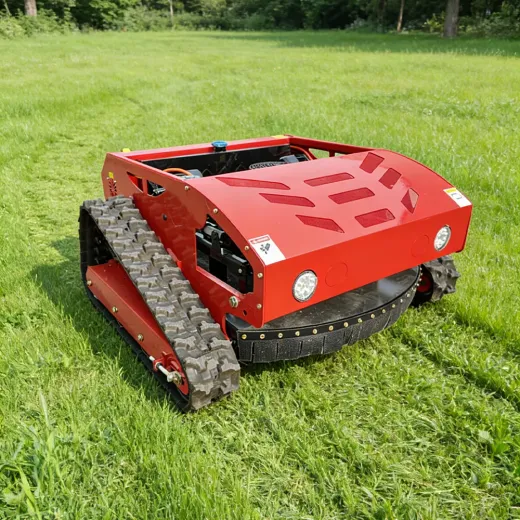
DIY RC Lawn Mower: Build vs Buy — What Actually Makes Sense
Thinking about building a DIY RC lawn mower? We break down every component, the Arduino approach, real costs, build time, and the safety risks most guides skip — so you can decide whether to build or buy a commercial remote control mower.
Read more →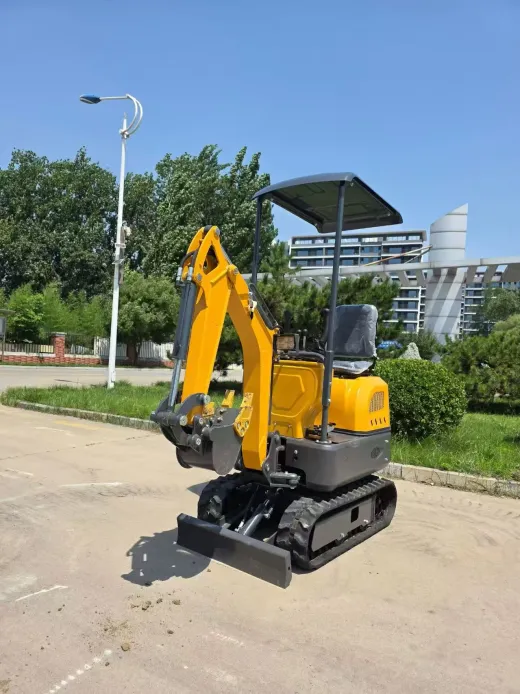
Big Excavators: Types, Sizes and How They Compare to Mini Excavators
Shopping for a big excavator but not sure which size fits your job site? This guide breaks down every weight class from 7-ton to 18-ton, explains real-world digging performance, and shows when a compact machine is the smarter buy.
Read more → Mini Excavator Model Numbers Compared: What the Specs Actually Mean
Confused by excavator model names like KX057-5, 305.5E2, or U17? This guide decodes how Kubota, Caterpillar, Bobcat, Yanmar, Kobelco, Hitachi, and John Deere name their machines — and shows where ZHONGMAI's range fits in.
Read more →