










DIY RC Lawn Mower: Build vs Buy — What Actually Makes Sense
2026-06-28
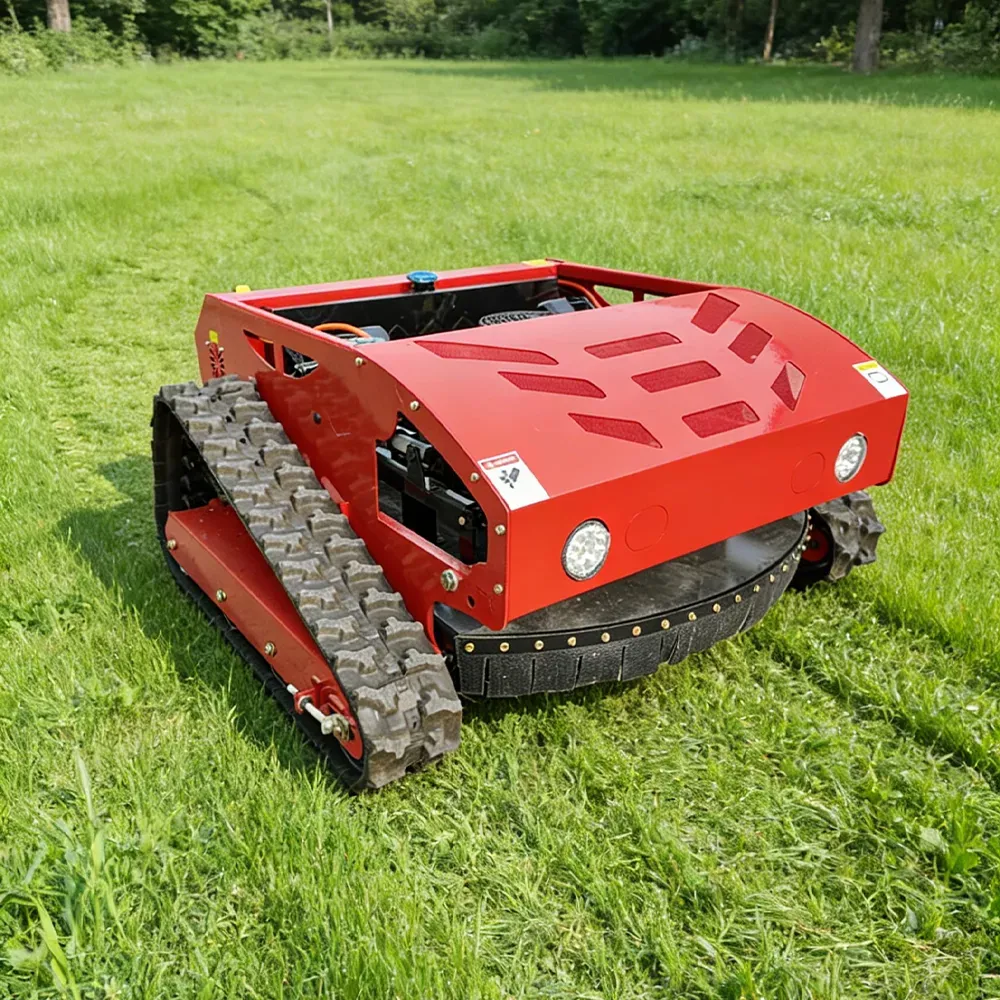
Thinking about building a DIY RC lawn mower? We break down every component, the Arduino approach, real costs, build time, and the safety risks most guides skip — so you can decide whether to build or buy a commercial remote control mower.
Why People Want to Build a DIY RC Lawn Mower
The appeal is real. You have a steep slope, an awkward ditch, or a sun-baked hillside that turns mowing into a genuine hazard — and you wonder whether you can solve it yourself. A DIY RC lawn mower project promises full control over specs, a lower upfront cost (on paper), and the satisfaction of building something that works. Forums like Reddit's r/lawncare and countless YouTube channels have made the idea look deceptively simple.
But there is a wide gap between a demonstration video and a machine that reliably cuts grass week after week without injuring anyone. This guide covers what it actually takes: the parts list, the electronics approach, honest cost estimates, the time commitment, and the safety risks that most build guides gloss over. By the end you will have a clear picture of when building makes sense and when buying a purpose-built commercial unit saves money, time, and risk.
What Goes Into a DIY Remote Control Mower — The Full Component List
A diy remote control mower is not a single project — it is four integrated systems that all have to work together reliably outdoors, under vibration, in wet grass, and in summer heat.
1. The Base Platform
Most builders start with a surplus riding mower deck, a steel-tube frame they weld themselves, or a repurposed garden tractor chassis. The frame has to support the drive motors, battery pack, blade motor, and all electronics while surviving rough terrain. Weight distribution matters: too front-heavy and the rear wheels lose traction; too rear-heavy and steering becomes unpredictable on slopes.
2. Drive System
The two most common approaches are wheelchair motors (24 V, high torque, widely available as salvage) and brushless DC motors paired with gear reducers. Wheelchair motors are easier to source and already rated for intermittent outdoor use. Brushless motors are more efficient but require matching motor controllers and careful thermal management. A dual-motor skid-steer layout (one motor per side) is the most popular because it eliminates complex steering linkages — the machine turns by varying motor speeds, identical to how a skid steer loader works.
3. Cutting Deck
You can adapt a walk-behind mower deck or fabricate one. The blade must be driven by a separate motor — usually a 1–2 kW brushless outrunner or a repurposed electric motor from industrial equipment. Blade speed, tip speed, and blade balance are critical safety parameters. An out-of-balance blade at 3,000 RPM can destroy a bearing in minutes or become a projectile if the shaft fails.
4. Power System
Lithium iron phosphate (LiFePO4) battery packs are the current standard for DIY builds because of their thermal stability and cycle life. A typical mid-size build needs 24 V or 48 V at 30–50 Ah for 45–90 minutes of runtime. This means a battery pack that alone costs $300–$600 if bought new. Add a battery management system (BMS), wiring rated for 50+ A continuous, weatherproof connectors, and a charging circuit.
5. Control Electronics
This is where most first builds stall. You need a radio receiver, an RC transmitter (or a custom radio link), motor controllers (Electronic Speed Controllers, or ESCs) sized for your motor current, a kill-switch wired to cut blade and drive power, and optionally a microcontroller to handle mixing, rate limiting, and safety logic. Off-the-shelf RC systems designed for cars or boats work but are not rated for the electrical noise that motor controllers generate at scale — you will likely chase interference problems.
The Arduino RC Lawn Mower Approach
Searching for arduino rc lawn mower builds turns up a specific category: projects where an Arduino microcontroller acts as the brain between the RC receiver and the motor controllers. The appeal is programmability — you can add features like auto-stop when the machine tips beyond a set angle (using an IMU), GPS waypoint mowing, or a dead-man switch that cuts blade power if no signal is received for two seconds.
A typical Arduino-based build uses an Arduino Mega or ESP32, a PWM-capable motor driver library, and either a standard RC receiver (reading PPM or SBUS signal) or a custom radio link built on LoRa or nRF24L01 modules for longer range. The software side is learnable but non-trivial: you need to debounce inputs, handle motor controller faults gracefully, and make sure the blade motor cuts power before the drive motors do if something goes wrong.
Practical limitations of the Arduino approach:
- Range: Standard 2.4 GHz RC systems give 100–300 m in open air, less with interference. Purpose-built commercial machines use industrial radio protocols tested for reliability.
- Noise immunity: High-current motor controllers generate significant RF noise. Proper grounding, shielded cable, and ferrite chokes are required — and learning curve is steep.
- Software bugs: A software crash during operation can leave the blade running and the drive motors at full speed. Robust watchdog logic and hardware safety interlocks are non-negotiable, not optional enhancements.
- Weather sealing: Arduinos and breadboard-style wiring do not tolerate moisture, vibration, or heat without deliberate enclosure design.
Arduino builds are genuinely achievable for someone with electronics experience. For someone without that background, the learning cost is high and the failure modes are hazardous.
Real Cost Breakdown: What a DIY RC Mower Actually Costs
One of the strongest arguments for a diy rc mower project is cost. The argument rarely survives contact with the actual parts list. Here is a realistic mid-size build budget (cutting width ~60 cm, runtime ~60 min, operating range ~100 m):
| Component | Budget Option | Realistic Cost |
|---|---|---|
| Drive motors (x2) | Salvage wheelchair motors | $80–$200 |
| Motor controllers (x2) | Sabertooth 2×32 or equivalent | $160–$280 |
| Battery pack (LiFePO4 24V 40Ah) | New cells + spot welder | $320–$600 |
| Battery management system | Overkill Solar BMS or similar | $40–$80 |
| Blade motor + controller | Brushless outrunner + ESC | $80–$160 |
| Frame / chassis fabrication | Steel tube + welding consumables | $100–$300 |
| Cutting deck (adapted) | Surplus walk-behind deck | $50–$150 |
| RC transmitter + receiver | FlySky FS-i6 or equivalent | $50–$80 |
| Arduino / ESP32 + sensors | Arduino Mega + IMU + modules | $40–$80 |
| Wiring, connectors, enclosures | — | $60–$120 |
| Wheels, bearings, hardware | — | $80–$150 |
| Total | $1,060–$2,200 |
This does not include tools (welder, drill press, multimeter, oscilloscope for debugging), time (50–150+ hours for a first build), or the cost of failed components during testing. It also does not include the cost of an emergency room visit, which is not hypothetical — spinning blades and high-current batteries are unforgiving of mistakes.
A diy rc lawn mower kit from specialized vendors reduces the integration work and can bring costs down to $800–$1,400, but you still assemble and wire the system yourself, and kits rarely include safety documentation equivalent to CE or UL certification.
Safety Risks Most DIY Build Guides Do Not Cover
The most important section of this article is the one most build guides skip. A diy remote lawn mower operates an open rotating blade at speed, outdoors, away from the operator. The risks are categorically different from a hobby RC car.
Projectile Hazards
A lawn mower blade traveling at tip speeds of 50–90 m/s will throw rocks, sticks, and debris with lethal force. Commercial mowers have discharge chutes, blade guards, and tested housing designs. DIY decks often have none of these — or improvised versions that have not been tested under the vibration and impact loads of actual use.
Runaway Risk
If your RC signal drops, your motor controller resets, or your Arduino crashes, what happens? On a commercial machine, the answer is a fail-safe that cuts all power. On a DIY build, the answer depends entirely on how carefully you designed your safety logic — and whether you tested every failure mode. A 60 kg machine with a running blade moving at walking speed can cover a lot of ground before it hits something or someone.
Battery Fire
LiFePO4 is far safer than lithium-ion polymer, but a DIY battery pack without proper cell balancing, over-current protection, and thermal cutoffs can still vent, catch fire, or cause burns. A pack on a mower also faces vibration, moisture, and heat that bench-built packs are not always designed for.
Slope Stability
The primary use case for remote mowers — steep slopes — is also where tipping risk is highest. Commercial slope mowers are designed with low centers of gravity, tracked or wide-stance drive systems, and tip sensors. A DIY wheeled build on a 30-degree slope is an engineering problem that requires deliberate design, not an afterthought.
Liability
If a DIY mower injures a bystander or damages property, liability falls entirely on the builder. A commercial machine from a reputable manufacturer carries product liability insurance and compliance certifications. This is not a trivial distinction.
When Building Actually Makes Sense
This is not an argument that DIY RC mower projects are always wrong. There are legitimate reasons to build:
- You have the skills: If you have professional experience in embedded systems, power electronics, or mechanical engineering, a build project is reasonable. You can anticipate failure modes, design proper safety interlocks, and test systematically.
- Your use case is unusual: Non-standard cutting widths, specialized terrain, integration with custom farm automation systems — there are scenarios where commercial products do not fit and a custom build is the right answer.
- It is a learning project: If your goal is to learn robotics and electronics and you have a safe, enclosed test area, a DIY RC mower is a legitimate education project. Just be honest that the product of that project should not be used unsupervised near people.
- You have time: A well-executed first build takes 80–150 hours of design, fabrication, wiring, testing, and debugging. If that is a reasonable investment for your situation, go in with clear eyes.
Most homeowners asking about a building a remote control lawn mower project are not in any of these categories. They want a solution to a real problem — typically slopes, heat, or physical difficulty — and the DIY path looks cheaper than it is and riskier than it looks.
When a Commercial Remote Control Mower Is the Smarter Choice
For the majority of use cases, a purpose-built commercial remote control mower solves the actual problem — grass on difficult terrain — without the build cost, the time investment, or the safety liability of a DIY project.
ZHONGMAI's remote control lawn mower is engineered specifically for the scenarios that drive most people toward DIY in the first place: steep slopes up to 45 degrees, rough terrain, and areas where operator proximity is a risk. Key advantages over a DIY build:
- Tested safety systems: Factory-set fail-safes, blade brakes, tip sensors, and CE-compliant engineering — not field-improvised solutions.
- Slope-rated design: The tracked or wheeled chassis and center-of-gravity calculations are done by engineers who specialize in this problem, not adapted from a garden tractor.
- Industrial radio control: Interference-resistant radio links with tested range and fail-safe behavior under signal loss.
- Warranty and support: When a commercial component fails, you have a manufacturer to call. With a DIY build, you are the manufacturer.
- Total cost of ownership: When you factor in build time at even a modest hourly rate, a commercial machine is often cheaper on a per-hour-of-mowing basis within the first season.
If you are managing a solar farm, a levee, a golf course rough, or a steep residential property, the ZHONGMAI remote control lawn mower is designed for exactly that duty cycle. Explore specifications, cutting width options, and slope ratings on the product page.
Build vs Buy — The Decision Framework
Here is a practical way to decide between a DIY build and a commercial purchase:
Build if:
- You have power electronics and mechanical fabrication experience.
- Your use case has specific requirements no commercial product meets.
- You are treating this as a deliberate learning or engineering project with realistic expectations.
- You have a safe test environment and will not deploy the machine near people until it has passed systematic safety testing.
Buy if:
- You need a reliable solution this season, not next year after debugging.
- Your primary goal is cutting grass on difficult terrain, not building robots.
- You are not comfortable designing high-current battery systems and motor control logic from scratch.
- You want documented safety certifications and manufacturer liability behind the machine.
- Your honest build cost estimate (including your time) exceeds the cost of a commercial unit.
The DIY RC mower community produces genuinely impressive machines. But the gap between an impressive project video and a machine you can trust unsupervised on a slope near your house or neighbors is significant. A commercial remote control lawn mower from ZHONGMAI bridges that gap with engineering, testing, and support already built in.
Browse our diy rc lawn mower range · — we reply within one business day.
Frequently asked questions
How much does it cost to build a DIY RC lawn mower?
A realistic mid-size DIY RC lawn mower build costs $1,060–$2,200 in parts alone, depending on whether you source motors as salvage or buy new. This does not include tools, consumables, or the value of 50–150+ hours of build and debug time. DIY RC lawn mower kits from specialty vendors can reduce integration work but still typically run $800–$1,400 and require significant assembly.
Can I use an Arduino to build a remote control lawn mower?
Yes — an Arduino RC lawn mower is a well-documented project category. An Arduino Mega or ESP32 can read RC receiver signals and control motor drivers for both drive and blade motors. The main challenges are noise immunity (motor controllers generate significant RF interference), proper fail-safe logic, and weather sealing. It is achievable for someone with embedded systems experience but carries a steep learning curve for beginners.
Is a DIY remote control mower safe to use on steep slopes?
Slope use is where DIY remote control mowers carry the most risk. Tipping stability, blade housing strength, and fail-safe behavior on signal loss all need deliberate engineering. Commercial slope mowers are designed with low centers of gravity, tested tip sensors, and rated slope angles. A DIY build on a 30-degree or steeper slope requires the same rigor — it cannot be improvised.
What battery type is best for a DIY RC mower?
Lithium iron phosphate (LiFePO4) is the standard choice for DIY remote control mower builds because of its thermal stability, cycle life, and lower fire risk compared to lithium polymer. A 24 V or 48 V pack at 30–50 Ah typically provides 45–90 minutes of runtime. Always include a properly sized battery management system (BMS) for cell balancing and over-current protection.
Are there DIY RC lawn mower kits available?
Yes, a diy rc lawn mower kit from specialized robotics and outdoor power vendors can provide a pre-designed frame, motor mounts, and wiring harness, reducing fabrication work. However, most kits still require you to source motors, batteries, and electronics separately and wire the system yourself. They do not typically include safety certifications equivalent to commercial products.
What is the range of a DIY remote control mower?
Standard 2.4 GHz RC systems used in most DIY remote lawn mower builds provide 100–300 m of range in open air, less in environments with RF interference. Custom radio links using LoRa modules can extend range significantly but require more software development. Commercial remote control mowers use industrial radio protocols tested for reliable operation at working distances.
When should I buy a commercial remote control mower instead of building one?
Buy a commercial unit when you need a reliable, deployment-ready solution this season; when safety certifications and manufacturer liability matter to your use case; when your honest build cost including time exceeds the commercial price; or when you do not have power electronics and fabrication experience. For steep slopes, solar farms, levees, and professional grounds maintenance, a purpose-built commercial remote control lawn mower offers tested performance and support that a first DIY build cannot match.
Related articles
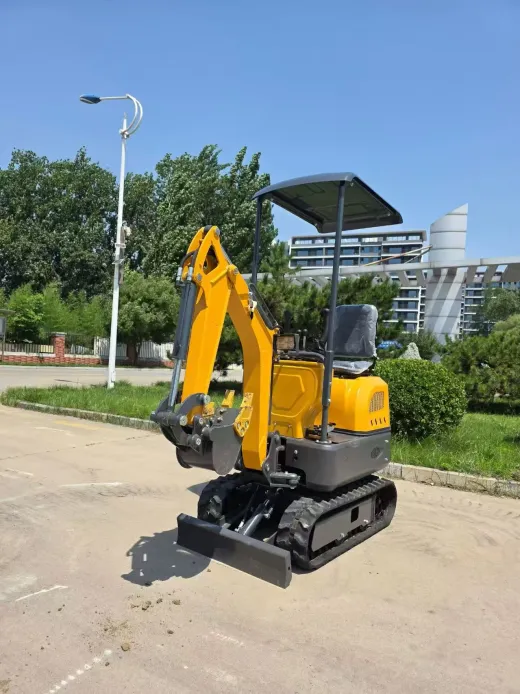
Big Excavators: Types, Sizes and How They Compare to Mini Excavators
Shopping for a big excavator but not sure which size fits your job site? This guide breaks down every weight class from 7-ton to 18-ton, explains real-world digging performance, and shows when a compact machine is the smarter buy.
Read more → Mini Excavator Model Numbers Compared: What the Specs Actually Mean
Confused by excavator model names like KX057-5, 305.5E2, or U17? This guide decodes how Kubota, Caterpillar, Bobcat, Yanmar, Kobelco, Hitachi, and John Deere name their machines — and shows where ZHONGMAI's range fits in.
Read more →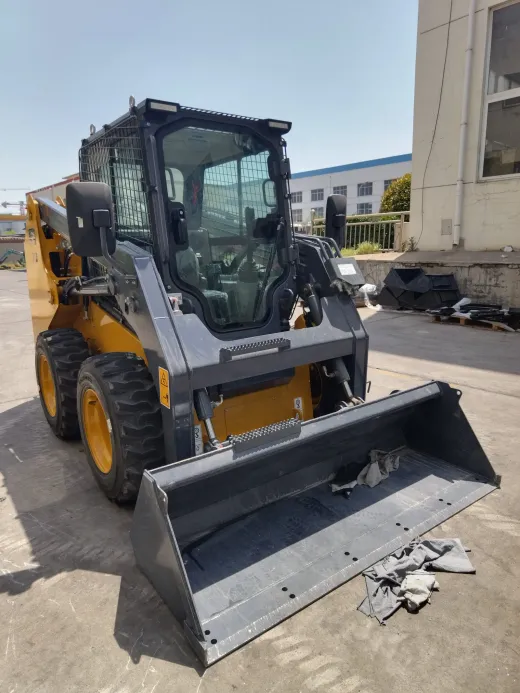
Skid Steer Comparison Chart: CAT, Bobcat, Case, John Deere & More
Use this skid steer comparison chart to weigh CAT, Bobcat, Case, John Deere, Ford, and Daewoo models side by side on rated operating capacity, horsepower, and lift type. Need the full detail behind a single spec instead? Our dedicated guides on skid steer weight, dimensions, and full specifications, linked throughout, cover those in depth.
Read more →