










Mini Excavator Model Numbers Compared: What the Specs Actually Mean
2026-06-28
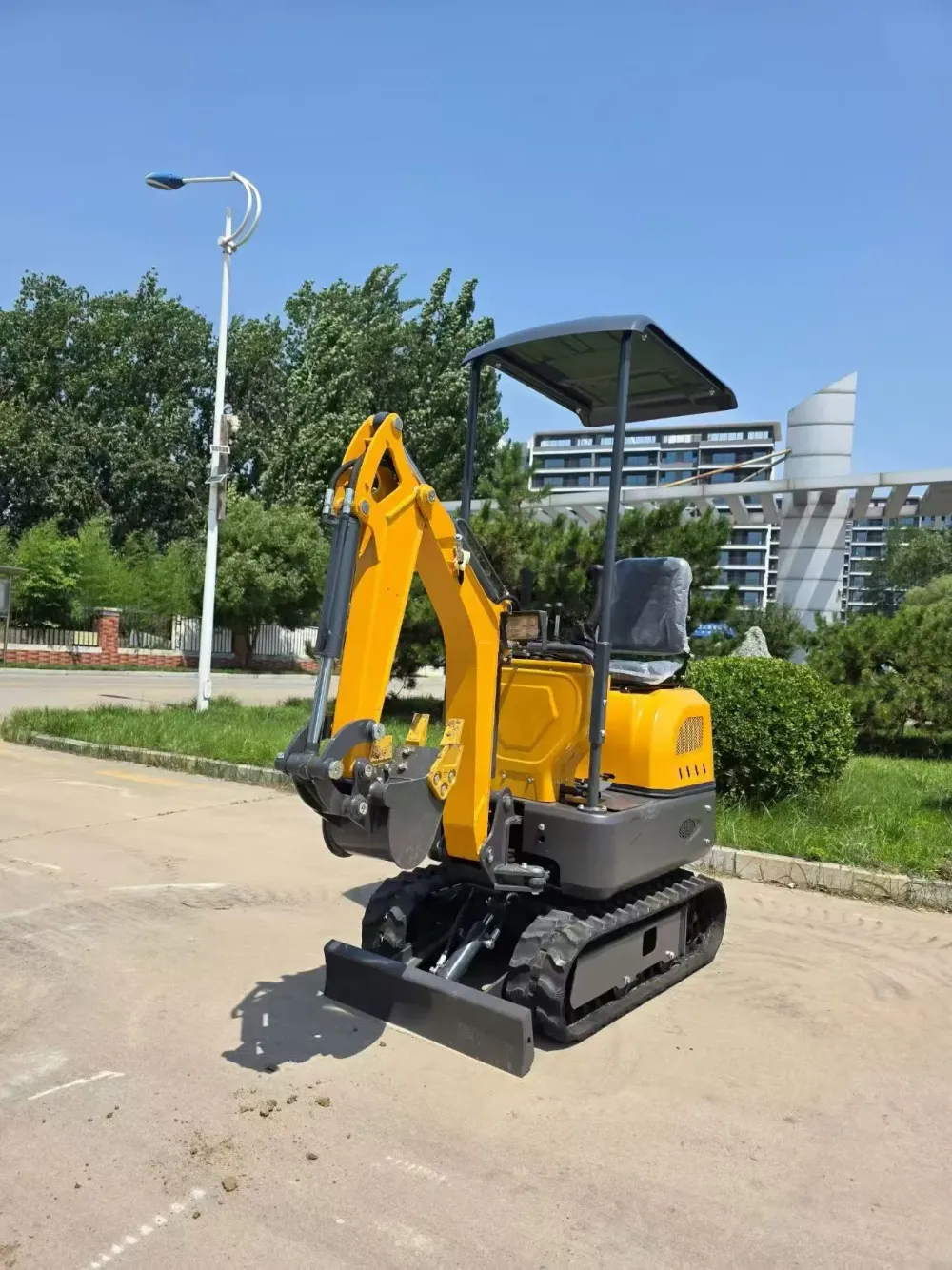
Confused by excavator model names like KX057-5, 305.5E2, or U17? This guide decodes how Kubota, Caterpillar, Bobcat, Yanmar, Kobelco, Hitachi, and John Deere name their machines — and shows where ZHONGMAI's range fits in.
Why Model Numbers Matter When Buying a Mini Excavator
Walk into any equipment yard and you will see machines labeled KX057-5, 305.5E2, SV100-2, ZX55U-5 or 35G. To the uninitiated, these strings of letters and digits look interchangeable. They are not. Each manufacturer encodes operating weight, bucket capacity, engine tier, and sometimes cab configuration directly into the model name. Understanding those codes lets you compare mini excavator models on paper before you ever sit in the seat — and it helps you avoid paying for capacity you do not need or buying underpowered for a job.
This guide works through the naming conventions of the seven brands that dominate the global compact excavator market, then shows how ZHONGMAI's line maps onto the same weight and capacity bands.
Kubota: KX and U Series Explained
Kubota uses two primary families for compact excavators. The KX series (conventional tail swing) is identified by a number that approximates operating weight in metric tons multiplied by ten: KX033-4 is roughly 3.3 t, KX057-5 is roughly 5.7 t, KX080-4S lands near 8 t. The trailing digit after the hyphen indicates the generation — "5" means fifth-generation, with Tier 4 Final / Stage V engine calibration and updated hydraulics. The KX080-4S suffix "S" signals a super-long arm option.
The U series (U10-3, U17-3, U35-4, U55-4) stands for "zero tail swing" — the counterweight does not protrude beyond the track width when rotating. These machines are favoured in urban trenching and utility work where obstacles surround the machine. The numeric portion still approximates weight class: U17 ≈ 1.7 t, U35 ≈ 3.5 t.
Key specs to verify regardless of model name: digging depth, bucket breakout force (kN), and auxiliary hydraulic flow (L/min). Kubota publishes all three in its spec sheets, and they vary meaningfully even within the same weight class across generations.
Caterpillar: 3, 3.5 and 5-Tonne Bands
Caterpillar compact excavator mini excavator model numbers follow a pattern of three digits plus an alphanumeric suffix: 301.7, 302.7, 303.5E2 CR, 305.5E2, 308. The first digits indicate operating weight in metric tons (301 = ~1 t, 308 = ~8 t). The decimal and following digit refine within a class. The suffix letters encode configuration: "E" denotes the current "E-Series" generation, "2" marks second-generation E, and "CR" stands for Compact Radius (reduced tail swing).
Cat's hydraulic system on these machines uses a load-sensing variable-displacement pump from the 305 upward, which gives finer control at partial throttle — a meaningful differentiator against fixed-displacement competitors at the same weight. The 303.5E2 CR and 305.5E2 are the most widely rented models globally, so parts availability and resale value are predictably strong.
Bobcat, John Deere, and Yanmar: North American Naming Logic
Bobcat labels compact excavators with an "E" prefix followed by approximate operating weight in thousands of pounds or a simplified metric code depending on market: E10, E20, E32, E35, E42, E50, E55, E85. The number after E is roughly the operating weight in hundreds of kilograms for the metric spec sheet — E32 ≈ 3,200 kg. Bobcat's E-series differentiates tail-swing radius within the model name only by the optional "-R" suffix on reduced-swing variants.
John Deere follows a similar convention: 17G, 26G, 35G, 50G, 60G. The number approximates operating weight in hundreds of kilograms (35G ≈ 3,500 kg). The "G" suffix has denoted the current generation since 2013. Deere's compact excavators share hydraulic components with their skid steer and compact track loader ranges, which simplifies dealer service logistics on mixed fleets.
Yanmar uses a weight-based prefix with a generation suffix: SV08, SV17, SV26, SV40, SV100-2. "SV" stands for "Super VIO" (Vio being Yanmar's legacy zero-tail-swing sub-brand). The trailing "-2" or "-3" marks the generation. Yanmar is notable for powering both its own excavators and many OEM-branded machines with its 3TNV and 4TNV diesel engines.
Kobelco and Hitachi: Japanese Engineering Codes
Kobelco compact excavators use an "SK" prefix (shared with their full-size range) plus weight class and a suffix marking generation and tail-swing type: SK17SR-3S, SK35SR-5, SK55SRX-6, SK75SR-5E. "SR" indicates short-radius (reduced tail swing). The trailing number is the generation; the additional letter ("E" in SK75SR-5E) can indicate an export-spec engine variant. Kobelco machines are widely noted for their CLSS (Closed-Loop load-sensing) hydraulic system, which reduces cycle time and fuel consumption simultaneously.
Hitachi's compact line is branded under both Hitachi and Zaxis: ZX17U-5, ZX26U-5, ZX35U-5, ZX55U-5. "ZX" is the Zaxis brand; the number approximates weight in tenths of metric tons; "U" means ultra-compact tail swing; and "-5" marks the fifth series. Hitachi's TRIAS III hydraulic system distributes oil to boom, arm, and bucket independently, reducing interference loss during combined movements — a feature the spec sheet rarely highlights but operators notice immediately.
Reading the Spec Sheet: Four Numbers That Actually Decide a Purchase
Across all mini excavator model families, four numbers drive most purchase decisions.
Operating weight (kg): Defines transport logistics (trailer rating, bridge limits), ground pressure, and stability envelope. A 5.5 t machine needs a significantly heavier trailer than a 3.5 t machine and may require a CDL in some jurisdictions. For a full breakdown of how weight class maps to real applications, see our mini excavator sizes guide.
Maximum digging depth (mm): Determines suitability for utility trenching (typically 1,500–2,500 mm required) versus landscaping (often 1,200 mm sufficient). Compare this number directly between models regardless of brand.
Bucket breakout force (kN): Reflects the hydraulic cylinder force available at the bucket. Higher values mean harder material capability. A 3.5 t machine typically delivers 28–38 kN; a 5.5 t machine 40–55 kN. Machines at similar weights can vary by 20% on this metric depending on hydraulic pump sizing.
Auxiliary hydraulic flow (L/min): Governs attachment compatibility. A hydraulic thumb, breaker, or auger each has a minimum flow requirement. If this number is lower than your attachment demands, you will run the attachment slowly or damage the pump. Most compact excavators in the 3–5 t class deliver 40–80 L/min on the high-flow circuit.
Where ZHONGMAI Mini Excavators Fit in the Comparison
ZHONGMAI's compact excavator range is engineered to cover the 1–6 t operating weight band — the same segment targeted by Kubota KX015–KX057, Cat 301.7–305.5E2, and Bobcat E10–E55. The machines share the core architecture of Japanese-derived compact excavators: zero or short tail swing options, load-sensing hydraulic systems, and Yanmar or equivalent Tier 4 / Stage V compliant diesel engines.
Where ZHONGMAI differentiates is total cost of ownership. Direct factory sourcing removes multiple tiers of regional distributor margin. Structural components (boom, arm, bucket) use the same Q355B high-strength steel specification found in OEM machines, with CNC-cut flanges and robotically welded seams. Hydraulic cylinders are chromed to 0.4 Ra surface finish, matching Kawasaki/Parker cylinder standards used by Kubota and Hitachi.
For buyers comparing a ZHONGMAI 3.5 t unit against a Bobcat E35 or Yanmar SV40, the relevant spec comparison is straightforward: digging depth, breakout force, and auxiliary flow are published on the ZHONGMAI mini excavator product page and can be placed side by side with OEM spec sheets. The machines compete directly on technical merit, with a landed price 25–40% lower depending on origin port and volume.
Choosing the Right Weight Class for Your Application
The most common purchasing mistake across all mini excavator model lines is over-specifying weight class. A 5.5 t machine costs roughly 35% more than a 3.5 t machine, requires heavier transport, and consumes more fuel per hour — yet for residential landscaping, utility trenching to 2 m, or indoor demolition, the 3.5 t machine completes every task and fits through gates and doorways the larger machine cannot.
Use this application map as a starting point: 1–2 t (Kubota KX016 / Cat 301.7 / ZHONGMAI 1.5T) for indoor work, tight urban lots, and greenhouse trenching. 3–4 t (KX033 / Cat 303.5 / Bobcat E35 / ZHONGMAI 3.5T) for residential construction, landscaping, and light utility. 5–6 t (KX057 / Cat 305.5 / Bobcat E55 / ZHONGMAI 6T) for commercial site work, road crossings, and heavy attachment use (breakers, cold planers). Above 6 t, machines transition out of the compact category and into mid-size excavators with different transport and operating cost profiles.
Our mini excavator buying guide walks through additional selection factors beyond weight class. Contact ZHONGMAI to request a direct specification comparison against any OEM model in the 1–6 t range. Factory engineers can match digging depth, breakout force, auxiliary flow, and transport weight to your exact project requirements before any order is placed.
Browse our mini excavator models range · — we reply within one business day.
Frequently asked questions
What does the number in a mini excavator model name mean?
For most brands the number approximates operating weight. Kubota KX057 ≈ 5.7 metric tons, Cat 305.5 ≈ 5.5 metric tons, Bobcat E35 ≈ 3.5 metric tons, John Deere 35G ≈ 3.5 metric tons. There are exceptions — always verify against the published spec sheet, as marketing generations and regional variants can shift the actual weight by 100–300 kg from the model number.
What does 'SR' or 'U' mean in mini excavator model numbers from Kobelco or Kubota?
'SR' on Kobelco models stands for Short Radius — the counterweight stays within or very close to the track width during rotation. Kubota uses 'U' for the same concept on their U-series (U17, U35, U55). These zero or reduced tail-swing configurations are designed for confined job sites where the machine works close to walls, fences, or parked vehicles.
How do I compare a ZHONGMAI mini excavator to a Kubota or Cat model?
Request the full spec sheet from ZHONGMAI and download the equivalent OEM spec sheet from Kubota or Cat's website. Compare four numbers directly: operating weight (kg), maximum digging depth (mm), bucket breakout force (kN), and auxiliary hydraulic flow (L/min). These four metrics determine whether a machine is suitable for your application regardless of brand name.
Which mini excavator weight class is right for landscaping work?
Most residential and commercial landscaping work — grading, pond excavation, tree removal, drainage trenching — is handled well by machines in the 3–4 t range. This covers models such as Kubota KX033, Cat 303.5E2, Bobcat E32, John Deere 35G, and ZHONGMAI's 3.5 t compact excavator. These machines fit through standard gates, load onto a 10,000 lb trailer, and deliver 28–38 kN breakout force sufficient for most soil conditions.
Are Chinese mini excavators structurally comparable to Kubota or Cat?
At the structural level, reputable Chinese manufacturers including ZHONGMAI use the same Q355B high-strength steel, CNC plasma-cut flanges, and robotic welding processes used in Japanese and American OEM production. The meaningful comparison points are hydraulic system quality (pump brand and displacement), engine certification (Tier 4 Final / Stage V compliance), and after-sales parts availability. ZHONGMAI uses Yanmar-compatible engines and Kawasaki or Parker hydraulic components on its compact excavator range.
What is the difference between Kubota KX and U series mini excavators?
The KX series uses a conventional tail-swing design where the counterweight extends beyond the track width during rotation. The U series is zero tail-swing — the counterweight stays within the machine's footprint. KX machines generally offer slightly higher stability and breakout force at the same weight class; U machines trade that margin for the ability to work in tighter spaces. Choose KX for open sites with higher production demands, U-series for confined urban or indoor environments.
How many hours do mini excavators from major brands typically last?
Well-maintained compact excavators from Kubota, Cat, Hitachi, Kobelco, and Yanmar routinely reach 8,000–12,000 hours before requiring major component overhaul. The key maintenance intervals are hydraulic filter and fluid changes (every 500–1,000 hours), track tension checks (every 50 hours of operation), and final drive oil changes (every 1,000 hours). ZHONGMAI machines follow the same service schedule and use standard metric fasteners and filter cartridges compatible with local supply chains in most markets.
Related articles
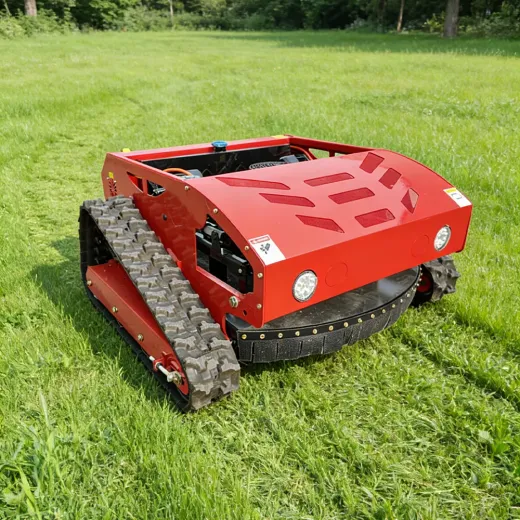
DIY RC Lawn Mower: Build vs Buy — What Actually Makes Sense
Thinking about building a DIY RC lawn mower? We break down every component, the Arduino approach, real costs, build time, and the safety risks most guides skip — so you can decide whether to build or buy a commercial remote control mower.
Read more →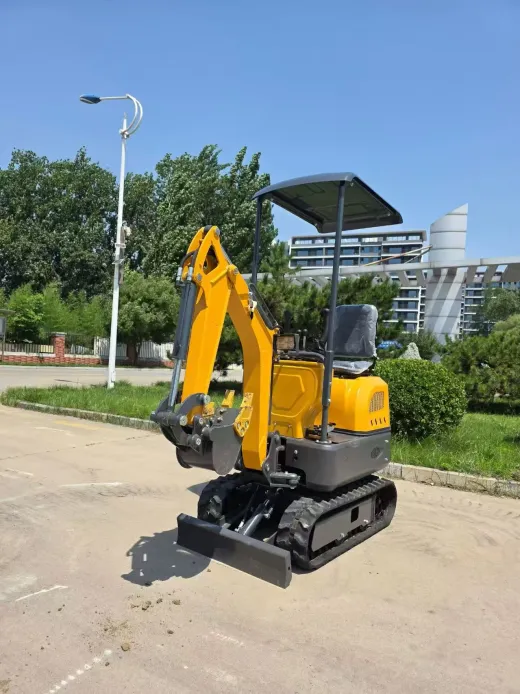
Big Excavators: Types, Sizes and How They Compare to Mini Excavators
Shopping for a big excavator but not sure which size fits your job site? This guide breaks down every weight class from 7-ton to 18-ton, explains real-world digging performance, and shows when a compact machine is the smarter buy.
Read more →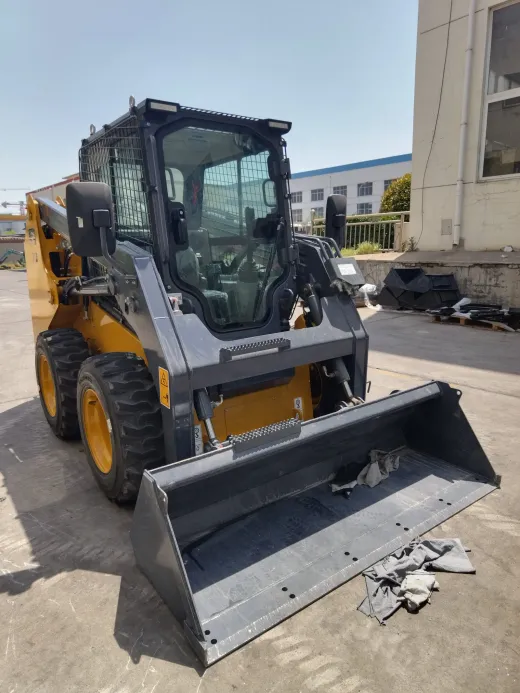
Skid Steer Comparison Chart: CAT, Bobcat, Case, John Deere & More
Use this skid steer comparison chart to weigh CAT, Bobcat, Case, John Deere, Ford, and Daewoo models side by side on rated operating capacity, horsepower, and lift type. Need the full detail behind a single spec instead? Our dedicated guides on skid steer weight, dimensions, and full specifications, linked throughout, cover those in depth.
Read more →