










Skid Steer vs Telehandler: Which Machine Do You Actually Need?
2026-06-28
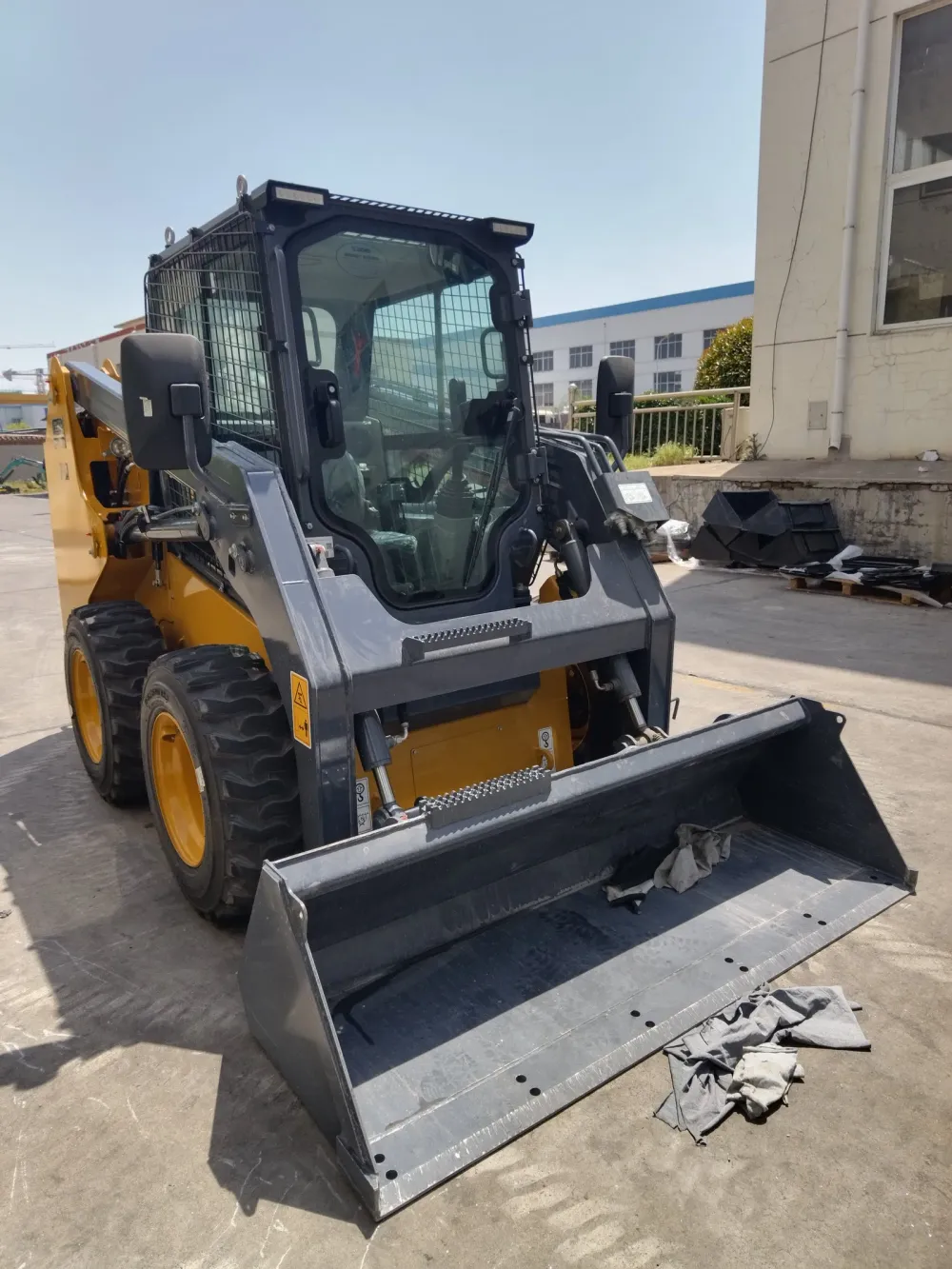
Skid steer telehandler comparisons trip up a lot of buyers because both machines handle material and both run attachments — but they're built around completely different priorities. Here's how to tell which one actually fits your work.
Walk onto most construction, agricultural, or industrial sites and you'll find both types of machine — but rarely the same buyer choosing between them twice. The skid steer telehandler comparison comes up because both handle material, both take attachments, and both show up on budget shortlists for the same jobs. The confusion ends the moment you understand what each machine is actually optimized for: one is a compact, ground-level workhorse; the other is a reach machine. This guide runs through lift height, forward reach, terrain, cost, and attachment compatibility so you can make the call cleanly, and it covers where a telescoping skid steer fits when you need elements of both.
The core difference: ground work vs. elevated reach
A skid steer loader is built for ground-level productivity in tight spaces. It spins on its own axis using differential wheel speed, carries a full attachment ecosystem at the front, and excels at tasks like loading, grading, demolition, trenching, and land clearing — almost always within a meter or two of ground level. A telehandler skid steer comparison immediately surfaces the key contrast: a telehandler's telescoping boom can place a pallet or pour concrete 8, 12, or even 17 meters in the air, and it can set material several meters forward from the machine's footprint, which no standard skid steer can do.
So the first diagnostic question isn't about attachments or price — it's about elevation. If your work happens at or near the ground, a skid steer loader is almost always the right answer. If your work requires placing material at height or reaching over an obstacle, a telehandler is the right answer. Most buying decisions are that straightforward.
Lift height and forward reach: where they split
A conventional skid steer has a rated operating capacity of 350 to 1,500 kg depending on class, and its lift height typically ranges from 2 to 3.5 meters — enough to fill a truck bed or clear a standard wall, but not enough to reach a second-story floor or top out a silage pile. A telehandler can handle similar rated loads (many overlap with mid-size skid steers) but extends them to 6, 10, or 17 meters depending on the model, and the telescoping boom creates forward reach that lets the operator set a load 3 to 5 meters beyond the front axle while staying planted.
That forward reach is what separates them on a job like framing: a telehandler can set a bundle of roof trusses directly onto the wall plate from the ground, a task a skid steer physically cannot perform regardless of how powerful it is. The skid steer telehandler split on lift is not a gap that can be bridged by a higher-spec skid steer — they're different machine geometries.
Terrain, stability, and maneuverability
Here the skid steer recovers ground it lost on reach. Its compact, low-slung chassis puts weight close to the ground and gives it excellent stability for ground-level heavy work. Skid steers can operate effectively on soft lawns, muddy sites (especially tracked models), tight residential plots, and inside buildings — the zero-turn radius means it can work in corridors and confined yards a telehandler cannot enter. A telehandler is a tall machine; with the boom elevated and a load on the forks, its center of gravity rises significantly, and it depends on a wider stance and outriggers (on larger models) to stay stable. Most telehandlers also have four-wheel steering and crab-steer modes to compensate for their longer wheelbase, but they still need substantially more room to maneuver than a skid steer.
On rough terrain, both have capable variants — rough-terrain telehandlers on large agricultural or quarry sites, and tracked skid steers in mud or on soft ground. Neither is definitively better off-road; the terrain question is more about site access (tight vs. open) and whether working at elevation makes slope stability a safety concern.
Attachment compatibility and versatility
One of the skid steer's strongest selling points is its attachment ecosystem. With a universal quick-attach plate, a single machine can run a bucket, auger, trencher, brush cutter, cold planer, mulcher, broom, hydraulic breaker, and dozens of other tools — often swapped in under a minute. That attachment versatility is why a skid steer with the right attachment set can replace three or four single-purpose machines on a smaller site.
A telehandler runs a narrower attachment range — primarily forks, a bucket, a winch, and a work platform. Some models accept a rotating headstock that improves flexibility at height, but the telehandler's boom geometry means it will never match the ground-level attachment breadth of a skid steer. If attachment versatility at ground level is a priority, the skid steer wins clearly. If placing that bucket or those forks at 8 meters is the priority, the telehandler wins.
The telescoping skid steer: bridging the gap
A telescoping skid steer — sometimes called a teletruk-style compact loader or a telescopic compact track loader — is a hybrid machine designed to address exactly this comparison. It uses a skid steer-style chassis and attachment carrier but replaces the standard vertical lift arm with a telescoping boom that provides additional lift height and some forward reach beyond what a conventional skid steer offers. Depending on the model, a telescoping skid steer can reach 4 to 6 meters — well beyond a standard skid steer but short of a full-size telehandler's range.
The telescoping skid steer makes practical sense when your work is primarily ground-level but regularly requires reaching a truck or a modest-height structure, and you want to retain the full attachment ecosystem and compact footprint of a skid steer. If you need to place material above 6 meters, a purpose-built telehandler is still the right machine; but for the buyer who finds the telehandler skid steer gap uncomfortably wide, the telescoping variant is a genuinely useful middle option. It typically costs more than a comparably sized conventional skid steer, so the premium is only worth it when the extra reach is used regularly.
Cost, operating hours, and total ownership
On purchase price, compact skid steers start lower than comparable telehandlers — a mid-size wheeled skid steer runs considerably less than a full-featured construction telehandler. The gap narrows as you move into higher-capacity skid steers and entry-level compact telehandlers, but telehandlers carry a premium for the boom engineering and load-management systems that keep them safe at elevation. Operating costs are comparable for fuel and routine maintenance; telehandlers have the added complexity of boom cylinders, extension lines, and load moment indicators that need periodic inspection.
For most buyers the cost conversation is simpler than it looks: if you don't need elevation, a telehandler's premium buys you reach you won't use. If you do need elevation, a skid steer's savings come at the cost of a capability you'll constantly miss. Buy the machine that fits the work, then optimize the spec within that type.
Choosing: a practical decision framework
Work through these questions in order. First: does your work regularly require placing or retrieving material above 3.5 meters, or reaching forward over an obstacle? If yes, buy a telehandler. If no, continue. Second: do you need heavy attachment versatility — trenching, mulching, grading, drilling — at ground level? If yes, buy a skid steer. Third: do you need mostly ground-level work but occasionally need to reach 4 to 6 meters, and do you want to keep the skid steer's attachment flexibility? If yes, consider a telescoping skid steer.
Two machines almost never make sense for a solo operator on a small site; on larger operations it is common to run a skid steer telehandler pairing — the skid steer handles ground work and attachment tasks, the telehandler handles material placement at height and long-reach work. They complement rather than duplicate each other in that role.
- Lift height — telehandler wins at elevation; skid steer handles ground-level.
- Forward reach — telehandler only.
- Maneuverability — skid steer in tight sites; telehandler needs room.
- Attachment range — skid steer by a wide margin.
- Purchase cost — skid steer lower at comparable capacity.
- Bridge option — telescoping skid steer for 4-6 m reach with attachment flexibility.
Browse our skid steer telehandler range · — we reply within one business day.
Frequently asked questions
What is the main difference between a skid steer and a telehandler?
A skid steer is a compact, zero-turn loader optimized for ground-level work — loading, grading, trenching, and attachment-based tasks within roughly 3.5 meters of height. A telehandler has a telescoping boom that places and retrieves material at 6 to 17 meters of height with significant forward reach. They overlap on material handling but diverge completely on elevation and forward reach.
Can a skid steer replace a telehandler?
Not for elevated work. A skid steer's lift arm, even on a high-flow or high-capacity model, tops out at 2 to 3.5 meters. If your work regularly involves setting material above that height — framing, silage, racking, or placing roofing materials — a telehandler is the correct machine and a skid steer cannot substitute for it regardless of spec.
What is a telescoping skid steer and when does it make sense?
A telescoping skid steer uses a skid steer-style chassis with a telescoping boom instead of a standard lift arm, providing 4 to 6 meters of lift height and some forward reach while retaining the compact footprint and attachment compatibility of a conventional skid steer. It makes sense when your work is primarily ground-level but you regularly need to reach a truck bed or low structure, and you want to avoid buying both a standard skid steer and a full telehandler.
Should I buy a skid steer or a telehandler for construction?
It depends on your tasks. If you are grading, excavating with attachments, demolishing, or clearing land at ground level, buy a skid steer. If you are framing, setting trusses, placing concrete block, or moving palletized material to upper floors, buy a telehandler. Many mid-size construction operations run both because the machines complement rather than duplicate each other.
Can a telehandler use skid steer attachments?
Generally no. Telehandlers use a fork carriage and may accept a bucket or work platform, but they do not run the universal quick-attach system that skid steer attachments require. Attachment versatility — augers, trenchers, mulchers, brush cutters — is a skid steer strength that a telehandler does not replicate.
Which is safer on slopes — a skid steer or a telehandler?
A skid steer's low center of gravity makes it inherently stable on moderate slopes. A telehandler's stability changes with boom extension and load height; with the boom elevated and a load forward, the center of gravity shifts significantly and most manufacturers specify reduced rated capacity. On steep slopes with elevated loads, a telehandler requires careful attention to load charts. Neither machine should be operated on grades that exceed manufacturer specifications.
How much does a telehandler cost compared to a skid steer?
A compact wheeled skid steer typically starts below $30,000 USD new. A comparable-capacity construction telehandler starts in the $50,000–$80,000 range and rises steeply with lift height and rated load. The premium reflects the boom engineering and load-management systems required for safe elevated operation. Rental rates show a similar gap, though both are widely available from equipment rental companies.
Related articles
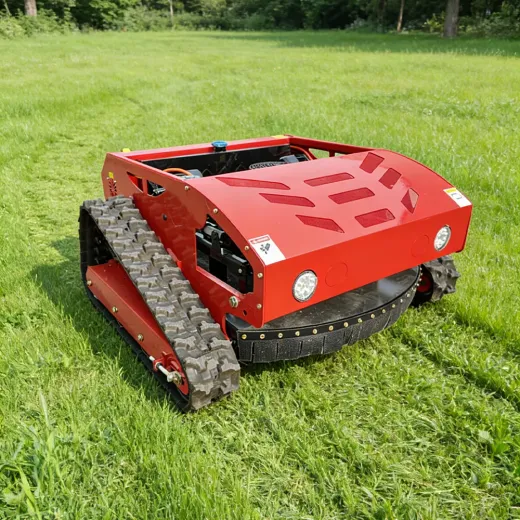
DIY RC Lawn Mower: Build vs Buy — What Actually Makes Sense
Thinking about building a DIY RC lawn mower? We break down every component, the Arduino approach, real costs, build time, and the safety risks most guides skip — so you can decide whether to build or buy a commercial remote control mower.
Read more →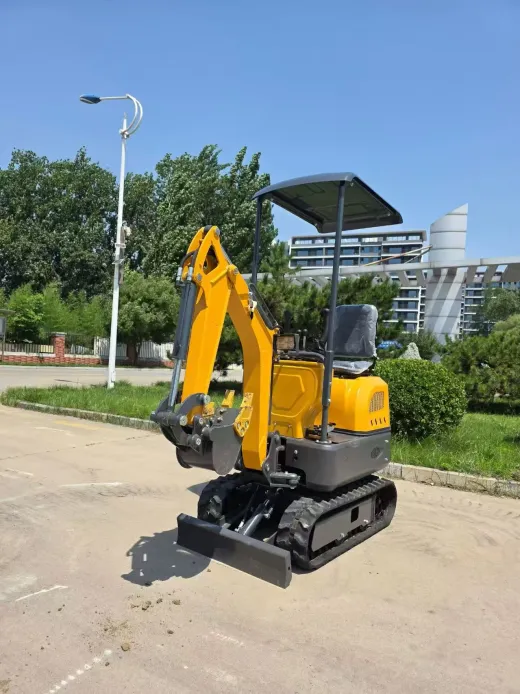
Big Excavators: Types, Sizes and How They Compare to Mini Excavators
Shopping for a big excavator but not sure which size fits your job site? This guide breaks down every weight class from 7-ton to 18-ton, explains real-world digging performance, and shows when a compact machine is the smarter buy.
Read more → Mini Excavator Model Numbers Compared: What the Specs Actually Mean
Confused by excavator model names like KX057-5, 305.5E2, or U17? This guide decodes how Kubota, Caterpillar, Bobcat, Yanmar, Kobelco, Hitachi, and John Deere name their machines — and shows where ZHONGMAI's range fits in.
Read more →