










The History of the Skid Steer Loader: Who Built the First One?
2026-06-28
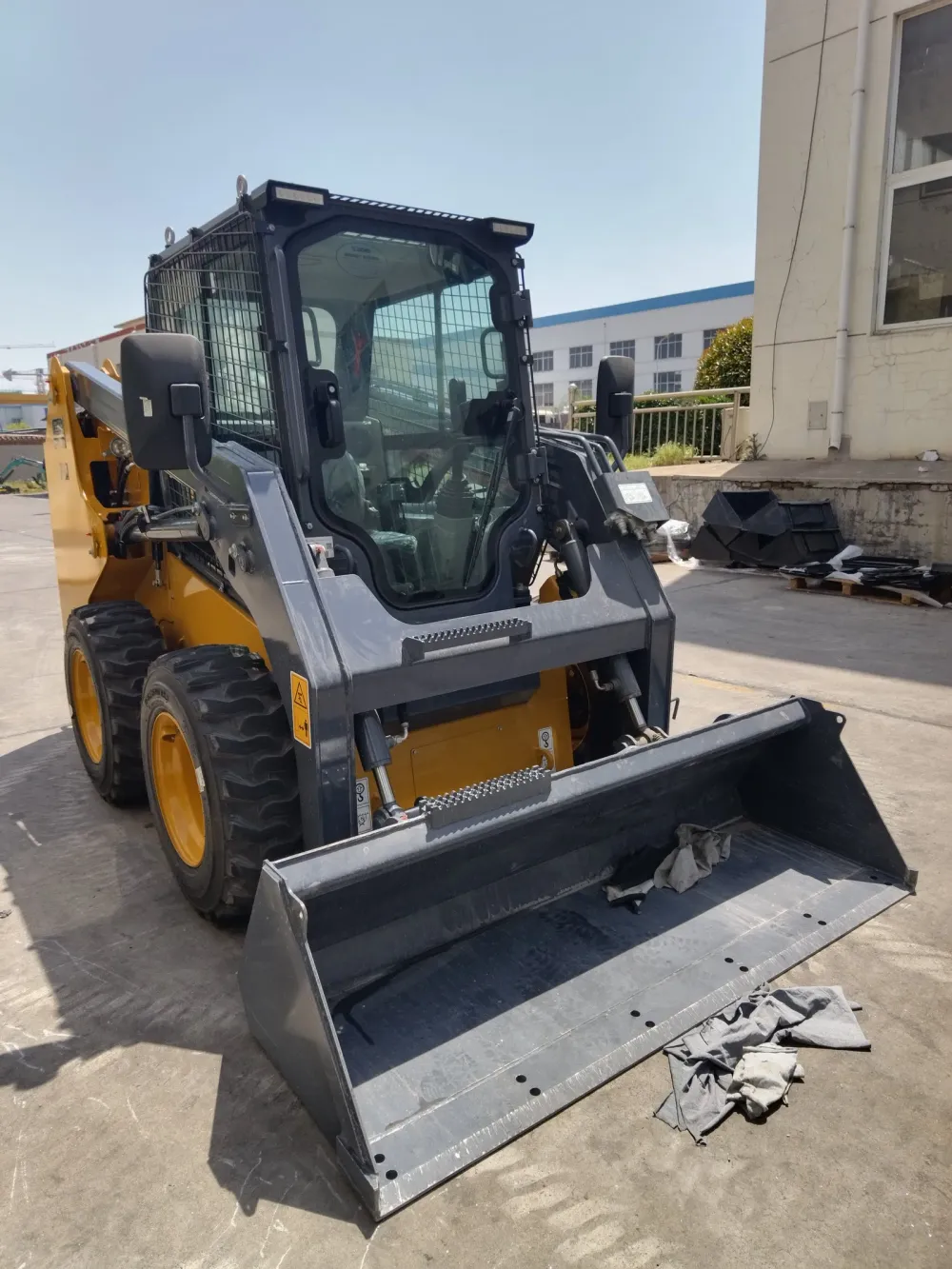
The full skid steer history from the Keller brothers' 1957 turkey-barn machine through Melroe, Bobcat, and the rise of modern Chinese manufacturers — who built the first skid steer loader and how the machine evolved into the compact powerhouse on job sites today.
Skid steer history is shorter than most people expect. The machine is barely seventy years old, born not in a manufacturing plant but on a Minnesota turkey farm, built by two brothers who needed a loader small enough to fit inside a low-clearance barn. That improvised solution became the template for one of the most versatile pieces of compact equipment ever made — and today the same concept, refined by decades of engineering, is manufactured on every major continent including China. This is the story of how it happened.
The turkey-barn problem that started everything
In 1957, Cyril and Louis Keller, brothers and machinists from Rothsay, Minnesota, were asked by a local turkey farmer to solve a specific problem: how do you move manure out of a barn when the clearance is too low for a conventional tractor and too tight for a standard loader? The farmer, Eddie Velo, needed something that could turn in its own footprint inside the building without tearing up the floor or knocking into the posts.
The Kellers built a three-wheeled, rear-engine loader with independent wheel drives on each side. By speeding up the wheels on one side and slowing the wheels on the other — or running them in opposite directions — the machine pivoted around its own center. No steering axle, no articulation joint, just differential wheel speed. The first skid steer was a hand-built, one-off farm tool, and it worked exactly as intended. The concept of skid steering — turning by skidding the wheels rather than turning them — was the insight that made it possible.
Melroe picks up the design
The Kellers showed their machine at a county fair. Melroe Manufacturing Company, a North Dakota implement maker, saw it and recognized something broader than a turkey-barn solution. Melroe licensed the design and, in 1958, began developing it into a commercial product. The early Melroe machines were three-wheeled like the Keller original, but the company quickly moved to a four-wheel configuration that improved stability and load handling.
In 1960, Melroe introduced the M-200 — the first skid steer loader manufactured at industrial scale and sold commercially. The M-200 was powered by a small Wisconsin engine and had a rated lift capacity modest by today's standards, but it was compact, maneuverable, and genuinely useful on farms and small construction sites. It was also the first machine that could be described as a product rather than a prototype. First skid steer loader production at Melroe marked the point where a clever idea became an industry.
Bobcat and the decades of refinement
Melroe's machine got a name in 1962: the Bobcat, after the North American wildcat known for agility and compact size. The name stuck, and Bobcat became the dominant brand name in the category for decades — to the point where many people still use "Bobcat" as a generic term for any skid steer, regardless of manufacturer, in the same way "Kleenex" describes any facial tissue.
Through the 1960s and 1970s, the machine evolved steadily. Engines grew more powerful. Lift arms became stronger. The universal quick-attach plate — the standardized mounting system that allows a skid steer to accept dozens of different attachments by simply driving into them and flipping two levers — was introduced in the 1970s and transformed the machine's utility. A skid steer with a quick-attach system is not one machine but twenty: loader, pallet fork, auger, trencher, sweeper, grapple, and more, all on the same frame.
Melroe was acquired by Clark Equipment in 1969, and Clark was later acquired by Ingersoll-Rand, which eventually became Doosan. Today the Bobcat brand is owned by Doosan Bobcat, a subsidiary of the South Korean Doosan Group. The name outlasted every corporate parent.
The industry expands: Case, Caterpillar, John Deere, and others
By the 1980s, the skid steer market was large enough to attract every major equipment manufacturer. Case, Caterpillar, John Deere, New Holland, Gehl, and Mustang all entered the segment with their own designs. The fundamental architecture — four-wheel skid steering, vertical or radial lift arms, universal attachment plate — had by this point converged on a standard that all manufacturers shared. Competition moved to refinements: cab comfort, visibility, hydraulic flow, lift arm geometry, and dealer support.
The compact track loader emerged in the 1990s as a tracked variant on the same concept. Running rubber tracks instead of tires, the CTL offers better flotation on soft or wet ground and lower ground pressure, at the cost of higher purchase price and greater track wear expense. Both wheeled and tracked variants now coexist in the market, and the choice between them comes down to ground conditions and operating economics rather than any fundamental difference in capability.
Chinese manufacturers enter the global market
From the 1990s onward, Chinese equipment manufacturers began developing their own skid steer loaders, initially for the domestic market and later for export. The entry was not immediate — early Chinese machines were derivative and build quality was inconsistent — but the trajectory over three decades has been one of steady and significant improvement.
Today, Chinese-built skid steers compete on genuine engineering merit, not just price. Major Chinese manufacturers have adopted the same standard attachment plate, the same hydraulic architecture, and the same engine platforms (including licensed or standard-compliant Cummins, Perkins, and Yanmar engines) as their Western counterparts. Factory processes have modernized substantially, and quality control on well-specified machines from established exporters has closed much of the gap that existed in the early years.
The practical difference for buyers outside China is less about engineering capability and more about the support structure: a Western brand sold through a dealer network offers local parts, local service, and a known warranty process. A factory-direct Chinese exporter offers a lower landed cost and direct access to the engineering team, but parts and service require more planning. Our skid steer loader range is designed for export buyers who want factory-direct value with predictable serviceability — standard engine and hydraulic platforms, comprehensive parts documentation, and a supply chain built around reliable export logistics.
How the machine changed job sites
The significance of skid steer development is not just in the machine itself but in what it made possible. Before compact, highly maneuverable loaders existed, small job sites — landscaping, residential construction, utility trenching, farm maintenance — had to manage with equipment that was either too large to work efficiently or too underpowered to move real material. The skid steer filled that gap precisely.
The attachment system amplified the impact further. One machine with a quick-attach plate and four or five attachments replaces what would otherwise require a small fleet of specialized tools. That compression of capital cost changed the economics of small contracting operations permanently. A landscaper, a small excavation contractor, or a farm operator could now own one machine and do the work of several.
The evolution from the Keller brothers' three-wheeled turkey-barn loader to today's enclosed-cab, high-flow, GPS-ready skid steer is a straight line of refinement on a single concept. The concept — differential wheel speed, compact frame, universal attachment interface — has not changed. Everything else has gotten better.
Where skid steers go from here
The current generation of skid steers adds electronic controls, load-sensing hydraulics, telematics, and in some cases electric powertrains to the same mechanical foundation. Autonomous and semi-autonomous skid steers are in development or limited deployment at several manufacturers. The attachment ecosystem continues to expand — specialized attachments exist for solar farm installation, tree care, pipeline work, and precision grading that would not have been conceivable when Melroe built the M-200.
Chinese manufacturers are active in these developments as well. Electric skid steers for indoor and emissions-restricted applications are already in production from several Chinese factories, and telematics integration is becoming standard rather than optional on export-specification machines.
The machine that started in a Minnesota turkey barn in 1957 is, seventy years later, one of the most-sold pieces of construction equipment on earth. The Keller brothers built one to solve one problem. The industry built millions to solve thousands of problems they never imagined. If you want to understand what today's machines can do, our skid steer loader page covers the current range in detail.
Browse our skid steer history range · — we reply within one business day.
Frequently asked questions
Who invented the first skid steer loader?
Cyril and Louis Keller, two brothers and machinists from Rothsay, Minnesota, built the first skid steer in 1957 for a local turkey farmer named Eddie Velo. The machine needed to maneuver inside a low-clearance barn, so the Kellers designed a loader that steered by running wheels on opposite sides at different speeds rather than using a turning axle. Melroe Manufacturing licensed the design and began commercial production in 1958, introducing the M-200 in 1960 as the first commercially manufactured skid steer loader.
What year was the first skid steer loader built?
The original prototype was built in 1957 by the Keller brothers. Melroe Manufacturing began commercial production in 1958 and released the M-200, the first production skid steer loader sold commercially, in 1960. The Bobcat name was given to the machine in 1962.
Why is it called a skid steer?
The name refers to how the machine turns. Instead of using a steerable front axle or an articulated frame, a skid steer turns by driving the wheels on each side at different speeds — or running them in opposite directions. The wheels on the tighter side skid (drag) across the ground while the outer wheels drive the machine around. This skidding action during steering is where the name comes from.
What is the difference between a skid steer and a Bobcat?
Bobcat is a brand name, not a machine type. Bobcat is the trade name given by Melroe Manufacturing in 1962 to its skid steer loaders, and the brand became so dominant in North America that many people use 'Bobcat' to mean any skid steer, regardless of who made it. Today Bobcat is a product line owned by Doosan Bobcat. A skid steer is the machine category; Bobcat is one manufacturer's brand within that category.
When did Chinese manufacturers start making skid steers?
Chinese manufacturers began developing skid steer loaders in the 1990s, initially for the domestic market. Export-oriented production grew through the 2000s and 2010s. Today, Chinese-built skid steers use the same standard attachment plates, engine platforms, and hydraulic architectures as Western machines and compete in global markets on engineering capability as well as price.
What was the first skid steer attachment system?
The universal quick-attach plate — the standardized mounting system that allows a skid steer to accept different attachments by driving into them and latching two levers — was developed in the 1970s. It is now an industry-wide standard used by virtually all skid steer manufacturers. Before the quick-attach system, each attachment required manual pinning and was more time-consuming to change.
Are Chinese skid steers as good as American or European ones?
Quality varies by manufacturer and specification, but established Chinese exporters producing machines to international standards — using licensed or certified engine platforms, standard hydraulic components, and quality-controlled manufacturing processes — have closed most of the gap that existed in earlier decades. The main practical difference for overseas buyers is the support structure: Western brands sold through dealer networks offer local service and parts, while factory-direct Chinese suppliers offer lower landed cost and direct factory access but require buyers to plan parts supply themselves.
Related articles
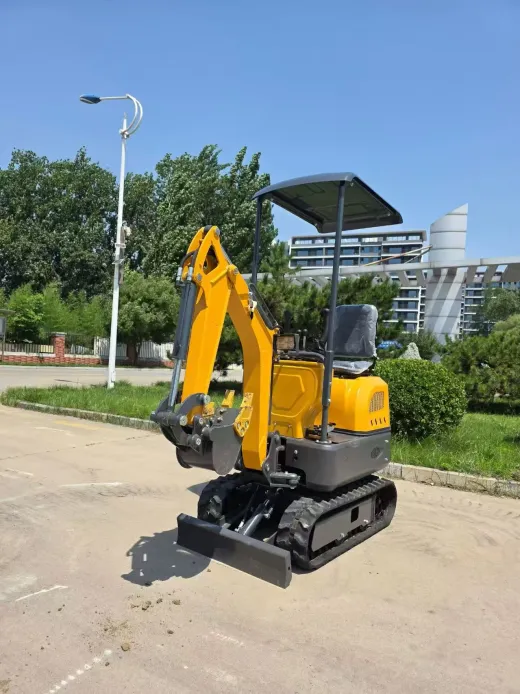
How to Operate a Mini Excavator: Controls, Techniques & Safety
A practical step-by-step guide to operating a mini excavator safely — covering cabin controls, swing and travel, basic digging technique, and what a micro digger driver needs to know before the first shift.
Read more →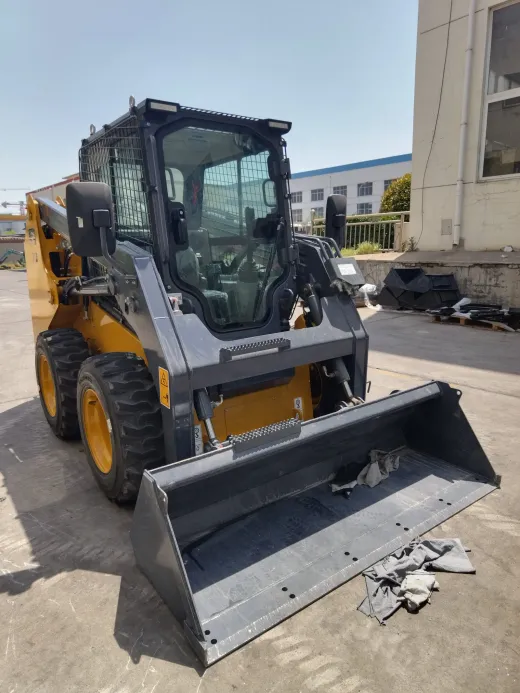
How to Drive and Operate a Skid Steer Loader: A Beginner's Guide
A complete beginner's guide to driving a skid steer loader — covering pre-operation checks, how the controls work, driving on varied terrain, digging techniques, attachment use, safety rules, and an honest look at why building your own skid steer rarely makes sense.
Read more → Largest Digger in the World — And What Most Buyers Actually Need
From the Bagger 293 bucket-wheel to the Cat 6090 mining giant, the world's largest diggers are engineering spectacles — but they have nothing to do with what most buyers actually need. Here's the full story, from record-breaking monsters to the compact machines that get real work done.
Read more →