










How a Self-Loading Concrete Mixer Replaces Five Machines on Site
2026-06-12
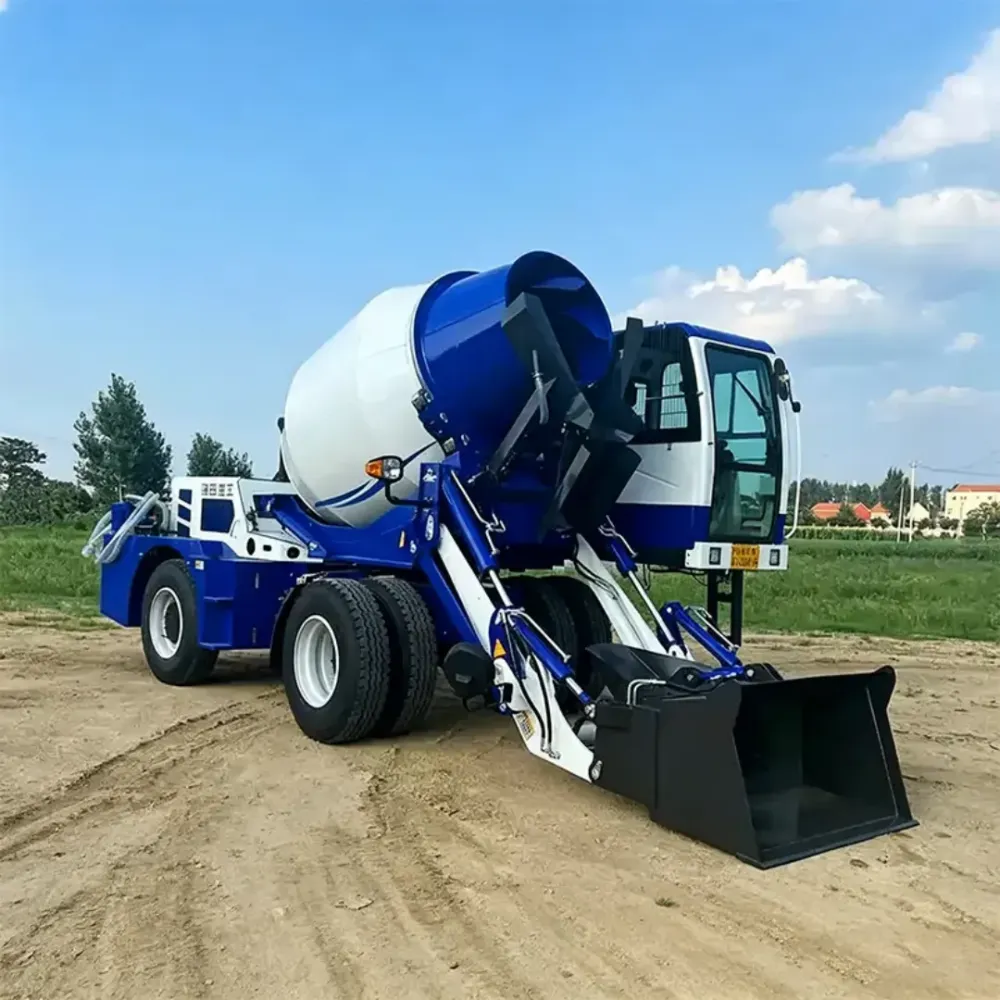
A self loading concrete mixer loads, measures, mixes, transports and pours on its own. Here's the ROI case for one machine replacing five — and how it compares to Fiori, Ajax, Carmix and volumetric mobile mixers.
On a remote site, getting concrete is half the job. Either you truck it in from a plant hours away and watch the load start setting before it arrives, or you run a small army of machines and people to make it on site. A self-loading concrete mixer collapses that whole operation into one driver and one machine — it loads its own aggregate, weighs the batch, mixes on the move, drives to the pour, and discharges. That's the pitch. The real question is whether the ROI holds up, and on the right job it clearly does.
The five jobs it does on its own
Look at what it takes to place concrete on site the conventional way, and a self-loading concrete mixer stands in for a string of separate machines and roles:
- Loading — a front shovel scoops aggregate and sand straight into the drum, doing the loader's job.
- Measuring — an onboard weighing system batches each mix by weight, so you get a consistent, repeatable ratio without a separate batching setup.
- Mixing — the rotating drum mixes to spec as it works, replacing a standalone mixer.
- Transport — it drives the wet load to the pour itself, doing what a separate delivery truck would.
- Pouring — the drum swivels and discharges where you need it, often reaching the spot directly.
One operator runs the lot. That's the headcount and the equipment list both coming down at once.
The ROI case, plainly
Strip the ROI down to where the money actually moves and the case is straightforward:
- Fewer machines to own, fuel and maintain — one diesel machine instead of a loader plus a mixer plus a delivery vehicle.
- Fewer people per pour — one skilled operator replaces a small crew, and labor is the line that compounds across every working day.
- Less waste — you mix what you need, when you need it, instead of ordering a full truck and dumping the surplus.
- No idle-time charges — you're not paying a delivery truck to wait while you place a slow pour.
The machine doesn't have to beat a city batching plant on cost-per-cubic-meter to win. It wins by removing the loader, the separate mixer, the delivery logistics, and most of the crew from your day rate.
Where it makes the most sense: remote and off-grid sites
The economics tilt hardest where ready-mix delivery is expensive, unreliable, or simply unavailable. That describes a lot of real work:
- Rural and remote projects far from any plant, where a delivery truck would spend most of the day driving.
- Off-grid and developing-region sites — much of the demand for these machines is across Africa and other regions where on-site concrete production beats waiting on logistics that may not exist.
- Scattered, small pours — footings, posts, slabs, repairs — where ordering a full ready-mix load for each is wasteful.
- Sites with poor access roads, where one self-sufficient machine beats coordinating multiple deliveries.
If you're next door to a reliable plant in a dense urban area, ready-mix may still be simpler. The further and more scattered your work, the stronger this machine looks.
Brand landscape: Fiori, Ajax Fiori, Carmix, Aimix and the rest
Buyers researching this category encounter a handful of established names, and it helps to know what each represents before comparing prices. The Fiori self-loading concrete mixer — sometimes called the Fiori concrete machine or Fiori mixer machine — is an Italian brand that helped define the category; the Fiori concrete mixer for sale market is active worldwide, and the Fiori self loading concrete mixer price sits at the premium end, reflecting its European engineering and service network. The Ajax Fiori self-loading concrete mixer — searched variously as the ajax fiori self loading mobile concrete mixer, the ajax argo 2000 concrete mixer, or simply an ajax concrete machine or ajax concrete mixing machine — is produced under a licensing arrangement by Ajax Engineering in India and is among the most widely sold self-loading mixers across South Asia, the Middle East, and Africa; the ajax fiori self loading concrete mixer price is a common price reference for buyers in those regions, and the argo 2000 concrete mixer price is often the specific model people ask about. Carmix — the carmix mixer or carmix self loading mixer — is another Italian brand known for heavy-duty machines used on demanding construction and military contracts, also traded actively as a carmix concrete mixer for sale.
Beyond the Italian and Indian names, the field includes Aimix (a Chinese exporter with strong online presence and active dealer networks, commonly searched as aimix self loading concrete mixer), Apollo (India, the apollo self loading concrete mixer line), Bull (bull self loading concrete mixer), Daffin (daffin mobile concrete mixer), Dieci (Italy, dieci self loading concrete mixer), Elsa (elsa self loading concrete mixer), Venus (venus self loading concrete mixer), Suihe (suihe concrete mixer, a Chinese brand often shipped directly from factory), AUSA (Spain, referenced for the ausa self loading mixer x1100rh model), and Universal (the universal self loading mixer price is frequently searched in South Asia). All share the same core architecture — self-loading front bucket, rotating drum, onboard weighing — and differ in build quality, drum capacity, engine choice, and regional parts depth. When comparing the self loading concrete mixer ajax fiori lineup against alternatives, the landed cost and service network in your country typically matter more than the badge on the drum.
Renting vs buying: self-loading concrete mixer for hire
Not every project justifies ownership. If your concrete work is a single large pour or a short contract, renting makes financial sense — searching for a self loading concrete mixer for hire, a self loading concrete mixer on rent, or a general self loading concrete mixer rent arrangement will surface options in most active construction markets. Rental works well when the project duration is shorter than the payback period, when you're entering a new market, or when capital is constrained. The flip side: rental rates on specialist machines can be steep, and availability is not guaranteed on short notice in remote areas. For any contractor who expects to place concrete regularly over months or years on distributed sites, buying beats renting by a wide margin — the machine earns its keep within the first months of steady use. The rule of thumb: rent for one project, buy once you can see at least a year of regular work ahead.
Buying used: what to check on a secondhand self-loading mixer
A healthy used market exists for self-loading mixers, and for capital-constrained buyers it's a viable route. A used self loading concrete mixer for sale, a used mobile concrete mixer for sale, or a listing as used mobile mixers for sale — including used examples from Ajax Fiori, Carmix, or Chinese brands — can represent real value; these machines are built to run for years with proper care. The checkpoints: inspect the drum for cracks and bearing play; check the hydraulic system for leaks, slow actuation, and hose condition; verify the onboard weighing system calibrates correctly; examine tracks or tires and the loading shovel for wear. A drum that needs replacing or a hydraulic rebuild can erase the purchase discount quickly. Ask for service records and observe a full load-mix-discharge cycle before buying. Also factor in whether the brand — Fiori, Ajax, Carmix, or Chinese — has parts available in your country, since that determines whether you can keep the machine running once something wears out.
Self-loading mixer vs volumetric mobile mixer
Two categories get confused in buyer research: the self-loading concrete mixer and the volumetric mobile mixer (also called a mobile volumetric concrete mixer). They solve related but different problems. A self-loading mixer scoops raw aggregate from the ground on site, mixes it in a rotating drum, and delivers a batch to the pour — it's an on-site production tool for one operator. A volumetric mobile mixer carries pre-loaded aggregates, cement, and water in separate compartments and blends them continuously at point of discharge, dispensing any volume of any mix design on demand. Volumetric machines — made by Elkin (elkin volumetric concrete mixers, elkin mobile mixer), Zimmerman (zimmerman mobile mixer, often found as a used zimmerman volumetric mixer for sale), or Reimer (used reimer mobile mixer for sale) — are primarily delivery tools for concrete supply businesses, not on-site production tools. They're larger, more expensive, and require pre-loading at a yard before each day's work. For remote construction, the self-loading mixer is usually the right category; for a ready-mix delivery business serving multiple sites with varied mix designs, volumetric mobile mixers are the answer.
Self-loading mixer vs mini batching plant
When output requirements grow, buyers compare a self-loading mixer against a batching plant mini or mini mobile batching plant. A mini mobile batching plant — sometimes searched by Indonesian buyers as harga batching plant mobile, or broadly as a mobile concrete mixing plant with its own mobile concrete mixing plant price point — is a semi-permanent installation that mixes at higher volume with greater precision, feeding transit mixers or a pump. It wins when daily output requirements justify the scale and the site is stationary enough to set up and take down the plant. For scattered work, small pours, or genuinely remote sites where installing a plant isn't practical, the self-loading mixer wins on flexibility and total cost. Many contractors run one of each: a self-loading mixer for fieldwork and distributed pours, a mini batching plant at the main yard for volume production when the work concentrates.
What to check before you buy
Like any machine, it's only an asset if it fits the job. Settle these before committing:
- Output you need — match drum capacity and cycle time to your typical pour volume. Don't buy more drum than your pours justify.
- Site access — confirm the machine can reach and maneuver where you actually place concrete, including grades and tight spots.
- Weighing accuracy — the onboard scale is what guarantees a consistent mix, so make sure it's calibrated and reliable.
- Parts and service support — on a remote site, a machine you can't get serviced is a machine that strands a pour. Check parts availability before anything else.
Part of a self-sufficient site fleet
The reason this machine fits remote work so well is that it slots into a way of building that doesn't lean on outside logistics. On a project far from supply, the goal is to do as much as possible from the equipment already on the ground. A self-loading mixer makes the concrete; getting raw material and spoil around the site is its own problem, and on rough, unpaved ground that often falls to a tracked dumper that can carry aggregate to a stockpile or haul off excavation. Thought about together, a small fleet of self-sufficient machines keeps a remote site moving without waiting on deliveries that may run late or not show at all. The mixer is usually the piece that removes the biggest external dependency, since concrete is the material you can least afford to have arrive half-set or not arrive.
The honest trade-offs
A self-loading mixer isn't the right answer everywhere. It's a capital purchase, so it earns its keep on steady, ongoing concrete work, not a one-off pour you could rent for. Output per cycle is sized for site work, not for feeding a high-rise's continuous demand. And it asks for a competent operator who can run the loading, batching and placing as one flow. There's a learning curve, too — the first few batches are about dialing in the mix and the routine, not full production. Weigh it against your real pour schedule: regular, distributed concrete work over months and years is where the numbers add up, and that's exactly the work it was built for.
Browse our self-loading concrete mixer range · — we reply within one business day.
Frequently asked questions
What does a self-loading concrete mixer do?
It does five jobs in one machine: it loads its own aggregate with a front shovel, weighs and batches the mix with an onboard scale, mixes in the rotating drum, drives the wet load to the pour, and discharges where you need it. One operator runs all of it, replacing a loader, a separate mixer, a delivery vehicle, and most of a crew.
Is a self-loading concrete mixer worth it?
It's worth it on steady, distributed concrete work where ready-mix delivery is expensive, slow, or unavailable — remote sites, scattered small pours, and poor-access projects. It saves on machines, fuel, labor and wasted concrete. For a one-off pour next to a reliable plant, ready-mix delivery is usually simpler.
Why are self-loading mixers popular on remote sites?
Because they make concrete on site instead of relying on delivery logistics that may be expensive or nonexistent. On rural, off-grid and developing-region projects, one self-sufficient machine beats coordinating ready-mix trucks over long distances and bad roads, which is why much of the demand comes from regions like Africa.
How accurate is the mix from a self-loading mixer?
Accuracy comes from the onboard weighing system, which batches each load by weight for a consistent, repeatable ratio without a separate batching setup. Keeping the scale calibrated is what guarantees the mix meets spec, so check the weighing system before you buy and maintain it in service.
How does a self-loading mixer compare to Fiori, Ajax Fiori, or Carmix?
Fiori (Italian), Ajax Fiori (Indian-licensed), and Carmix (Italian) are established category benchmarks, particularly in European and South Asian markets where their service networks are strong. Chinese-manufactured self-loading mixers offer the same core architecture — self-loading bucket, rotating drum, onboard weighing — at substantially lower landed cost for buyers in Asia, Africa and the Middle East where European parts support is limited. Compare total landed cost and regional service availability, not just the machine price.
Should I rent or buy a self-loading concrete mixer?
Rent for a single project or short contract where you can find a self loading concrete mixer for hire locally. Buy when you have regular, ongoing concrete work over months or years — the machine pays back quickly under steady use. On remote sites where rental availability is uncertain, buying is the safer planning assumption.
What is the difference between a self-loading mixer and a volumetric mobile mixer?
A self-loading mixer scoops raw aggregate from the ground, mixes on site, and delivers batches to the pour — it's a production tool for one operator on remote sites. A volumetric mobile mixer carries pre-loaded materials and blends them continuously at point of discharge — it's a delivery tool for concrete supply businesses. For remote construction work, the self-loading mixer is usually the right choice.
Related articles
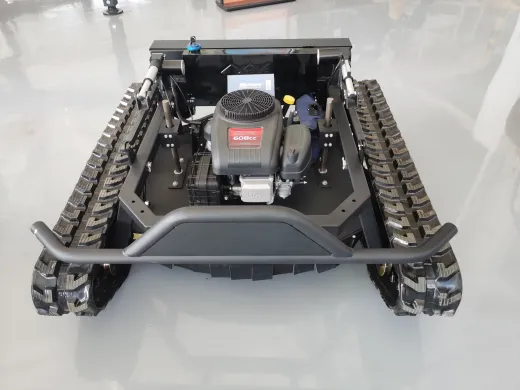
Best Mower for Steep Slopes and Hills: How to Choose Safely
Finding the best mower for steep slopes, hills, and banks — from push mowers and riding mowers to tracked zero-turn conversions and remote-control slope mowers. Safety grades, robot mower limits, and what commercial operators actually use.
Read more →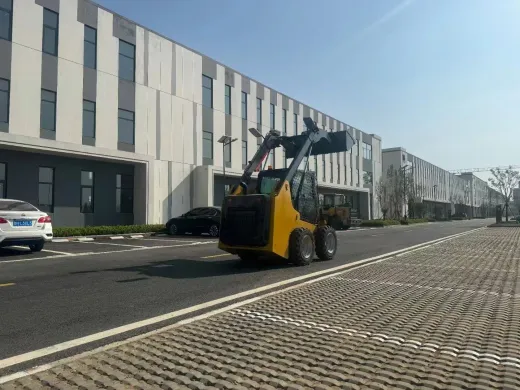
Best Skid Steer for Mulching, Land Clearing and Snow Removal
The best skid steer for mulching, land clearing or snow removal isn't one model — it's the right hydraulic flow, traction and attachment for the job. Drum mulcher vs disc, brush hog vs flail mower, stump grinder vs tree shear: here's how to spec the machine and pick every attachment.
Read more →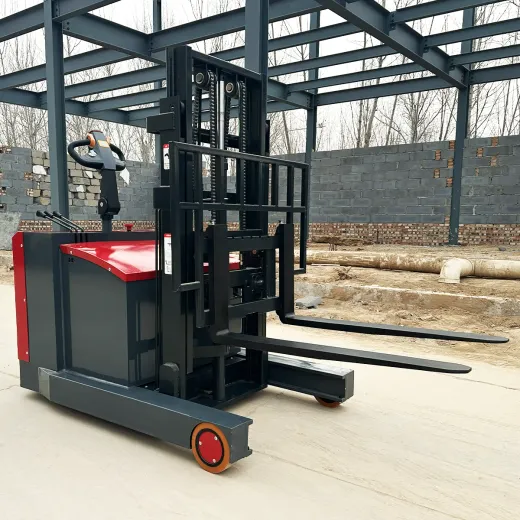
Forklifts for Narrow Aisles: Reach Trucks, Stackers and Aisle Math
Choosing forklifts for narrow aisles comes down to aisle width versus storage density. Here's how reach trucks and stackers stack up, and how to find the best narrow aisle forklift for your racking.
Read more →