










When You Need a Rough Terrain Forklift (and When You Don't)
2026-06-12
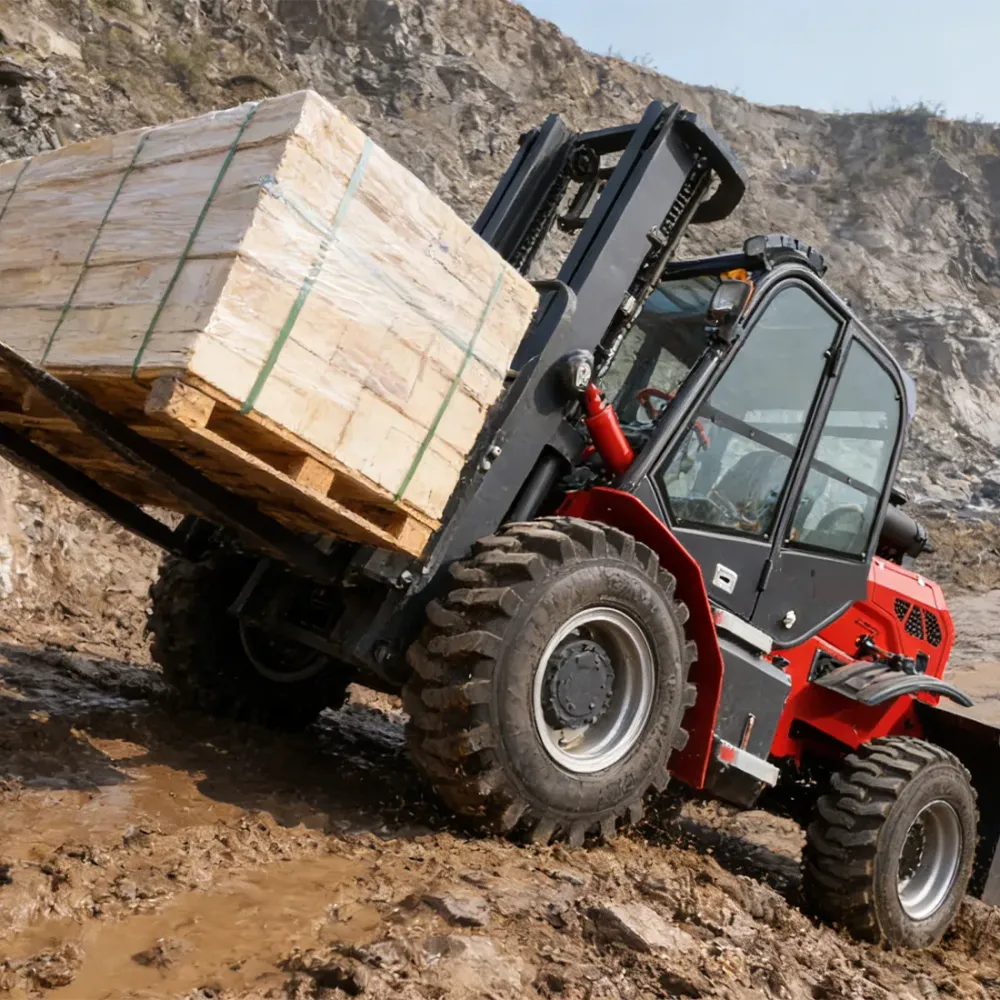
A rough terrain forklift earns its keep outdoors on dirt, mud and grades where a warehouse truck is stranded. Here's how to know if you need the best rough terrain forklift — and when a standard one will do.
A warehouse forklift is built for a flat, hard floor. Drive it onto a building site, a timber yard, or a field after rain and it's stuck — small solid tires sink into soft ground, and the low chassis bottoms out on anything but level. That's the gap a rough terrain forklift fills. The real question for a buyer isn't whether one exists; it's whether your ground actually needs it, because they cost more to buy and run than a standard truck.
Buy one for genuine off-road work and it pays for itself. Buy one for a paved yard and you've over-spent on capability you'll never use.
What makes a forklift "rough terrain"
An off road forklift isn't just a regular truck with bigger tires. The whole machine is built for unpaved ground:
- Large pneumatic tires with deep tread that float over soft ground and bite into mud, gravel and grass.
- High ground clearance so the chassis clears ruts, rocks and debris instead of grounding out.
- More power and torque to drive a loaded mast up a grade or out of a soft patch.
- A 4x4 drivetrain on the heavier-duty machines, so all four wheels pull when two would just spin.
Together those put load-handling where a warehouse truck simply can't go.
The clearest sign you need one: the ground
Forget the brochure and look at where the forklift will actually work. You need a rough terrain machine when the surface is anything but a finished floor:
- Active construction sites — dirt, fill, rutted access roads
- Timber, brick and building-supply yards with unpaved storage areas
- Farms, vineyards and agricultural yards on soil and grass
- Any outdoor site that turns to mud after rain
If your forklift lives indoors or on concrete and only crosses paved ground, you don't need one — a standard industrial truck is cheaper to buy, run and maintain. The moment loads have to move across raw earth, ruts, or a slope, a standard truck stops being an option.
When 4x4 is worth it
Not every rough-terrain job needs four-wheel drive. Two-wheel-drive machines handle firm, dry, lightly uneven ground at lower cost. A 4x4 forklift earns the premium when you regularly face:
- Mud and soft ground — where a 2WD truck spins one wheel and goes nowhere.
- Slopes and grades — pushing a loaded mast uphill needs traction on all four corners.
- Loose surfaces — sand, gravel and fresh fill where grip is unreliable.
If your worst day is dry and firm, 2WD is enough. If your worst day is wet and steep, a 4wd forklift is what keeps the job moving instead of stranded. Spec for the worst conditions you hit regularly, not the average.
Don't buy one for indoor work
The flip side of all this is just as important: a rough terrain forklift is the wrong tool for a warehouse. The big pneumatic tires and high clearance that make it shine on dirt make it tall, wide, and clumsy in a tight aisle, and the engine you need for outdoor grunt is something you don't want running indoors. If your work is on a finished floor — loading docks, racking, indoor storage — a standard electric forklift is cleaner, quieter, more compact, and cheaper to run. Plenty of operations need both: a rough terrain machine for the yard and the site, and a warehouse truck for inside. The mistake is forcing one machine to cover both, because each is poor at the other's job. Decide where the bulk of the work happens and buy for that ground first.
Sizing the machine to the load and the site
Once you've decided you need rough terrain capability, size it like any other forklift: to the heaviest load you lift regularly and the height you stack to. Bigger isn't automatically better — a heavier machine costs more in fuel and is harder to move between sites, and a large rough-terrain truck can be overkill on a tight job. A compact rough terrain forklift fits constrained sites while still handling unpaved ground. Think about mast height and lift capacity together: a tall lift loses capacity as the load goes up, so check the load chart at the height you actually stack to, not just the headline rating. Match capacity to the real work, and rent up for the occasional outsized load rather than buying for it.
Cost and ownership reality
A rough terrain forklift costs more than a warehouse truck — bigger tires, stronger driveline, more engine, and a 4x4 system on the heavier units all add to purchase and running cost. That's exactly why the decision hinges on the ground. The premium is justified only by the off-road work it makes possible. Tires are a real wear item on abrasive sites, so factor replacements into your budget, and check parts and service support before you commit to any machine you can't get serviced where it works.
Decision checklist
Before you ask for a quote, settle these:
- What surface does the forklift work on — finished, or raw earth and grades?
- Does it get muddy or steep? How often?
- Heaviest load and highest lift you need
- Tightest access on your typical site
- Can you get parts and tires serviced locally?
If the ground is unpaved and the grades are real, a rough terrain forklift — 4x4 where mud and slopes are routine — is the machine that finishes the job. If it's all concrete, save your money and buy a standard truck.
Browse our rough terrain forklift range · — we reply within one business day.
Frequently asked questions
When do you need a rough terrain forklift?
You need one when the forklift works on unpaved ground — construction sites, timber and building-supply yards, farms, or any outdoor site that turns to mud after rain. Large pneumatic tires and high clearance let it move loads across dirt, ruts and grades where a warehouse truck sinks or bottoms out. If your work stays on concrete, a standard industrial forklift is cheaper and enough.
Is a 4x4 forklift worth it?
A 4x4 forklift is worth the premium when you regularly face mud, soft ground, slopes, or loose surfaces, because all four wheels pull where a two-wheel-drive truck just spins one and stalls. If your roughest ground is dry and firm, a 2WD rough terrain machine costs less and is enough. Spec for the worst conditions you hit regularly.
What is the difference between a rough terrain and a standard forklift?
A standard forklift has small solid tires and low clearance built for flat, hard floors. A rough terrain forklift has large pneumatic tires, high ground clearance, more power, and often a 4x4 drivetrain so it can carry loads across dirt, mud, gravel and grades. The right one depends entirely on the surface it works on.
Can a regular forklift be used outdoors?
A regular forklift handles paved outdoor yards fine, but it struggles or gets stuck the moment the surface turns to soft ground, ruts, or a slope — small solid tires sink and the low chassis grounds out. For genuine off-road work you need a rough terrain machine built for the conditions.
Related articles
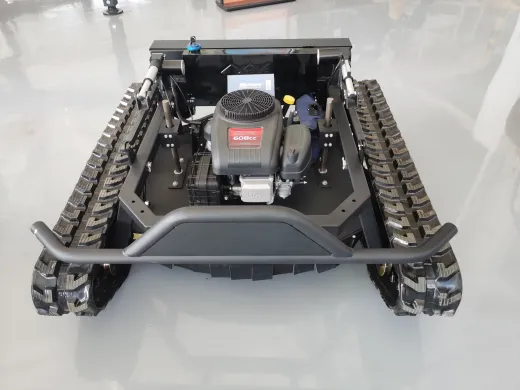
Best Mower for Steep Slopes and Hills: How to Choose Safely
Finding the best mower for steep slopes, hills, and banks — from push mowers and riding mowers to tracked zero-turn conversions and remote-control slope mowers. Safety grades, robot mower limits, and what commercial operators actually use.
Read more →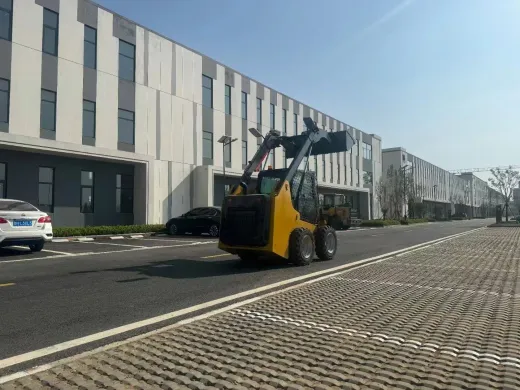
Best Skid Steer for Mulching, Land Clearing and Snow Removal
The best skid steer for mulching, land clearing or snow removal isn't one model — it's the right hydraulic flow, traction and attachment for the job. Drum mulcher vs disc, brush hog vs flail mower, stump grinder vs tree shear: here's how to spec the machine and pick every attachment.
Read more →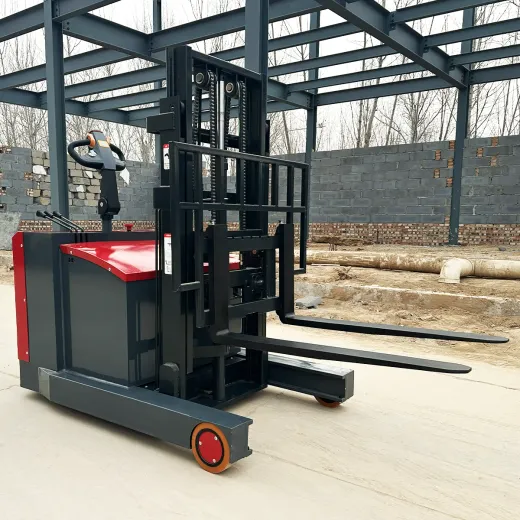
Forklifts for Narrow Aisles: Reach Trucks, Stackers and Aisle Math
Choosing forklifts for narrow aisles comes down to aisle width versus storage density. Here's how reach trucks and stackers stack up, and how to find the best narrow aisle forklift for your racking.
Read more →