










Electric Forklift Cost: Lithium vs Lead-Acid and the TCO Math
2026-06-12
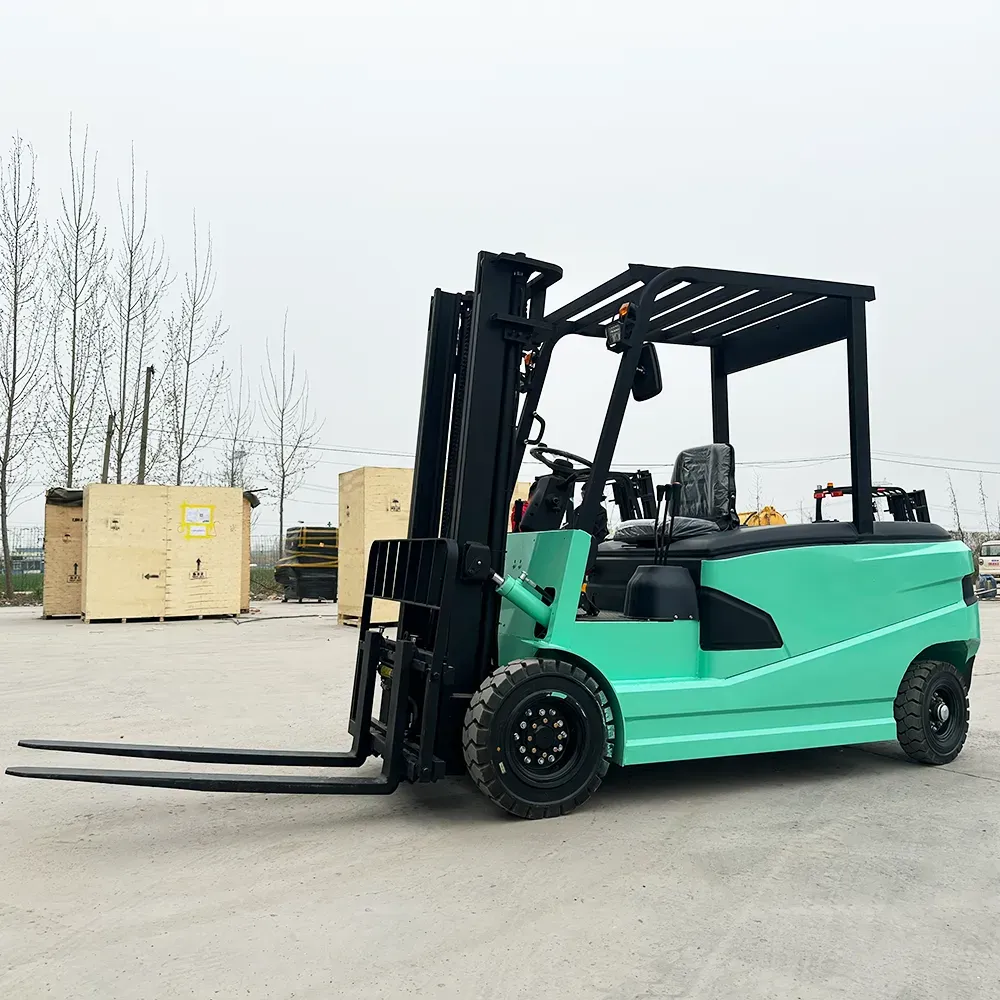
What drives electric forklift cost and forklift battery cost — lithium versus lead-acid TCO math, battery voltages (24V, 36V, 48V, 80V), brand options, and everything involved in buying, changing, and replacing a fork truck battery.
The headline price of an electric forklift is the part of the cost that's easiest to see and the worst predictor of what you'll actually spend. A big slice of electric forklift cost lives in the battery — and the chemistry you pick changes not just the purchase price but the energy, maintenance, and replacement bills for years afterward. This guide is about the math: what drives the cost of the truck and its battery, and why lithium versus lead-acid is a total-cost-of-ownership decision, not a sticker comparison. We don't post prices — the right number depends on your truck, your battery, and your shift pattern.
What drives the cost of the truck itself
Before the battery, the truck's own price is set by rated capacity, lift height, and configuration. A light warehouse truck sits below a high-capacity machine; mast height, tire type, cab fittings, and attachments all add cost. Size the truck to your heaviest regular load and your highest rack, not to the rare outlier — overbuying capacity and lift adds cost you'll carry for the life of the machine. Our electric forklift range covers the capacity and mast options to spec against your work.
The battery is the swing factor in the price
On an electric truck, the battery and charger are one of the largest cost lines, and the two main chemistries sit far apart. When buyers research forklift battery cost — whether they call it a fork truck battery, an FLT battery, or a forklift truck battery — this is the fork in the road:
- Lead-acid — lower purchase price, but heavier, slower to charge, and it needs watering and ventilated charging. Also called a lead acid battery forklift or forklift lead acid battery; the deep-cycle flooded type used in forklifts is technically a motive battery or forklift traction battery, distinct from a starting battery.
- Lithium-ion — higher up-front lithium ion forklift battery cost, but lighter, faster to charge, and far less to maintain. Sold as a forklift lithium battery, li ion battery forklift, or lithium battery forklift, with LiFePO4 (lithium iron phosphate) being the dominant chemistry for safety and cycle life.
If you only look at the purchase price, lead-acid wins and the conversation ends there. That's the mistake. The purchase price is one number out of four, and the other three favor lithium more the harder you run the truck.
Forklift battery voltage: 24V, 36V, 48V, and 80V explained
Every electric fork truck battery — whether it's a lead acid traction battery or a lithium pack — is built to a specific voltage that must match the truck's drive system. The common voltages you'll encounter when searching for forklift battery voltage or a specific electric forklift battery pack are:
- 24V — a 24 volt forklift battery or 24 volt battery forklift is typical for lighter walkie pallet jacks, stackers, and small reach trucks. A 24v traction battery runs smaller machines that don't need the power of a full sit-down counterbalance.
- 36V — a 36 volt forklift battery is common in mid-size counterbalance trucks and many older US market machines. When buyers search for a 36v forklift battery for sale or ask about 36 volt forklift battery price, they're usually replacing an existing pack in a truck that was spec'd at that voltage from the factory.
- 48V — the 48 volt forklift battery, also written as a 48v forklift battery or forklift battery 48 v, is today's most common voltage for sit-down counterbalance trucks in the 1.5 to 3.5 tonne range. 48 volt forklift battery price and 48v forklift battery price are among the most searched specs, and a 48 volt lithium ion forklift battery in this class gives full opportunity-charging capability. A 48v10ah forklift battery refers to the smaller end of 48V packs; most warehouse trucks run considerably higher amp-hour ratings than this.
- 80V — an 80 volt forklift battery or 80v forklift battery is used in higher-capacity machines, typically above 3.5 tonnes, where the extra voltage supports the power demands of heavier loads.
- 6V and 2V cells — lead-acid traction batteries are assembled from individual cells: 6 volt forklift battery blocks or 2 volt forklift batteries (individual cells, also called 2v forklift battery cells) wired in series to reach the required pack voltage. A 36V pack uses eighteen 2V cells or six 6V blocks.
Battery forklift battery amp hours (Ah) and forklift battery kwh (kWh) are the other key specs: amp-hours set how long the battery runs per shift, and kWh tells you the energy content. A larger Ah rating extends runtime; a higher kWh pack costs more and weighs more. Match both to your shift pattern and the truck's counterbalance weight requirement — the battery is structural ballast in a counterbalance forklift, not just a power source.
Energy and charging cost
Both chemistries draw electricity, but they don't convert it the same way. Lead-acid loses more energy as heat during charging and self-discharges faster, so you pay for power you never use. Lithium charges more efficiently and accepts opportunity charging — short top-ups during breaks — which keeps a truck working across shifts instead of sitting on charge.
For a single-shift operation the difference is modest. For multi-shift work it's large: lead-acid often needs a spare battery and a change-out routine to cover round-the-clock running, and that spare battery plus the charging room and labor is real money. Lithium's opportunity charging can remove the spare battery entirely. The harder you run, the more the energy math tilts.
There's also an infrastructure cost that gets overlooked. Lead-acid charging needs a ventilated, often dedicated room with the right electrical supply and spill containment; that floor space and the fit-out are part of the true cost of the lead-acid option, even though they never show up on the battery quote. Lithium charges in the open with far less around it, so the cost of the charging setup itself comes down.
Maintenance and downtime cost
Lead-acid batteries need topping up with water, equalizing charges, and a ventilated, often dedicated charging area. Skip the maintenance and they fail early. That's labor and facility cost on top of the battery price. Lithium batteries are effectively maintenance-free in daily use — no watering, no ventilation room, no battery-change labor.
There's a downtime line too. A truck waiting on a battery change, or sitting on a slow charge, isn't moving freight. Lithium's fast and opportunity charging cut that idle time, and for a busy operation lost productivity is one of the bigger hidden costs. We won't cover how long each battery lasts here — that's its own topic in our forklift battery lifespan guide — but replacement frequency feeds directly into the cost picture below.
Forklift battery changing: equipment and lead-acid's uptime tax
One cost that rarely appears on a battery quote but belongs in any honest TCO comparison is the infrastructure for forklift battery changing. A lead-acid battery in a 2-tonne counterbalance truck can weigh 800 to 1,200 kg — a mass that can't be lifted by hand. Facilities running lead-acid on multi-shift operations need a forklift battery changing station with a dedicated forklift battery hoist, forklift battery lifter, or forklift battery lifting beam (sometimes called a forklift battery lifting bar beam). A forklift battery cart or forklift battery transfer cart moves the pack from the truck to the charging stand; a forklift battery transfer platform handles the horizontal slide into the battery compartment. Some facilities use a dedicated forklift battery changing machine that automates the whole swap. A forklift battery stand holds the spare pack while it charges.
All of this — the hoist, the cart, the stand, the changing machine, the floor space, the electrical hookups — is capital spending that lithium eliminates. A lithium electric lift truck battery or lift truck battery opportunity-charges in the truck during breaks, so the changing station, spare pack, and swap labor disappear from the cost model. For a site running one or two trucks, the infrastructure cost may be modest. For a warehouse running a fleet, it's significant.
A forklift battery lifting strap is the lighter-duty alternative for smaller packs — common on walkie pallet jacks and small stackers — but for full-size counterbalance trucks, dedicated mechanical changing equipment is required for safe handling.
Adding it up: total cost of ownership
Total cost of ownership is purchase price plus energy plus maintenance plus replacement, counted over the years you'll keep the truck. Put the two chemistries side by side and the pattern is consistent:
- Lead-acid wins on day one, on purchase price alone.
- Lithium tends to win over the life of a hard-working truck once cheaper charging, near-zero maintenance, less downtime, and fewer replacements are added in.
The break-even depends on how intensely you use the truck. A light, single-shift operation may never run lithium hard enough to recover the premium. A multi-shift, high-throughput operation usually recovers it well inside the truck's life. The honest answer is to run the numbers on your own hours rather than trust either sticker price.
Forklift battery brands and buying options
When searching for forklift battery suppliers or forklift battery dealers to buy forklift battery packs, buyers encounter a wide range of brands. In the lead-acid space, established names include Deka forklift batteries (sold as Deka 36 volt forklift battery or Deka D series forklift battery ranges), EnerSys forklift batteries (including the Hawker forklift battery line, since Hawker was acquired by EnerSys), Exide forklift battery packs, and GNB forklift batteries. On the lithium side, EnerSys lithium forklift battery and BYD forklift battery packs appear frequently; BYD is a major Chinese lithium cell manufacturer with forklift-specific products. For specific truck brands, buyers often search by OEM: Clark forklift battery, Yale forklift battery, Nissan forklift battery, Mitsubishi forklift battery, Daewoo forklift battery, TCM forklift battery, and Bendi forklift battery are all common searches for replacement packs matched to a specific truck model.
Rebuilt forklift batteries and reconditioned forklift batteries — sometimes listed as reconditioned forklift batteries for sale — are a cost option worth understanding. A reconditioned lead-acid pack has had worn or failed cells replaced and the electrolyte refreshed; quality varies widely between suppliers. A repower forklift battery service goes further, replacing cells in a serviceable case to return it to near-new capacity. For lithium, reconditioning is less common because the BMS (battery management system) and module structure are different, but lithium repower services are emerging. Cheap forklift batteries in either category usually signal either reconditioned packs or off-brand cells — worth checking the cell provenance and warranty before buying on price alone.
Part-number codes on lead-acid packs look cryptic but follow a pattern. A designation like 18 85 17 — as in an 18 85 17 forklift battery — reads as: 18 cells (giving 36V), 85 Ah per cell capacity, 17 plate count per cell. So a 36 volt forklift battery 18 85 17 is an 18-cell, 85-Ah, 17-plate 36V pack. Similarly, a 24 85 21 forklift battery is a 24-cell (48V) pack. Other common variants include 18 85 21, 18 85 23, 18 85 25, 18 85 27, 18 125 11, 18 125 17, and 24 85 17 — each a different cell count, capacity, and plate combination for different truck models. Model-specific codes like the e0583 battery (also written e583 forklift battery or eo583 forklift battery), the epx16 battery, or the clark tm15 battery are OEM part numbers that cross-reference to standard battery specs.
When searching for forklift batteries for sale, fork truck batteries for sale, or forklift truck batteries for sale — including electric forklift batteries for sale, new forklift batteries for sale, or lift truck batteries for sale — compare on voltage, Ah rating, physical dimensions (the pack must fit the battery compartment), and connector type, not just price. Forklift truck batteries prices vary widely by chemistry, brand, capacity, and whether you're buying new, rebuilt, or reconditioned.
How to budget and what to ask for a quote
To get a quote you can actually compare, decide these first:
- Rated capacity and lift height your work needs
- Single-shift or multi-shift running — this drives the battery decision
- Whether lithium or lead-acid fits your usage and your charging setup
- Charger spec and whether you need a spare battery (and the changing station that comes with it)
- Delivery terms and destination, so landed cost is in the figure
With those settled, ask for the truck and battery quoted together, not separately — the two are a system, and pricing them apart hides the real cost. Then weigh the total over the years you'll own it, not the number on day one. The electric forklift battery cost, electric forklift battery price, or forklift battery price on day one is just the start of the picture; lithium forklift battery cost and forklift lithium battery price look different once multi-year running costs are in the same column.
Browse our electric forklift range · — we reply within one business day.
Frequently asked questions
How much does an electric forklift cost?
There's no single figure — the price is set by rated capacity, lift height, configuration, and above all the battery. The battery and charger are one of the largest cost lines, and choosing lithium or lead-acid changes both the purchase price and the running cost. The useful approach is to spec the truck and battery to your work and ask for them quoted together.
Is a lithium forklift battery worth the higher cost?
It depends on how hard you run the truck. Lithium costs more to buy but charges more efficiently, needs almost no maintenance, supports opportunity charging, and can remove the need for a spare battery. For multi-shift, high-throughput operations it usually recovers the premium over its life. For light, single-shift use, lead-acid's lower purchase price may never be beaten.
Why is lead-acid cheaper up front but not always overall?
Lead-acid has a lower purchase price, but it needs watering, ventilated charging, and equalizing, charges less efficiently, and on multi-shift work often needs a spare battery and a change-out routine. Add energy waste, maintenance labor, downtime, and replacement, and the cheaper battery can cost more over a few years of heavy use than lithium.
How should I compare electric forklift quotes?
Ask for the truck and battery quoted together on the same delivery terms, since pricing them apart hides the real number. Then compare total cost of ownership — purchase plus energy plus maintenance plus replacement over the years you'll keep the truck — not just the sticker price. The right choice depends on your shift pattern and how intensely the truck is used.
What voltages do forklift batteries come in?
The most common forklift battery voltages are 24V (walkie pallet jacks and small stackers), 36V (mid-size counterbalance trucks, common in older US-market machines), 48V (the most common voltage for 1.5 to 3.5 tonne sit-down trucks today), and 80V (higher-capacity machines above 3.5 tonnes). Lead-acid packs are built from 2V cells or 6V blocks wired in series to reach the required voltage.
What do the numbers in a forklift battery part number mean?
Lead-acid forklift battery codes typically follow a cells-capacity-plates format. For example, 18-85-17 means 18 cells (giving 36V at 2V per cell), 85 Ah per cell capacity, and 17 plates per cell. A 24-85-21 pack is 24 cells (48V), 85 Ah, 21 plates. The plate count affects how fast the battery can deliver power. OEM codes like E0583 or EPX16 cross-reference to standard cell-count and Ah specs for a specific truck model.
Can I buy a rebuilt or reconditioned forklift battery?
Yes — rebuilt and reconditioned lead-acid forklift batteries are widely available and can significantly reduce the purchase cost compared to a new pack. Quality varies by supplier: a reputable recondition replaces worn cells and refreshes electrolyte; a poor one just cleans the case. Check the warranty, confirm the cell provenance, and verify that the physical dimensions and connector type match your truck before buying on price alone.
What equipment is needed for forklift battery changing?
Lead-acid battery changing on full-size counterbalance trucks requires mechanical handling equipment because packs can weigh 800 to 1,200 kg. A typical battery changing station includes a hoist or lifter, a transfer cart or platform to slide the pack horizontally, and a stand to hold the spare pack while charging. Smaller walkie trucks can use lifting straps. Lithium batteries support opportunity charging in the truck, eliminating the need for changing equipment and spare packs on most operations.
Related articles
Mini Excavator Cost: What Drives the Price and How to Budget
What really drives mini excavator cost — weight class, attachments, freight and running costs — plus compact excavator prices, cheap mini digger options, Chinese pricing, and finance. No sticker prices, just the real math.
Read more →
Pallet Jack and Pallet Truck Cost: What You Pay For and Why
What drives pallet truck cost — manual versus electric, capacity, fork size, battery and running costs — and how to budget before you request a quote. No sticker prices, just the real factors.
Read more →
Skid Steer Loader Cost: What Sets the Price and How to Budget
What drives skid steer loader cost — size, rated capacity, attachments, freight and running costs — and how to budget new skid steer prices, mini skid steer price, and compact track loader cost before you ask for a quote.
Read more →