










Largest Digger in the World — And What Most Buyers Actually Need
2026-06-28
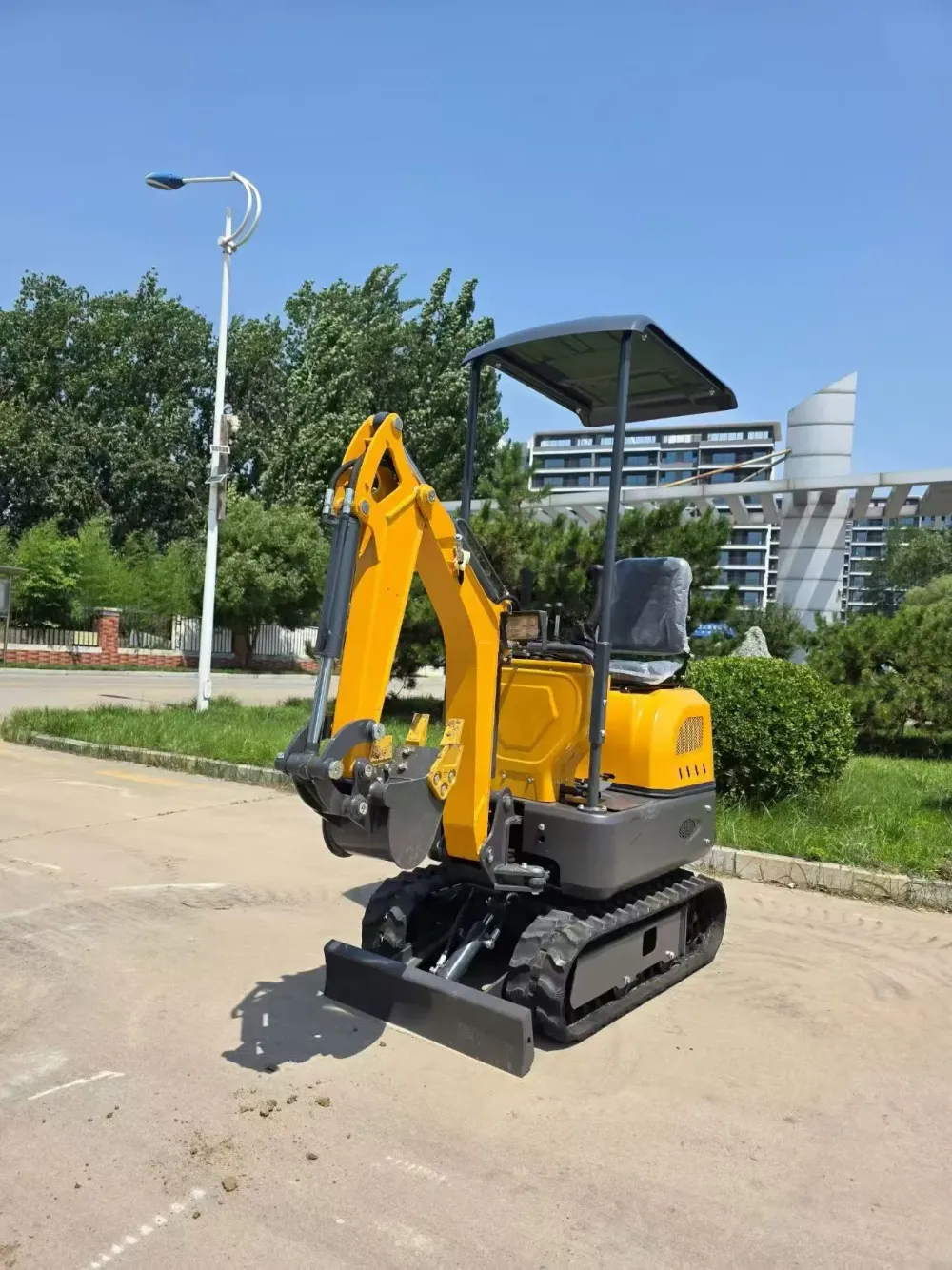
From the Bagger 293 bucket-wheel to the Cat 6090 mining giant, the world's largest diggers are engineering spectacles — but they have nothing to do with what most buyers actually need. Here's the full story, from record-breaking monsters to the compact machines that get real work done.
There are two kinds of excavator questions people ask. The first is pure fascination: what is the largest digger in the world, how big can a machine actually get, and who builds something that enormous? The second is practical: what size machine do I actually need for my project? This article answers both — because they lead to the same conclusion. The record-holders are extraordinary feats of engineering that almost nobody will ever operate, and the machines most real buyers end up with are at the opposite end of the scale. Understanding the full range from the colossal to the compact helps you make a better purchasing decision, and the story is worth knowing anyway.
The largest digger in the world: Bagger 293
The undisputed largest digger in the world is the Bagger 293, a bucket-wheel excavator built by TAKRAF and operated in the Hambach open-cast lignite mine in Germany. It holds the Guinness World Record for the largest land vehicle ever built. The numbers are almost incomprehensible: the machine stands 96 metres tall and stretches 225 metres in length — roughly the height of a 30-storey building lying on its side. It weighs approximately 14,200 tonnes, which is heavier than the Eiffel Tower. The bucket-wheel alone has a diameter of 21.6 metres, and the machine can move up to 240,000 cubic metres of earth per day. It takes a crew of five to operate and moves on twelve caterpillar-style crawler units, each one taller than a person. It is not a machine you buy. It is a machine you commission for a specific mine and it never leaves.
Bucket-wheel excavators like the Bagger 293 are purpose-built for continuous surface mining of soft material — brown coal (lignite) in this case. They do not dig discrete bucketfuls; the rotating wheel cuts continuously, feeding a conveyor system that runs the length of the machine and transfers material directly to a spreader or processing plant. The largest digger in the world is essentially a 14,000-tonne conveyor system with a rotating cutting head attached. It moves at roughly 0.1 km/h across the mine floor and is repositioned over months, not minutes.
Other contenders: the world's largest hydraulic excavators
Below the bucket-wheel category sit the large hydraulic mining excavators — the machines most people picture when they think of a very large digger. These are conventional face-shovel or backhoe machines scaled to mining proportions, and several manufacturers compete at the top of this class.
The Caterpillar 6090 FS (formerly the O&K RH400) is widely cited as the largest hydraulic excavator in production. It weighs around 980 tonnes in face-shovel configuration, carries a 52 to 65 cubic metre bucket, and can load a 363-tonne haul truck in three to four passes. The operating weight alone is equivalent to roughly 650 average cars. It is used in copper, coal, and oil sands operations, primarily in Canada, Australia, and Chile.
Komatsu competes with the PC8000, a 710-tonne hydraulic mining excavator with a bucket capacity up to 42 cubic metres. Liebherr produces the R 9800, weighing approximately 800 tonnes. These machines operate in open-pit mining environments where the cost of the machine — typically several million US dollars — is justified by the volume of material they move per shift. They require dedicated maintenance crews, purpose-built access roads, and mine infrastructure to support them. None of them have anything to do with what you will find in a contractor's yard.
From the world's largest to the world's smallest: why the gap matters
The contrast between the Bagger 293 and a modern micro excavator is so extreme it barely registers as the same category of machine. But understanding it is useful, because it illustrates that excavator size is entirely determined by application — there is no inherently correct size, only the size that fits the work. The same logic that produced the largest digger in the world for lignite mining produces the class that sits at the other extreme: the world's smallest excavator.
The world's smallest excavator category has been contested by several manufacturers over the past decade. Yanmar's ViO10 and Kubota's U10-5 have both been marketed as among the smallest purpose-built hydraulic excavators in production, with operating weights below 1 tonne. Some micro excavators designed for indoor demolition or utility work go even further, with machines below 800 kg designed to pass through standard doorways. These machines carry a bucket capacity measured in a few hundred litres rather than tens of cubic metres — a ratio of roughly 1 to 150,000 compared to the Cat 6090.
The world's smallest excavator class is not a curiosity. It exists because a large proportion of real excavation work happens in conditions where a bigger machine simply cannot go: walled gardens, basements, greenhouses, narrow laneways, indoor utility corridors, and any site where access is restricted by width, height, or ground-bearing capacity.
What most buyers actually need: the mini excavator class
The machines between the world's smallest excavator and the mining giants — specifically in the 1 to 8 tonne class — handle the vast majority of real-world excavation tasks. This is the mini excavator segment, and it is where almost every contractor, landscaper, utility company, and small builder ends up. The reasons are straightforward.
A 1.5 to 3.5 tonne mini excavator can reach most residential and light commercial sites without special permits, transport on a standard trailer behind a pickup truck, and work in conditions that would be inaccessible to anything larger. It can dig trenches for utility work, do foundation excavation for extensions, grade driveways, clear stumps, and handle drainage work — which covers the majority of what smaller operations actually do. The bucket force is more than adequate for all but the hardest ground, and modern hydraulic systems give precise control that mining-scale machines do not need and do not have.
Our mini excavator range is built specifically for this segment: machines that are big enough to do serious work but compact enough to go where the work is. If you need to dig a trench across a back garden with a 900mm gate, a 10,000-tonne machine is not the answer — and neither is most of what you'll find at a large dealer. The 1.5 to 3 tonne class usually is.
Choosing the right size: what the spectrum teaches you
The lesson from the full spectrum — from the largest digger in the world to the world's smallest excavator — is that every machine size exists because there is work that requires it. The selection logic is the same at every point on the scale: match the machine to the job, not to an idea of what a serious machine looks like.
Common sizing mistakes buyers make in the mini excavator class:
- Over-buying for access — choosing a 5 tonne machine for work that requires a 1.5 tonne. The bigger machine won't fit the site, damages lawns and paths, and costs more to move.
- Under-buying for production — choosing a 1 tonne micro machine for work that needs the dig force of a 3.5 tonne. The job takes twice as long and the wear cost is higher.
- Ignoring transport — a machine over 3.5 tonnes typically requires a trailer rated above standard road limits, adding permit and equipment cost.
- Underestimating attachments — the base machine is only part of the story. Whether you need a hydraulic thumb, a breaker, or an auger determines the hydraulic spec before you look at size.
The mini excavator range we build covers the 1 to 6 tonne class. Most buyers start at the 1.5 to 2.5 tonne range and move up only when their regular work genuinely demands it. The right approach is to define the tightest access condition and the heaviest regular task, and find the machine that handles both. That is exactly what the engineers who built the Bagger 293 did — they just had different constraints.
Why compact beats colossal for most real projects
There is a tendency to equate machine size with capability, but in most project environments the opposite is true: a compact machine that can actually reach the work does more productive hours per day than a large machine stuck at the gate. The largest digger in the world is productive because it never needs to manoeuvre — it crawls slowly through terrain that has been prepared for it. In a real construction or landscaping environment, manoeuvrability is a large part of productivity.
Mini excavators in the 1 to 5 tonne class now come with zero tail-swing or minimal tail-swing designs that allow operation in confined spaces without the counterweight sweeping into walls or fences. Variable undercarriage width allows the machine to retract to pass through narrow gaps and then extend for stability on open ground. These are engineering responses to real operational constraints — the same problem-solving that produced the bucket-wheel at the other end of the scale, just applied to different constraints.
If you are evaluating a mini excavator for your operation, the useful questions are: What is the narrowest access point on my most common site? What is the heaviest material I dig regularly? Do I need to transport the machine on a standard trailer? The answers to those three will put you in a weight class and configuration before you ever look at a price list. Request a quote from there, not from a headline number.
Browse our largest digger in the world range · — we reply within one business day.
Frequently asked questions
What is the largest digger in the world?
The largest digger in the world is the Bagger 293, a bucket-wheel excavator operating in the Hambach lignite mine in Germany. It weighs approximately 14,200 tonnes, stands 96 metres tall, and stretches 225 metres in length. It holds the Guinness World Record as the largest land vehicle ever built and can move up to 240,000 cubic metres of earth per day.
What is the world's largest hydraulic excavator?
The Caterpillar 6090 FS (formerly the O&K RH400) is generally regarded as the largest hydraulic excavator in production, weighing around 980 tonnes with a bucket capacity of up to 65 cubic metres. Competitors at the top of this class include the Komatsu PC8000 and the Liebherr R 9800, both used in large-scale open-pit mining operations.
What is the world's smallest excavator?
The world's smallest excavator class includes machines below 1 tonne in operating weight, such as the Yanmar ViO10 and Kubota U10-5. Some purpose-built indoor demolition machines weigh below 800 kg and are designed to pass through standard doorways. These micro excavators are genuine purpose-built hydraulic machines, not scaled-down toys — they are used for utility work, indoor demolition, and sites with extreme access restrictions.
Do I need a mini excavator or a full-size excavator for my project?
For most residential and light commercial work — trenching, foundations, drainage, landscaping, and utility work — a mini excavator in the 1.5 to 5 tonne class is not a compromise, it is the correct tool. Full-size excavators (above 6 to 8 tonnes) add transport cost, require larger trailers, damage lawns and paths, and often cannot access the sites where the work actually is. The right size is the one that fits your tightest access point and handles your heaviest regular task.
How much can a mini excavator dig compared to a large mining excavator?
The scale difference is enormous. A large mining excavator like the Cat 6090 carries a 52 to 65 cubic metre bucket and moves tens of thousands of tonnes per shift. A typical 2 tonne mini excavator carries a bucket of around 0.04 to 0.06 cubic metres. However, in a residential or light commercial environment, raw bucket size is irrelevant — cycle time, manoeuvrability, and access are what determine how much work gets done per day.
What mini excavator weight class should I buy?
Start with your access constraints and your standard task. If you regularly work through gates, laneways, or tight residential sites, a 1.5 to 2.5 tonne machine with a retractable undercarriage is usually the right range. If your regular work is heavier — deeper trenches, harder ground, larger volumes — the 3.5 to 6 tonne class provides the dig force you need while still being transportable on a standard trailer. Over-buying on size is a common and expensive mistake.
Can I transport a mini excavator on a standard trailer?
Most mini excavators up to around 3.5 tonnes can be transported on a standard tandem-axle trailer behind a suitable tow vehicle without special permits in most jurisdictions. Above 5 tonnes, transport requirements vary by country and region and may require a dedicated low-loader and permits. Always check your local road transport rules before buying — transport cost and logistics are a real part of the total cost of ownership.
Related articles
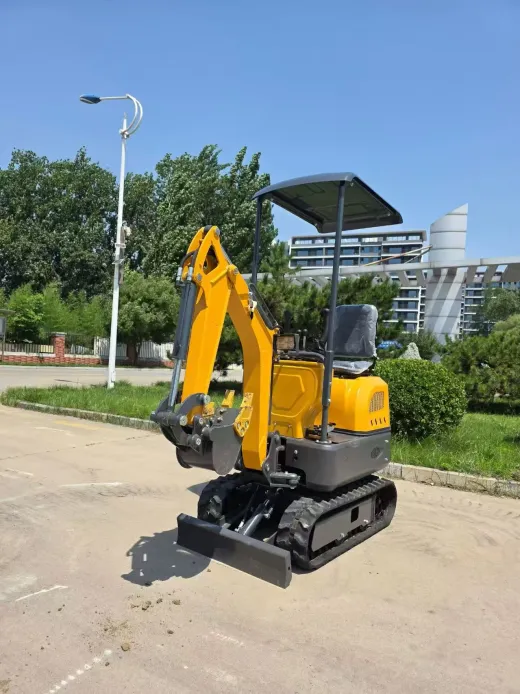
How to Operate a Mini Excavator: Controls, Techniques & Safety
A practical step-by-step guide to operating a mini excavator safely — covering cabin controls, swing and travel, basic digging technique, and what a micro digger driver needs to know before the first shift.
Read more →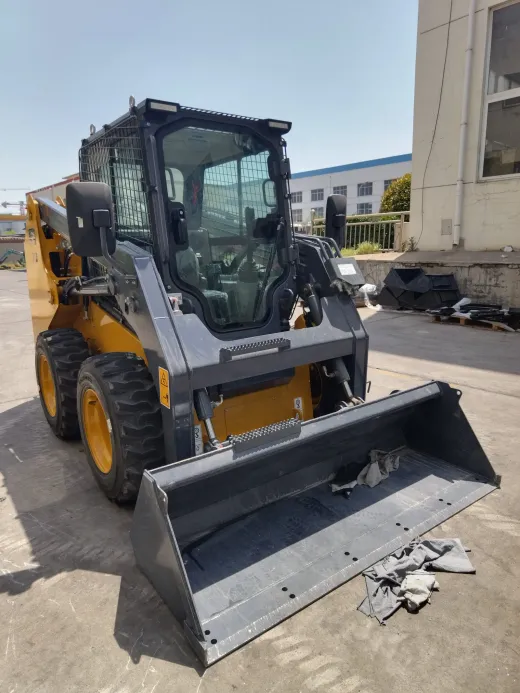
How to Drive and Operate a Skid Steer Loader: A Beginner's Guide
A complete beginner's guide to driving a skid steer loader — covering pre-operation checks, how the controls work, driving on varied terrain, digging techniques, attachment use, safety rules, and an honest look at why building your own skid steer rarely makes sense.
Read more →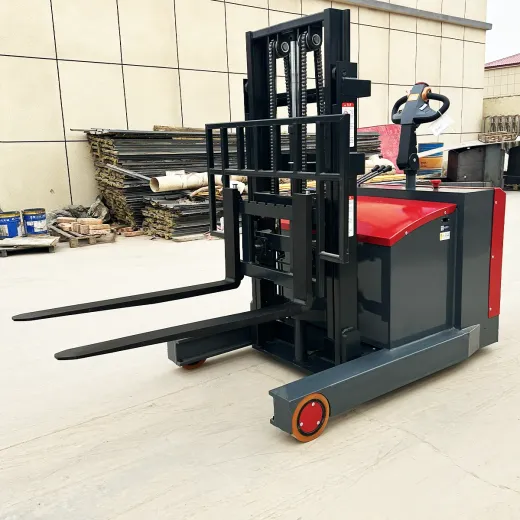
Reach Truck Operator: Skills, Training, and What the Job Actually Involves
A complete guide to the reach truck operator role: what you do on the job every day, the skills and certification you need, safety rules that matter, and how the right machine makes every shift easier.
Read more →