










A Buyer from New Zealand Spent a Morning on Our Mini Excavator Floor
2026-09-02
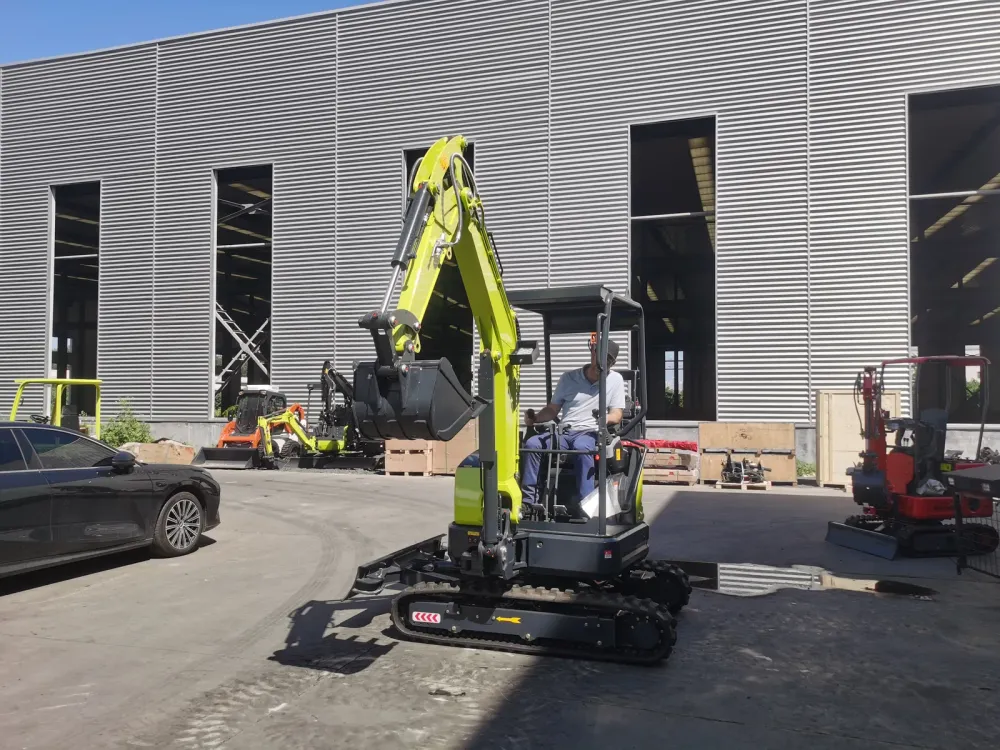
On 2 September a buyer from New Zealand walked our workshop, then took two mini excavators into the test area and ran them himself. This is what he looked at, what he asked, and what any buyer should do with a day at a factory.
Video calls have made it possible to buy a machine without ever meeting the people who build it, and plenty of buyers now do exactly that. The ones who still get on a plane tend to be buying more than one machine, or buying for resale, and they come with a list.
On the morning of 2 September a buyer from New Zealand came through our gate with that kind of list. He spent the morning here, and by the time he left he had personally driven two machines. Here is how the visit actually went.
The floor before anything else
He asked to see the workshop first, which is the right instinct. A showroom tells you what a company wants to sell; the floor tells you what it actually builds and how much of it. Walking in, the first thing visible is simply how many machines are standing there at different stages — assembled units waiting on final checks, others still open.
What a buyer should be reading at this point is not the paint. It is whether the machines on the floor are the same models that appear in the catalogue, whether there is more than one size in build at once, and whether the place looks like it assembles machines continuously or put a few together for the visit.
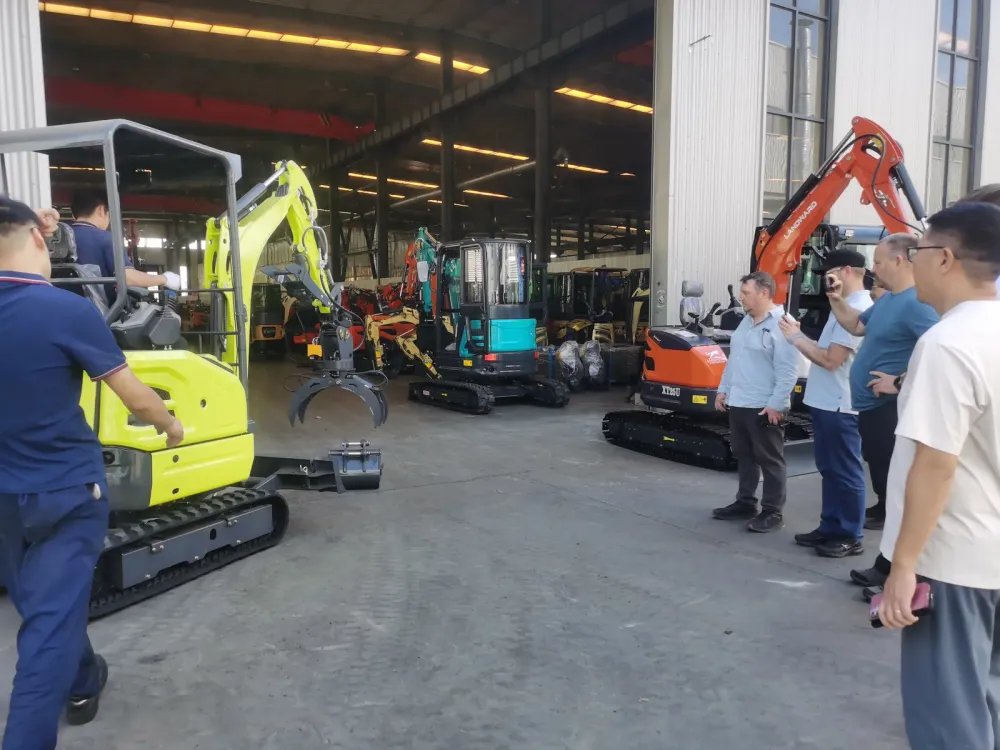
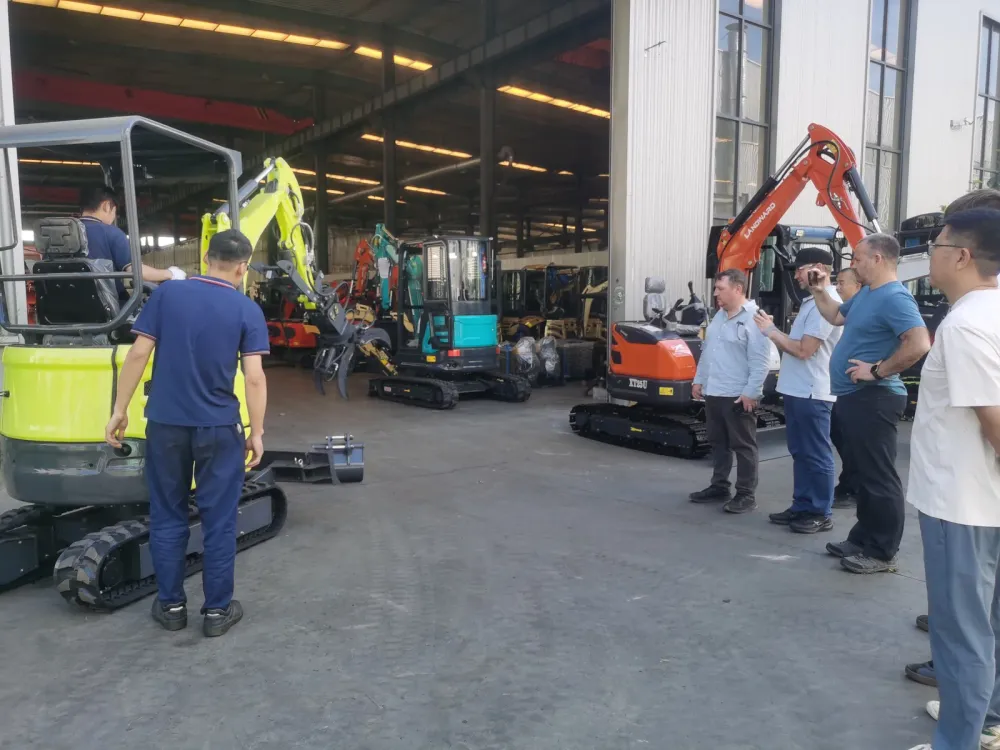
What was standing on the floor that morning
The machines nearest the door that day ran across the compact range — crawler excavators in several sizes, one fitted with a grapple instead of a bucket, alongside forklifts and loaders from the other lines. The 1 to 3.6 tonne excavator family is five models, ZM-10 through ZM-40, and having more than one of them physically present matters during a visit: it is the only way to feel the size difference honestly.
Buyers consistently underestimate how much machine they need or, more often, overestimate it. Standing next to a 1.8 t frame and a 3.6 t frame in the same aisle settles that argument in about thirty seconds, and it is the main reason a visit beats a spec sheet. If you cannot get here, the size question is worked through in mini excavator sizes explained.
The test area is where the decision actually happens
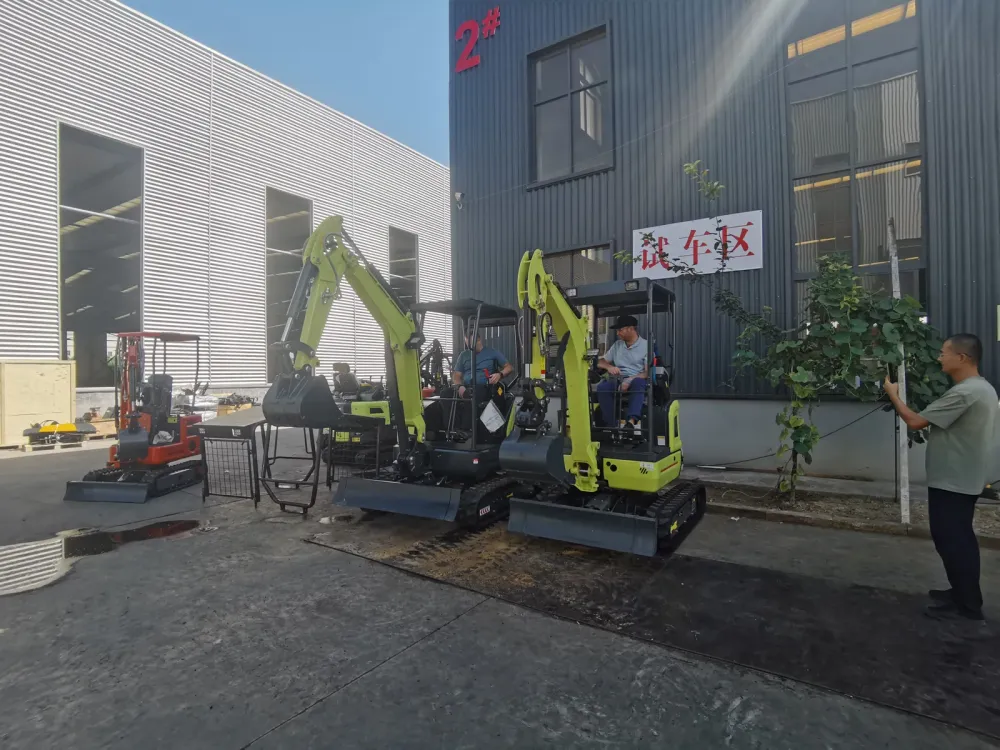
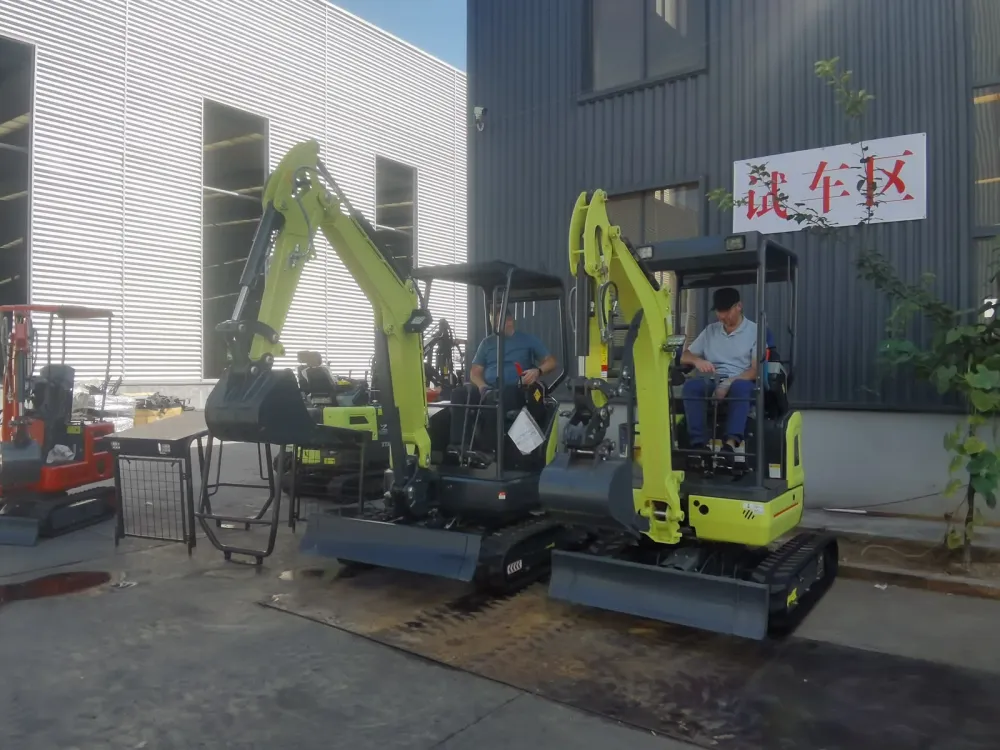
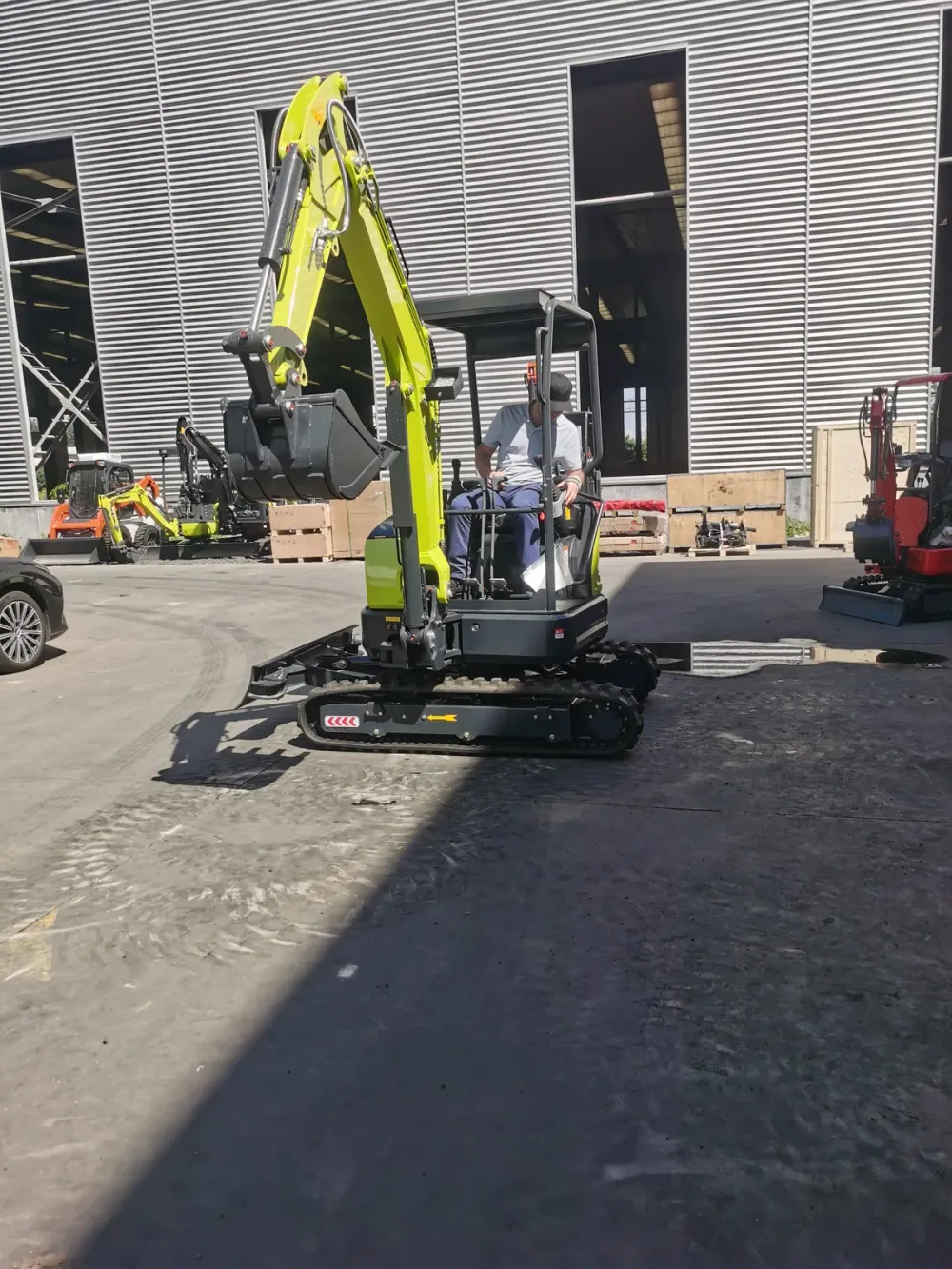
Outside the second workshop there is a marked test area, and that is where the morning went from a tour to an evaluation. Two canopy machines were brought out onto the pad, and rather than watching a demonstration operator, he sat in the seat himself.
This is the part of a factory visit worth protecting. A demonstration by someone who has run the same machine for two years proves the machine works; it tells you nothing about how the controls feel to a stranger. A buyer who puts his own hands on the levers for ten minutes learns things no data sheet carries — how fast the boom comes up under no load, whether the swing coasts, where the blade sits in his sightline, how much noise reaches the seat.
Running the machine himself
He worked the boom, bucket and swing through a full cycle, dropped the blade, and drove the machine back and forth across the pad. It looks unremarkable on video and it is the single most informative ten minutes of any visit.
What an experienced operator is checking in that time: whether two functions can be worked at once without one starving the other, whether the tracks pull evenly, whether the machine settles when the bucket is loaded or the front end lifts, and whether anything gets hot or loud that should not. None of this appears in a specification table, and all of it is obvious from the seat.
Two machines, side by side, same afternoon
Later both machines were on the pad together with our own staff running the second one, which let him watch a machine work from the outside immediately after having driven it himself. Buyers who are reselling care about this view in particular: it is what their own customer will see in a yard demonstration.
The comparison also does something a single test cannot. Running two units of the same build back to back is a check on consistency — if the second machine behaves noticeably differently from the first, that is a production problem, and it is far better to discover it in our yard than in a container six weeks later.
The questions that came up
The technical questions on a visit like this are always the same handful, and they are the right ones:
- What engine is in it, and can the buyer get filters and parts locally. On the 1.8 and 2.5 t frames that is a Kubota diesel, which matters precisely because parts for it exist in almost every market.
- What comes as standard versus optional — dozer blade, canopy or enclosed cab, quick coupler, thumb.
- What paperwork ships with the machine, and what the destination market requires before it can be sold or hired out.
- Parts and warranty support after delivery, which for an importer is usually the question that decides the supplier rather than the machine.
- Lead time and how the batch would be consolidated for shipping.
Those last two are worth more thought than most first-time buyers give them. The machine comparison that gets people to a factory in the first place is covered in buying a Chinese mini excavator, and the model-by-model choice in our mini excavator range.
Why buyers still fly to a china mini excavator factory
Three things cannot be done remotely, and they are the reason the trip is still worth the airfare.
The first is sitting in the seat. The second is seeing how many machines are genuinely in production, which separates a manufacturer from a trading company that photographs someone else's yard. The third is meeting the people who will answer the phone when a hydraulic fitting fails in eighteen months — a supplier relationship is easier to judge across a table than across a chat window.
The flip side is that a visit is not proof of anything on its own. A pleasant morning and a good lunch have sold a lot of bad machines. What made this visit useful was that the buyer drove the machines himself, asked about parts before he asked about price, and looked at the floor before the showroom.
If you cannot get on a plane
Most of a visit can be reconstructed remotely if you ask for the right things, and we do this regularly for buyers who cannot travel:
- A live video call from the floor with your own machine in frame, not an edited clip — ask the person holding the camera to walk around it and to start it.
- Photographs of the actual serial-numbered unit built for your order, before it is wrapped.
- A third-party inspection before shipment, arranged by you rather than by us, which is standard practice and which no honest supplier objects to.
- Reference contact with a buyer in a comparable market, so you can ask someone else how the parts support behaved after delivery.
And if you are still narrowing down the machine itself rather than the supplier, start with how to choose a mini excavator — the size, the engine and the attachment plan decide more about the next five years than the factory tour does.
Browse our chinese mini excavator range · — we reply within one business day.
Frequently asked questions
Can I visit the factory before placing an order?
Yes. Buyers are welcome on the floor and in the test area, and we would rather you came before the order than after it. Tell us which models you want to see and roughly when, so the machines are on the pad and ready to run when you arrive.
Can I operate the machines myself during a visit?
Yes, and we encourage it. Watching a demonstration operator proves the machine works; sitting in the seat yourself tells you how the controls feel, how the machine behaves under load, and whether it suits the operators who will actually run it.
What should I look at on a mini excavator factory visit?
The assembly floor before the showroom, how many machines are genuinely in build, more than one frame size side by side so the class difference is physical rather than theoretical, and the engine and parts situation for your own market. Ask about after-sales support before you ask about price.
What if I cannot travel to China?
Ask for a live unedited video call from the floor with your machine running, photographs of the serial-numbered unit built for your order, and a pre-shipment inspection arranged by a third party of your choosing. Those three together cover most of what a visit would have shown you.
Which mini excavator models can I see at the factory?
The compact crawler range runs from 1 t to 3.6 t — ZM-10, ZM-12, ZM-18, ZM-25 and ZM-40 — plus attachments and machines from the loader and forklift lines. Which specific units are on the floor depends on the week, so tell us in advance what you need to see.
Related articles
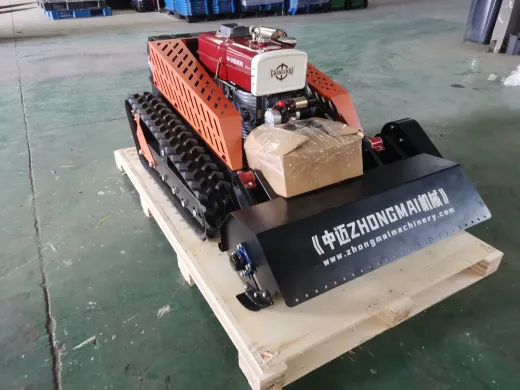
Shipping Day: How a Batch of Remote Control Mowers Gets Crated for Export
On 14 August a batch of tracked flail mowers left our floor bound for the port of Kaohsiung. This is what the last day of an order actually looks like — pallet, stretch wrap, plywood crate — and what the buyer finds when the lid comes off.
Read more →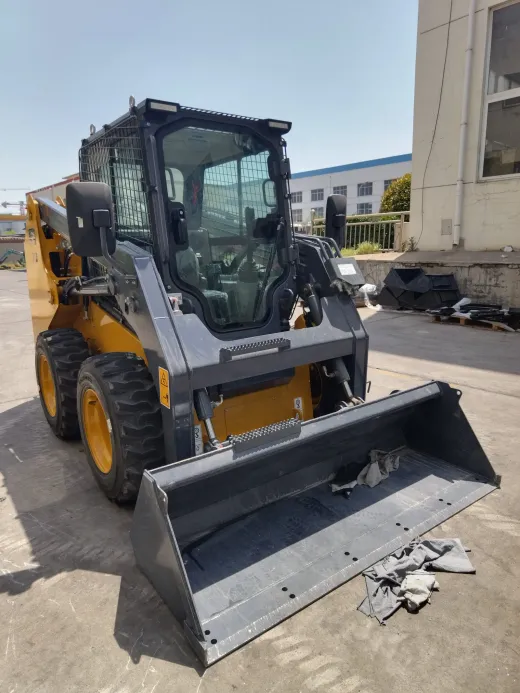
Skid Steer Weight: Operating Weight by Class, Mini to Large Frame
How much does a skid steer weigh? It depends on frame class, undercarriage, and whether you mean operating weight, shipping weight, or rated capacity. This guide breaks down skid steer weight from stand-on minis to large-frame machines, explains tracked vs wheeled weight differences, and covers what the number means for trailer selection and towing rules.
Read more →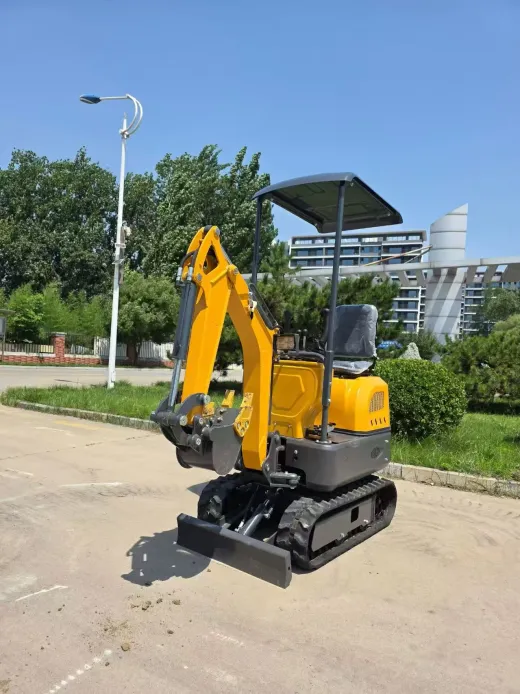
Amphibious Mini Excavators: Working on Water, Marshes & Wetlands
A clear-headed guide to amphibious and floating mini excavators — how pontoon undercarriages work, where they outperform standard machines, their real limitations, and when wide rubber tracks are the smarter choice for wet and soft-ground work.
Read more →